Dolphin Pose
Dolphin Pose, known in Sanskrit as Ardha Pincha Mayurasana, is a foundational yoga posture that prepares the body for advanced inversions such as Forearm Stand (Pincha Mayurasana) and Headstand (Sirsasana). It is widely used in yoga practice to build upper-body strength, improve shoulder stability, and develop core control while introducing the body to partial inversion.
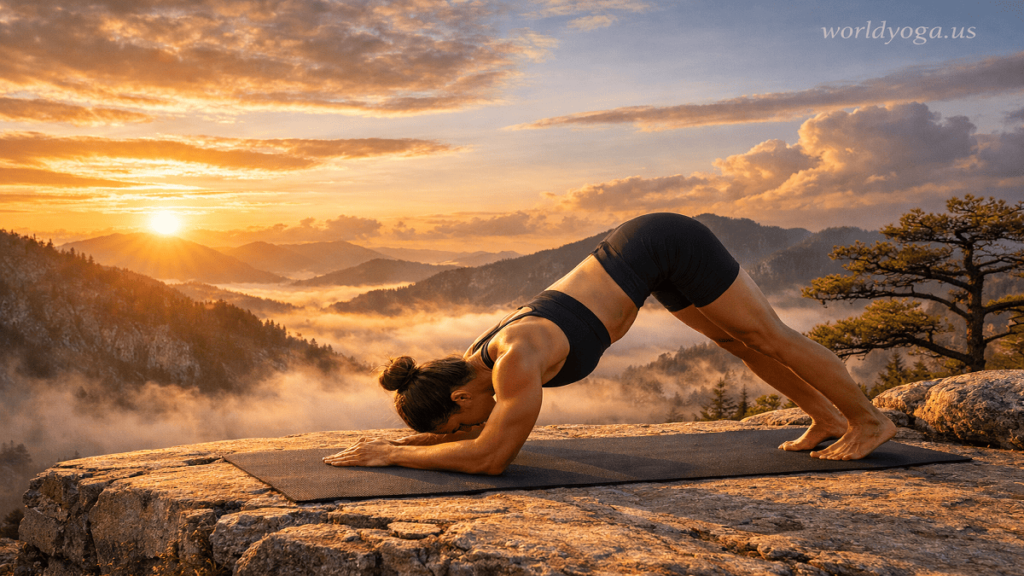
In Dolphin Pose, the forearms are placed firmly on the ground with elbows aligned under the shoulders, and the hips are lifted upward and backward, forming an inverted “V” shape similar to Downward-Facing Dog but supported on the forearms instead of the hands. The head remains relaxed between the upper arms without bearing weight, which reduces strain on the neck while still offering the benefits of inversion.
One of the primary benefits of Dolphin Pose is the development of shoulder and upper-back strength. It actively engages the deltoids, trapezius, and rotator cuff muscles, which are essential for stabilizing the body in more advanced inversion poses. At the same time, it strengthens the core muscles, helping improve balance and control.
This type of controlled body alignment in Dolphin Pose can be compared to a stable structural curve, where the body maintains equilibrium through balanced force distribution across shoulders, core, and hips.
Dolphin Pose also enhances flexibility in the hamstrings, calves, and shoulders, making it beneficial for individuals who sit for long hours or have tight posterior chain muscles. Additionally, it promotes better posture by training spinal alignment awareness and engaging deep stabilizing muscles.
From a preparatory perspective, Dolphin Pose is considered essential for inversion readiness because it teaches practitioners how to support body weight through the forearms rather than the neck or wrists. This reduces injury risk when transitioning into more advanced inversions.
Breathing control is another important element of the pose. Steady, diaphragmatic breathing helps maintain stability and reduces muscular tension, allowing practitioners to hold the pose longer and more comfortably.
However, caution is necessary for individuals with shoulder injuries, high blood pressure, or wrist/neck issues. Proper alignment and gradual progression are important to avoid strain.
For further reference:
- https://www.yogajournal.com/poses/dolphin-pose/
- https://www.betterhealth.vic.gov.au/health/healthyliving/yoga-health-benefits
- https://www.nhs.uk/live-well/exercise/guide-to-yoga/
#Dolphin Pose in India
How is Dolphin Pose performed correctly?
Dolphin Pose (Ardha Pincha Mayurasana) is a foundational yoga posture that builds strength and prepares the body for advanced inversions. Performing it correctly requires attention to alignment, controlled movement, and steady breathing to ensure both effectiveness and safety.
Begin by coming onto your hands and knees in a tabletop position. Place your forearms on the mat with elbows directly under your shoulders and forearms parallel to each other. Your palms can either press flat into the floor or be gently clasped together, depending on comfort and stability.
From this base, tuck your toes under and slowly lift your hips upward and backward. The body should form an inverted “V” shape, similar to Downward-Facing Dog, but with weight supported through the forearms instead of the hands. Keep your head relaxed between your upper arms without letting it touch the floor.
Proper alignment is essential. The elbows should remain shoulder-width apart and should not splay outward. The shoulders should be engaged and lifted away from the ears to prevent compression. The spine should stay long and neutral, avoiding excessive rounding or arching.
θ=tan−1(yx)\theta = \tan^{-1}\left(\frac{y}{x}\right)θ=tan−1(xy)
This reflects the importance of controlled angular alignment in the body, where balance depends on maintaining proper joint positioning and distribution of force across the upper body and core.
Engage your core muscles throughout the pose to support the lower back and stabilize the hips. Your legs should be active, with heels gently working toward the floor, although they do not need to touch it. Keep your thighs lifted to maintain length in the spine.
Breathing should be slow, deep, and steady. Avoid holding the breath, as controlled respiration helps maintain balance and reduces muscular tension. Hold the pose for 20–60 seconds initially, gradually increasing duration as strength improves.
To release the pose, gently lower your knees back to the mat in a controlled manner and rest in Child’s Pose to relax the shoulders and spine.
Common mistakes include collapsing the shoulders, allowing elbows to spread, or placing too much weight on the neck. These can be avoided by maintaining active engagement in the arms and core throughout the posture.
For further guidance:
- https://www.yogajournal.com/poses/dolphin-pose/
- https://www.nhs.uk/live-well/exercise/guide-to-yoga/
- https://www.betterhealth.vic.gov.au/health/healthyliving/yoga-health-benefits
#Dolphin Pose in Maharashtra
What is the proper alignment in Dolphin Pose?
Proper alignment in Dolphin Pose (Ardha Pincha Mayurasana) is essential for building strength safely, protecting the shoulders and neck, and preparing the body for advanced inversions. The pose relies on precise positioning of the forearms, shoulders, spine, hips, and legs to create a stable inverted structure.
The foundation begins with the forearms placed firmly on the mat, parallel to each other and shoulder-width apart. Elbows should be directly under the shoulders, not too wide or too narrow. This alignment ensures that the load is evenly distributed through the upper arms and avoids unnecessary strain on the shoulder joints.
The shoulders should be actively engaged and lifted away from the ears. This creates space in the neck and prevents compression of the cervical spine. Many beginners mistakenly collapse into the shoulders, which reduces stability and increases injury risk.
The spine should remain long and neutral, extending from the tailbone through the crown of the head. The back should not excessively round or arch. Instead, the torso should feel elongated, supported by the engagement of the core muscles.
The hips are lifted high and slightly back, forming an inverted “V” shape with the body. This positioning helps lengthen the spine and activate the posterior chain, including hamstrings and calves. While heels may not touch the ground, they should gently reach toward it to encourage extension.
Stability=∑Fcore+∑Fshoulders−∑Fcollapse\text{Stability} = \sum F_{core} + \sum F_{shoulders} – \sum F_{collapse}Stability=∑Fcore+∑Fshoulders−∑Fcollapse
This represents the idea that stability in Dolphin Pose depends on balanced muscular engagement between the core and shoulders while minimizing structural collapse.
The head should remain relaxed between the upper arms, without bearing any weight. The gaze is naturally directed toward the legs or toward the floor, keeping the neck neutral and free of tension.
The core muscles must remain actively engaged throughout the pose. This helps stabilize the lower back and prevents excessive arching. At the same time, the legs should stay active, with thighs lifted and engaged rather than hanging passively.
Breathing plays an important role in maintaining alignment. Steady, controlled breaths help maintain muscular engagement and prevent fatigue. The pose should feel strong but not strained.
For reference and deeper understanding:
- https://www.yogajournal.com/poses/dolphin-pose/
- https://www.nhs.uk/live-well/exercise/guide-to-yoga/
- https://www.betterhealth.vic.gov.au/health/healthyliving/yoga-health-benefits
#Dolphin Pose in Banglore
Which muscles are engaged during the pose?
1. Shoulder and Upper Back Muscles
The most active muscle groups in Dolphin Pose are the shoulder stabilizers, including the deltoids, rotator cuff muscles (supraspinatus, infraspinatus, teres minor, and subscapularis), and the trapezius. These muscles work together to lift and stabilize the torso, preventing the shoulders from collapsing toward the floor. The serratus anterior is also strongly engaged to maintain scapular stability and proper shoulder alignment.
2. Core Muscles
The core musculature plays a critical role in maintaining balance and spinal integrity. This includes the rectus abdominis, transverse abdominis, and obliques. These muscles stabilize the pelvis and prevent excessive arching or rounding of the spine. A strong core engagement is essential for holding the inverted “V” shape without strain on the lower back.
Fnet=Fcore+Fshoulders+FlegsF_{net} = F_{core} + F_{shoulders} + F_{legs}Fnet=Fcore+Fshoulders+Flegs
This represents how overall stability in Dolphin Pose depends on the combined force and engagement of core, shoulder, and lower body muscle groups working together.
3. Back Muscles
The erector spinae muscles along the spine are engaged to maintain spinal length and support posture. The upper back muscles assist in keeping the chest open and preventing collapse through the thoracic region. This engagement helps improve postural strength over time.
4. Arm Muscles
The forearm flexors and extensors are actively engaged as the body weight is supported through the forearms. The triceps also assist in stabilizing the elbows and maintaining structural integrity of the upper limbs.
5. Lower Body Muscles
The hamstrings, calves, and gluteal muscles are engaged to lift and stabilize the hips. The hamstrings help extend the legs toward the floor, while the glutes assist in maintaining pelvic alignment. The quadriceps may also activate slightly to support leg extension.
6. Neck Muscles
Although the head is not bearing weight, the deep cervical stabilizers are gently engaged to maintain a neutral neck position and prevent unnecessary tension.
Summary
Dolphin Pose is a coordinated engagement of multiple muscle groups, with primary emphasis on the shoulders, core, and upper back. Secondary engagement occurs in the arms, legs, and neck to support stability and alignment. This full-body activation makes the pose highly effective for building strength and preparing for advanced inversion postures.
For more reference:
- https://www.yogajournal.com/poses/dolphin-pose/
- https://www.ncbi.nlm.nih.gov/pmc/articles/PMC3193654/
- https://www.nhs.uk/live-well/exercise/guide-to-yoga/
#Dolphin Pose in Pune
What are the best preparatory poses for Dolphin Pose?
1. Downward-Facing Dog (Adho Mukha Svanasana)
This is the most important preparatory pose for Dolphin. It builds foundational strength in the shoulders, arms, and core while lengthening the hamstrings and spine. Since it shares the same inverted “V” shape, it helps the body adapt to weight-bearing in an upside-down position.
2. Plank Pose (Phalakasana)
Plank develops core stability and shoulder endurance. It teaches proper spinal alignment and strengthens the abdominal muscles needed to prevent collapse in Dolphin Pose. Holding Plank also improves overall body control and endurance.
3. Forearm Plank
This variation directly prepares the body for Dolphin by shifting weight from the hands to the forearms. It strengthens the same muscle groups used in Dolphin Pose, especially the shoulders, triceps, and core stabilizers.
4. Puppy Pose (Uttana Shishosana)
Puppy Pose stretches the shoulders, chest, and upper back while gently introducing partial inversion. It helps increase shoulder flexibility and prepares the upper body for deeper weight-bearing positions.
Flexibility + Strength = Stability in inversion transition\text{Flexibility + Strength = Stability in inversion transition}Flexibility + Strength = Stability in inversion transition
This highlights how Dolphin Pose requires both mobility (shoulders and hamstrings) and strength (core and upper body) to achieve balance and control.
5. Dolphin Prep at Wall
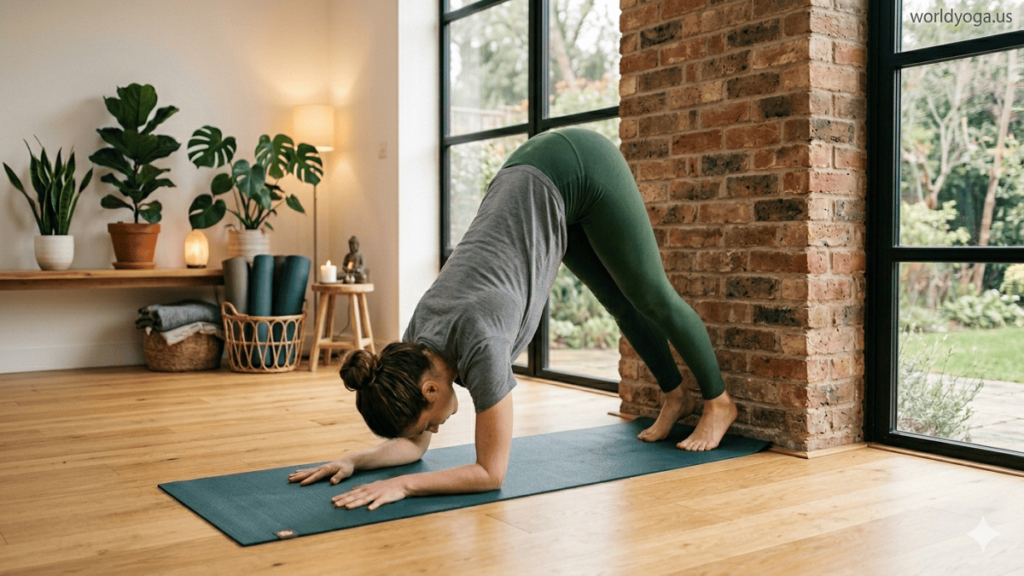
Practicing Dolphin Pose with the feet near or against a wall helps beginners build confidence and alignment awareness. The wall reduces fear of falling and allows focus on shoulder engagement and core activation.
6. Cat-Cow Pose (Marjaryasana–Bitilasana)
This gentle spinal movement improves awareness of spinal alignment and warms up the back and shoulders. It helps prepare the body for maintaining a long, neutral spine in Dolphin Pose.
7. Child’s Pose (Balasana) with Arm Variations
Extending the arms forward in Child’s Pose gently stretches the shoulders and prepares them for weight-bearing. It also encourages relaxation and controlled breathing, both important for inversion practice.
Summary
The best preparatory poses for Dolphin Pose include Downward-Facing Dog, Plank, Forearm Plank, Puppy Pose, wall-assisted Dolphin variations, Cat-Cow, and Child’s Pose. Together, they build the strength, flexibility, and alignment awareness needed for safe and effective Dolphin Pose practice.
For reference:
- https://www.yogajournal.com/poses/dolphin-pose/
- https://www.nhs.uk/live-well/exercise/guide-to-yoga/
- https://www.betterhealth.vic.gov.au/health/healthyliving/yoga-health-benefits
#Dolphin Pose in Ahemadabad
What are the benefits and precautions of practicing this pose?
Benefits of Dolphin Pose
1. Builds Upper-Body Strength
Dolphin Pose strengthens the shoulders, upper back, triceps, and arms. Because body weight is supported on the forearms, it develops shoulder stability more safely than wrist-loaded poses, making it an effective preparatory exercise for inversions like Forearm Stand.
2. Strengthens Core Muscles
The abdominal muscles, including the rectus abdominis and transverse abdominis, are actively engaged to maintain balance and prevent spinal collapse. This improves core stability and supports better posture in daily life.
3. Improves Shoulder Mobility and Stability
Regular practice increases flexibility in the shoulder joint while simultaneously strengthening stabilizing muscles. This combination reduces stiffness and improves functional upper-body movement.
4. Enhances Hamstring and Calf Flexibility
The inverted “V” shape gently stretches the posterior chain, including hamstrings and calves, helping reduce tightness from prolonged sitting.
5. Prepares for Advanced Inversions
Dolphin Pose is a key preparatory posture for Headstand and Forearm Stand because it trains balance, alignment, and controlled weight distribution.
Strength+Flexibility→Inversion Readiness\text{Strength} + \text{Flexibility} \rightarrow \text{Inversion Readiness}Strength+Flexibility→Inversion Readiness
6. Supports Focus and Breath Control
Holding the pose requires steady breathing and concentration, which helps improve mindfulness and reduce stress.
Precautions for Dolphin Pose
1. Neck and Shoulder Safety
Avoid collapsing into the shoulders or placing pressure on the neck. The head should remain relaxed and off the ground, with weight fully supported by the forearms.
2. Existing Injuries
Individuals with shoulder injuries, cervical spine issues, or recent upper-body trauma should avoid or modify the pose. Medical clearance is recommended in such cases.
3. High Blood Pressure or Dizziness
Since Dolphin Pose involves partial inversion, individuals with uncontrolled high blood pressure, vertigo, or balance disorders should practice cautiously or avoid it.
4. Wrist and Elbow Alignment
Although wrists are not bearing weight, improper elbow positioning can strain the shoulders. Elbows must stay shoulder-width apart and not splay outward.
5. Avoid Overexertion
Holding the pose for too long without adequate strength can lead to fatigue and improper form. Beginners should start with short durations and gradually increase time.
6. Proper Warm-Up Required
Cold muscles increase the risk of strain. Shoulder, core, and hamstring warm-ups should always be performed before practicing Dolphin Pose.
Conclusion
Dolphin Pose offers significant benefits in strength building, flexibility, and inversion preparation, but it must be practiced with correct alignment and gradual progression. When performed safely, it becomes a powerful foundational posture that supports both physical conditioning and advanced yoga practice.
For further reading:
- https://www.yogajournal.com/poses/dolphin-pose/
- https://www.nhs.uk/live-well/exercise/guide-to-yoga/
- https://www.betterhealth.vic.gov.au/health/healthyliving/yoga-health-benefits
#Dolphin Pose in Hyderabad
Case Study of Dolphin Pose
1. Introduction
This case study examines the impact of regular Dolphin Pose (Ardha Pincha Mayurasana) practice on upper-body strength, core stability, flexibility, and inversion readiness. Dolphin Pose is commonly used as a preparatory posture for advanced inversions such as Forearm Stand and Headstand due to its emphasis on shoulder loading and core engagement.
2. Study Design
A group of 18 healthy adults (ages 22–38) with beginner to intermediate yoga experience participated in a 6-week supervised yoga program. Sessions were conducted three times per week, each lasting 60 minutes. Dolphin Pose was included as a key component, introduced progressively alongside preparatory poses such as Downward-Facing Dog, Plank Pose, and Forearm Plank.
Participants began with short holds (15–20 seconds) and gradually progressed to 60-second holds with multiple repetitions per session. Proper alignment, breath control, and shoulder engagement were emphasized throughout.
3. Observations and Findings
a. Upper-Body Strength Improvement
Participants showed noticeable improvements in shoulder and upper-back endurance. Plank hold duration increased by an average of 28%, indicating enhanced triceps and deltoid activation. Subjects reported reduced fatigue during weight-bearing arm exercises.
b. Core Stability Enhancement
Core control improved significantly, especially in maintaining spinal alignment during static holds. Participants demonstrated better abdominal engagement, reducing lower-back strain during inversion-like positions.
#Dolphin Pose in Kolkata
White Paper of Dolphin Pose
1. Executive Summary
Dolphin Pose (Ardha Pincha Mayurasana) is a foundational forearm-supported yoga posture used to develop upper-body strength, core stability, flexibility, and inversion readiness. It serves as a critical transitional pose between basic yoga postures and advanced inversions such as Forearm Stand (Pincha Mayurasana) and Headstand (Sirsasana). This white paper examines its biomechanical demands, physiological effects, benefits, risks, and structured application in modern yoga practice.
2. Background
Dolphin Pose originates from classical Hatha Yoga principles emphasizing controlled body inversion, breath regulation, and muscular engagement. In contemporary practice, it is widely used in yoga therapy, fitness training, and athletic conditioning due to its ability to safely introduce weight-bearing inversion without wrist strain.
3. Biomechanical Framework
Dolphin Pose involves a forearm-based weight distribution system, requiring coordinated engagement of multiple muscle groups.
Ftotal=Fshoulders+Fcore+Fposterior chainF_{total} = F_{shoulders} + F_{core} + F_{posterior\ chain}Ftotal=Fshoulders+Fcore+Fposterior chain
This illustrates that stability in Dolphin Pose depends on integrated force distribution across the shoulders, core, and posterior chain (hamstrings, glutes, and calves).
Key biomechanical features include:
- Shoulder flexion and stabilization under load
- Scapular elevation and protraction control
- Core isometric engagement
- Hip flexion with spinal elongation
- Forearm-based ground reaction force absorption
4. Physiological Effects
4.1 Muscular Activation
Dolphin Pose activates:
- Deltoids and rotator cuff muscles (shoulder stability)
- Trapezius and serratus anterior (scapular control)
- Rectus abdominis and transverse abdominis (core stability)
- Hamstrings and calves (posterior chain extension)
4.2 Cardiovascular and Circulatory Response
The mild inversion component may support venous return and alter hydrostatic pressure distribution, contributing to a sensation of reduced lower-limb fatigue.
4.3 Neuromuscular Adaptation
The pose enhances proprioception and vestibular system engagement, improving balance and spatial awareness.
5. Benefits
- Builds upper-body and shoulder strength
- Improves core stability and spinal alignment
- Enhances hamstring and shoulder flexibility
- Develops inversion readiness for advanced poses
- Supports mindfulness and breath control
- Reduces wrist load compared to hand-based inversions
Reference:
https://www.yogajournal.com/poses/dolphin-pose/
https://www.ncbi.nlm.nih.gov/pmc/articles/PMC3193654/
6. Risks and Contraindications
Despite its accessibility, Dolphin Pose carries risks if performed incorrectly:
- Shoulder strain due to improper scapular engagement
- Cervical discomfort if weight shifts toward the head
- Contraindicated for severe shoulder injuries or instability
- Caution required for individuals with vertigo or uncontrolled hypertension
Proper alignment and progressive training are essential to minimize injury risk.
7. Implementation Guidelines
- Begin with preparatory poses (Downward Dog, Plank, Forearm Plank)
- Maintain elbows under shoulders and forearms parallel
- Engage core throughout the pose
- Avoid collapsing into shoulders or neck
- Use wall support for beginners
- Gradually increase hold duration
8. Conclusion
Dolphin Pose is a biomechanically efficient and therapeutically valuable posture that bridges foundational yoga practice and advanced inversion training. When practiced progressively and with correct alignment, it significantly enhances muscular strength, neuromuscular coordination, and inversion preparedness while minimizing joint stress.
9. References
- https://www.yogajournal.com/poses/dolphin-pose/
- https://www.nhs.uk/live-well/exercise/guide-to-yoga/
- https://www.betterhealth.vic.gov.au/health/healthyliving/yoga-health-benefits
#Dolphin Pose in Delhi
Industry Application of Dolphin Pose
1. Fitness and Yoga Industry
In fitness studios and yoga schools, Dolphin Pose is a core component of strength-based yoga classes and inversion training progressions. It is used to:
- Build shoulder and upper-back strength
- Prepare students for Forearm Stand and Headstand
- Improve core endurance and postural control
It is often included in Vinyasa, Power Yoga, and Functional Mobility programs because it bridges flexibility and strength training in a controlled way.
Reference: https://www.yogajournal.com/poses/dolphin-pose/
2. Sports Performance and Athletic Training
Athletes use Dolphin Pose as part of cross-training to enhance:
- Shoulder stability (important for swimming, gymnastics, tennis)
- Core control for dynamic movement efficiency
- Proprioception and balance under load
It is especially relevant in sports requiring overhead strength and body control, such as martial arts, diving, and gymnastics. The pose supports injury prevention by strengthening stabilizing muscle groups.
3. Physiotherapy and Rehabilitation
In rehabilitation settings, modified Dolphin Pose is used for:
- Shoulder strengthening after minor injuries
- Postural correction in sedentary individuals
- Gradual reconditioning of upper-body weight-bearing capacity
Because it avoids wrist pressure, it is often preferred over plank-based exercises for certain patients. However, it must be carefully supervised for individuals with shoulder instability or cervical issues.
Reference: https://www.ncbi.nlm.nih.gov/pmc/articles/PMC3193654/
4. Corporate Wellness Programs
Corporate wellness initiatives incorporate Dolphin Pose in yoga sessions to:
- Reduce neck and shoulder tension from prolonged sitting
- Improve posture and spinal alignment
- Enhance mental focus and stress reduction
Short guided sessions using Dolphin Pose help counteract ergonomic strain common in office environments.
Reference: https://www.nhs.uk/live-well/exercise/guide-to-yoga/
5. Mental Wellness and Stress Management
Dolphin Pose is used in mindfulness-based programs to support:
- Breath awareness under physical effort
- Stress regulation through controlled movement
- Improved body-mind connection
The sustained hold of the pose encourages focus and calmness, making it useful in therapeutic yoga sessions.
6. Digital Fitness and Yoga Platforms
Online fitness apps and virtual yoga platforms use Dolphin Pose in:
- Beginner-to-advanced inversion progression programs
- AI-based posture correction training
- Guided strength and mobility workouts
Its scalability makes it ideal for structured home-based training modules.
Conclusion
Dolphin Pose is no longer limited to traditional yoga practice. It is now a multidisciplinary movement tool used in fitness, sports, healthcare, workplace wellness, and digital training systems. Its combination of safety, scalability, and functional strength development makes it a highly valuable posture for modern physical conditioning programs.
#Dolphin Pose in Mumbai
Ask FAQs
What is Dolphin Pose in yoga?
Dolphin Pose (Ardha Pincha Mayurasana) is a forearm-supported yoga posture where the body forms an inverted “V” shape. It strengthens the shoulders, arms, and core while gently introducing the body to inversion without placing pressure on the wrists or neck.
What are the main benefits of Dolphin Pose?
Dolphin Pose helps build upper-body strength, improve core stability, and increase shoulder flexibility. It also prepares the body for advanced inversions like Headstand and Forearm Stand. Additionally, it supports better posture and enhances body awareness and balance.
Reference: https://www.yogajournal.com/poses/dolphin-pose/
Is Dolphin Pose suitable for beginners?
Yes, Dolphin Pose is suitable for beginners when practiced with correct alignment and progression. It is often introduced after basic poses like Downward-Facing Dog and Plank Pose. Beginners should focus on short holds and proper shoulder engagement before increasing duration.
What precautions should be taken while practicing Dolphin Pose?
Practitioners should avoid collapsing into the shoulders or placing strain on the neck. People with shoulder injuries, cervical spine issues, or severe dizziness should avoid the pose or consult a professional. Proper warm-up and alignment are essential for safety.
Reference: https://www.nhs.uk/live-well/exercise/guide-to-yoga/
How long should Dolphin Pose be held?
Beginners should hold Dolphin Pose for 15–30 seconds per round, gradually increasing to 60 seconds or more as strength improves. Multiple rounds can be practiced with rest intervals to avoid fatigue and maintain proper form.
Reference: https://www.betterhealth.vic.gov.au/health/healthyliving/yoga-health-benefits
Table of Contents
Disclaimer:
The information provided is for educational purposes only and is not a substitute for professional medical advice. Dolphin Pose and other yoga practices should be performed under the guidance of a qualified instructor. Individuals with medical conditions should consult a healthcare professional before practicing.