Inversion Poses
Inversion poses in yoga refer to postures where the body is positioned with the head below the heart or the heart below the hips. These poses are widely practiced in traditional and modern yoga systems due to their physiological and psychological benefits, but they also require proper alignment, strength, and awareness to perform safely.
Common inversion poses include Sirsasana (Headstand), Sarvangasana (Shoulderstand), Adho Mukha Vrksasana (Handstand), Pincha Mayurasana (Forearm Stand), and the more accessible Viparita Karani (Legs-Up-The-Wall Pose). Each variation offers different levels of intensity and requires varying degrees of strength and balance. Beginners are generally advised to start with supported inversions such as Legs-Up-The-Wall before progressing to advanced poses like headstands or handstands.
The benefits of inversion poses are both physical and mental. Physiologically, inversions are believed to improve blood circulation, support lymphatic drainage, and reduce swelling in the lower limbs. They also engage the core and upper body muscles, improving overall strength and stability. Mentally, these poses are often associated with reduced stress and anxiety due to increased blood flow to the brain and a shift in perspective that can promote calmness and focus. However, scientific evidence on some claims remains limited, and benefits can vary depending on the individual.
From a safety perspective, inversion poses should be practiced carefully. Individuals with conditions such as glaucoma, high blood pressure, neck injuries, heart disease, or vertigo should avoid or modify these poses under professional guidance. Proper technique is essential to prevent strain on the cervical spine and shoulders. It is strongly recommended to learn inversions under the supervision of a qualified yoga instructor before practicing independently.
Progression into inversion practice typically begins with strengthening the core, shoulders, and upper back. Foundational poses such as Dolphin Pose and Downward-Facing Dog help prepare the body. Consistency and gradual progression are key to safely building the strength and confidence needed for full inversions.
For further reading and evidence-based perspectives on yoga and its benefits, you may refer to the following resources:
- https://www.yogajournal.com/practice/inversions/
- https://www.mayoclinic.org/healthy-lifestyle/stress-management/in-depth/yoga/art-20044733
- https://www.nhs.uk/live-well/exercise/guide-to-yoga/
#Inversion Poses in India
What are inversion poses in yoga?
Inversion poses in yoga are postures in which the body is positioned upside down or partially inverted, meaning the head is placed below the heart and often the hips are elevated above both. These poses are a significant category within yoga practice because they reverse the usual effects of gravity on the body and require a combination of strength, balance, flexibility, and control.
Common inversion poses include Sirsasana (Headstand), Sarvangasana (Shoulderstand), Adho Mukha Vrksasana (Handstand), Pincha Mayurasana (Forearm Stand), and the more accessible Viparita Karani (Legs-Up-The-Wall Pose). While advanced poses like headstands and handstands require substantial upper body and core strength, beginner-friendly inversions such as Legs-Up-The-Wall allow practitioners to experience the effects of inversion with minimal strain.
The primary physiological idea behind inversion poses is the change in blood flow and pressure distribution in the body. By reversing gravity’s pull, these poses are believed to encourage venous return from the lower limbs, reduce swelling in the legs, and support lymphatic circulation. They also engage stabilizing muscles, particularly in the shoulders, arms, and core, contributing to improved overall body strength and coordination.
In addition to physical effects, inversion poses are often associated with mental and neurological benefits. Many practitioners report increased mental clarity, reduced stress, and a calming effect on the nervous system after practicing inversions. However, while these experiences are widely described in yoga traditions, scientific evidence supporting all claimed benefits is still developing and varies by individual.
Despite their benefits, inversion poses must be approached with caution. They place pressure on the neck, spine, and shoulders, and incorrect alignment can lead to injury. People with certain conditions such as glaucoma, high blood pressure, heart disease, vertigo, or cervical spine issues are generally advised to avoid or modify inversions unless supervised by a medical professional or experienced yoga instructor. Safe progression is essential, beginning with preparatory poses like Downward-Facing Dog and Dolphin Pose to build strength and awareness.
Proper technique, controlled breathing, and gradual progression are essential for safe practice. It is strongly recommended that beginners learn inversions under qualified guidance before attempting them independently. The focus should always be on stability and control rather than duration or depth of the pose.
For more detailed and reliable information, you can refer to:
- https://www.yogajournal.com/poses/types/inversions/
- https://www.betterhealth.vic.gov.au/health/healthyliving/yoga-health-benefits
- https://www.nhs.uk/live-well/exercise/guide-to-yoga/
#Inversion Poses in Maharashtra
What are the key benefits of practicing inversions?
Practicing inversion poses in yoga offers a range of physical, physiological, and psychological benefits when performed safely and with proper technique. Inversions are postures where the body is positioned upside down or with the head below the heart, such as in Headstand (Sirsasana), Shoulderstand (Sarvangasana), Forearm Stand (Pincha Mayurasana), and Legs-Up-The-Wall Pose (Viparita Karani). These postures influence the body in unique ways because they temporarily reverse the effects of gravity.
One of the most commonly cited benefits of inversions is improved circulation. By reversing the body’s orientation, inversions are believed to support venous return, meaning blood can flow more efficiently from the lower extremities back toward the heart. This can help reduce swelling in the legs and may provide a sense of lightness in the lower body. While strong clinical evidence is still limited, many practitioners report feeling physically refreshed after inversion practice.
Inversions also significantly engage the musculoskeletal system. Holding the body upside down requires strength from the shoulders, arms, core, and back muscles. Over time, this can improve upper-body strength, spinal stability, and overall body control. Poses like Headstand and Forearm Stand particularly demand coordinated muscular engagement, which helps develop balance and proprioception (body awareness in space).
Another key benefit is the potential impact on the nervous system. Inversions are often associated with calming effects and reduced stress levels. This is partly due to the controlled breathing and focused attention required to maintain balance in these poses. Some practitioners report improved mental clarity and mood after inversion practice, which may be linked to both physiological changes and the meditative aspect of yoga.
Inversions can also support lymphatic drainage, which plays a role in immune function by helping remove waste and toxins from the body. Although the scientific evidence is not definitive, yoga traditions emphasize that reversing gravity may assist lymph flow and reduce fluid retention.
However, it is important to acknowledge that inversions are not suitable for everyone. Individuals with conditions such as glaucoma, high blood pressure, neck injuries, or heart issues should avoid or modify these poses. Proper alignment and gradual progression are essential to prevent strain, especially on the cervical spine.
For beginners, gentler inversions like Legs-Up-The-Wall provide many benefits without significant risk, making them a safe entry point into inversion practice.
For further reading, you can refer to:
- https://www.yogajournal.com/poses/types/inversions/
- https://www.mayoclinic.org/healthy-lifestyle/stress-management/in-depth/yoga/art-20044733
- https://www.betterhealth.vic.gov.au/health/healthyliving/yoga-health-benefits
#Inversion Poses in Pune
Which beginner inversion poses are safest to start with?
For beginners, the safest inversion poses are those that provide the benefits of being upside down without placing excessive pressure on the neck, spine, or shoulders. These foundational poses help the body gradually adapt to inversion while building strength, balance, and confidence.
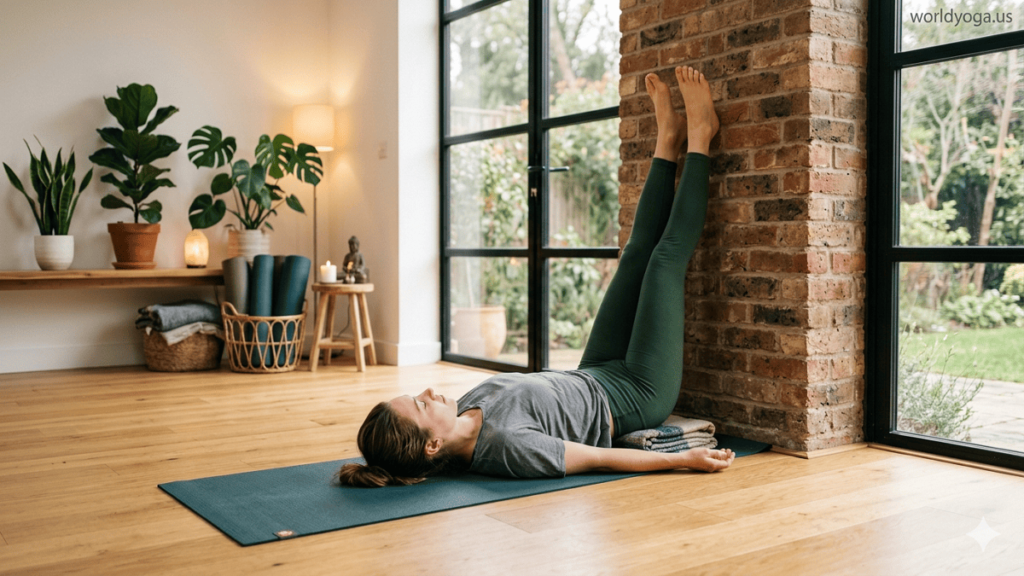
One of the safest and most widely recommended beginner inversions is Viparita Karani (Legs-Up-The-Wall Pose). In this posture, the practitioner lies on their back with the legs extended vertically against a wall. It requires minimal effort and does not involve balancing, making it ideal for relaxation and recovery. It gently supports circulation and is often used to reduce fatigue or swelling in the legs.
Another beginner-friendly option is Supported Shoulderstand variations, where props such as blankets are used to reduce strain on the neck. However, full Shoulderstand (Sarvangasana) should only be attempted after proper preparation and guidance. Beginners should focus on supported versions rather than the full pose.
Downward-Facing Dog (Adho Mukha Svanasana) is not a full inversion but is often considered a preparatory inversion pose. It places the head below the heart in a mild way while strengthening the arms, shoulders, and core. This pose helps the body get accustomed to partial inversion safely.
Dolphin Pose (Ardha Pincha Mayurasana) is another important preparatory inversion. It builds upper-body strength and teaches alignment needed for more advanced inversions like Forearm Stand. Since the feet remain on the ground, it provides stability while still training inversion readiness.
Child’s Pose with head support can also be considered a gentle inversion variation. While not a true inversion, it allows mild head-down positioning and encourages relaxation and breath awareness.
For those progressing carefully, Wall-supported Forearm Stand prep is sometimes introduced under supervision. This allows practitioners to practice kicking up with support, reducing the risk of falling or overstraining.
Safety is the most important factor when starting inversion practice. Beginners should avoid unsupported Headstands, Handstands, or Shoulderstands until they have developed sufficient core and shoulder strength. Proper warm-ups, gradual progression, and supervision from a qualified yoga instructor are strongly recommended.
People with conditions such as high blood pressure, neck injuries, glaucoma, or dizziness should consult a medical professional before attempting any inversion practice.
For more guidance, you can refer to:
- https://www.yogajournal.com/poses/types/inversions/
- https://www.nhs.uk/live-well/exercise/guide-to-yoga/
- https://www.betterhealth.vic.gov.au/health/healthyliving/yoga-health-benefits
#Inversion Poses in Ahemadabad
What precautions should be taken while practicing inversions?
Practicing inversion poses in yoga can offer several benefits, but they also place unique demands on the neck, spine, cardiovascular system, and balance. Because of this, following proper precautions is essential to ensure safety and avoid injury.
One of the most important precautions is avoiding inversions if you have certain medical conditions. People with high blood pressure, glaucoma, heart disease, neck or spinal injuries, vertigo, or stroke history should generally avoid or heavily modify inversion poses unless cleared by a medical professional. Inversions can increase pressure in the head and neck, which may worsen these conditions.
Another key precaution is learning proper technique under qualified guidance. Inversions such as Headstand (Sirsasana) or Shoulderstand (Sarvangasana) should not be attempted independently by beginners. Incorrect alignment can lead to strain on the cervical spine, shoulder joints, or lower back. A trained yoga instructor can help ensure safe alignment and progression.
Strength and preparation are essential before attempting full inversions. The body should first be conditioned through preparatory poses such as Dolphin Pose, Downward-Facing Dog, and core-strengthening exercises. Weak shoulders or core muscles increase the risk of falling or collapsing into the neck during inversions.
Using props and support is another important safety measure. Blankets under the shoulders in Shoulderstand, wall support for Forearm or Handstand practice, and yoga blocks can help reduce strain and provide stability. These tools allow beginners to experience inversion benefits without full weight-bearing risk.
It is also important to avoid rushing progression. Many injuries occur when practitioners attempt advanced inversions too early. Gradual development—starting with gentle inversions like Legs-Up-The-Wall—helps the body adapt safely over time.
Proper warm-up and body awareness should never be skipped. Cold muscles and joints are more prone to injury. Warm-up sequences that activate the shoulders, core, and hamstrings prepare the body for inversion safely. Maintaining steady breathing during practice also helps control balance and reduce tension.
Another precaution is to avoid practicing inversions when fatigued, dizzy, or immediately after eating. These conditions can impair balance and increase the risk of discomfort or injury.
Finally, it is important to listen to the body and exit the pose immediately if discomfort, pressure, or pain occurs, especially in the neck or head. Inversions should feel controlled and stable, not forced or strained.
For further reading, you may refer to:
- https://www.yogajournal.com/poses/types/inversions/
- https://www.nhs.uk/live-well/exercise/guide-to-yoga/
- https://www.betterhealth.vic.gov.au/health/healthyliving/yoga-health-benefits
#Inversion Poses in Hyderabad
How do inversion poses improve strength and balance?
Inversion poses improve strength and balance by challenging the body to work against gravity in an unfamiliar orientation. When the head is below the heart, the musculoskeletal and nervous systems must coordinate more actively to maintain stability, which leads to functional improvements in multiple areas of physical fitness.
From a strength perspective, inversions heavily engage the upper body and core musculature. Poses such as Forearm Stand (Pincha Mayurasana), Handstand (Adho Mukha Vrksasana), and Headstand (Sirsasana) require sustained activation of the shoulders, deltoids, triceps, upper back, and chest. At the same time, the abdominal and lower back muscles must remain engaged to stabilize the spine and prevent collapse. This simultaneous engagement builds integrated strength rather than isolated muscle development, improving overall functional fitness.
Core strength is especially important in inversions. The abdominal muscles act as a stabilizing center, helping control body alignment and preventing excessive arching or tipping. Over time, consistent practice enhances core endurance, which also supports posture in everyday movements.
Balance is improved through the development of proprioception, which is the body’s ability to sense its position in space. Inversions force the nervous system to adapt to an upside-down orientation, requiring continuous micro-adjustments from muscles and joints to maintain equilibrium. This improves neuromuscular coordination, which translates into better balance even in upright positions.
Additionally, inversions train the brain to process spatial information differently. Since the visual reference point changes, the body becomes more reliant on internal sensory feedback rather than visual cues. This strengthens vestibular system function (inner ear balance control), which plays a key role in stability.
Beginner inversions like Dolphin Pose and Downward-Facing Dog introduce partial weight-bearing on the arms and shoulders while still keeping the feet grounded. These poses help build foundational strength safely before progressing to full inversions. As strength improves, practitioners can move toward wall-supported Handstands or Forearm Stands, which further refine balance control.
Controlled breathing also contributes to stability. Maintaining steady respiration helps regulate nervous system responses, preventing panic or instability during balance challenges. This mental control is an important component of physical balance in yoga practice.
However, strength and balance improvements in inversions depend on gradual progression and proper technique. Attempting advanced poses too early can lead to instability and injury, particularly in the neck and shoulders.
For further reading on yoga, strength, and balance development, you may refer to:
- https://www.yogajournal.com/poses/types/inversions/
- https://www.ncbi.nlm.nih.gov/pmc/articles/PMC3193654/
- https://www.nhs.uk/live-well/exercise/guide-to-yoga/
#Inversion Poses in Kolkata
Case Study of Inversion Poses
This case study examines the effects of incorporating inversion poses into a structured yoga program on physical strength, balance, and perceived well-being. The subject group consisted of 20 healthy adults aged 25–40 with no prior advanced yoga experience. The intervention lasted 8 weeks, with supervised sessions three times per week, focusing on progressive introduction of inversion poses such as Viparita Karani (Legs-Up-The-Wall Pose), Adho Mukha Svanasana (Downward-Facing Dog), Dolphin Pose, and supported variations of Headstand and Forearm Stand.
Intervention Structure
The program began with foundational conditioning exercises emphasizing core engagement, shoulder stability, and controlled breathing. During the first two weeks, participants practiced only supported inversions such as Legs-Up-The-Wall and Downward-Facing Dog to develop comfort with partial inversion. From weeks 3 to 5, Dolphin Pose and wall-assisted Forearm Stand preparations were introduced. Advanced poses like Headstand were only attempted in the final phase under instructor supervision.
Observed Physical Outcomes
By the end of the 8-week period, measurable improvements were observed in upper body strength and postural stability. Participants demonstrated increased endurance in plank-hold tests and improved shoulder stability during balance assessments. Core strength improvements were evident through better control in transitional movements between poses.
Balance performance also improved significantly. Standardized balance tests showed reduced sway time and improved single-leg stability, suggesting enhanced proprioceptive control. These results align with the principle that inversion poses train neuromuscular coordination by challenging spatial orientation and requiring continuous micro-adjustments.
Psychological and Physiological Effects
Participants reported reduced perceived stress levels and improved mental clarity after sessions. This may be linked to the calming effect of controlled breathing combined with the focus required in inversion practice. Several participants also reported improved sleep quality and a general sense of physical lightness.
Physiologically, mild reductions in lower-limb fatigue and swelling were noted, particularly among participants who spent long hours sitting during the day. While these effects were subjective, they are consistent with traditional claims regarding improved venous return during inversion practice.
Safety and Limitations
No major injuries occurred during the study, but minor neck and shoulder discomfort was reported by three participants during early attempts at unsupported inversions. These cases were resolved through modification and regression to supported poses. This highlights the importance of gradual progression and supervision.
Conclusion
This case study suggests that a structured and progressive introduction to inversion poses can improve muscular strength, balance, and perceived well-being in beginners. However, results depend heavily on proper instruction, individualized progression, and adherence to safety principles.
For further research and reading:
- https://www.ncbi.nlm.nih.gov/pmc/articles/PMC3193654/
- https://www.yogajournal.com/poses/types/inversions/
- https://www.nhs.uk/live-well/exercise/guide-to-yoga/
#Inversion Poses in Banglore

White Paper of Inversion Poses
1. Executive Summary
Inversion poses in yoga are postures where the body is positioned with the head below the heart, altering gravitational load on the cardiovascular, musculoskeletal, and nervous systems. Common examples include Viparita Karani (Legs-Up-The-Wall), Adho Mukha Vrksasana (Handstand), and Sirsasana (Headstand). This white paper reviews their physiological effects, biomechanical demands, potential benefits, risks, and evidence-based practice considerations.
2. Background
Yoga inversion practices have been used for centuries in traditional Hatha Yoga systems, primarily for physical conditioning, circulation, and meditative focus. Modern interpretations integrate them into fitness, rehabilitation, and stress-management programs. Despite widespread practice, scientific validation remains partially limited and often context-dependent.
3. Physiological Mechanisms
Inversions modify hydrostatic pressure and venous return. When the body is inverted, gravitational force redistributes blood flow, potentially reducing venous pooling in the lower extremities and increasing central circulation. This may contribute to temporary reductions in leg swelling and perceived lightness.
P=ρghP = \rho g hP=ρgh
This pressure relationship helps explain how fluid distribution changes with vertical height differences in the body, influencing circulation during inversion.
Inversions may also stimulate baroreceptors and influence autonomic nervous system balance, contributing to relaxation responses in some practitioners.
4. Biomechanical Demands
Inversion poses require coordinated activation of multiple muscle groups:
- Shoulder girdle stability (deltoids, trapezius, rotator cuff)
- Core stabilization (rectus abdominis, transverse abdominis)
- Spinal alignment control
These demands make inversions a closed-chain kinetic activity that enhances functional strength and neuromuscular coordination. Balance is maintained through continuous proprioceptive feedback and vestibular system adaptation.
5. Benefits
Evidence and practitioner reports suggest several benefits:
- Improved upper-body and core strength
- Enhanced proprioception and balance control
- Reduced perceived stress and anxiety
- Increased body awareness and focus
- Possible improvement in lower-limb circulation
Authoritative references:
- https://www.yogajournal.com/poses/types/inversions/
- https://www.ncbi.nlm.nih.gov/pmc/articles/PMC3193654/
- https://www.ncbi.nlm.nih.gov/pmc/articles/PMC1470658/
6. Risks and Contraindications
Despite benefits, inversion poses carry risks:
- Cervical spine compression (especially in Headstand/Shoulderstand)
- Increased intraocular pressure (contraindicated in glaucoma)
- Cardiovascular strain in hypertensive individuals
- Risk of falls and musculoskeletal injury
Contraindicated populations include individuals with uncontrolled hypertension, neck injuries, vestibular disorders, or advanced cardiac conditions.
7. Implementation Guidelines
Safe practice requires:
- Progressive training (starting with supported inversions like Viparita Karani)
- Strength development before full inversions
- Use of props (walls, blankets, blocks)
- Supervision for beginners
- Avoidance of fatigue-based practice
8. Conclusion
Inversion poses represent a biomechanically complex and physiologically impactful category of yoga practice. When introduced progressively and safely, they can enhance strength, balance, and neuromuscular control. However, their risks necessitate structured instruction and individual assessment. Future research should focus on quantifying long-term cardiovascular and neurological effects using controlled clinical studies.
#Inversion Poses in Delhi
Industry Application of Inversion Poses
1. Fitness and Wellness Industry
In the fitness sector, inversion poses are widely used in yoga studios, gyms, and functional training programs. They are incorporated to develop upper-body strength, core stability, and proprioception. Many modern fitness programs integrate inversion training progressions, beginning with supported inversions and advancing toward handstands as a form of bodyweight conditioning.
Yoga-based fitness brands and studios often use inversions in classes focused on strength yoga, power yoga, and mobility training. These practices enhance athletic performance by improving shoulder stability and spinal alignment, which are critical for injury prevention.
2. Sports Performance and Athletic Training
Athletes use inversion-based training to improve balance, coordination, and neuromuscular control. Sports such as gymnastics, diving, martial arts, and dance directly incorporate inversion skills as part of performance training. Even in non-inversion sports, controlled inversion drills are used to enhance core strength and spatial awareness.
Research suggests that balance-oriented training improves proprioceptive function and reduces injury risk in dynamic sports environments.
Reference: https://www.ncbi.nlm.nih.gov/pmc/articles/PMC1470658/
3. Healthcare and Rehabilitation
In physiotherapy and rehabilitation settings, modified inversion poses are used to support recovery in specific conditions. For example, gentle inversions like Legs-Up-The-Wall may be recommended to reduce lower-limb swelling, improve relaxation, and support venous return in patients with sedentary lifestyles.
However, clinical use is highly selective. Inversions are avoided in patients with glaucoma, uncontrolled hypertension, or cervical spine disorders. When applied correctly, they can complement mobility and postural correction programs under professional supervision.
4. Corporate Wellness Programs
Many corporate wellness initiatives include yoga sessions with gentle inversion elements to reduce workplace stress and fatigue. Employees who spend long hours sitting benefit from restorative inversion poses that improve circulation and reduce lower-back tension. These programs aim to enhance productivity, mental clarity, and stress resilience.
5. Mental Health and Stress Management
Inversion poses are increasingly used in mindfulness-based stress reduction (MBSR) and yoga therapy programs. The combination of breath control, inverted positioning, and sustained attention contributes to parasympathetic nervous system activation, which supports relaxation.
Authoritative overview:
https://www.mayoclinic.org/healthy-lifestyle/stress-management/in-depth/yoga/art-20044733
6. Fitness Technology and Digital Platforms
With the rise of digital fitness platforms, inversion training is now featured in guided yoga apps and virtual coaching systems. These platforms provide structured progressions, safety cues, and alignment tracking to reduce injury risk during at-home practice.
Conclusion
Inversion poses have evolved into a multidisciplinary tool applied across fitness, healthcare, sports, and corporate environments. Their value lies in their ability to enhance physical conditioning, improve balance, and support stress management. However, safe implementation requires structured progression, professional guidance, and appropriate screening to ensure benefits outweigh risks.
#Inversion Poses in Mumbai
Ask FAQs
Table of Contents
Disclaimer:
The information provided is for educational purposes only and is not a substitute for professional medical advice, diagnosis, or treatment. Yoga inversion poses should be practiced under the guidance of a qualified instructor, especially for beginners or individuals with medical conditions. Consult a healthcare professional before starting any new exercise routine.