Eka Pada Eka Hasta Salamba Navasana
Eka Pada Eka Hasta Salamba Navasana is an advanced yogic posture that combines balance, core engagement, flexibility, and concentration into a single dynamic asana. Derived from Sanskrit, the name can be broken down as: “Eka” meaning one, “Pada” meaning foot, “Hasta” meaning hand, “Salamba” meaning supported, and “Navasana” meaning boat pose. This variation of the traditional boat pose challenges practitioners to stabilize the body while maintaining controlled alignment and mindful breathing.
The posture primarily focuses on strengthening the abdominal muscles, hip flexors, lower back, and shoulders. It also improves coordination and develops greater body awareness. Because the pose demands both muscular endurance and mental focus, it is often practiced in intermediate to advanced yoga sequences aimed at cultivating stability and control.
To enter the posture, practitioners typically begin in a seated position with the spine elongated. One leg is extended while the opposite hand or arm supports balance, creating a lifted and controlled boat-like shape. The chest remains open, the core engaged, Eka Pada Eka Hasta Salamba Navasana and the gaze steady. Proper breathing is essential throughout the posture, as shallow or restricted breathing can reduce stability and increase tension in the body.
One of the key benefits of Eka Pada Eka Hasta Salamba Navasana is its impact on core strength. A strong core supports spinal health, improves posture, and enhances overall athletic performance. Additionally, balancing postures like this one help sharpen concentration and encourage mindfulness by requiring full awareness of movement and alignment.
This asana can also contribute to improved flexibility in the hamstrings and hips while enhancing neuromuscular coordination. Yogis who regularly practice balancing poses often experience better control over body mechanics, Eka Pada Eka Hasta Salamba Navasana which can positively influence daily movement patterns and reduce the risk of injury.
However, beginners should approach this pose carefully. Attempting advanced balancing postures without adequate preparation may strain the lower back or hip flexors. It is advisable to first develop strength through foundational poses such as Navasana and seated balancing exercises before progressing into more complex variations.
For safe practice guidance and anatomical alignment tips, resources such as Yoga Journal and Yoga International provide detailed tutorials and expert instruction. Practitioners seeking deeper understanding of yoga philosophy and posture alignment can also explore The Art of Living Yoga Resources.
Eka Pada Eka Hasta Salamba Navasana is more than a physical posture; it is a practice of discipline, awareness, and balance. Through consistent and mindful training, this asana can help practitioners cultivate both physical resilience and mental steadiness, Eka Pada Eka Hasta Salamba Navasana making it a valuable addition to an advanced yoga practice.
#Eka Pada Eka Hasta Salamba Navasana in India
How is Boat Pose with scissor legs performed correctly?
Boat Pose with scissor legs is an advanced variation of the traditional yoga Boat Pose, or Navasana, designed to enhance core stability, flexibility, Eka Pada Eka Hasta Salamba Navasana balance, and lower body coordination. This variation intensifies abdominal engagement by introducing alternating leg movements while maintaining balance on the sitting bones. It is widely practiced in strength-focused yoga sequences and core conditioning routines.
To perform the pose correctly, begin by sitting on the floor with your knees bent and feet flat. Keep the spine tall and shoulders relaxed. Place your hands slightly behind the hips for initial support if needed. Slowly lean the torso back while keeping the chest lifted and the back straight. Engage the abdominal muscles to prevent collapsing into the lower spine.
Next, lift both feet off the ground so the shins become parallel to the floor. This creates the foundational position of Navasana. Once stable, extend both legs upward at an angle while balancing on the sitting bones. The arms can be stretched forward parallel to the floor for greater challenge and balance.
From this position, initiate the scissor-leg movement by crossing one leg over the other in alternating motions. The movement should be slow, controlled, and driven from the hip joints rather than the knees. Continue breathing steadily throughout the exercise. Inhale deeply through the nose and exhale slowly while maintaining core activation.
Proper alignment is essential during this posture. The chest should remain open, Eka Pada Eka Hasta Salamba Navasana shoulders relaxed away from the ears, and the neck neutral. Avoid rounding the lower back, as this may place unnecessary strain on the spine. If maintaining straight legs becomes difficult, practitioners can slightly bend the knees while focusing on stability and alignment.
This variation offers several physical benefits. It strengthens the abdominal muscles, hip flexors, lower back, and thighs while improving balance and coordination. The scissor movement also increases muscular endurance and challenges stabilizing muscles that support posture and spinal alignment. Regular practice may contribute to improved athletic performance and better body awareness.
For beginners, it is advisable to practice standard Navasana before progressing to the scissor-leg variation. Individuals with lower back injuries, hip discomfort, or neck strain should practice under the guidance of a qualified yoga instructor and modify the posture as necessary.
Detailed instructional guides and alignment tips can be found on trusted yoga platforms such as Yoga Journal and Yoga International. Those interested in learning advanced core-focused yoga practices may also benefit from resources available through Iyengar Yoga Association.
Boat Pose with scissor legs is a powerful exercise that combines strength, balance, and concentration. When practiced with proper technique and mindful breathing, Eka Pada Eka Hasta Salamba Navasana it can significantly enhance core endurance and overall body control within a yoga practice.
#Eka Pada Eka Hasta Salamba Navasana in Maharashtra
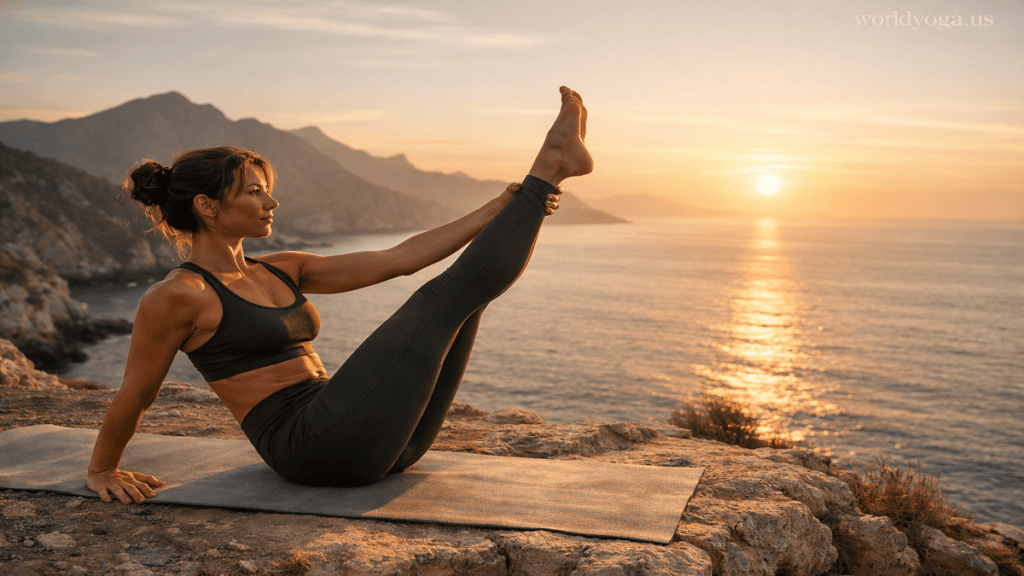
What is the proper alignment in this dynamic Navasana variation?
Proper alignment in a dynamic variation of Navasana is essential for maintaining balance, preventing strain, and maximizing the effectiveness of the posture. Dynamic Navasana variations often involve leg movements, arm transitions, or controlled twisting motions that challenge stability and core engagement. Without correct alignment, practitioners may place unnecessary pressure on the lower back, neck, Eka Pada Eka Hasta Salamba Navasana or hip flexors.
The foundation of proper alignment begins with the sitting bones. The body should balance evenly on the sit bones while the pelvis remains slightly tilted forward to support a long and neutral spine. Avoid collapsing backward into the sacrum, as this rounds the lower back and reduces core activation.
The spine should remain elongated throughout the movement. The chest stays lifted and open, while the shoulders are relaxed away from the ears. A common mistake in dynamic Navasana variations is hunching the shoulders or allowing the upper body to collapse forward. Maintaining an upright torso helps distribute muscular effort evenly across the abdomen and back muscles.
Core engagement is the central element of alignment in this posture. The abdominal muscles should remain active at all times to stabilize the torso and protect the lumbar spine. Rather than relying solely on the hip flexors, practitioners should draw the navel gently inward to create support from the deep core muscles.
Leg positioning is equally important. In most dynamic Navasana variations, the legs are extended at approximately a 45-degree angle from the floor. The knees should remain straight but not hyperextended. The thighs stay engaged, and the toes are typically pointed or flexed depending on the variation being practiced. During scissor movements or alternating leg transitions, the movement should originate from the hips while maintaining pelvic stability.
The neck and head should remain neutral with the gaze directed forward or slightly upward. Looking downward excessively may cause tension in the cervical spine and compromise balance. Smooth and controlled breathing also supports alignment by helping maintain steadiness and muscular control throughout the sequence.
For practitioners who struggle to maintain alignment, modifications can be helpful. Keeping the knees bent or placing the hands lightly behind the thighs may reduce strain while allowing the practitioner to build strength gradually. Yoga props such as blocks or straps can also provide support during training.
Consistent practice with proper alignment offers numerous benefits, including stronger abdominal muscles, improved posture, enhanced spinal stability, and better body awareness. Dynamic Navasana variations also help improve coordination and concentration by requiring continuous muscular engagement and mindful movement.
For detailed posture breakdowns and professional alignment instruction, trusted yoga resources such as Yoga Journal and Yoga International offer valuable guidance. Additional anatomy-focused insights can be explored through DoYogaWithMe.
Mastering alignment in dynamic Navasana variations allows practitioners to move with greater efficiency, stability, and confidence. Through mindful engagement and controlled movement, this posture becomes an effective practice for developing both physical strength and mental focus.
#Eka Pada Eka Hasta Salamba Navasana in Ahemadabad
Which muscles are engaged during the pose?
Navasana and its dynamic variations engage multiple muscle groups throughout the body, making it one of the most effective yoga postures for developing core strength, stability, and muscular endurance. Because the pose requires balancing on the sitting bones while maintaining lifted legs and an upright spine, several primary and secondary muscles work together to support alignment and controlled movement.
The primary muscles activated during the pose are the abdominal muscles. These include the rectus abdominis, transverse abdominis, and obliques. The rectus abdominis helps maintain the lifted torso position, while the transverse abdominis acts as a deep stabilizer that supports the spine and pelvis. The oblique muscles contribute to balance and rotational control, especially in dynamic variations involving twisting or scissor-leg movements.
The hip flexors are also heavily engaged. Muscles such as the iliopsoas and rectus femoris help lift and stabilize the legs while maintaining the V-shaped body position characteristic of Boat Pose. Because of this intense hip flexor involvement, practitioners often feel strong activation in the front of the hips and thighs during extended holds.
The quadriceps play an important role in keeping the legs straight and active. Engaging these muscles helps maintain proper alignment and prevents unnecessary strain on the knees. In dynamic variations, the inner thigh muscles, or adductors, are additionally activated to control leg movement and maintain balance.
The spinal stabilizers and lower back muscles are equally essential. The erector spinae muscles support an upright posture and prevent the torso from collapsing backward. Maintaining spinal extension is crucial for protecting the lower back and distributing muscular effort evenly throughout the body.
Shoulder and upper body muscles are also involved, particularly when the arms are extended forward or overhead. The deltoids and trapezius muscles help stabilize the shoulders, while the chest muscles contribute to maintaining an open upper body posture.
Dynamic Navasana variations further activate smaller stabilizing muscles throughout the body. These include muscles around the pelvis, deep spinal stabilizers, and muscles supporting the ankles and feet. The continuous balancing effort improves neuromuscular coordination and enhances overall body awareness.
Breathing muscles also contribute significantly during the pose. Controlled diaphragmatic breathing supports endurance and helps practitioners maintain stability without excessive tension. Proper breathing prevents unnecessary strain and allows smoother muscular engagement throughout the sequence.
Regular practice of Boat Pose and its variations can improve posture, strengthen the core, enhance balance, and support spinal health. However, overuse of the hip flexors or poor alignment may lead to discomfort if the core is not adequately engaged. Practicing with mindful technique and gradual progression is therefore essential.
For anatomy-focused yoga instruction and detailed posture analysis, trusted resources such as Yoga Journal and Yoga International provide expert guidance. Additional information about muscle engagement in yoga can also be explored through Anatomy Trains.
Understanding which muscles are engaged during Navasana helps practitioners refine their technique, improve alignment, and build strength more effectively. With consistent practice, this pose becomes a powerful tool for developing both physical endurance and functional stability.
#Eka Pada Eka Hasta Salamba Navasana in Hyderabad
What preparatory poses help build strength and stability for this variation?
Preparing for advanced variations of Navasana requires a combination of core strengthening, hip stabilization, spinal support, and balance training. Because dynamic Boat Pose variations demand endurance and precise muscular control, practicing foundational yoga postures beforehand can significantly improve stability, alignment, and overall performance.
One of the most effective preparatory postures is Plank Pose. Plank strengthens the deep abdominal muscles, shoulders, wrists, and spinal stabilizers, all of which are essential for maintaining balance in Navasana. Holding the posture with proper alignment also teaches practitioners how to engage the core without collapsing into the lower back.
Another valuable preparation is Forearm Plank. This variation intensifies core activation while reducing pressure on the wrists. It helps develop endurance in the abdominal muscles and improves body awareness, both of which are crucial for dynamic balancing movements.
Low Boat Pose is particularly beneficial because it closely resembles the mechanics of the full posture. In this pose, the torso and legs hover slightly above the floor while the lower back remains grounded. This strengthens the lower abdominal muscles and teaches practitioners how to stabilize the pelvis during movement.
Hip flexor and leg strength are equally important. Bridge Pose helps activate the glutes and hamstrings, creating muscular balance around the pelvis. Strengthening the posterior chain reduces excessive dependence on the hip flexors during Boat Pose variations.
Seated balancing poses such as Staff Pose are also highly effective. Although simple in appearance, Staff Pose develops postural awareness, spinal alignment, and hamstring engagement. Maintaining an upright spine in seated positions is essential before progressing into more challenging balancing postures.
To improve flexibility and reduce tension in the hips and hamstrings, practitioners often incorporate forward folds and hip-opening postures. Poses like Seated Forward Bend and gentle lunge variations help create mobility that supports smoother leg extension in dynamic Navasana movements.
Balancing postures such as Warrior III can further enhance coordination and core control. These poses train stabilizing muscles throughout the body and improve concentration, which is essential for maintaining control during advanced Boat Pose variations.
Breath awareness should also be developed alongside physical strength. Controlled breathing techniques help maintain stability and prevent unnecessary muscular tension during prolonged holds or dynamic transitions.
For detailed tutorials and alignment-focused preparation sequences, resources such as Yoga Journal and Yoga International offer expert instruction. Additional anatomy and movement education can be explored through DoYogaWithMe.
Consistent practice of preparatory poses creates the strength, mobility, and body awareness necessary for safely performing advanced Navasana variations. By building a stable foundation first, practitioners can progress into dynamic movements with greater control, confidence, and reduced risk of injury.
#Eka Pada Eka Hasta Salamba Navasana in Banglore
What are the benefits and precautions of practicing this pose?
Navasana and its dynamic variations offer a wide range of physical and mental benefits when practiced with proper alignment and control. This posture is widely recognized in yoga for its ability to strengthen the core, improve balance, and develop overall body stability. However, because it is an advanced balancing posture, practitioners should also understand the necessary precautions to avoid strain or injury.
One of the primary benefits of this pose is core strengthening. The abdominal muscles, including the rectus abdominis, transverse abdominis, and obliques, are deeply engaged to maintain balance and spinal support. A stronger core contributes to improved posture, better athletic performance, and enhanced spinal stability in everyday movements.
The pose also strengthens the hip flexors, quadriceps, lower back, and pelvic stabilizers. Dynamic variations involving leg movements further improve muscular endurance and coordination. Because the body must remain balanced on the sitting bones, the posture develops greater body awareness and neuromuscular control.
Another significant benefit is improved balance and concentration. Maintaining stability in Boat Pose requires mental focus and controlled breathing, making it an effective posture for cultivating mindfulness and reducing mental distraction. Many practitioners find that balancing postures enhance both physical confidence and emotional steadiness.
The pose can also support better posture by strengthening the muscles responsible for spinal alignment. Consistent practice encourages an upright sitting position and may help reduce muscular imbalances caused by prolonged sitting or sedentary lifestyles.
In addition to strength development, dynamic Navasana variations can improve flexibility in the hamstrings and hips. The posture encourages active leg extension while maintaining spinal length, which promotes mobility and muscular control simultaneously.
Despite its many benefits, certain precautions are essential. Individuals with lower back injuries, herniated discs, neck pain, or hip problems should approach the pose carefully and seek guidance from a qualified yoga instructor. Poor alignment, especially rounding the lower back, can place excessive pressure on the lumbar spine and increase the risk of discomfort.
Beginners should avoid forcing full leg extension if core strength is insufficient. Practicing modified variations with bent knees can help build stability gradually without overloading the hip flexors or spine. It is also important to avoid holding the breath during the posture, as restricted breathing may create unnecessary tension and reduce balance.
Pregnant individuals and people recovering from abdominal surgery should generally avoid advanced Boat Pose variations unless specifically advised by a healthcare professional or experienced yoga therapist.
Warm-up exercises and preparatory poses are highly recommended before practicing this posture. Engaging the body through core activation, hip opening, and spinal stabilization exercises helps reduce injury risk and improves overall performance.
For professional guidance and detailed posture instructions, trusted yoga resources such as Yoga Journal and Yoga International provide expert information. Additional anatomy-based insights can be explored through Anatomy Trains.
When practiced mindfully and progressively, this pose becomes an excellent tool for building strength, improving stability, and enhancing body awareness while supporting long-term physical wellness.
#Eka Pada Eka Hasta Salamba Navasana in Pune
Case Study of Eka Pada Eka Hasta Salamba Navasana
Introduction
Eka Pada Eka Hasta Salamba Navasana is an advanced variation of the traditional Boat Pose that combines balance, core engagement, flexibility, and muscular coordination. This posture is practiced in advanced yoga sequences to improve stability, concentration, and overall body control. The pose demands significant activation of the abdominal muscles, hip flexors, spinal stabilizers, and lower body musculature while maintaining controlled breathing and alignment.
This case study examines the physical and mental impact of practicing Eka Pada Eka Hasta Salamba Navasana over a structured eight-week yoga training program.
Background of the Practitioner
The subject of this case study was a 32-year-old intermediate yoga practitioner with three years of consistent yoga experience. The practitioner reported moderate core strength but experienced occasional lower back discomfort caused by prolonged desk work and insufficient postural support. The primary objectives of the training program included:
- Improving core stability
- Enhancing balance and muscular endurance
- Reducing lower back discomfort
- Developing better posture and concentration
Before beginning the program, the practitioner was able to hold a standard Navasana for approximately 20 seconds with moderate stability.
Training Methodology
The practitioner followed a structured yoga routine five days per week. Sessions included preparatory postures such as:
- Plank Pose
- Low Boat Pose
- Bridge Pose
- Warrior III
Each session also incorporated breathing exercises and flexibility training focused on the hips and hamstrings. Eka Pada Eka Hasta Salamba Navasana was gradually introduced during the third week with modified holds and assisted balance support.
Observations and Results
By the end of the eight-week program, several measurable improvements were observed. The practitioner increased holding time in the pose from 10 seconds initially to nearly 45 seconds with improved balance and alignment. Core endurance improved significantly, and lower back discomfort was reduced due to stronger abdominal and spinal support muscles.
The practitioner also reported enhanced concentration and body awareness during yoga sessions. Dynamic balancing exercises improved neuromuscular coordination and posture control in daily activities. Greater flexibility in the hamstrings and hip flexors was also noted.
Physically, visible improvements included:
- Stronger abdominal engagement
- Improved spinal alignment
- Better pelvic stability
- Enhanced muscular endurance
- Increased balance and coordination
Mentally, the practitioner experienced improved focus and reduced stress during practice due to the concentration required for balancing postures.
Challenges Encountered
During the initial stages, the practitioner experienced difficulty maintaining spinal length and avoiding excessive tension in the hip flexors. Fatigue in the lower abdomen and instability during leg extension were common challenges. These issues were addressed through gradual progression, proper alignment correction, and consistent breathing techniques.
Conclusion
This case study demonstrates that consistent practice of Eka Pada Eka Hasta Salamba Navasana can significantly improve core strength, posture, balance, and body awareness when approached progressively and mindfully. The posture proved effective not only as a physical strengthening exercise but also as a tool for developing concentration and stability.
#Eka Pada Eka Hasta Salamba Navasana in Delhi
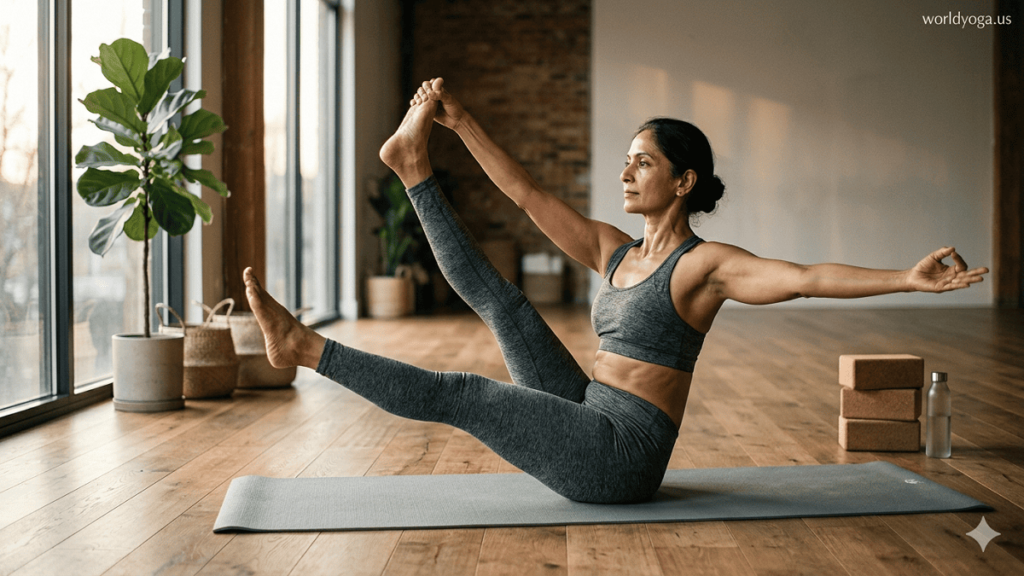
White Paper of Eka Pada Eka Hasta Salamba Navasana
Abstract
Eka Pada Eka Hasta Salamba Navasana is an advanced yoga posture derived from the classical principles of Navasana. This asana integrates balance, muscular endurance, spinal stabilization, flexibility, and mental concentration into a single coordinated movement. The posture is increasingly incorporated into modern yoga training programs focused on core conditioning, neuromuscular coordination, and postural rehabilitation.
This white paper examines the biomechanics, physiological benefits, muscular engagement, training applications, safety considerations, and therapeutic relevance of Eka Pada Eka Hasta Salamba Navasana within contemporary yoga practice.
Introduction
Advanced yoga postures serve not only as physical exercises but also as tools for improving awareness, stability, and controlled movement. Eka Pada Eka Hasta Salamba Navasana combines unilateral balance with dynamic core activation, making it an effective posture for improving both muscular strength and body coordination.
The posture requires the practitioner to balance on the sitting bones while maintaining spinal extension and controlled leg positioning. Due to the asymmetrical nature of the pose, stabilizing muscles throughout the trunk and pelvis are significantly activated.
As modern lifestyles increasingly contribute to poor posture, weak core musculature, and lower back discomfort, yoga postures emphasizing spinal support and balance are gaining clinical and fitness-related attention.
Biomechanical Analysis
The biomechanical structure of this pose relies on coordinated activation of several muscle groups. Primary muscular engagement includes:
- Rectus abdominis
- Transverse abdominis
- Internal and external obliques
- Iliopsoas and hip flexors
- Quadriceps
- Erector spinae muscles
- Pelvic stabilizers
The asymmetrical balance component requires continuous neuromuscular adjustments to maintain equilibrium. Dynamic stabilization of the pelvis and lumbar spine is particularly important in preventing excessive spinal flexion and maintaining proper alignment.
The posture also challenges proprioception, which refers to the body’s ability to sense movement and positioning in space. This contributes to improved coordination and balance over time.
Physiological Benefits
Consistent practice of Eka Pada Eka Hasta Salamba Navasana may provide multiple physiological benefits, including:
Core Strength Development
The posture strongly activates deep abdominal stabilizers, improving spinal support and functional movement capacity.
Improved Postural Alignment
Strengthening the trunk and spinal stabilizers contributes to better posture and reduced postural fatigue associated with sedentary lifestyles.
Enhanced Balance and Coordination
The unilateral balancing component improves neuromuscular efficiency and body awareness.
Increased Muscular Endurance
Sustained holds build endurance in the core, hip flexors, and lower extremities.
Mental Focus and Breath Control
The pose demands concentration and controlled breathing, supporting mindfulness and cognitive focus during practice.
Applications in Yoga and Rehabilitation
Eka Pada Eka Hasta Salamba Navasana is commonly integrated into:
- Advanced vinyasa yoga sequences
- Core conditioning programs
- Athletic balance training
- Postural correction routines
- Functional movement rehabilitation
In therapeutic contexts, modified variations may assist in developing controlled spinal support and improving muscular activation patterns. However, rehabilitation use should always be supervised by qualified professionals.
Risks and Precautions
Despite its benefits, this posture carries certain risks when performed incorrectly. Common concerns include:
- Excessive lumbar spine strain
- Hip flexor overuse
- Neck tension
- Pelvic instability
- Improper breath retention
Individuals with lower back injuries, spinal disorders, hip pathology, or abdominal conditions should approach the posture cautiously. Preparatory strengthening exercises and progressive modifications are strongly recommended.
Proper alignment principles include:
- Maintaining spinal length
- Engaging the deep core muscles
- Avoiding shoulder tension
- Stabilizing the pelvis
- Coordinating movement with breath
Training Recommendations
To safely progress toward this posture, practitioners should first develop competency in foundational poses such as:
- Plank Pose
- Low Boat Pose
- Bridge Pose
- Warrior III
Gradual progression and consistent technique refinement are essential for long-term improvement and injury prevention.
Conclusion
Eka Pada Eka Hasta Salamba Navasana represents a sophisticated integration of balance, strength, flexibility, and concentration within yoga practice. Its emphasis on core stabilization and neuromuscular coordination makes it valuable for advanced practitioners, movement specialists, and posture-focused training programs.
#Eka Pada Eka Hasta Salamba Navasana in Kolkata
Industry Application of Eka Pada Eka Hasta Salamba Navasana
Introduction
Eka Pada Eka Hasta Salamba Navasana is an advanced yoga posture that integrates core strength, balance, flexibility, and neuromuscular coordination. While traditionally practiced within yoga systems, the pose has increasingly gained relevance across multiple industries including fitness, rehabilitation, sports performance, corporate wellness, physiotherapy, and preventive healthcare.
As industries continue emphasizing holistic wellness, posture correction, injury prevention, and functional movement training, advanced yoga practices such as Eka Pada Eka Hasta Salamba Navasana are becoming valuable tools for physical conditioning and mental resilience programs.
Application in the Fitness Industry
The modern fitness industry increasingly incorporates yoga-based functional training into strength and conditioning programs. Eka Pada Eka Hasta Salamba Navasana is particularly effective for improving:
- Core stability
- Muscular endurance
- Balance and coordination
- Functional movement control
- Postural alignment
Fitness trainers often integrate this posture into core-focused classes, Pilates-inspired sessions, and mobility routines. Because the pose activates deep stabilizing muscles, it supports injury prevention and improves movement efficiency during athletic training.
Many boutique fitness studios and wellness centers now combine yoga and strength conditioning to create hybrid training systems aimed at improving flexibility alongside muscular performance.
Role in Sports Performance Training
Professional athletes and sports performance specialists increasingly use yoga postures to enhance mobility, concentration, and recovery. The asymmetrical balancing demands of Eka Pada Eka Hasta Salamba Navasana improve proprioception and neuromuscular coordination, which are critical in sports requiring precision and agility.
Applications in sports training include:
- Balance enhancement for runners and cyclists
- Core strengthening for swimmers and gymnasts
- Stability training for martial artists
- Flexibility and recovery support for team sports athletes
By strengthening the trunk and stabilizing muscles, the posture contributes to improved biomechanical efficiency and reduced risk of overuse injuries.
Application in Rehabilitation and Physiotherapy
The rehabilitation industry has increasingly adopted yoga-based movement therapies as complementary treatment methods. Modified forms of Navasana are sometimes used in physiotherapy settings to strengthen the core and support spinal stability.
When supervised by trained rehabilitation specialists, Eka Pada Eka Hasta Salamba Navasana variations may assist with:
- Postural correction
- Pelvic stabilization
- Lower back strengthening
- Controlled mobility training
- Functional movement restoration
However, advanced versions should only be introduced after foundational strength and alignment are established.
Corporate Wellness Programs
Corporate wellness has become a rapidly growing industry due to increasing awareness of workplace stress, sedentary lifestyles, and musculoskeletal disorders caused by prolonged sitting. Yoga programs that include balance and core-strengthening postures help employees improve posture, concentration, and stress management.
Eka Pada Eka Hasta Salamba Navasana can support workplace wellness initiatives by promoting:
- Better spinal alignment
- Improved focus and productivity
- Reduced physical fatigue
- Increased body awareness
- Enhanced stress resilience
Organizations investing in employee wellness programs increasingly collaborate with yoga instructors and wellness consultants to implement movement-based interventions.
Integration in Digital Wellness Platforms
The digital fitness and wellness industry has also expanded the reach of advanced yoga practices. Online yoga platforms, mobile applications, and virtual coaching systems frequently include instructional modules for advanced balancing postures.
These platforms use Eka Pada Eka Hasta Salamba Navasana in:
- Core-strength training programs
- Advanced yoga workshops
- Guided mobility routines
- Personalized wellness coaching
- Subscription-based fitness content
The growing demand for home-based fitness solutions has accelerated the commercial adoption of yoga-centered movement training.
Challenges and Safety Considerations
Despite its benefits, the pose requires professional instruction and gradual progression. Improper execution may lead to:
- Lower back strain
- Hip flexor overuse
- Pelvic instability
- Neck tension
- Muscular imbalance
Industries utilizing this posture in training programs should prioritize certified instruction, anatomical education, and individualized progression strategies.
Conclusion
Eka Pada Eka Hasta Salamba Navasana has evolved beyond traditional yoga practice into a valuable movement tool across fitness, rehabilitation, sports, and corporate wellness industries. Its ability to develop core strength, balance, posture, and concentration makes it highly relevant within modern health and performance programs.
#Eka Pada Eka Hasta Salamba Navasana in Mumbai
Ask FAQs
What is Eka Pada Eka Hasta Salamba Navasana?
Eka Pada Eka Hasta Salamba Navasana is an advanced variation of Boat Pose that combines balance, core engagement, flexibility, and muscular control. The posture requires practitioners to balance on the sitting bones while extending one leg and maintaining stability with controlled body alignment. It is commonly practiced in advanced yoga and core-conditioning sequences.
What are the main benefits of practicing this pose?
This posture helps strengthen the abdominal muscles, hip flexors, lower back, and pelvic stabilizers. It also improves balance, posture, concentration, and body awareness. Regular practice may enhance spinal support, muscular endurance, and neuromuscular coordination while contributing to better overall stability and movement control.
Is Eka Pada Eka Hasta Salamba Navasana suitable for beginners?
This pose is generally recommended for intermediate to advanced yoga practitioners because it requires significant core strength and balance. Beginners should first develop stability through foundational postures such as Navasana, plank variations, and seated balancing exercises before attempting this advanced variation.
Which muscles are primarily engaged during the pose?
The pose mainly activates the rectus abdominis, transverse abdominis, obliques, hip flexors, quadriceps, and spinal stabilizers. Secondary muscle engagement includes the shoulders, pelvic stabilizers, and inner thigh muscles. Dynamic variations further increase muscular coordination and balance control throughout the body.
What precautions should be taken while practicing this posture?
Practitioners should avoid rounding the lower back or forcing leg extension beyond their current strength level. Individuals with lower back injuries, neck problems, hip discomfort, or abdominal conditions should practice under professional supervision. Proper breathing, gradual progression, and correct alignment are essential for preventing strain and maintaining stability during the pose.
Table of Contents
Desclaimer
The information provided in this article is for educational and informational purposes only and should not be considered medical or professional health advice. Always consult a qualified yoga instructor or healthcare professional before attempting advanced yoga postures, especially if you have existing injuries or medical conditions. Practice responsibly and within your physical limits.