
Feet Spread Downward Facing Dog Pose
The Feet Spread Downward Facing Dog Pose is a variation of the traditional Adho Mukha Svanasana in yoga, where the practitioner places the feet wider than hip-width apart while maintaining the inverted “V” shape of the body. This modification is commonly used in Hatha, Vinyasa, and therapeutic yoga practices to increase stability, deepen hamstring and inner thigh engagement, and improve overall mobility.
Overview and Alignment
In this variation, the hands are firmly grounded shoulder-width apart, fingers spread to distribute weight evenly. The hips are lifted upward and backward, forming a strong triangular shape. Unlike the standard version where feet are hip-width apart, here the feet are positioned wider—often toward the edges of the mat—while keeping the toes either slightly inward or parallel. The spine remains elongated, Downward Facing Dog Pose and the head relaxes between the arms.
Proper alignment is essential. The practitioner should ensure that the shoulders are not collapsing toward the ears and that the spine maintains length rather than rounding. The heels may or may not touch the ground depending on flexibility, Downward Facing Dog Pose and forcing them down should be avoided.
Benefits
This variation provides several physical and therapeutic benefits:
- Enhanced inner thigh stretch: The wider stance increases adductor muscle engagement.
- Improved hamstring flexibility: The posterior chain is lengthened more deeply.
- Shoulder strengthening: Weight-bearing on the upper body improves shoulder stability.
- Spinal decompression: The inverted position helps relieve pressure on the spine.
- Circulation boost: Reversed blood flow may support energy balance and reduce fatigue.
According to yoga research summaries, inverted poses like Downward Dog can also support mild stress reduction and improved mental clarity when practiced consistently.
Step-by-Step Practice
- Begin on hands and knees in a tabletop position.
- Tuck the toes and lift the hips upward.
- Walk the feet wider than hip-width apart.
- Press palms firmly into the mat, lengthen the spine.
- Engage thighs and gently press heels toward the floor.
- Hold for 5–10 breaths while maintaining steady breathing.
Common Mistakes
Practitioners often overextend the feet too wide, Downward Facing Dog Pose, which can strain the inner knees. Another common issue is rounding the back instead of maintaining spinal length. Overemphasis on forcing heels down can also reduce the pose’s effectiveness.
Precautions
Individuals with shoulder injuries, wrist pain, or severe hamstring tightness should approach this variation gradually. Using yoga blocks under the hands can reduce pressure.
Variations
- Bent-knee version for beginners
- Heel-elevated version using a folded mat
- Dynamic pedaling of the feet for mobility
References
- https://www.yogajournal.com/poses/downward-facing-dog-pose/
- https://www.verywellfit.com/downward-facing-dog-pose-3567105
- https://www.ncbi.nlm.nih.gov/pmc/articles/PMC3193654/
#Feet Spread Downward Facing Dog Pose in Pune
How is Feet Spread Downward Facing Dog Pose performed correctly?
The Feet Spread Downward Facing Dog Pose is performed as a widened-foot variation of Adho Mukha Svanasana, emphasizing stability, Downward Facing Dog Pose, lower-body flexibility, and spinal elongation. Proper execution depends on alignment, controlled engagement of muscle groups, and mindful breathing rather than simply increasing the distance between the feet.
Starting Position
Begin on a yoga mat in a tabletop position with hands directly under the shoulders and knees under the hips. Spread the fingers wide to create a stable base. Press firmly through the palms, especially the index finger and thumb, Downward Facing Dog Pose, which helps protect the wrists.
Transition into the Pose
Exhale and tuck the toes under. Lift the knees away from the mat and begin raising the hips upward and back. Initially, the knees may remain slightly bent to allow the spine to lengthen properly. The goal is to create a long, Downward Facing Dog Pose, straight line from the hands through the spine to the hips before focusing on the legs.
Feet Placement (Key Variation)
Once in the inverted “V” shape, carefully step the feet wider than hip-width apart. The feet should move toward the outer edges of the mat, Downward Facing Dog Pose, but not so wide that the inner thighs feel strain or the knees lose alignment. The toes may point forward or slightly inward depending on comfort and hip structure. This widening increases engagement in the inner thighs and improves hip mobility.
Alignment and Form
Proper alignment is crucial for effectiveness and safety:
- Hands and arms: Keep arms straight but not locked, Downward Facing Dog Pose, shoulders externally rotated, and ears away from the shoulders.
- Spine: Maintain a long, neutral spine without rounding the upper back.
- Hips: Lift the hips high, aiming to create length rather than compression in the lower back.
- Legs: Engage quadriceps gently while allowing heels to move toward the floor without forcing them.
- Neck: Keep the head relaxed between the arms, gaze toward the navel or thighs.
Breathing and Hold
Maintain slow, steady breathing through the nose. Hold the position for 5–10 breaths, focusing on even weight distribution between hands and feet. Avoid collapsing into the shoulders or overstretching the hamstrings.
Common Mistakes to Avoid
A frequent error is placing the feet too wide, which can destabilize the hips and strain the inner knees. Another mistake is rounding the back due to tight hamstrings; instead, slight knee bending is preferred until flexibility improves. Pressing the heels forcefully to the ground can also compromise alignment.
Benefits of Correct Practice
When performed correctly, this variation improves hamstring and inner thigh flexibility, strengthens the shoulders and core, enhances circulation, Downward Facing Dog Pose and supports spinal decompression.
References
- https://www.yogajournal.com/poses/downward-facing-dog-pose/
- https://www.verywellfit.com/downward-facing-dog-pose-3567105
- https://www.ncbi.nlm.nih.gov/pmc/articles/PMC3193654/
#Feet Spread Downward Facing Dog Pose in India
What is the proper alignment in this variation?
The proper alignment in the Feet Spread Downward Facing Dog Pose (a widened stance variation of Adho Mukha Svanasana) focuses on maintaining structural balance between the upper and lower body while allowing increased engagement of the inner thighs and hips. Although the feet are positioned wider than in the standard pose, the core alignment principles remain consistent to ensure safety and effectiveness.
Upper Body Alignment
The foundation begins with the hands and arms. The hands should be placed shoulder-width apart with fingers fully spread, Downward Facing Dog Pose distributing weight evenly across the palms. The index finger and thumb press firmly into the mat to stabilize the wrists. The elbows remain straight but not locked, allowing the arm muscles to stay engaged rather than passive. The shoulders rotate externally, moving away from the ears to prevent compression in the neck and upper spine.
The spine should remain long and neutral. Instead of collapsing the chest toward the floor, practitioners should actively lift the hips upward while extending the spine in both directions—toward the hands and toward the tailbone. This elongation is more important than forcing depth in the stretch.
Lower Body Alignment
In this variation, the feet are placed wider than hip-width apart, typically toward the edges of the mat. Despite the wider stance, Downward Facing Dog Pose the feet should still remain grounded with equal pressure through the inner and outer edges. The toes can point forward or slightly inward depending on hip structure, but extreme outward rotation should be avoided to protect the knees.
The knees should track in line with the toes. Even though the legs are apart, the alignment should not collapse inward or hyperextend outward. A slight bend in the knees is acceptable and often recommended to maintain spinal length, Downward Facing Dog Pose, especially if hamstrings are tight.
The hips are lifted high and directed backward, forming the peak of the inverted “V” shape. The goal is not to drop the pelvis but to create upward and backward extension, Downward Facing Dog Pose, which helps decompress the spine.
Core and Muscular Engagement
The abdominal muscles remain gently engaged to support the spine and prevent excessive arching in the lower back. The quadriceps are active to stabilize the legs, Downward Facing Dog Posewhile the inner thighs are lightly engaged due to the widened stance.
Head and Neck Position
The head should hang naturally between the arms without tension. The neck remains neutral, avoiding strain. The gaze is typically directed toward the thighs or navel.
Key Principles of Proper Alignment
- Equal weight distribution between hands and feet
- Long spine without rounding
- Stable shoulders away from ears
- Controlled hip elevation
- Balanced foot pressure despite wider stance
References
- https://www.yogajournal.com/poses/downward-facing-dog-pose/
- https://www.verywellfit.com/downward-facing-dog-pose-3567105
- https://www.ncbi.nlm.nih.gov/pmc/articles/PMC3193654/
#Feet Spread Downward Facing Dog Pose in Maharashtra
Which muscles are engaged during the pose?
Upper Body Muscles
The upper body bears a significant portion of body weight, Downward Facing Dog Pose leading to strong engagement of multiple muscle groups:
- Deltoids (shoulders): These muscles stabilize the shoulder joint and support body weight in the inverted position.
- Triceps brachii: Help maintain elbow extension and arm stability.
- Latissimus dorsi: Assist in shoulder stabilization and spinal extension.
- Forearm flexors and extensors: Actively engaged to maintain grip and control pressure through the palms.
- Serratus anterior: Supports scapular stability, preventing shoulder collapse and allowing proper alignment.
This combination creates a controlled weight-bearing structure that strengthens the entire shoulder girdle.
Core Muscles
The core plays a critical role in maintaining spinal alignment and preventing collapse:
- Rectus abdominis: Helps stabilize the trunk and prevent excessive lumbar arching.
- Transverse abdominis: Provides deep core support and stabilizes the spine.
- Obliques (internal and external): Assist in maintaining balance, especially with the wider stance.
- Erector spinae: Support spinal extension and maintain the elongated back position.
Together, these muscles ensure that the torso remains stable while the hips lift upward.
Lower Body Muscles
The widened stance significantly increases engagement in the lower body compared to the traditional pose:
- Hamstrings: Lengthen deeply while controlling hip extension.
- Gluteus maximus: Supports hip extension and pelvic alignment.
- Gluteus medius and minimus: Play a key role in stabilizing the hips due to the wider foot placement.
- Adductor group (inner thighs): More actively engaged in this variation because of the increased distance between the legs.
- Quadriceps: Maintain knee extension and provide support, especially when the knees are slightly bent.
- Calf muscles (gastrocnemius and soleus): Assist in maintaining foot stability and grounding the heels.
Stabilizing Muscles
Smaller stabilizing muscles throughout the body work continuously:
- Intrinsic foot muscles for balance
- Deep spinal stabilizers for posture control
- Rotator cuff muscles for shoulder joint integrity
Functional Summary
This pose functions as a full-body kinetic chain engagement exercise, where strength and flexibility are developed simultaneously. The upper body supports weight, the core stabilizes the spine, and the lower body provides controlled lengthening and grounding.
References
- https://www.yogajournal.com/anatomy/yoga-anatomy-downward-facing-dog/
- https://www.verywellfit.com/downward-facing-dog-pose-3567105
- https://www.ncbi.nlm.nih.gov/pmc/articles/PMC3193654/
#Feet Spread Downward Facing Dog Pose in Ahemadabad
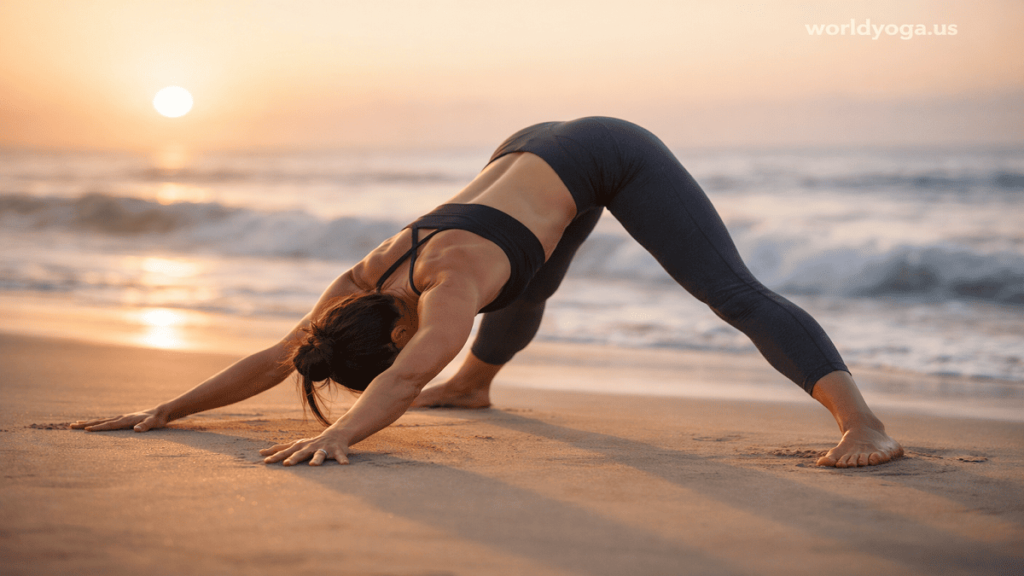
What preparatory poses are recommended?
1. Cat–Cow Pose (Marjaryasana–Bitilasana)
This is a foundational warm-up for spinal mobility. It gently mobilizes the entire vertebral column, preparing the back for the elongation required in Downward Dog. Cat–Cow also helps coordinate breath with movement, which is essential for maintaining stability in inverted postures.
2. Child’s Pose (Balasana)
Child’s Pose is useful for gently opening the hips, stretching the lower back, and calming the nervous system. It also helps lengthen the spine in a supported position, making it easier to transition into Downward Dog without strain.
3. Puppy Pose (Uttana Shishosana)
This pose is especially effective for shoulder preparation. It stretches the shoulders, upper back, and chest while keeping the hips elevated above the knees. Since Downward Dog requires sustained shoulder flexion and stability, this posture helps reduce stiffness in the upper body.
4. Low Lunge (Anjaneyasana)
Low Lunge targets the hip flexors, quadriceps, and groin. Since the Feet Spread Downward Dog increases hamstring and inner thigh engagement, loosening the front of the hips is essential for balanced alignment. It also helps improve pelvic mobility.
5. Standing Forward Fold (Uttanasana)
This pose directly prepares the hamstrings for the deep stretch required in Downward Dog variations. It also allows gravity-assisted lengthening of the spine and encourages relaxation in the neck and shoulders.
6. Plank Pose (Phalakasana)
Plank builds the core and shoulder strength necessary to support body weight in Downward Dog. It activates the abdominal muscles, wrists, and shoulder stabilizers, ensuring better control during inversion.
7. Dolphin Pose (Ardha Pincha Mayurasana)
Dolphin Pose is one of the most effective preparatory poses. It mimics Downward Dog but places weight on the forearms, reducing wrist strain while intensifying shoulder and core engagement. It is particularly useful for building endurance in the upper body.
8. Reclined Hand-to-Big-Toe Pose (Supta Padangusthasana)
This supine stretch helps isolate hamstring flexibility without weight-bearing stress. It prepares the legs for the widened stance by improving range of motion in a controlled environment.
Why Preparation Matters
Proper preparation reduces the risk of wrist strain, hamstring overstretching, and shoulder collapse. It also improves alignment awareness, which is crucial when transitioning into a wider-foot variation where stability can be more challenging.
References
- https://www.yogajournal.com/poses/childs-pose/
- https://www.yogajournal.com/poses/dolphin-pose/
- https://www.verywellfit.com/downward-facing-dog-pose-3567105
- https://www.ncbi.nlm.nih.gov/pmc/articles/PMC3193654/
#Feet Spread Downward Facing Dog Pose in Hyderabad
What are the benefits and precautions of this pose?
Benefits of the Pose
1. Improved Hamstring and Inner Thigh Flexibility
The widened foot position increases the stretch across the hamstrings and adductor (inner thigh) muscles. This makes the variation more effective than the standard Downward Dog for improving lower-body mobility and hip openness.
2. Enhanced Hip Mobility
Because the legs are spread wider, the hips must stabilize in a more open position. This helps improve hip joint range of motion, especially useful for people with tight hips from prolonged sitting.
3. Shoulder and Upper Body Strength
The pose is a weight-bearing inversion where the arms support much of the body’s weight. This strengthens the deltoids, triceps, serratus anterior, and upper back muscles, improving shoulder stability over time.
4. Spinal Decompression
The inverted “V” shape allows gravity to gently decompress the spine. This can help relieve lower back tension and promote better spinal alignment when practiced correctly.
5. Core Engagement and Stability
The abdominal muscles, including the transverse abdominis and obliques, remain active to stabilize the torso. This improves overall core strength and postural control.
6. Circulatory and Energetic Benefits
Like other inversions, this pose supports blood circulation toward the upper body and brain, which may contribute to reduced fatigue and improved mental clarity.
Precautions and Safety Considerations
1. Wrist Strain
Since significant weight is placed on the hands, individuals with wrist pain, carpal tunnel syndrome, or weak wrists should proceed carefully. Using a folded mat or practicing on forearms (Dolphin variation) may help reduce pressure.
2. Shoulder Instability
Improper alignment can cause the shoulders to collapse toward the ears. This may lead to strain in the rotator cuff muscles. Always keep shoulders externally rotated and away from the neck.
3. Hamstring Overstretching
The wider stance increases hamstring and inner thigh stretch intensity. For individuals with tight hamstrings, forcing the heels down or locking the knees can cause strain. A slight bend in the knees is safer.
4. Knee Stress from Over-Widening Feet
Placing the feet too wide can misalign the knees and place stress on the medial knee ligaments. The feet should be wide but still controlled and aligned.
5. Neck Compression
Dropping the head incorrectly or tensing the neck can create discomfort. The neck should remain neutral and relaxed, without excessive pressure.
6. Contraindications
People with severe shoulder injuries, acute wrist conditions, or uncontrolled high blood pressure should modify or avoid long holds in this pose.
References
- https://www.yogajournal.com/poses/downward-facing-dog-pose/
- https://www.verywellfit.com/downward-facing-dog-pose-3567105
- https://www.ncbi.nlm.nih.gov/pmc/articles/PMC3193654/
#Feet Spread Downward Facing Dog Pose in Banglore
Case Study of Feet Spread Downward Facing Dog Pose
1. Introduction
The Feet Spread Downward Facing Dog Pose is a modified form of Adho Mukha Svanasana in which the practitioner places the feet wider than hip-width apart while maintaining the inverted “V” structure. This case study examines its application in a real-world yoga therapy context, focusing on a recreational yoga practitioner with tight hamstrings, reduced hip mobility, and mild postural fatigue from prolonged desk work.
2. Subject Profile
- Age: 34
- Activity level: Sedentary job (computer-based work ~8–9 hours/day)
- Primary complaints: Hamstring tightness, lower back stiffness, shoulder fatigue
- Yoga experience: Beginner to intermediate (6 months of practice)
The subject was introduced to the pose as part of a functional mobility program designed to improve posterior chain flexibility and spinal decompression.
3. Intervention Protocol
The pose was integrated into a structured sequence performed 4 times per week over 6 weeks:
- Warm-up: Cat–Cow Pose and Low Lunge for spinal and hip preparation
- Primary Pose Practice: Feet Spread Downward Facing Dog held for 20–40 seconds, repeated 3–5 times
- Modifications used initially:
- Slight knee bend to reduce hamstring strain
- Hands elevated on yoga blocks to reduce wrist load
- Feet only slightly wider than hips in early weeks
Progression was gradual, increasing both duration and stance width.
4. Observed Biomechanical Effects
Improved Posterior Chain Flexibility
Within 3–4 weeks, noticeable improvement occurred in hamstring length and calf flexibility, allowing heels to move closer to the floor without forced effort.
Enhanced Hip Abduction Control
The wider stance activated the adductor muscles and gluteus medius, improving hip stability and reducing discomfort during prolonged sitting.
Shoulder Strength and Endurance
The subject reported increased tolerance in weight-bearing through the upper limbs. This aligns with activation of the deltoids, serratus anterior, and triceps, improving scapular stability.
Spinal Decompression Relief
The inverted position helped reduce perceived lumbar stiffness, especially after long working hours. This was attributed to gentle traction along the spine.
5. Functional Outcomes (After 6 Weeks)
- 30–40% improvement in hamstring flexibility (self-reported and range observation)
- Reduced lower back tightness after work hours
- Increased comfort in static standing posture
- Improved balance and stability during yoga transitions
- Better awareness of spinal alignment and core engagement
6. Limitations and Risks Noted
- Occasional wrist discomfort during longer holds
- Inner knee sensitivity when feet were placed too wide too early
- Need for frequent alignment corrections to avoid shoulder collapse
These findings highlighted the importance of gradual progression and proper instruction.
7. Conclusion
This case study demonstrates that the Feet Spread Downward Facing Dog Pose is an effective functional mobility and strengthening posture when introduced progressively. It provides significant benefits for sedentary individuals, particularly in improving hamstring flexibility, hip stability, and spinal decompression. However, safe practice depends on controlled alignment, gradual widening of stance, and appropriate modifications for joint protection.
References
- https://www.yogajournal.com/poses/downward-facing-dog-pose/
- https://www.verywellfit.com/downward-facing-dog-pose-3567105
- https://www.ncbi.nlm.nih.gov/pmc/articles/PMC3193654/
#Feet Spread Downward Facing Dog Pose in Kolkata
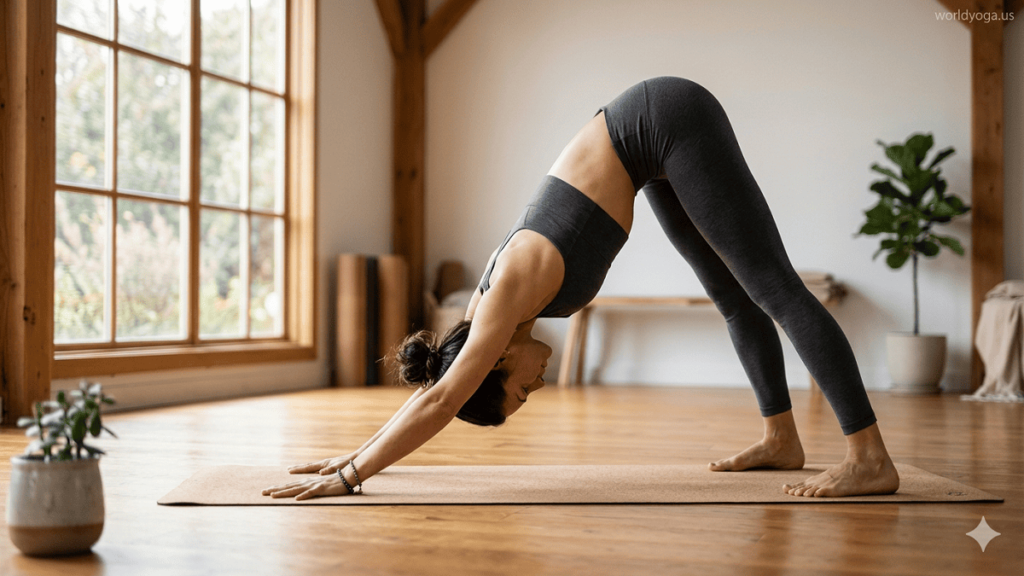
White Paper of Feet Spread Downward Facing Dog Pose
1. Executive Summary
The Feet Spread Downward Facing Dog Pose is a biomechanically modified variation of Adho Mukha Svanasana in which the practitioner places the feet wider than hip-width apart while maintaining an inverted “V” shape. This white paper evaluates the pose from anatomical, physiological, therapeutic, and safety perspectives. The analysis indicates that this variation enhances lower-limb flexibility (hamstrings and adductors), improves shoulder stability, and supports spinal decompression when performed with correct alignment and progressive loading principles.
2. Background and Rationale
Downward Facing Dog is a foundational posture in modern yoga systems. The widened-foot variation is commonly introduced in yoga therapy and mobility training to:
- Increase hip abduction capacity
- Intensify inner thigh (adductor) engagement
- Improve posterior chain flexibility
- Enhance postural awareness in weight-bearing inversions
The modification is particularly relevant for populations with sedentary lifestyles, where hamstring tightness and hip immobility are prevalent.
3. Biomechanical Analysis
3.1 Kinetic Chain Engagement
The pose functions as a closed-chain kinetic posture involving simultaneous upper- and lower-body activation. Load distribution occurs across:
- Upper limbs (approximately 60–70% body weight in early stages)
- Lower limbs (through heel grounding and hip stabilization)
3.2 Primary Muscle Activation
- Upper body: deltoids, triceps, serratus anterior, latissimus dorsi
- Core: transverse abdominis, rectus abdominis, spinal extensors
- Lower body: hamstrings, gluteus maximus, gluteus medius, adductors, calf muscles
The widened stance increases activation of the adductor group and hip stabilizers, distinguishing it from standard Downward Dog.
4. Physiological and Therapeutic Effects
4.1 Flexibility Enhancement
The pose produces significant elongation of the posterior chain, particularly the hamstrings and calves, improving overall lower-limb mobility.
4.2 Spinal Decompression
The inverted orientation facilitates gravitational traction along the spine, which may reduce compressive stress in the lumbar region.
4.3 Shoulder Stabilization
Sustained weight-bearing improves strength in the shoulder girdle and enhances scapular control, particularly via the serratus anterior.
4.4 Circulatory Effects
Inversion promotes venous return and may assist in reducing peripheral fatigue, contributing to perceived energy restoration.
5. Risk Assessment and Contraindications
5.1 Musculoskeletal Risks
- Wrist strain due to prolonged weight-bearing
- Inner knee stress if feet are excessively widened
- Shoulder impingement from poor scapular alignment
- Hamstring overstretching in individuals with limited flexibility
5.2 Contraindications
- Acute wrist or shoulder injuries
- Severe hamstring tears
- Uncontrolled hypertension (due to inversion pressure effects)
6. Best Practice Guidelines
To ensure safe execution:
- Maintain shoulder external rotation and avoid scapular collapse
- Keep a micro-bend in knees if hamstrings are tight
- Gradually increase foot width rather than forcing maximum spread
- Engage core musculature to stabilize lumbar spine
- Distribute weight evenly across palms and feet
Supportive modifications include yoga blocks under hands and forearm-based variations (Dolphin Pose).
7. Applications in Yoga Therapy and Fitness
The pose is widely applicable in:
- Rehabilitation programs for postural correction
- Athletic mobility training (especially runners and cyclists)
- Stress reduction protocols in yoga-based interventions
- Functional movement screening and correction
8. Conclusion
The Feet Spread Downward Facing Dog Pose is a highly effective multi-joint posture that integrates flexibility, strength, and postural control. Its widened stance enhances hip and inner thigh activation while maintaining the core benefits of spinal decompression and shoulder strengthening. However, its effectiveness depends strongly on progressive adaptation and biomechanically sound alignment principles.
References
- https://www.yogajournal.com/poses/downward-facing-dog-pose/
- https://www.verywellfit.com/downward-facing-dog-pose-3567105
- https://www.ncbi.nlm.nih.gov/pmc/articles/PMC3193654/
#Feet Spread Downward Facing Dog Pose in Pune
Industry Application of Feet Spread Downward Facing Dog Pose
1. Introduction
The Feet Spread Downward Facing Dog Pose is a functional yoga variation widely used beyond traditional yoga practice due to its combined effects on flexibility, strength, and neuromuscular coordination. In modern applied settings, it is increasingly integrated into fitness training, physiotherapy, sports conditioning, corporate wellness, and rehabilitation programs. Its widened stance enhances hip mobility and lower-limb engagement, making it particularly valuable for populations with sedentary lifestyles and athletic performance needs.
2. Fitness and Strength Training Industry
In the fitness sector, this pose is used as a dynamic mobility and bodyweight conditioning exercise. Trainers incorporate it into warm-ups and cooldowns because it:
- Activates the posterior chain (hamstrings, glutes, calves)
- Improves shoulder endurance and scapular stability
- Enhances functional flexibility required for squats, deadlifts, and running mechanics
It is often included in yoga-fusion classes, HIIT mobility circuits, and functional training programs to improve movement efficiency.
3. Physiotherapy and Rehabilitation Applications
In physiotherapy, the pose is applied in non-load-bearing rehabilitation protocols for patients recovering from mild musculoskeletal imbalances. It is particularly useful for:
- Hamstring tightness and restricted hip mobility
- Early-stage postural correction for lumbar stiffness
- Shoulder stabilization training after mild overuse injuries
The widened stance allows therapists to selectively increase adductor and hip stabilizer activation, which is important in restoring balanced lower-body mechanics.
4. Sports Performance and Athletic Conditioning
Athletes in sports such as running, football, cycling, and martial arts benefit from this variation due to its impact on:
- Hip mobility and stride efficiency
- Posterior chain elasticity for sprint mechanics
- Shoulder stability for contact and overhead sports
Strength and conditioning coaches use it as a movement preparation drill to reduce injury risk and improve neuromuscular readiness before high-intensity training.
5. Corporate Wellness and Occupational Health
In workplace wellness programs, especially for desk-based professions, this pose is used to counteract:
- Prolonged sitting posture
- Rounded shoulders and forward head alignment
- Lower back stiffness from static positions
Short guided sessions help improve spinal decompression and circulation, making it suitable for stress management breaks in corporate environments.
6. Yoga Therapy and Mental Health Applications
Within yoga therapy, the pose supports both physical and psychological well-being. It is used to:
- Reduce mild anxiety through inversion-based relaxation
- Improve body awareness and proprioception
- Support breath regulation techniques (pranayama integration)
The gentle inversion is associated with calming effects on the autonomic nervous system when combined with slow breathing practices.
7. Educational and Training Institutions
Yoga teacher training programs and sports science curricula use this variation to teach:
- Biomechanical alignment principles
- Load distribution in inverted postures
- Functional anatomy of the shoulder and hip complex
It serves as a model pose for understanding kinetic chain integration.
8. Limitations in Industry Use
Despite its benefits, limitations include:
- Not suitable for individuals with acute wrist or shoulder injuries
- Requires supervision for beginners to prevent overextension
- Variability in hip anatomy affects optimal foot width positioning
9. Conclusion
The Feet Spread Downward Facing Dog Pose has significant multi-industry applications due to its combination of mobility enhancement, strength development, and postural correction benefits. Its adaptability makes it valuable in fitness, rehabilitation, sports performance, and workplace wellness settings. However, its effectiveness depends on proper instruction, alignment control, and gradual progression tailored to individual physical capacity.
References
- https://www.yogajournal.com/poses/downward-facing-dog-pose/
- https://www.verywellfit.com/downward-facing-dog-pose-3567105
- https://www.ncbi.nlm.nih.gov/pmc/articles/PMC3193654/
#Feet Spread Downward Facing Dog Pose in Mumbai
Ask FAQs
What is the Feet Spread Downward Facing Dog Pose?
It is a variation of the traditional Downward Facing Dog Pose (Adho Mukha Svanasana) where the feet are placed wider than hip-width apart. This adjustment increases engagement of the inner thighs and hips while maintaining the inverted “V” shape of the body. It is commonly used in yoga, fitness, and physiotherapy for improved flexibility and strength.
What are the main benefits of this pose?
This pose helps improve hamstring flexibility, inner thigh (adductor) strength, and hip mobility. It also strengthens the shoulders, arms, and core while supporting spinal decompression. Regular practice may reduce lower back stiffness and improve posture, especially for individuals who sit for long hours.
How should beginners perform this pose safely?
Beginners should start in a standard Downward Dog and gradually walk the feet wider. A slight bend in the knees is recommended to avoid hamstring strain. Hands should be firmly grounded, shoulders relaxed away from the ears, and weight evenly distributed. Using yoga blocks under the hands can help reduce wrist pressure.
Which muscles are primarily used in this pose?
The pose engages multiple muscle groups including the hamstrings, glutes, adductors (inner thighs), calves, core muscles (abdominals and spinal stabilizers), deltoids, triceps, and upper back muscles. The widened stance increases activation of the inner thighs and hip stabilizers compared to the standard version.
Who should avoid or modify this pose?
Individuals with wrist injuries, shoulder instability, severe hamstring injuries, or uncontrolled high blood pressure should avoid or modify this pose. Pregnant individuals or beginners with limited flexibility should also practice under guidance. Modifications like bending the knees or using forearm support (Dolphin Pose) are recommended.
Table of Contents
Disclaimer: This content is for educational and informational purposes only and is not a substitute for professional medical, physiotherapy, or certified yoga instruction. Practice the Feet Spread Downward Facing Dog Pose only within your physical limits and stop immediately if you experience pain or discomfort. Individuals with existing injuries, medical conditions, or concerns should consult a qualified healthcare professional before attempting this pose.