
Hamsasana
Hamsasana, commonly known as the Swan Pose, is a traditional and foundational posture in Yoga that focuses on developing upper-body strength, core stability, balance control, and neuromuscular coordination. The name “Hamsa” is derived from Sanskrit, meaning swan, a symbol often associated with purity, grace, wisdom, and smooth, controlled movement. This symbolism reflects the nature of the posture, which requires steady control, patience, and refined body awareness.
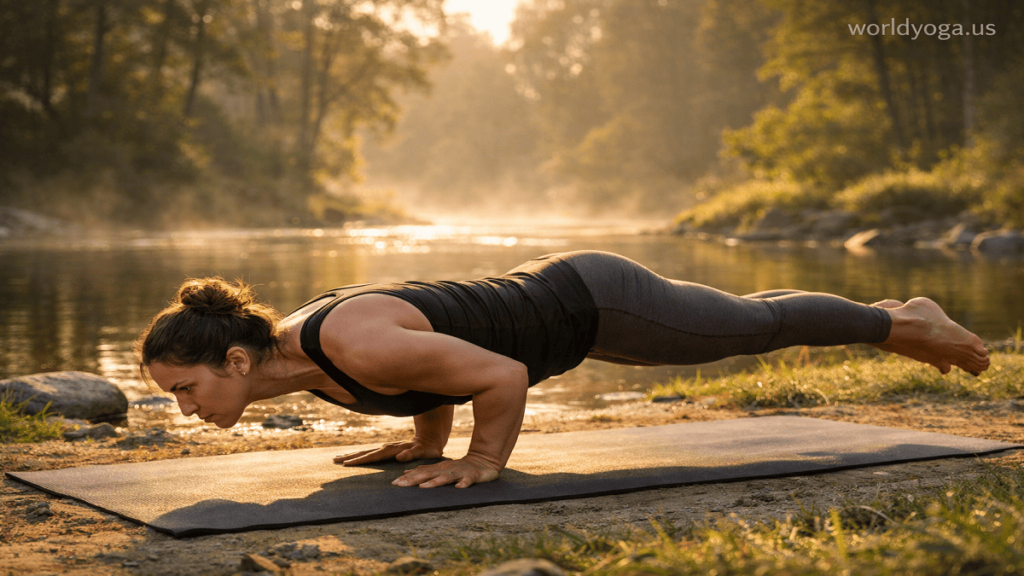
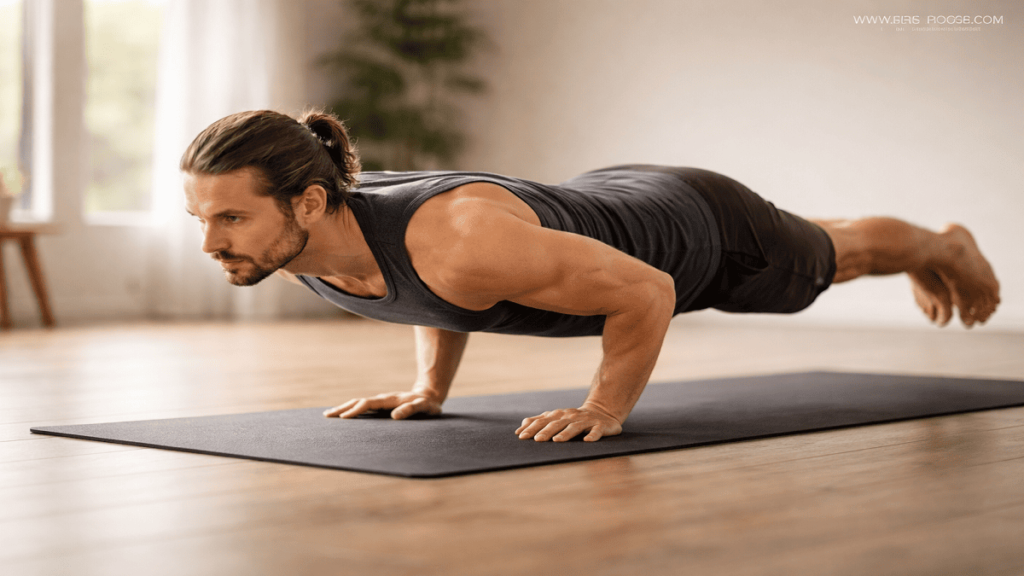
In Hamsasana, the practitioner supports the body using the hands placed firmly on the ground while engaging the arms, shoulders, and core muscles. The elbows are typically positioned near or against the abdominal region to provide additional structural support. By gradually shifting body weight forward and engaging the core, the practitioner lifts part of the body into a controlled, slightly elevated arm-supported balance. Unlike advanced arm balances, Hamsasana is generally considered a preparatory or foundational posture, making it more accessible while still requiring strength and control.
This posture plays an important role in building the physical foundation needed for more advanced arm balances such as Mayurasana. It helps condition the wrists, forearms, triceps, and shoulder stabilizers, while also activating deep abdominal muscles. The combination of upper-body engagement and core activation improves posture alignment and strengthens the body’s ability to maintain stability under load.
Hamsasana also contributes significantly to neuromuscular development. The practitioner must coordinate breath, balance, and muscle engagement simultaneously, which enhances body awareness and improves motor control. Over time, this leads to better coordination and more efficient movement patterns in both yoga practice and functional physical activities.
From a traditional yoga perspective, the gentle compression of the abdominal region is believed to stimulate internal organs and support digestive function. While this effect is based on classical yogic understanding, modern interpretations also recognize its role in activating core musculature and improving stability.
Additionally, Hamsasana is often used as a preparatory step for other arm-supported postures such as Bakasana. It helps practitioners gradually adapt to weight-bearing through the arms, reducing the risk of injury when progressing toward more complex poses.
Due to the pressure placed on the wrists and shoulders, proper alignment, warm-up, and gradual progression are essential. Individuals with wrist, shoulder, or abdominal injuries should approach this posture cautiously and preferably under the supervision of an experienced instructor.
In summary, Hamsasana is a foundational arm balance that bridges basic yoga practice with advanced postural control. It strengthens the upper body, enhances core stability, improves balance, and prepares the practitioner for more challenging arm balances within the discipline of yoga.
#Hamsasana in India
What is Hamsasana (Swan Pose)?
Hamsasana, commonly known as Swan Pose, is a traditional posture in Yoga that emphasizes upper-body strength, balance, and core engagement. The term “Hamsa” is derived from Sanskrit, meaning swan, a symbol of grace, purity, and controlled movement. This pose is often considered a preparatory arm balance and is closely related in structure and mechanics to the more advanced Mayurasana.
In Hamsasana, the practitioner places both palms on the ground with fingers typically pointing backward toward the feet. The elbows are positioned near or against the abdomen, creating a supportive base. By engaging the core muscles and shifting the body weight forward, the practitioner lifts the body slightly off the ground while maintaining a controlled and aligned posture. Unlike more advanced arm balances, Hamsasana is generally more accessible and serves as a foundational strength-building pose.
This posture primarily targets the wrists, forearms, shoulders, and abdominal muscles. The compression of the abdominal region encourages activation of core stabilizers and may support digestive stimulation according to traditional yoga principles. It also helps improve posture awareness and body control through sustained engagement of multiple muscle groups.
Hamsasana is often used as a preparatory exercise for advanced arm balances such as Bakasana. It teaches practitioners how to distribute body weight effectively through the arms while maintaining balance and steady breathing. This makes it valuable for developing neuromuscular coordination and confidence in arm-supported positions.
From a mental perspective, the pose encourages focus, patience, and controlled breathing. Practitioners must maintain concentration to avoid collapsing forward, making it a useful tool for developing mindfulness during physical practice.
However, caution is advised for individuals with wrist, shoulder, or abdominal injuries. Proper warm-up and gradual progression are essential to avoid strain. Beginners are encouraged to practice under professional guidance to ensure correct alignment and safe execution.
In summary, Hamsasana (Swan Pose) is a foundational arm-supported yoga posture that builds strength, stability, and awareness, serving as an important stepping stone toward more advanced arm balance practices.
#Hamsasana in Maharashtra
How is this arm balance performed step by step?
Step 1: Start in a Kneeling Position
Begin by kneeling on the mat with your knees slightly apart. Keep your spine upright and take a few steady breaths to center your focus. This prepares the body for weight transfer onto the arms.
Step 2: Place the Hands on the Floor
Place both palms firmly on the ground beside your knees. In traditional alignment, the fingers may point backward toward the feet. Spread the fingers wide to create a strong and stable base for support.
Step 3: Position the Elbows
Gently bend your elbows and bring them close to the abdominal region. The elbows act as a support point, helping create a controlled shelf for the torso. Avoid placing them too wide, as this reduces stability.
Step 4: Engage the Core and Lean Forward
Activate the abdominal muscles and slowly lean your body forward. Shift the weight gradually from the knees into the arms. This step requires controlled movement to prevent sudden loss of balance.
Step 5: Lift the Lower Body
Once your weight is supported by the arms and elbows, begin lifting your knees off the floor. Keep your body compact and stable, maintaining engagement in the core and shoulders.
Step 6: Hold the Balance
Maintain a steady position with controlled breathing. The chest should remain slightly forward while the elbows support the abdomen. Focus your gaze slightly ahead on the floor to improve balance and stability.
Step 7: Release Slowly
To exit the pose, gently lower your knees back to the ground with control. Release the hands slowly and return to a kneeling position before resting.
Key Safety Notes
- Warm up wrists, shoulders, and core before attempting
- Avoid sudden weight shifts
- Do not force lift if balance is not stable
- Practice under supervision if you are a beginner
Summary
Hamsasana is performed through a controlled sequence of kneeling, hand placement, core engagement, and gradual weight transfer onto the arms. It builds foundational strength needed for advanced arm balances like Mayurasana while improving stability, focus, and body coordination.
#Hamsasana in Delhi
What strength and flexibility are required?
1. Upper Body Strength Requirements
Wrist strength:
Strong wrists are essential because they bear most of the body’s weight. The wrists must remain stable in extension without collapsing inward. Weak wrists can lead to strain or discomfort during weight transfer.
Forearm strength:
The forearm muscles help stabilize the wrists and control pressure distribution through the palms. They are actively engaged throughout the pose.
Shoulder stability:
The shoulders must be strong enough to support body weight in a slightly forward-leaning position. Scapular stability (especially protraction control) is essential to prevent the chest from dropping.
2. Core Strength Requirements
A stable core is one of the most important requirements in Hamsasana. The abdominal muscles—including the rectus abdominis and transverse abdominis—must engage to control forward lean and prevent collapse.
The core acts as a central stabilizer, ensuring smooth weight transfer from the lower body to the arms. Without sufficient core strength, the pose becomes unstable and difficult to maintain.
3. Lower Body Engagement
While not as demanding as the upper body, the lower body still plays a supporting role. The hips and legs must remain active to maintain alignment and reduce unnecessary strain on the arms. Gentle engagement of the glutes helps maintain overall body stability.
4. Flexibility Requirements
Wrist flexibility:
Moderate wrist extension flexibility is required to comfortably place the palms on the ground with fingers turned backward. Limited flexibility can make the position uncomfortable or restrictive.
Shoulder mobility:
Adequate shoulder openness is needed to allow forward leaning without strain. Tight shoulders may limit proper alignment and balance.
Hip and spine flexibility:
Mild flexibility in the hips and lower back helps in smoothly transitioning weight forward while maintaining control and posture alignment.
5. Neuromuscular Control
Beyond strength and flexibility, Hamsasana requires coordination and body awareness. The nervous system must learn to manage small balance adjustments while maintaining steady breathing and controlled movement.
Summary
Hamsasana requires:
- Strong wrists, forearms, and shoulders
- Engaged and stable core muscles
- Moderate wrist and shoulder flexibility
- Controlled hip and spinal mobility
- Good balance and neuromuscular coordination
Conclusion
While Hamsasana is considered a beginner-to-intermediate arm balance, it still demands structured strength and flexibility development. Proper preparation ensures safe practice and builds a strong foundation for advanced postures like Mayurasana.
#Hamsasana in Kolkata
What are the benefits of this pose?
1. Builds Upper Body Strength
Hamsasana strengthens the wrists, forearms, shoulders, and triceps. Since the body weight is partially supported by the arms, it improves muscular endurance and joint stability. Over time, this enhances the ability to perform more advanced arm balances safely.
2. Strengthens Core Muscles
The pose requires active engagement of the abdominal muscles to control forward leaning and maintain balance. This strengthens the rectus abdominis and deep stabilizing muscles, improving overall core control and posture.
3. Improves Balance and Coordination
Hamsasana enhances neuromuscular coordination by training the body to distribute weight evenly through the arms and maintain stability in a forward-leaning position. This improves overall balance control in other yoga practices and physical activities.
4. Enhances Wrist and Shoulder Stability
Regular practice increases resilience in the wrists and strengthens shoulder stabilizers. This helps reduce the risk of injury in other weight-bearing activities and supports long-term joint health when practiced correctly.
5. Supports Digestive Function (Traditional View)
In traditional yoga theory, gentle abdominal compression in Hamsasana is believed to stimulate internal organs, including the digestive system. This may support digestion and metabolic activity, although this is based on classical interpretation rather than clinical evidence.
6. Improves Focus and Mental Control
Because balance must be maintained through steady attention and controlled breathing, Hamsasana helps develop concentration, patience, and mindfulness. Practitioners learn to remain calm under physical effort.
7. Prepares for Advanced Arm Balances
Hamsasana serves as a stepping stone toward advanced postures like Mayurasana. It builds the foundational strength and alignment awareness needed for more complex arm balances.
Summary
Hamsasana offers benefits including improved upper-body strength, stronger core muscles, better balance, enhanced joint stability, and increased mental focus. It is a valuable preparatory pose that bridges basic yoga practice with advanced arm balancing skills.
#Hamsasana in Hyderabad
What common mistakes should be avoided?
1. Poor Wrist Alignment
One of the most common errors is placing excessive pressure on improperly aligned wrists. Collapsing into the wrist joint or failing to distribute weight evenly across the palm can cause discomfort or long-term strain. Proper finger spread and active pressing through the hands are essential.
2. Incorrect Elbow Positioning
Many practitioners place the elbows too wide or fail to engage them against the abdominal region. This reduces stability and removes the structural support needed for balance. The elbows should remain close and controlled to create a stable base.
3. Weak Core Engagement
A major mistake is relying too much on arm strength while neglecting the core. Without proper abdominal activation, the body tends to drop forward or collapse. The core must remain engaged throughout the movement to maintain alignment and control.
4. Rushing the Weight Transfer
Attempting to lift the body too quickly often leads to loss of balance. The transition from knees to arms should be slow and controlled. Sudden movements reduce stability and increase the risk of falling forward.
5. Poor Shoulder Stability
Failing to stabilize the shoulders can cause the chest to collapse or the upper body to lose alignment. Over-tension or under-engagement of the shoulder muscles can both create instability. Proper scapular control is essential.
6. Holding the Breath
Breath control is often overlooked. Many practitioners unconsciously hold their breath during effort, which increases tension and reduces balance efficiency. Steady, controlled breathing supports focus and stability.
7. Lack of Proper Warm-Up
Skipping wrist, shoulder, and core preparation increases the risk of injury. Cold joints are less flexible and more prone to strain. A proper warm-up improves mobility and readiness for weight-bearing.
8. Looking Too Far Down or Back
Incorrect gaze direction can affect balance. Looking too close or too far can disrupt alignment. A steady, forward-focused gaze helps maintain stability and control.
Summary
To practice Hamsasana safely, avoid poor wrist alignment, weak core engagement, rushed transitions, and improper shoulder control. Focus on gradual movement, steady breathing, and correct structural alignment to build a safe foundation for advanced poses like Mayurasana.
#Hamsasana in Ahemadabad
Case Study of Hamsasana
Introduction
Hamsasana is a foundational arm-supported posture in Yoga used to develop upper-body strength, core stability, and balance awareness. It is often considered a preparatory pose for more advanced arm balances such as Mayurasana and supports progression toward stability-based postures like Bakasana. This case study examines the effects of structured practice on a beginner-to-intermediate practitioner over an 8-week period.
Subject Profile
The subject is a 28-year-old recreational yoga practitioner with 1.5 years of general yoga experience but limited exposure to arm balances. The individual’s goals were to improve upper-body strength, core stability, and balance control while preparing for advanced arm support postures.
Training Protocol
The program was divided into three progressive phases:
Phase 1: Foundational Strength (Weeks 1–3)
Focus was placed on wrist conditioning, plank holds, and shoulder mobility drills. The subject practiced modified Hamsasana with knees lightly supported to reduce load while learning correct hand and elbow placement.
Phase 2: Controlled Weight Transfer (Weeks 4–6)
The practitioner gradually shifted more body weight into the arms while maintaining knee contact. Emphasis was placed on slow forward lean, core engagement, and breath regulation. Short holds of 5–10 seconds were introduced.
Phase 3: Full Expression (Weeks 7–8)
The subject progressed to full Hamsasana holds without knee support. Balance duration increased to 10–20 seconds with improved stability and reduced wrist discomfort.
Observations and Outcomes
Physical Improvements:
- Increased wrist and forearm endurance
- Improved shoulder stability and scapular control
- Noticeable core strengthening and better postural alignment
- Enhanced ability to distribute weight evenly through the hands
Neuromuscular Adaptation:
- Improved balance correction responses
- Better coordination between core engagement and upper-body support
- Increased body awareness during forward weight shifts
Challenges Noted:
- Initial wrist discomfort during early weight-bearing phases
- Difficulty maintaining steady breathing under load
- Occasional forward tipping due to delayed core activation
Discussion
The case demonstrates that Hamsasana significantly improves foundational strength and neuromuscular control when practiced progressively. The most critical factor in successful adaptation was gradual load increase combined with proper alignment. Breath control also played a key role in maintaining stability during holds.
Conclusion
Hamsasana is an effective preparatory posture that builds the structural and neurological foundation required for advanced arm balances such as Mayurasana. With consistent practice, it enhances upper-body strength, core control, and balance awareness, making it a valuable bridge between basic yoga and advanced arm stability training.
References
- https://www.yogajournal.com/poses/peacock-pose/
- https://www.ekhartyoga.com/blog/peacock-pose-mayurasana
- https://www.yogapedia.com/definition/6300/eka-hasta-mayurasana
#Hamsasana in Pune
White Paper of Hamsasana
Abstract
Hamsasana is a foundational arm-supported posture in Yoga designed to develop upper-body strength, core stability, and neuromuscular coordination. It serves as a preparatory structure for advanced arm balances such as Mayurasana and contributes to progression toward stability-intensive postures like Bakasana. This white paper examines its biomechanics, physiological impact, training methodology, and safety considerations.
1. Introduction
Hamsasana (Swan Pose) is an arm-supported posture where partial body weight is transferred onto the upper limbs while maintaining controlled alignment. It is commonly used as a bridge between basic yoga postures and advanced arm balances, providing foundational strength and stability training.
2. Biomechanical Analysis
Hamsasana operates through a controlled closed-chain kinetic system in which the upper limbs act as the primary support structure.
Key biomechanical features include:
- Wrist load-bearing in extension
- Forearm stabilization for pressure distribution
- Shoulder engagement with scapular control
- Core activation for forward balance regulation
- Elbow positioning near the abdomen for structural support
This coordinated system ensures that body weight is evenly distributed, minimizing joint overload when performed correctly.
3. Physiological Adaptations
Regular practice of Hamsasana produces progressive adaptations in muscular endurance and neuromuscular efficiency.
Primary adaptations include:
- Increased wrist and forearm strength
- Improved shoulder joint stability
- Enhanced abdominal muscle activation
- Better postural control and spinal alignment
These adaptations contribute to improved performance in other arm-supported movements within Yoga systems.
4. Training Methodology
Training for Hamsasana follows a progressive overload model emphasizing gradual adaptation.
Key training components:
- Wrist strengthening exercises and mobility drills
- Core stabilization training (planks, hollow holds)
- Shoulder mobility and scapular activation exercises
- Gradual weight-transfer drills from knees to arms
- Controlled static holds for balance development
Progression is essential to prevent strain and ensure safe adaptation.
5. Safety and Risk Management
Although less intense than advanced arm balances, Hamsasana still carries risk if performed incorrectly.
Common risks include:
- Wrist strain due to poor alignment
- Shoulder discomfort from improper engagement
- Loss of balance due to weak core activation
Contraindications include wrist injuries, shoulder instability, and abdominal conditions. Proper warm-up and supervised practice are strongly recommended.
6. Applications
Hamsasana has applications in:
- Foundational yoga strength development
- Preparation for advanced arm balances like Mayurasana
- Functional fitness and bodyweight training systems
- Neuromuscular coordination development
7. Conclusion
Hamsasana is a critical foundational posture that builds structural strength, balance control, and neuromuscular coordination. It serves as an essential preparatory stage for advanced yoga practices and supports long-term physical development in arm balance progression.
References
- https://www.yogajournal.com/poses/peacock-pose/
- https://www.ekhartyoga.com/blog/peacock-pose-mayurasana
- https://www.yogapedia.com/definition/6300/eka-hasta-mayurasana
#Hamsasana in Kolkata
Industry Application of Hamsasana
Hamsasana is a foundational arm-supported posture in Yoga that develops upper-body strength, core stability, and neuromuscular coordination. Although traditionally practiced for physical and mental conditioning, its underlying biomechanics have relevant applications across several modern industries. It also serves as a preparatory structure for advanced arm balances such as Mayurasana and contributes to progression toward stability-focused postures like Bakasana.
1. Fitness and Strength Training Industry
In functional fitness and bodyweight training systems, Hamsasana is used as a model for foundational upper-body load-bearing development. Trainers adapt its principles into progressive exercises that build wrist, shoulder, and core strength. It is especially relevant in calisthenics, where controlled bodyweight support is essential for advanced movements such as planche progressions and arm balances.
2. Sports Performance and Athletic Conditioning
Hamsasana contributes to athletic training programs by improving static strength, balance, and body control under load. Athletes in gymnastics, martial arts, wrestling, and climbing benefit from similar movement mechanics. The pose helps develop scapular stability and core integration, which are critical for injury prevention and performance efficiency in dynamic sports.
3. Physiotherapy and Rehabilitation
In rehabilitation science, modified versions of Hamsasana are used to study gradual weight-bearing recovery in the upper limbs. It is particularly relevant for patients recovering from wrist, elbow, or shoulder injuries. Controlled progression from partial to full load-bearing helps rebuild strength safely while improving joint stability and motor control.
4. Biomechanics and Movement Research
Hamsasana is valuable in biomechanics as a simplified model of closed-chain kinetic loading. Researchers analyze how force is distributed through the wrists, elbows, and shoulders during partial body suspension. This contributes to understanding posture control, muscular coordination, and injury risk in unilateral weight-bearing systems.
5. Ergonomics and Workplace Health
The principles of Hamsasana inform ergonomic design and occupational health strategies, particularly in jobs involving repetitive upper-limb strain. Insights from wrist and shoulder load distribution help improve workplace safety guidelines and reduce risks of repetitive stress injuries.
6. Mindfulness and Cognitive Training Applications
Hamsasana also supports cognitive performance training by enhancing focus, breath control, and stress regulation. Maintaining balance under physical load requires sustained attention, making it useful in mindfulness-based training programs for professionals, athletes, and high-performance individuals.
7. Yoga Education and Teacher Training
In yoga education systems, Hamsasana is widely used as a progression tool for teaching arm balance fundamentals. It bridges basic postural practice and advanced arm balances such as Mayurasana, making it an essential component of structured yoga curricula.
Conclusion
Hamsasana extends beyond traditional practice into multiple industries, including fitness, rehabilitation, biomechanics, ergonomics, and cognitive training. Its principles of controlled weight-bearing and stability development make it a versatile model for both physical conditioning and applied movement science.
#Hamsasana in Mumbai
Ask FAQs
What is Hamsasana?
Hamsasana, or Swan Pose, is a foundational arm-supported posture in Yoga. It involves balancing part of the body weight on the arms while engaging the core. It is often used as a preparatory pose for advanced arm balances such as Mayurasana.
Is Hamsasana suitable for beginners?
Yes, Hamsasana can be suitable for beginners with basic strength and body awareness. However, it should still be practiced carefully, as it places pressure on the wrists and shoulders. Beginners should learn under supervision and progress gradually.
What muscles does Hamsasana work?
Hamsasana primarily strengthens the wrists, forearms, shoulders, triceps, and core muscles. It also engages stabilizing muscles in the back and hips, helping improve overall balance and posture control.
What are the main benefits of Hamsasana?
The pose improves upper body strength, core stability, and balance. It enhances coordination and concentration while preparing the body for advanced arm balances such as Bakasana and Mayurasana variations. It may also support better posture and body awareness.
What precautions should be taken while practicing Hamsasana?
Proper warm-up is essential, especially for the wrists and shoulders. Avoid the pose if you have wrist, elbow, or shoulder injuries. Do not rush the movement or hold your breath. Practicing under the guidance of a qualified instructor is strongly recommended.
Table of Contents
Disclaimer:
Hamsasana is a physical yoga posture intended for general educational purposes only. It should be practiced under the guidance of a qualified instructor. Individuals with wrist, shoulder, elbow, or abdominal injuries should avoid this pose or seek medical advice before attempting it.