
Mulabandhasana
Mula Bandhasana is a foundational yogic posture and internal control practice that combines a seated asana with the activation of the pelvic floor lock known as Mula Bandha. The term “Mula” refers to “root,” and “Bandha” means “lock” or “seal,” indicating the engagement of the root energy and muscular control at the base of the spine.
In Mula Bandhasana, the practitioner sits in a stable posture while consciously activating the pelvic floor muscles in a controlled and sustained manner. Unlike simple meditation poses, this practice integrates both physical alignment and internal muscular engagement, making it a more advanced and focused yogic technique.
The posture is traditionally used to build stability in the lower body, improve awareness of internal muscle control, and support deeper meditative states. It is closely associated with strengthening the connection between body awareness and breath regulation, which is essential in pranayama and advanced yoga practices.
From a physical perspective, Mula Bandhasana helps engage the deep core muscles, including the pelvic floor and lower abdominal region. This engagement supports spinal stability, improves posture, and enhances control over internal muscular systems. It also encourages better sitting endurance during prolonged meditation.
From a yogic and energetic perspective, this posture is believed to activate the Muladhara (root) energy center, promoting grounding, stability, and mental focus. It is often considered an important preparatory practice for higher levels of meditation and energy control techniques.
Mula Bandhasana requires patience and subtle awareness, as the engagement is internal rather than external. Proper guidance is recommended to ensure correct technique and to avoid unnecessary strain. When practiced consistently, it becomes a powerful tool for developing both physical stability and deeper meditative concentration.
#Mulabhandasana in India
How is Mulabandhasana performed correctly?
Mulabandhasana is a seated yogic posture combined with the internal activation of the pelvic floor known as Mula Bandha. Correct execution depends less on external movement and more on subtle muscular awareness, spinal alignment, and controlled breathing. It is considered an advanced awareness-based practice that integrates posture with internal energy control.
1. Starting seated posture
Begin by sitting in a stable meditation position such as:
- Sukhasana (Easy Pose)
- Vajrasana (Thunderbolt Pose)
- Padmasana (Lotus Pose, if comfortable)
The spine should be:
- Upright and elongated
- Head aligned over the shoulders
- Shoulders relaxed and not hunched
Hands can rest on the knees in a relaxed position.
2. Establishing body stability
Before engaging the lock:
- Relax the entire lower body
- Ensure the pelvis is evenly grounded
- Soften the abdomen, thighs, and glutes
- Maintain steady, natural breathing
This creates a neutral base for correct activation.
3. Engaging Mula Bandha (root activation)
To perform Mulabandhasana correctly:
- Inhale slowly and relax the pelvic floor
- As you exhale, gently draw the pelvic muscles inward and upward
- The sensation should feel like a soft internal lift at the base of the spine
- Maintain light engagement without tightening the abdomen or glutes
- Hold the engagement for a few seconds while breathing normally
- Release slowly on the next inhale
The key is subtle lift, not forceful contraction.
4. Maintaining spinal alignment
During the practice:
- Keep the spine tall and neutral
- Avoid leaning forward or backward
- Do not collapse the chest or round the back
- Maintain a steady, relaxed posture throughout
Proper alignment ensures the lock functions effectively.
5. Breath coordination
Breathing should remain smooth:
- Inhale: relax pelvic floor
- Exhale: gently engage Mula Bandha
- Hold: maintain soft activation without strain
- Release: fully relax before repeating
Avoid breath holding or pressure buildup.
6. Duration and repetition
For beginners:
- 5–10 gentle contractions per session
- Hold each engagement for 2–5 seconds
With practice, duration and awareness can gradually increase, allowing sustained engagement during meditation or pranayama.
7. Common mistakes to avoid
- Over-contracting pelvic muscles
- Engaging glutes or thighs instead of pelvic floor
- Holding the breath forcefully
- Creating tension in the lower abdomen or back
These reduce effectiveness and may cause discomfort.
Summary
Mulabandhasana is correctly performed by sitting in a stable posture, maintaining spinal alignment, and gently engaging the pelvic floor muscles with breath awareness. The practice emphasizes subtle internal control, relaxation, and precision rather than strength or force.
#Mulabhandasana in Maharashtra
What is the proper alignment in this grounding pose?
Proper alignment in Mulabandhasana is essential because the posture is not driven by external movement but by internal stability and awareness. In this grounding practice, which integrates a seated posture with activation of Mula Bandha, alignment ensures that the pelvic floor engagement is effective, safe, and balanced throughout the body.
1. Pelvis and hip alignment
- The pelvis should be evenly grounded on both sitting bones
- There should be no tilting forward or backward of the hips
- The lower back should maintain its natural gentle curve without collapsing or over-arching
- Weight distribution should feel balanced on both sides
A stable pelvis is the foundation of correct root engagement.
2. Spinal alignment
- The spine should be long, upright, and naturally extended
- The crown of the head should reach upward without strain
- The lower back, mid-back, and neck should remain in a neutral line
- Avoid rounding the shoulders or slouching forward
A neutral spine allows proper energy and breath flow during the lock.
3. Shoulder and chest alignment
- Shoulders should be relaxed and gently rolled back and down
- The chest should remain open but not overly lifted
- The ribcage should stay soft, not flared outward
This prevents tension from interfering with internal pelvic engagement.
4. Head and neck alignment
- The head should remain balanced directly over the spine
- The chin should be slightly tucked but not forced downward
- The gaze can be forward or gently closed for meditation focus
This supports mental steadiness and prevents neck strain.
5. Lower body and leg positioning
- Legs should be placed in a stable seated posture (cross-legged or kneeling)
- Knees should rest comfortably without strain or lifting
- Thighs, glutes, and legs should remain relaxed, not actively engaged
- Feet should be soft and grounded depending on the seated position
The lower body should support stillness, not tension.
6. Pelvic floor alignment (core focus)
- The pelvic floor should remain neutral before activation
- During engagement, the lift should be subtle and inward
- The activation should feel centered at the base of the spine
- No external visible movement should occur
Correct alignment ensures that Mula Bandha works internally rather than mechanically.
7. Breath and internal balance
- Breath should remain smooth and natural
- No strain or breath holding should occur
- Inhale relaxes the pelvic floor
- Exhale gently activates the root lock
Breath and alignment must work together for stability.
Summary
Proper alignment in Mulabandhasana involves a grounded pelvis, upright spine, relaxed shoulders, and neutral head position, while maintaining soft lower-body relaxation. This alignment allows the subtle activation of the pelvic floor to occur efficiently without tension, supporting both physical stability and meditative focus.
#Mulabhandasana in Ahemadabad
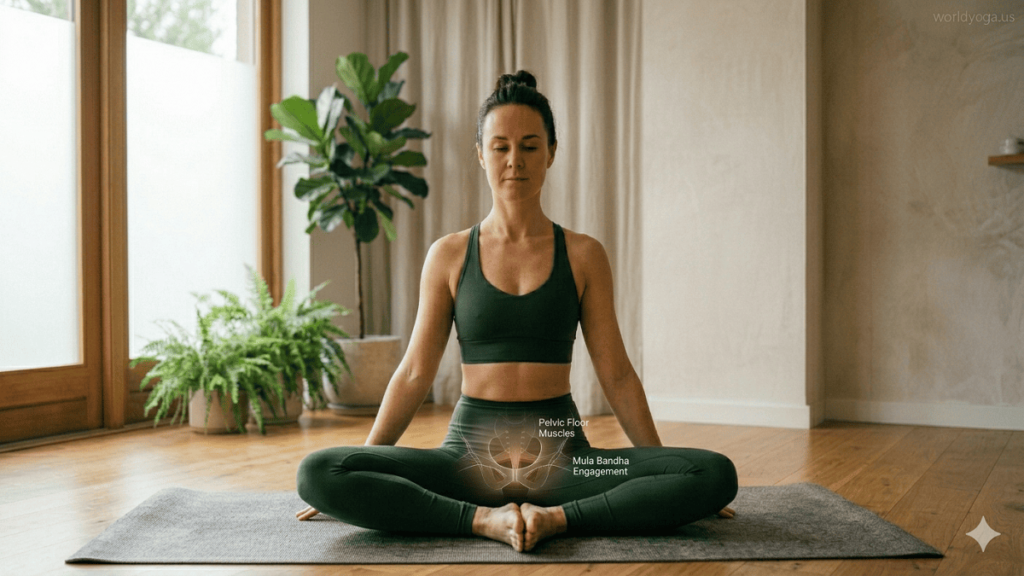
Which muscles and energy locks are engaged during the practice?
Mulabandhasana is a seated stability practice that combines posture with the internal activation of Mula Bandha. Unlike external yoga postures, its primary focus is subtle neuromuscular engagement and energetic control at the base of the body. It integrates deep muscular activation with traditional yogic energy locking systems.
1. Muscles engaged during the practice
Primary muscles (pelvic floor complex)
The main activation occurs in the pelvic floor, which forms a supportive muscular sling at the base of the pelvis:
- Pubococcygeus (PC muscle)
- Puborectalis
- Iliococcygeus
These muscles gently contract inward and upward, creating the “root lift” sensation essential to the practice.
Deep core stabilizers
These muscles assist in maintaining spinal stability during engagement:
- Transverse abdominis (deep abdominal stabilizer)
- Multifidus (spinal support muscles)
- Diaphragm (breath coordination muscle)
They work together to stabilize internal pressure and support posture.
Secondary supporting muscles
- Lower abdominal muscles (light engagement only)
- Inner thigh adductors (stabilization role)
- Gluteal muscles (should remain relaxed, minimal involvement)
Overuse of these muscles is considered incorrect in this practice.
2. Energy locks (Bandhas) involved
In yogic physiology, Mulabandhasana primarily involves one of the three major energy locks:
Mula Bandha (Root Lock)
- Located at the base of the spine and pelvic floor
- Associated with grounding, stability, and control of pranic energy
- Considered the foundational lock of the body
This is the primary energetic mechanism in the practice.
Secondary energetic interactions
Although not directly activated, Mula Bandha supports coordination with:
Uddiyana Bandha (Abdominal Lock)
- Located in the lower abdomen
- Associated with upward energy movement and core activation
- Works synergistically when breath control is integrated
Jalandhara Bandha (Throat Lock)
- Located at the throat and neck region
- Regulates energy flow and breath retention during advanced practices
- Often used in combination with the other locks in pranayama
3. Energetic system activation
From a yogic perspective, Mulabandhasana influences:
- Muladhara Chakra (Root Energy Center): primary activation point for grounding and stability
- Subtle regulation of pranic flow (life force energy) through the central energy channel (Sushumna Nadi)
- Improved balance between downward and upward energetic movement
4. Functional integration of muscles and energy
The practice creates a unified system where:
- Pelvic floor muscles provide physical support
- Core stabilizers maintain spinal integrity
- Breath coordinates internal pressure
- Energy locks regulate subtle energetic flow
Summary
Mulabandhasana engages deep pelvic floor muscles, core stabilizers, and minimal supporting muscle groups while primarily activating the Mula Bandha energy lock. It integrates physical stability with energetic grounding, making it a foundational practice for both body control and meditative awareness.
#Mulabhandasana in Hyderabad
What preparatory poses or techniques are recommended?
Mulabandhasana requires a combination of pelvic awareness, core stability, breath control, and comfortable seated alignment. Because it involves subtle activation of Mula Bandha, preparatory practices are essential to develop sensitivity in the pelvic floor and avoid unnecessary muscular tension.
1. Seated stability foundations
Sukhasana (Easy Pose)
Sukhasana
This is the most common preparatory posture. It helps:
- Establish upright spinal alignment
- Relax the lower body
- Create comfort for prolonged sitting
- Develop awareness of pelvic grounding
Vajrasana (Thunderbolt Pose)
Vajrasana
This kneeling posture supports:
- Natural spinal alignment
- Reduced lower back strain
- Improved focus on pelvic region awareness
It is especially useful for beginners building stability.
Padmasana (Lotus Pose – advanced)
Padmasana
For experienced practitioners, this posture helps:
- Deepen meditation stability
- Enhance energy flow awareness
- Support long-duration practice without discomfort
2. Pelvic floor awareness techniques
Before attempting full Mulabandhasana, practitioners should develop control over the pelvic muscles:
Gentle pelvic contractions
- Lightly engage pelvic floor as if stopping urination
- Release fully between contractions
- Focus on awareness, not force
This builds neuromuscular control of the correct region.
Ashwini Mudra (preparatory activation)
Ashwini Mudra
This technique involves:
- Gentle rhythmic contraction and release of the anal sphincter
- Developing awareness of lower pelvic muscles
- Strengthening mind–muscle connection in the root area
It is often used as a stepping stone toward Mula Bandha.
3. Breath control (Pranayama preparation)
Diaphragmatic breathing
- Inhale: expand abdomen naturally
- Exhale: soften and release tension
- Maintain smooth, unforced rhythm
This prepares coordination between breath and internal muscle engagement.
Nadi Shodhana (alternate nostril breathing)
Nadi Shodhana
Benefits include:
- Calming the nervous system
- Improving focus and concentration
- Preparing the mind for subtle internal awareness
4. Core stability preparation
Gentle core activation exercises
- Supine pelvic tilts
- Light engagement of transverse abdominis
- Basic plank holds (for intermediate practitioners)
These improve spinal support during seated practice.
5. Relaxation and release work
Before engaging Mulabandhasana:
- Relax glutes, thighs, and abdomen
- Release lower back tension
- Ensure no gripping in surrounding muscles
Relaxation is essential for correct isolation of the pelvic floor.
Summary
Effective preparation for Mulabandhasana includes stable seated postures, pelvic floor awareness training, breath control practices, and gentle core strengthening. These techniques ensure that the activation of Mula Bandha is subtle, accurate, and free from unnecessary muscular tension, supporting safe and effective practice.
#Mulabhandasana in Banglore
What are the benefits and precautions of Mulabandhasana?
Mulabandhasana is a seated yogic practice that integrates posture with internal engagement of Mula Bandha. It is widely used in traditional yoga systems to improve pelvic stability, core control, and meditative focus. Because it involves subtle internal muscular activation, correct technique and awareness are essential for safe and effective practice.
Benefits of Mulabandhasana
1. Strengthens pelvic floor muscles
The practice gently activates deep pelvic floor muscles, improving muscular tone and control in the base of the pelvis. This supports functional stability in daily movement and seated posture.
2. Enhances core stability
Mulabandhasana engages deep stabilizing muscles such as the transverse abdominis and multifidus. This improves spinal support, reduces slouching, and enhances overall postural endurance.
3. Improves posture and spinal alignment
Regular practice encourages an upright seated position. It helps maintain a neutral spine, reducing strain on the lower back during prolonged sitting or meditation.
4. Supports breath control and pranayama
The coordination between pelvic engagement and breathing improves respiratory awareness. It enhances control during pranayama practices by stabilizing internal pressure and breath flow.
5. Increases concentration and mental focus
Because the practice requires subtle internal awareness, it trains the mind to remain attentive and centered. This improves focus during meditation and reduces mental distraction.
6. Promotes grounding and stability (traditional view)
In yogic philosophy, Mula Bandha is associated with the Muladhara (root) energy center. It is believed to enhance grounding, emotional stability, and a sense of inner security.
Precautions for Mulabandhasana
1. Avoid excessive muscular contraction
One of the most common mistakes is over-tightening the pelvic floor. This can create unnecessary tension in the abdomen, glutes, or lower back and reduce effectiveness.
2. Do not hold the breath forcefully
Breathing should remain natural and smooth. Breath holding or strain can increase internal pressure and cause discomfort.
3. Avoid engaging surrounding muscles incorrectly
The glutes, thighs, and abdominal muscles should remain relaxed. Overuse of these muscles indicates incorrect technique.
4. Not suitable during certain medical conditions
Avoid or seek professional guidance if there are:
- Pelvic pain or dysfunction
- Recent abdominal or pelvic surgery
- Hernia or severe lower back conditions
5. Practice gradually and under guidance
Because the engagement is subtle, beginners should learn slowly under supervision to avoid incorrect muscle patterns.
6. Stop if discomfort occurs
Any pain, pressure, or strain in the pelvic or lower abdominal region is a sign to reduce intensity or discontinue practice.
Summary
Mulabandhasana offers significant benefits in pelvic strength, core stability, posture, breath control, and mental focus. However, it requires gentle engagement, correct alignment, and mindful progression to ensure safety and effectiveness while practicing Mula Bandha.
#Mulabhandasana in Pune
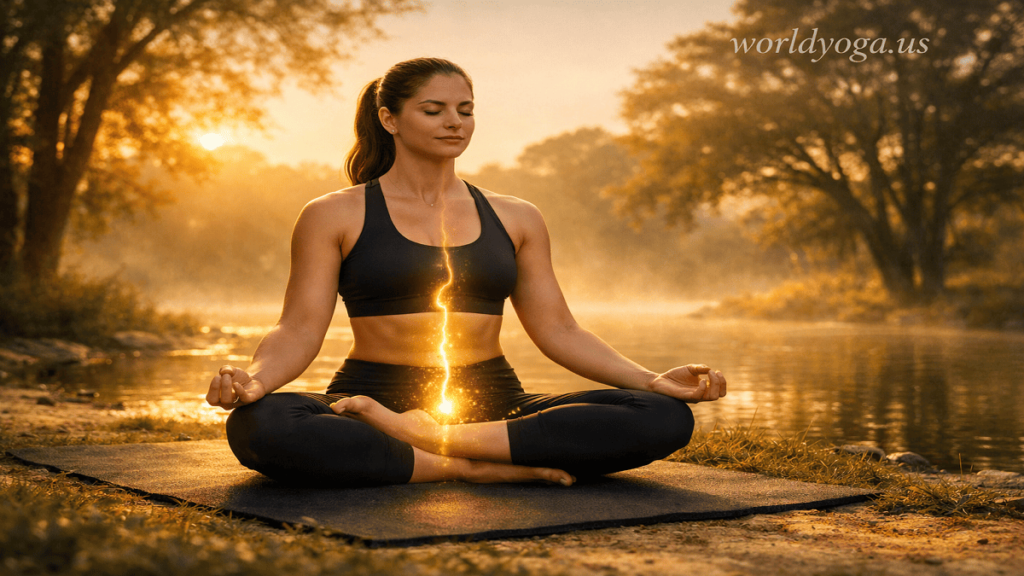
Case Study of Mulabhandasana
Mulabandhasana is a seated yogic practice that combines stable posture with the internal activation of Mula Bandha. It is traditionally used to improve pelvic floor control, core stability, and meditative focus. This case study explores its application in a structured yoga intervention program aimed at improving posture, breath regulation, and neuromuscular awareness.
1. Background and objective
The case study involved adults with sedentary lifestyles, mild postural imbalances, and reduced core strength. Common issues included slouched sitting posture, shallow breathing patterns, and weak pelvic floor awareness.
The primary objectives were:
- Improve pelvic floor activation and control
- Enhance spinal alignment during seated posture
- Support breath awareness and regulation
- Improve concentration during meditation practices
2. Methodology
The intervention was conducted over 6–8 weeks with supervised daily practice.
Practice structure:
- 10–15 minutes per session
- Seated posture (Sukhasana or Vajrasana)
- Gentle activation of Mula Bandha with breath coordination
- Gradual progression from short holds to sustained awareness
Supporting techniques included:
- Diaphragmatic breathing
- Basic pelvic floor awareness exercises
- Simple seated meditation practices
3. Observations and outcomes
3.1 Improved pelvic floor awareness
Participants developed better control over deep pelvic muscles. Initially difficult to isolate, these muscles became more responsive with consistent practice.
3.2 Enhanced core stability
There was noticeable improvement in upright seated posture and reduction in lower back fatigue during prolonged sitting.
3.3 Better breath control
Breathing became slower, deeper, and more coordinated. Participants reported improved ability to maintain steady breath during stress.
3.4 Increased postural endurance
Sitting for longer durations without discomfort became easier due to improved spinal alignment and reduced muscular strain.
3.5 Improved mental focus
Participants demonstrated increased concentration during meditation sessions and reduced cognitive distraction.
4. Limitations
- Difficulty in correctly identifying pelvic floor muscles in early stages
- Tendency to over-contract surrounding muscles such as glutes and abdomen
- Requires consistent supervision for correct technique development
- Subtle nature makes self-correction challenging
5. Safety considerations
Key safety guidelines followed:
- Avoid forceful contraction of pelvic muscles
- Maintain relaxed breathing at all times
- Prevent engagement of unnecessary muscle groups
- Discontinue practice if pain or discomfort occurs
- Ensure gradual progression under guidance
6. Conclusion
Mulabandhasana is an effective yogic practice for improving pelvic stability, core strength, posture, and breath control. When practiced correctly and consistently, it enhances both physical and mental stability. However, due to its subtle internal nature, proper guidance and gradual progression are essential for safe and effective results in practices involving Mula Bandha.
#Mulabhandasana in Delhi
White Paper of Mulabhandasana
1. Executive Summary
Mulabandhasana is a foundational yogic practice that combines a stable seated posture with the internal activation of Mula Bandha. It is designed to enhance pelvic floor control, core stability, spinal alignment, and meditative awareness. Unlike dynamic yoga postures, Mulabandhasana emphasizes subtle neuromuscular engagement and breath-integrated awareness, making it a key practice in traditional yoga therapy and modern mind–body conditioning systems.
This white paper explores its anatomical basis, physiological effects, therapeutic applications, safety considerations, and relevance in contemporary wellness and rehabilitation contexts.
2. Anatomical and physiological framework
Mulabandhasana primarily involves activation of the pelvic floor muscle complex, including:
- Pubococcygeus (PC muscle)
- Puborectalis
- Iliococcygeus
These muscles support the base of the pelvis and play a key role in:
- Pelvic organ stability
- Intra-abdominal pressure regulation
- Core coordination
Secondary involvement includes:
- Transverse abdominis (deep core stabilizer)
- Multifidus (spinal support muscles)
- Diaphragm (breath coordination system)
The engagement is subtle, isometric, and internally focused.
3. Functional and physiological effects
3.1 Neuromuscular coordination
The practice improves voluntary control of deep pelvic muscles and enhances coordination between pelvic floor and core stabilizers.
3.2 Core stability and posture
It strengthens deep stabilizing muscles, improving spinal alignment and reducing postural fatigue during prolonged sitting.
3.3 Breath regulation
Mulabandhasana enhances synchronization between pelvic engagement and respiratory control, supporting more efficient and stable breathing patterns.
3.4 Mental focus and attention control
The subtle nature of the practice improves concentration, mindfulness, and internal awareness during meditation.
4. Therapeutic applications
Mulabandhasana is applied in:
- Yoga therapy for pelvic floor strengthening
- Rehabilitation programs for postural dysfunction
- Core stabilization training in sedentary populations
- Breath retraining and stress management programs
- Meditation-based mental focus enhancement
It is particularly valuable in addressing weak core engagement due to sedentary lifestyles.
5. Energetic framework (traditional yoga perspective)
In classical yogic philosophy, Mulabandhasana is associated with:
- Muladhara Chakra (Root Energy Center)
- Grounding and emotional stability
- Regulation of pranic (life force) energy flow
It is considered a preparatory practice for advanced pranayama and meditation techniques.
6. Safety and risk considerations
Key precautions include:
- Avoid excessive contraction of pelvic muscles
- Do not hold breath forcefully
- Prevent overuse of glutes, abdomen, or thighs
- Avoid during acute pelvic or abdominal conditions
- Require gradual progression under qualified guidance
Incorrect technique may lead to muscular tension or ineffective activation.
7. Methodological role in yoga systems
Mulabandhasana functions as a foundational stability and awareness technique, supporting:
- Seated meditation practices
- Pranayama (breath control techniques)
- Advanced yogic energy regulation practices
It bridges physical stability with internal awareness training.
8. Conclusion
Mulabandhasana is a highly refined internal yogic practice that integrates pelvic floor activation, core stabilization, and breath awareness. Its value lies in its ability to unify physical alignment, respiratory control, and mental focus. When practiced correctly, it enhances posture, stability, and meditative depth while supporting overall mind–body integration.
References
- https://www.yogajournal.com/practice/mula-bandha/
- https://www.britannica.com/topic/yoga-exercise-and-meditation
- https://www.ncbi.nlm.nih.gov/pmc/articles/PMC4268608/
#Mulabhandasana in Kolkata
Industry Application of Mulabhandasana
Mulabandhasana is a seated yogic practice that integrates posture with internal engagement of Mula Bandha. Because it develops pelvic floor control, core stability, breath regulation, and focused awareness, it has strong applications across healthcare, rehabilitation, fitness, sports science, corporate wellness, and education sectors.
1. Healthcare and physiotherapy industry
In clinical settings, Mulabandhasana is used as a pelvic floor and core stabilization training tool.
Key applications include:
- Supporting rehabilitation for pelvic floor weakness
- Assisting postural correction therapy programs
- Improving lower back stability and spinal support
- Enhancing neuromuscular control in sedentary patients
Physiotherapists often integrate it with breathing retraining and gentle core activation exercises.
2. Women’s health and pelvic rehabilitation
In women’s health care, Mulabandhasana-based techniques are applied in:
- Postpartum recovery programs
- Pelvic floor dysfunction therapy
- Bladder control improvement training
- Core reconnection after childbirth
It is widely used for restoring awareness and strength in deep pelvic musculature.
3. Fitness and functional training industry
In fitness systems, Mulabandhasana is used as a deep core activation and stability foundation.
Applications include:
- Improving core bracing for strength training
- Enhancing spinal support during compound lifts
- Injury prevention for lower back and hip strain
- Developing internal stability for athletic movements
It is especially valuable in functional training programs that emphasize movement efficiency.
4. Sports performance and athletic conditioning
Athletes use Mula Bandha principles to enhance:
- Core control during dynamic movement
- Balance and stability in high-impact sports
- Breath regulation under physical stress
- Injury prevention in lumbar and pelvic regions
It is relevant in sports such as running, martial arts, gymnastics, and football.
5. Corporate wellness programs
In workplace wellness environments, Mulabandhasana is adapted for posture correction and stress management.
Applications include:
- Reducing lower back fatigue from prolonged sitting
- Improving seated posture and spinal alignment
- Supporting mindfulness and breath awareness practices
- Enhancing focus and mental clarity during work breaks
Its subtle nature makes it suitable for office-based practice.
6. Yoga, meditation, and mindfulness industry
In yoga studios and meditation systems, Mulabandhasana is used to:
- Stabilize seated meditation posture
- Deepen pranayama (breathing practices)
- Improve concentration and internal awareness
- Support progression into advanced yogic practices
It is considered a foundational technique in traditional yoga systems.
7. Education and personal development
In yoga education programs, it is introduced to:
- Develop early awareness of pelvic floor control
- Teach foundational core engagement principles
- Support mindfulness-based physical education
- Build groundwork for advanced yogic practices
8. Summary
Mulabandhasana has wide industry relevance due to its ability to:
- Strengthen pelvic floor and core systems
- Improve posture and spinal stability
- Enhance breath control and focus
- Support rehabilitation and injury prevention
- Promote mental clarity and grounding
References
- https://www.yogajournal.com/practice/mula-bandha/
- https://www.britannica.com/topic/yoga-exercise-and-meditation
- https://www.ncbi.nlm.nih.gov/pmc/articles/PMC4268608/
#Mulabhandasana in Mumbai
Ask FAQs
What is Mulabandhasana?
Mulabandhasana is a seated yogic practice that combines stable posture with internal activation of Mula Bandha. It focuses on gently engaging the pelvic floor muscles while maintaining an upright spine to support stability, breath control, and meditation.
What is the main purpose of Mulabandhasana?
The main purpose is to develop pelvic floor awareness, improve core stability, enhance spinal alignment, and support deeper focus during meditation and pranayama practices. It is considered a foundational technique in traditional yoga systems.
Who can practice Mulabandhasana?
Most healthy individuals can practice it, especially beginners in yoga and meditation. However, it is recommended to learn under guidance, particularly for those who are new to pelvic floor awareness or have limited experience with internal yoga techniques.
What are the common mistakes in this practice?
Common mistakes include over-contracting the pelvic muscles, tightening the abdomen or glutes, holding the breath, and applying excessive force. The practice should remain subtle, controlled, and relaxed.
Are there any precautions to follow?
Yes. People with pelvic pain, recent surgeries, hernia, or abdominal conditions should consult a healthcare professional before practicing. It is also important to avoid strain, maintain natural breathing, and progress gradually.
Table of Contents
Disclaimer:
Mulabandhasana is a traditional yogic practice intended for general wellness, breath awareness, and internal stability training. It is not a medical treatment and should not replace professional healthcare advice. Individuals with pelvic, abdominal, or post-surgical conditions should consult a qualified healthcare professional before practicing. Proper guidance is recommended to ensure safe and correct technique.