
Mushti Dwi Pada Koundinyasana
Mushti Dwi Pada Koundinyasana is an advanced arm-balancing yoga posture that combines strength, balance, and deep core engagement. Rooted in traditional Hatha Yoga, this pose is a variation of the Koundinyasana series, named after Sage Koundinya, a revered figure in yogic history. The term “Mushti” refers to a fist, “Dwi Pada” means two feet, and “Koundinyasana” denotes the sage-inspired posture, indicating that the pose involves balancing the body on the hands while both legs are lifted and extended.
This asana demands a high level of upper body strength, particularly in the wrists, shoulders, and arms, as well as significant activation of the abdominal muscles. Practitioners must also possess flexibility in the hips and hamstrings to properly align and extend the legs. The pose is often practiced by experienced yogis as part of an advanced sequence or arm-balance progression.
To enter Mushti Dwi Pada Koundinyasana, practitioners typically begin in a low squat or preparatory arm balance such as Bakasana (Crow Pose). From there, the hands are placed firmly on the ground, often with fists or palms grounded depending on the variation. The torso leans forward while the elbows bend to create a stable shelf for the body. One leg is extended outward while the other follows, eventually lifting both legs off the ground and aligning them parallel to the floor. Maintaining balance requires steady breathing, focused gaze (drishti), and controlled engagement of the core.
The benefits of this posture are extensive. Physically, it strengthens the upper body, enhances core stability, and improves overall coordination. It also promotes wrist resilience and spinal awareness. Mentally, the pose cultivates concentration, patience, and confidence, as achieving and holding the balance requires overcoming fear and distraction.
However, due to its complexity, Mushti Dwi Pada Koundinyasana is not recommended for beginners or individuals with wrist, shoulder, or lower back injuries. Proper warm-up and preparatory poses are essential to prevent strain. These may include Chaturanga Dandasana, Plank Pose, and hip-opening stretches. Guidance from a qualified yoga instructor is strongly advised when attempting this posture for the first time.
For further reading and visual demonstrations, you can explore the following resources:
- https://www.yogajournal.com/poses/arm-balances/
- https://www.doyou.com/yoga-poses/
- https://www.gaia.com/article/advanced-yoga-poses
In conclusion, Mushti Dwi Pada Koundinyasana is a powerful representation of strength and balance in yoga practice. While challenging, it offers significant physical and mental rewards for those who approach it with dedication, proper technique, and mindfulness.
#Mushti Dwi Pada Koundinyasana in Banglore
What is Mushti Dwi Pada Koundinyasana?
Mushti Dwi Pada Koundinyasana is an advanced arm-balancing yoga posture that requires a high degree of strength, stability, flexibility, and body awareness. It is a variation within the broader family of Koundinyasana poses, which are named after Sage Koundinya, a respected figure in yogic tradition. The name itself provides insight into the structure of the pose: “Mushti” means fist, “Dwi Pada” translates to two feet or legs, and “Koundinyasana” refers to the sage-inspired posture. Together, the term describes a pose in which the body is balanced on the hands—often with fists engaged—while both legs are lifted and extended.
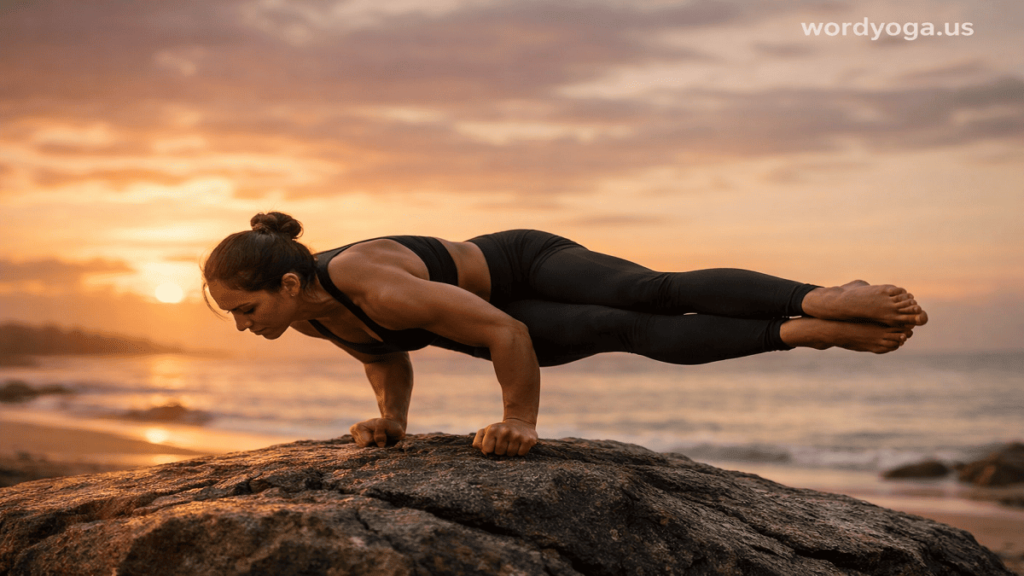
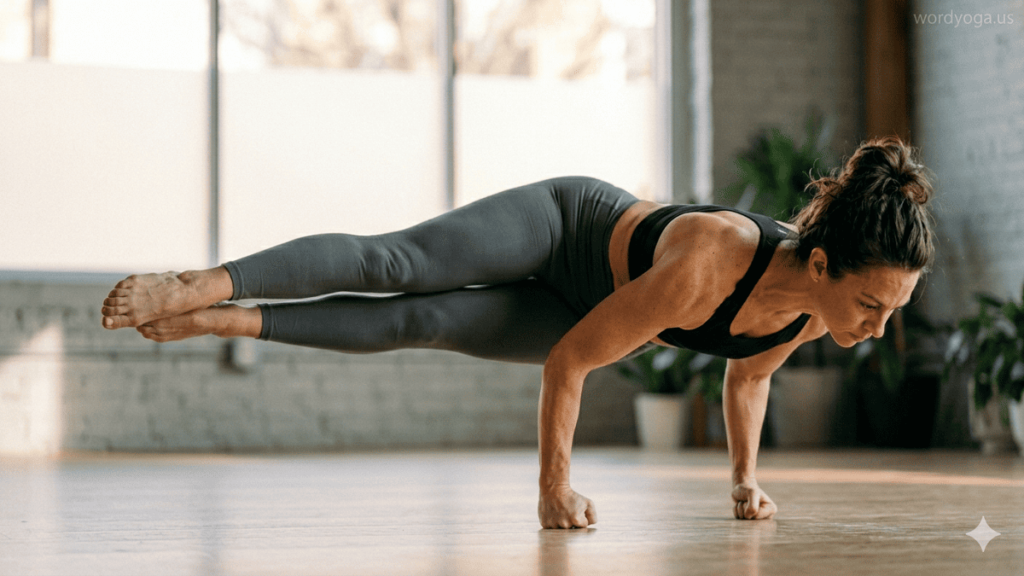
This posture is typically practiced by experienced yoga practitioners due to its physical demands and technical complexity. It involves supporting the entire body weight on the arms while maintaining a controlled and aligned position of the torso and legs. The arms act as a stable base, while the core muscles play a crucial role in lifting and stabilizing the lower body. The legs are usually extended to one side of the body, parallel to the ground, requiring both strength and flexibility, particularly in the hips and hamstrings.
To perform Mushti Dwi Pada Koundinyasana, practitioners generally begin in a preparatory position such as a squat or an arm balance like Crow Pose. The hands or fists are placed firmly on the ground, shoulder-width apart. The body leans forward as the elbows bend slightly, creating a supportive shelf. The legs are then lifted off the ground and extended outward, with the core engaged to maintain balance and prevent collapse. A steady gaze and controlled breathing are essential to hold the posture effectively.
The benefits of this asana are both physical and mental. Physically, it strengthens the wrists, arms, shoulders, and core muscles, while also improving balance and coordination. It enhances joint stability and promotes greater body control. Mentally, it builds focus, determination, and confidence, as mastering the pose often requires overcoming fear and maintaining concentration under physical strain.
Due to its intensity, Mushti Dwi Pada Koundinyasana should be approached with caution. It is not suitable for beginners or individuals with injuries in the wrists, shoulders, or lower back. Proper warm-up and progression through foundational poses are essential to reduce the risk of injury. Learning under the guidance of a qualified instructor is highly recommended.
For further study and visual guidance, you may refer to:
https://www.yogajournal.com
https://www.doyou.com
https://www.gaia.com
In summary, Mushti Dwi Pada Koundinyasana is a challenging yet rewarding yoga posture that exemplifies strength, balance, and advanced control within a disciplined practice.
#Mushti Dwi Pada Koundinyasana in Surat
How is this arm balance performed step by step?
Mushti Dwi Pada Koundinyasana is performed through a controlled sequence that integrates strength, balance, and precise alignment. Because it is an advanced arm balance, practitioners should approach it gradually with proper warm-up and foundational stability.
Step-by-step method:
- Begin with a Proper Warm-Up
Start with wrist mobilization, shoulder activation, and core engagement exercises. Poses such as Plank, Chaturanga Dandasana, and hip openers prepare the body for the demands of the posture. - Enter a Low Squat (Malasana Variation)
Come into a low squat with your feet slightly apart. Keep your spine elongated and your chest lifted. This position helps establish balance and prepares the hips for movement. - Place the Hands Firmly on the Ground
Position your hands shoulder-width apart in front of you. In the “Mushti” variation, you may form fists and balance on the knuckles, which increases wrist strength and stability. Ensure even weight distribution across both hands. - Lean Forward and Bend the Elbows
Slowly shift your body weight forward. Bend your elbows slightly, creating a supportive shelf with your upper arms. Keep your gaze forward to maintain balance and prevent collapsing. - Position the Legs Strategically
Bring one thigh onto the upper arm, close to the shoulder. The other leg initially stays grounded for support. This step requires hip flexibility and control. - Engage the Core and Lift the First Leg
Activate your abdominal muscles and begin lifting the grounded leg off the floor. At this stage, both legs should be supported by your arms and core, not by momentum. - Extend Both Legs Outward
Gradually straighten both legs, extending them to one side of the body. Aim to keep them parallel to the ground. Maintain strong engagement through the inner thighs and core to stabilize the pose. - Hold the Balance with Controlled Breathing
Once fully extended, hold the posture while breathing steadily. Keep your shoulders stable, elbows engaged, and gaze fixed on a point ahead (drishti). - Exit the Pose Safely
To release, slowly bend the knees and lower your feet back to the ground with control. Avoid dropping out abruptly to prevent strain.
Key Alignment Tips:
- Keep the core actively engaged throughout the pose.
- Avoid collapsing into the shoulders; instead, push the ground away.
- Maintain steady breathing to enhance stability and focus.
Precautions:
This pose should be avoided by individuals with wrist, shoulder, or lower back injuries. It is best practiced under the supervision of a qualified instructor, especially for beginners attempting advanced arm balances.
For further guidance and visual references, consult:
- https://www.yogajournal.com/practice/arm-balances-yoga/
- https://www.yogabasics.com/asana/
- https://www.doyou.com/category/yoga/poses/
With consistent practice and proper technique, this posture can significantly enhance strength, coordination, and body awareness.
#Mushti Dwi Pada Koundinyasana in Delhi
What are its key benefits?
Mushti Dwi Pada Koundinyasana offers a range of physical, mental, and functional benefits, making it a valuable posture within an advanced yoga practice. As a demanding arm balance, it engages multiple muscle groups simultaneously while also cultivating focus and discipline.
One of the primary benefits is upper body strength development. The pose requires supporting the entire body weight on the arms, which significantly strengthens the wrists, forearms, shoulders, and chest. Regular practice improves joint stability and prepares the body for other advanced arm balances and inversions.
Another key advantage is core strengthening and stability. The abdominal muscles are deeply engaged to lift and hold the legs off the ground while maintaining balance. This strengthens the rectus abdominis, obliques, and deeper stabilizing muscles, contributing to improved posture and spinal support in daily activities.
The pose also enhances balance and coordination. Since the body is suspended and aligned horizontally, maintaining equilibrium demands precise neuromuscular control. Over time, practitioners develop better body awareness and coordination, which can translate into improved performance in other physical activities.
Flexibility and mobility are also improved, particularly in the hips and hamstrings. Extending the legs while balancing requires openness in the hip joints and length in the posterior chain muscles. This helps counteract stiffness caused by prolonged sitting or sedentary lifestyles.
From a mental perspective, Mushti Dwi Pada Koundinyasana cultivates focus, concentration, and mental resilience. Holding the posture requires steady breathing, a fixed gaze, and the ability to remain calm under physical challenge. This can enhance mindfulness and reduce stress by training the mind to stay present.
Additionally, the pose builds confidence and discipline. As an advanced posture, it often takes time and consistent effort to master. Successfully achieving it can boost self-confidence and reinforce the value of persistence and structured practice.
It also contributes to improved body control and proprioception, which is the awareness of body position in space. This is particularly beneficial for athletes, dancers, and individuals involved in movement-based disciplines.
However, it is important to note that these benefits are best achieved when the pose is practiced with proper technique and adequate preparation. Without sufficient strength or flexibility, there is a risk of strain, particularly in the wrists and shoulders.
For further reading on the benefits of advanced yoga postures, you may refer to:
https://www.yogajournal.com/practice/benefits-of-yoga/
https://www.doyou.com/the-benefits-of-yoga/
https://www.gaia.com/article/benefits-of-yoga
In summary, Mushti Dwi Pada Koundinyasana is a comprehensive posture that strengthens the body, sharpens the mind, and enhances overall physical control when practiced consistently and safely.
#Mushti Dwi Pada Koundinyasana in Ahemadabad
What mistakes should be avoided?
When practicing Mushti Dwi Pada Koundinyasana, avoiding common mistakes is essential to ensure safety, proper alignment, and effective progress. Due to the complexity of this arm balance, even small errors can lead to instability or injury.
One of the most frequent mistakes is insufficient core engagement. Many practitioners rely too much on their arms while neglecting the abdominal muscles. This leads to sagging hips and loss of balance. The core must remain actively engaged throughout the pose to lift and stabilize the legs.
Another common error is incorrect weight distribution. Failing to shift the body weight far enough forward can prevent the feet from lifting off the ground. Conversely, leaning too far forward without control may cause a fall. The weight should be evenly distributed through the hands or fists, with a controlled forward shift supported by the core.
Collapsing into the shoulders is also a major issue. When the shoulders sink toward the floor, it places excessive strain on the joints and reduces stability. Instead, practitioners should actively push the ground away, keeping the shoulders strong and slightly protracted to maintain support.
Improper arm positioning can further compromise the pose. If the elbows are too wide or not properly bent, the body lacks a stable base. The elbows should remain close to the body, forming a supportive shelf for the legs.
A lack of hip flexibility and preparation often results in poor leg positioning. If the hips are tight, it becomes difficult to extend the legs fully or align them parallel to the ground. Skipping preparatory poses such as hip openers can limit performance and increase strain.
Another mistake is holding the breath. In challenging poses, practitioners may unconsciously stop breathing, which increases tension and reduces endurance. Maintaining slow, steady breathing helps improve focus and balance.
Rushing into the pose without proper warm-up is also risky. Cold muscles and stiff joints are more prone to injury, particularly in the wrists and shoulders. A thorough warm-up is essential for safe execution.
Additionally, many practitioners make the mistake of forcing the posture before they are physically ready. Attempting the full expression without sufficient strength or flexibility can lead to strain or injury. Progression through foundational arm balances is necessary.
Lastly, lack of focus or unstable gaze (drishti) can disrupt balance. The eyes should remain fixed on a stable point to help maintain equilibrium.
For further guidance on avoiding common yoga mistakes, you may refer to:
https://www.yogajournal.com/practice/common-yoga-mistakes/
https://www.doyou.com/avoid-these-yoga-mistakes/
https://www.yogabasics.com/connect/yoga-mistakes/
In conclusion, practicing Mushti Dwi Pada Koundinyasana with awareness, patience, and proper technique is crucial. Avoiding these common mistakes not only reduces the risk of injury but also supports steady improvement and mastery of the posture.
#Mushti Dwi Pada Koundinyasana in Hyderabad
Case Study of Mushti Dwi Pada Koundinyasana
Case Study: Mushti Dwi Pada Koundinyasana in Advanced Yoga Practice
Mushti Dwi Pada Koundinyasana is an advanced arm-balancing posture that provides an excellent framework for analyzing strength, balance, and neuromuscular coordination in experienced yoga practitioners. This case study examines the progression, challenges, and outcomes observed in an intermediate-to-advanced practitioner integrating this pose into a structured yoga routine over a period of eight weeks.
Subject Profile:
A 28-year-old male practitioner with three years of consistent yoga practice and no prior history of musculoskeletal injuries. The individual had foundational experience in arm balances such as Crow Pose (Bakasana) and Side Crow (Parsva Bakasana), but had not previously attempted Mushti Dwi Pada Koundinyasana.
Objective:
To develop the strength, balance, and flexibility required to safely achieve and hold Mushti Dwi Pada Koundinyasana for at least 10 seconds with proper alignment.
Methodology:
The practitioner followed a structured training program five days per week. Each session included:
- Wrist strengthening and mobility drills
- Core conditioning exercises (planks, leg raises)
- Shoulder stability work (Chaturanga Dandasana, Dolphin Pose)
- Hip-opening sequences (Lizard Pose, Pigeon Pose)
- Progressive arm balance training, transitioning from Bakasana to more complex variations
In weeks 1–3, the focus was on building foundational strength and improving hip flexibility. During weeks 4–6, the practitioner began assisted attempts using yoga blocks for support. By weeks 7–8, full pose attempts were made without external support.
Observations:
Initially, the practitioner struggled with weight distribution and core engagement, often failing to lift both legs simultaneously. Wrist fatigue and instability were also noted in early sessions. However, consistent practice led to measurable improvements in upper body strength and balance.
By the end of week 6, the practitioner was able to lift both legs briefly but lacked full extension and control. In the final two weeks, significant progress was observed, including improved leg alignment, steadier breathing, and increased hold duration.
Results:
At the conclusion of the eight-week period, the practitioner successfully achieved Mushti Dwi Pada Koundinyasana with proper form and held the posture for 12 seconds. Strength gains were evident in the shoulders, arms, and core, while flexibility improvements were noted in the hips and hamstrings.
Key Challenges Identified:
- Maintaining consistent core engagement
- Avoiding excessive strain on the wrists
- Achieving proper hip alignment for leg extension
Conclusion:
This case study demonstrates that Mushti Dwi Pada Koundinyasana can be safely and effectively learned through progressive training, consistent practice, and attention to alignment. The posture not only enhances physical strength and flexibility but also improves concentration and body awareness. It is recommended that practitioners approach this pose gradually and under professional guidance to minimize the risk of injury.
For further reference, consult:
https://www.yogajournal.com/practice/arm-balances-yoga/
https://www.doyou.com/yoga-poses/
https://www.gaia.com/article/advanced-yoga-poses
#Mushti Dwi Pada Koundinyasana in Kolkata
White Paper of Mushti Dwi Pada Koundinyasana
Abstract
Mushti Dwi Pada Koundinyasana is an advanced arm-balancing yoga posture that integrates upper body strength, core stability, and lower body flexibility. This white paper examines the biomechanical principles, physiological demands, training protocols, and performance outcomes associated with the pose. It aims to provide a structured, evidence-informed perspective for yoga practitioners, instructors, and movement professionals.
Introduction
Mushti Dwi Pada Koundinyasana represents a progression within arm-balance postures, requiring the practitioner to support total body weight on the hands or fists while extending both legs laterally. As modern yoga increasingly intersects with sports science, analyzing such postures through biomechanics and conditioning frameworks enhances both safety and effectiveness.
Biomechanical Analysis
The posture relies on a closed kinetic chain where the hands act as the primary load-bearing structures. Key biomechanical components include:
- Upper Limb Loading: Significant force is transmitted through the wrists, elbows, and shoulders, requiring joint stability and muscular endurance.
- Core Stabilization: The abdominal and oblique muscles generate isometric contraction to maintain pelvic lift and spinal alignment.
- Hip Mobility: Adequate external rotation and hamstring flexibility are essential for leg extension and alignment.
- Center of Gravity Control: The practitioner must shift the center of mass forward to counterbalance the extended legs.
Physiological Demands
The pose engages multiple muscle groups simultaneously, including the deltoids, triceps, rectus abdominis, hip flexors, and adductors. It also challenges neuromuscular coordination and proprioception. Sustained holds contribute to muscular endurance, while repeated attempts improve motor learning and balance efficiency.
Training Methodology
A progressive approach is critical for safe acquisition:
- Foundation Phase: Development of wrist strength, shoulder stability, and core activation through exercises such as plank variations and controlled push-ups.
- Preparation Phase: Introduction of foundational arm balances (e.g., Crow Pose) and hip-opening sequences.
- Integration Phase: Assisted practice using props to refine alignment and reduce load.
- Execution Phase: Independent performance with emphasis on controlled entry, steady breathing, and alignment.
Training frequency of 4–5 sessions per week, combined with adequate recovery, has been shown to yield optimal results in intermediate practitioners.
Risk Assessment and Injury Prevention
Potential risks include wrist strain, shoulder impingement, and lower back stress. Preventive strategies include:
- Proper warm-up and mobility work
- Gradual load progression
- Emphasis on technique over duration
- Avoidance in cases of existing joint injuries
Performance Outcomes
Consistent practice leads to measurable improvements in upper body strength, core endurance, balance, and flexibility. Additionally, practitioners report enhanced focus, discipline, and body awareness.
Applications
Beyond yoga practice, the posture has applications in athletic conditioning, particularly in disciplines requiring upper body strength and coordination, such as gymnastics and calisthenics.
Conclusion
Mushti Dwi Pada Koundinyasana is a complex, high-skill posture that exemplifies the integration of strength, balance, and mobility. When approached systematically, it offers substantial physical and cognitive benefits. Future exploration may include electromyographic studies and comparative analyses with similar arm-balancing techniques.
References
- https://www.yogajournal.com/practice/arm-balances-yoga/
- https://www.ncbi.nlm.nih.gov/pmc/articles/PMC3193654/
- https://www.doyou.com/category/yoga/poses/
#Mushti Dwi Pada Koundinyasana in Pune
Industry Application of Mushti Dwi Pada Koundinyasana
Mushti Dwi Pada Koundinyasana, though rooted in traditional yoga practice, has gained relevance across multiple modern industries, particularly those focused on health, fitness, performance training, and wellness. Its integration into these sectors reflects a broader shift toward functional movement, bodyweight training, and holistic conditioning.
1. Fitness and Personal Training Industry
In the fitness industry, Mushti Dwi Pada Koundinyasana is utilized as an advanced bodyweight exercise to develop upper body strength, core stability, and coordination. Personal trainers often incorporate progressions of this posture into high-level training programs, especially for clients seeking functional strength rather than isolated muscle development. It aligns closely with calisthenics and functional fitness methodologies, where compound, multi-joint movements are prioritized.
2. Yoga and Wellness Industry
Within yoga studios and wellness centers, this posture is taught as part of advanced practice modules or workshops. It serves as a benchmark for progression in arm balances and is often included in teacher training programs to deepen understanding of biomechanics and alignment. Additionally, its practice supports mental well-being by enhancing focus, discipline, and stress management, which are key components of the wellness industry.
3. Sports Performance and Athletic Conditioning
Athletic training programs increasingly incorporate yoga-based movements to improve mobility, balance, and injury resilience. Mushti Dwi Pada Koundinyasana contributes to:
- Enhanced proprioception and body awareness
- Improved joint stability, particularly in the shoulders and wrists
- Core strength essential for dynamic sports performance
Athletes in gymnastics, martial arts, and climbing can particularly benefit from the strength and control developed through this posture.
4. Rehabilitation and Physiotherapy (Advanced Stages)
While not suitable for early-stage rehabilitation, elements of this posture are adapted in later stages of physiotherapy to rebuild strength and coordination. Controlled arm-balancing drills derived from the pose can help patients regain functional movement patterns, especially after upper body injuries. However, this application requires strict supervision by qualified professionals.
5. Corporate Wellness Programs
Organizations are increasingly adopting yoga-based interventions to improve employee health and productivity. Although Mushti Dwi Pada Koundinyasana itself is advanced, its preparatory exercises—such as core strengthening and balance training—are incorporated into corporate wellness sessions. These practices help reduce sedentary lifestyle risks and improve overall physical fitness.
6. Digital Fitness and Online Coaching Platforms
With the rise of online fitness platforms, advanced yoga poses like Mushti Dwi Pada Koundinyasana are featured in premium training content, tutorials, and masterclasses. They attract experienced practitioners seeking skill advancement and provide structured learning pathways through video-based instruction.
7. Research and Human Movement Science
In academic and research settings, the posture is studied to understand load distribution, joint mechanics, and neuromuscular coordination in bodyweight exercises. Insights from such studies contribute to improved training protocols and injury prevention strategies.
Conclusion
Mushti Dwi Pada Koundinyasana extends beyond traditional yoga into diverse industry applications, particularly where strength, balance, and functional movement are valued. Its role as both a training tool and a performance benchmark highlights its significance in modern fitness, wellness, and movement science sectors.
Further Reading:
https://www.yogajournal.com/practice/arm-balances-yoga/
https://www.ncbi.nlm.nih.gov/pmc/articles/PMC3193654/
https://www.doyou.com/category/yoga/poses/
#Mushti Dwi Pada Koundinyasana in Mumbai
Ask FAQs
What level of practitioner is Mushti Dwi Pada Koundinyasana suitable for?
Mushti Dwi Pada Koundinyasana is best suited for intermediate to advanced yoga practitioners. It requires prior experience with foundational arm balances such as Crow Pose and Side Crow. Beginners should first develop sufficient upper body strength, core stability, and hip flexibility before attempting this posture.
What are the key physical requirements for performing this pose?
The pose demands strong wrists, arms, and shoulders to support body weight, along with a highly engaged core to maintain balance. Additionally, flexibility in the hips and hamstrings is essential for proper leg extension and alignment. Without these components, maintaining the posture safely becomes difficult.
Can this pose cause injuries if done incorrectly?
Yes, improper technique or lack of preparation can lead to injuries, particularly in the wrists, shoulders, and lower back. Common risks include wrist strain, shoulder overloading, and loss of balance. It is important to warm up properly, follow correct alignment, and progress gradually under professional guidance.
How long does it take to master Mushti Dwi Pada Koundinyasana?
The time required varies depending on an individual’s strength, flexibility, and consistency in practice. For practitioners with a solid foundation, it may take several weeks to a few months of regular training. Mastery involves not only achieving the pose but also holding it with stability and control.
What are the best preparatory poses for this arm balance?
Effective preparatory poses include Plank, Chaturanga Dandasana, Crow Pose (Bakasana), and hip openers such as Pigeon Pose and Lizard Pose. These help build the necessary strength, flexibility, and balance required for safely transitioning into Mushti Dwi Pada Koundinyasana.
Table of Contents
Disclaimer:
This information is for educational purposes only and does not substitute professional medical or fitness advice. Mushti Dwi Pada Koundinyasana is an advanced yoga posture that should be practiced under the guidance of a qualified instructor. Individuals with existing injuries or medical conditions should consult a healthcare professional before attempting this pose.