
Parivritta Jathara Utthita Eka Padasana
Parivritta Jathara Utthita Eka Padasana is a powerful twisting yoga posture that combines spinal rotation, abdominal engagement, and leg extension into one integrated movement. Derived from Sanskrit terminology, “Parivritta” means revolved or twisted, “Jathara” refers to the abdomen, “Utthita” means extended, “Eka” means one, “Pada” means leg, and “Asana” means posture. This asana is widely appreciated in advanced yoga practice for its ability to strengthen the core, improve flexibility, and stimulate internal organs.
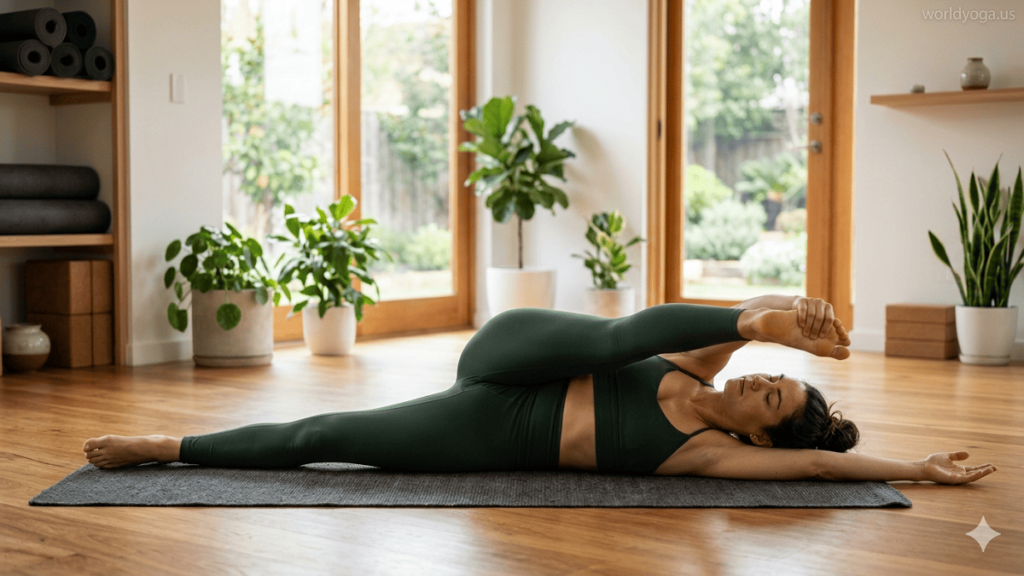
The posture is often considered a variation of Jathara Parivartanasana, also known as the Revolved Abdomen Pose. It focuses on controlled twisting movements while maintaining stability through the shoulders and spine. Practitioners typically perform this pose while lying on the back, extending one leg upward and rotating it across the body to create a deep abdominal and spinal twist.
How to Perform the Pose
Begin by lying flat on your yoga mat with both arms extended sideways at shoulder level. Raise one leg vertically while keeping the other grounded. Slowly move the raised leg across the body toward the opposite side while maintaining shoulder contact with the floor. Keep the movement slow and controlled, engaging the abdominal muscles throughout the transition. Hold the posture for several breaths before returning to the starting position and repeating on the opposite side.
Proper breathing is essential while practicing this asana. Deep inhalation helps lengthen the spine, while exhalation supports deeper twisting and muscle relaxation.
Key Benefits of Parivritta Jathara Utthita Eka Padasana
One of the primary advantages of this posture is improved spinal mobility. The twisting action helps release tension in the lower back and enhances flexibility throughout the vertebral column. It also activates the abdominal region, making it beneficial for strengthening the core muscles and supporting digestive health.
This pose may also improve balance and body coordination by requiring stability and controlled movement. The hamstrings, hips, and oblique muscles receive an effective stretch, which contributes to better posture and mobility.
In addition to physical benefits, twisting yoga postures are traditionally associated with stress reduction and nervous system relaxation. Regular practice may help calm the mind and improve focus during meditation and breathing exercises.
Safety and Practice Considerations
Beginners should practice this pose under professional guidance to avoid excessive strain on the lower back or neck. Individuals with spinal injuries, hernia issues, or severe abdominal conditions should consult a certified yoga instructor or healthcare professional before attempting the posture.
For detailed yoga posture references and guidance, readers can explore resources from Yogapedia and Fitsri Yoga. Additional instructional demonstrations are available on YouTube Yoga Tutorials.
#Parivritta Jathara Utthita Eka Padasana in India
How is Parivritta Jathara Utthita Eka Padasana performed correctly?
Parivritta Jathara Utthita Eka Padasana is an advanced supine twisting posture that requires flexibility, balance, and controlled abdominal engagement. The asana focuses on spinal rotation while strengthening the core and stretching the hips, hamstrings, and lower back. Correct alignment and mindful breathing are essential to safely practice this pose and gain its full benefits.
Step-by-Step Instructions
1. Begin in a Supine Position
Lie flat on your back on a yoga mat with your legs extended and feet together. Stretch your arms outward at shoulder height to form a “T” shape. Keep your palms facing downward for stability.
Relax your shoulders and ensure that your spine is aligned comfortably against the mat.
2. Raise One Leg
Slowly lift your right leg upward toward the ceiling while keeping the left leg grounded firmly on the floor. The raised leg should remain straight without bending the knee. Engage your abdominal muscles to support the lower back.
Maintain steady breathing and avoid lifting the hips prematurely.
3. Initiate the Twist
With control, move the raised leg across the body toward the left side. The movement should originate from the core rather than momentum. Keep both shoulders pressing into the floor to create a deep spinal twist.
The leg may either hover above the ground or lightly touch the floor depending on flexibility. Avoid forcing the stretch.
4. Turn the Head Oppositely
For a deeper twist, gently turn your head toward the opposite side of the extended leg. If the right leg crosses leftward, the head turns to the right. This action enhances spinal rotation and helps maintain balance in the posture.
Keep the neck relaxed and avoid excessive strain.
5. Hold the Pose
Remain in the posture for 20 to 30 seconds while breathing slowly and deeply. Each exhalation can help release muscular tension and deepen the twist naturally.
Focus on maintaining an even distribution of weight across the shoulders and back.
6. Return to Starting Position
Slowly engage the core muscles to bring the raised leg back to the center. Lower it gently to the floor and repeat the same sequence on the opposite side.
Controlled movement is important during both entry and exit from the pose.
Common Mistakes to Avoid
Many practitioners make the mistake of lifting the shoulders off the mat or forcing the leg too far across the body. These errors can strain the spine and reduce the effectiveness of the pose. Another common issue is holding the breath, which limits relaxation and mobility during the twist.
Practicing slowly with awareness helps improve alignment and prevents injury.
Tips for Safe Practice
Beginners can place a yoga block or cushion under the crossing leg for support. Practicing under the supervision of a certified yoga instructor is recommended, especially for those with lower back discomfort or limited flexibility.
#Parivritta Jathara Utthita Eka Padasana in Maharashtra

What is the proper alignment in this twisted single-leg supine variation?
Proper alignment in Parivritta Jathara Utthita Eka Padasana is essential for maximizing the therapeutic benefits of the pose while minimizing strain on the spine, hips, and neck. This twisted single-leg supine variation requires coordinated engagement of the core muscles, controlled spinal rotation, and balanced positioning of the shoulders and pelvis. Practicing with correct alignment helps improve flexibility, posture, and muscular stability.
Spine and Shoulder Alignment
The foundation of this posture begins with maintaining a long and neutral spine before entering the twist. While lying on the back, the shoulders should remain grounded evenly on the mat throughout the movement. One of the most important alignment principles is preventing the opposite shoulder from lifting as the raised leg crosses the body.
The chest should stay open and broad, allowing the twist to originate from the thoracic and abdominal region rather than collapsing into the lower back. Keeping both arms extended at shoulder height provides stability and support during the posture.
Leg Positioning and Hip Control
The raised leg should remain straight and active without excessive tension in the knee. Flexing the foot can help engage the leg muscles and maintain alignment. As the leg moves across the body, the pelvis rotates naturally, but the movement should remain controlled rather than forced.
The grounded leg must stay extended firmly on the floor with the toes pointing upward. This anchoring action stabilizes the hips and prevents unnecessary compression in the lumbar spine.
If flexibility is limited, the crossing leg does not need to touch the floor. Overextending can compromise spinal integrity and place stress on the sacroiliac joints.
Core Engagement and Breathing
Gentle engagement of the abdominal muscles is crucial for protecting the lower back during the twist. The core supports spinal rotation and helps maintain balance as the leg moves across the body.
Breathing should remain smooth and rhythmic throughout the posture. Inhalation helps lengthen the spine, while exhalation allows a deeper and safer twist. Avoid holding the breath, as this can create muscular tension and reduce mobility.
Head and Neck Placement
The head may turn in the opposite direction of the crossing leg to deepen the spinal rotation. However, the neck should remain relaxed and comfortable. Practitioners with cervical sensitivity may keep the head facing upward instead of rotating it fully.
Maintaining a soft jaw and relaxed facial muscles also contributes to overall stability and ease in the posture.
Alignment Mistakes to Avoid
Common alignment errors include bending the raised knee, lifting the shoulders off the floor, collapsing the chest, or forcing the twist beyond natural mobility. These mistakes can reduce the effectiveness of the pose and increase the risk of discomfort or injury.
Using props such as yoga bolsters or blocks under the crossing leg can provide additional support and improve alignment for beginners.
#Parivritta Jathara Utthita Eka Padasana in Ahemadabad
Which muscles are engaged during the posture?
Parivritta Jathara Utthita Eka Padasana is a dynamic twisting yoga posture that activates multiple muscle groups simultaneously. The pose combines spinal rotation, core stabilization, hip mobility, and hamstring flexibility, making it an effective full-body asana. Proper muscular engagement is essential for maintaining balance, protecting the spine, and achieving controlled movement throughout the posture.
Core Muscles
The abdominal region plays the most significant role in this asana. The obliques, particularly the internal and external oblique muscles, are heavily engaged during the twisting action. These muscles help rotate and stabilize the torso while controlling the movement of the raised leg.
The rectus abdominis and transverse abdominis also activate to support the lower back and maintain core stability. Deep core engagement prevents excessive strain on the lumbar spine and allows smoother spinal rotation.
Spinal and Back Muscles
Several muscles along the spine contribute to maintaining alignment and posture during the twist. The erector spinae muscles help support spinal extension and control the rotational movement. Smaller stabilizing muscles around the vertebrae, including the multifidus, assist in maintaining balance and spinal integrity.
The latissimus dorsi and quadratus lumborum may also become active as the body works to stabilize the torso and pelvis during the cross-body leg movement.
Hip and Glute Muscles
The gluteal muscles, particularly the gluteus medius and gluteus minimus, help stabilize the pelvis during the posture. The hip flexors engage while lifting and controlling the extended leg.
As the leg crosses the body, the outer hip muscles and deep rotators contribute to controlled rotation and mobility. The grounded leg also remains active to maintain pelvic balance and alignment.
Leg Muscles
The hamstrings are stretched deeply in the raised leg, especially when the knee remains straight. Simultaneously, the quadriceps engage to support leg extension and prevent knee collapse.
The inner thigh muscles, or adductors, assist in controlling the leg as it moves across the body. The calf muscles and foot stabilizers remain subtly engaged to maintain proper leg activation.
Shoulder and Arm Stabilizers
Although the posture primarily targets the core and lower body, the shoulders and arms provide essential stabilization. The deltoids and upper back muscles help keep the shoulders grounded against the mat.
Pressing the palms downward activates the triceps and shoulder stabilizers, preventing the upper body from shifting excessively during the twist.
Importance of Balanced Engagement
Balanced muscular activation is critical for safe and effective practice. Overusing flexibility without core support can place unnecessary pressure on the spine and joints. Controlled engagement allows practitioners to deepen the posture gradually while protecting the body from strain.
#Parivritta Jathara Utthita Eka Padasana in Hyderabad
What preparatory poses are recommended before practicing it?
Parivritta Jathara Utthita Eka Padasana is an advanced twisting posture that demands spinal mobility, hamstring flexibility, hip openness, and strong core engagement. Practicing appropriate preparatory poses before attempting this asana helps warm up the muscles, improve alignment, and reduce the risk of strain or injury. A well-structured preparation sequence also enhances balance and control during the twist.
Supine Core Activation Poses
Before entering deep twisting postures, activating the abdominal muscles is essential. Gentle core-strengthening poses prepare the body for controlled leg movement and spinal stabilization.
Supta Padangusthasana (Reclining Hand-to-Big-Toe Pose)
This pose stretches the hamstrings and calves while improving leg alignment and hip mobility. It also teaches practitioners how to maintain an extended leg without straining the lower back.
Apanasana (Knees-to-Chest Pose)
Apanasana helps release tension in the lumbar spine and gently activates the abdominal region. It creates awareness of pelvic positioning and encourages spinal relaxation before deeper rotations.
Twisting Preparatory Poses
Mild spinal twists are highly beneficial before practicing Parivritta Jathara Utthita Eka Padasana. These postures gradually increase spinal flexibility and prepare the oblique muscles for rotational movement.
Jathara Parivartanasana (Revolved Abdomen Pose)
This foundational twisting posture is one of the best preparations because it introduces the mechanics of spinal rotation in a gentler form. Practitioners learn how to keep the shoulders grounded while rotating the pelvis safely.
Bharadvajasana (Seated Twist)
Bharadvajasana improves thoracic mobility and gently stretches the spine, hips, and shoulders. It also helps coordinate breath with twisting actions, which is important for deeper supine twists.
Hamstring and Hip Openers
Flexible hamstrings and stable hips are necessary for maintaining correct alignment in the raised-leg variation of the pose.
Adho Mukha Svanasana (Downward-Facing Dog)
This posture lengthens the hamstrings, calves, and spine while strengthening the shoulders and arms. It also improves body awareness and overall flexibility.
Supta Baddha Konasana (Reclining Bound Angle Pose)
This restorative hip opener relaxes the inner thighs and groin muscles, allowing smoother movement during cross-body leg transitions.
Spinal Mobility and Relaxation Poses
Preparing the spine through gentle mobility exercises improves rotational freedom and reduces stiffness.
Marjaryasana-Bitilasana (Cat-Cow Pose)
Cat-Cow movements warm up the entire spinal column and improve coordination between breath and movement. This helps practitioners maintain fluidity during twisting postures.
Setu Bandhasana (Bridge Pose)
Bridge Pose activates the glutes, core, and spinal muscles while opening the chest and front body. It creates balanced muscular engagement before attempting deeper twists.
Importance of Gradual Preparation
Rushing into advanced twisting postures without preparation can place excessive stress on the lower back and hips. A progressive warm-up sequence improves circulation, increases flexibility, and enhances muscular control, making the final posture safer and more effective.
#Parivritta Jathara Utthita Eka Padasana in Banglore
What are the benefits and precautions of this reclined twisting pose?
Parivritta Jathara Utthita Eka Padasana is a reclined twisting yoga posture known for its ability to strengthen the core, improve spinal flexibility, and enhance body awareness. This advanced variation combines controlled abdominal engagement with deep rotational movement, making it beneficial for both physical conditioning and relaxation. However, because of its intensity, proper technique and safety precautions are essential for avoiding strain or injury.
Benefits of Parivritta Jathara Utthita Eka Padasana
Improves Spinal Mobility
One of the primary benefits of this posture is enhanced spinal flexibility. The twisting action gently mobilizes the vertebral column, helping release stiffness in the back and improving overall range of motion. Regular practice may support better posture and reduce muscular tension caused by prolonged sitting or poor alignment.
Strengthens the Core Muscles
The pose strongly activates the abdominal region, especially the obliques and deep core stabilizers. Maintaining the raised leg and controlled twist requires continuous engagement of the abdominal muscles, which helps improve core strength and stability.
A stronger core also contributes to better balance, spinal support, and reduced pressure on the lower back.
Enhances Digestive Function
Twisting yoga postures are traditionally associated with stimulating the abdominal organs and improving digestion. The gentle compression and release created during the twist may support circulation in the digestive tract and help relieve mild bloating or abdominal discomfort.
Stretches the Hips and Hamstrings
The extended leg position creates a deep stretch through the hamstrings, hips, and lower body muscles. Over time, this can improve flexibility and mobility, especially for practitioners with tight posterior chain muscles.
Reduces Stress and Mental Fatigue
Like many reclined yoga postures, this asana encourages relaxation and mindful breathing. Slow breathing combined with controlled movement may help calm the nervous system, reduce stress levels, and improve concentration.
Precautions and Safety Considerations
Avoid Forcing the Twist
One of the most important precautions is avoiding excessive rotation. Forcing the leg too far across the body can strain the lumbar spine, sacroiliac joints, and hip muscles. The movement should remain smooth and controlled at all times.
Protect the Neck and Shoulders
Practitioners should keep both shoulders grounded on the mat to prevent unnecessary spinal compression. The neck should remain relaxed, and individuals with cervical discomfort may choose not to rotate the head fully.
Use Modifications if Necessary
Beginners or individuals with limited flexibility can place a yoga block or bolster under the crossing leg for support. Slightly bending the raised knee may also reduce strain on the hamstrings and lower back.
Medical Conditions and Contraindications
People with spinal injuries, slipped discs, severe sciatica, hernia issues, or recent abdominal surgery should avoid this pose unless approved by a qualified healthcare professional or experienced yoga instructor. Pregnant practitioners should also approach deep twisting postures cautiously.
Final Thoughts
When practiced mindfully, Parivritta Jathara Utthita Eka Padasana can improve flexibility, muscular strength, spinal health, and relaxation. Consistent attention to alignment, breathing, and gradual progression ensures that practitioners experience the benefits of the pose safely and effectively.
#Parivritta Jathara Utthita Eka Padasana in Delhi
Case Study of Parivritta Jathara Utthita Eka Padasana
Parivritta Jathara Utthita Eka Padasana is an advanced reclined twisting yoga posture that integrates spinal mobility, core activation, balance, and controlled breathing. This case study explores the practical application, physical effects, challenges, and therapeutic outcomes associated with the pose when incorporated into a structured yoga routine. The study highlights how consistent practice can contribute to flexibility, muscular stability, and postural improvement.
Background of the Practitioner
A 34-year-old yoga practitioner with intermediate-level experience reported persistent lower back stiffness, reduced hamstring flexibility, and mild postural imbalance caused by prolonged desk work. Although physically active, the individual experienced discomfort during prolonged sitting and difficulty performing deep spinal twists.
A certified yoga instructor introduced Parivritta Jathara Utthita Eka Padasana as part of a six-week mobility and core-strengthening program. The practice schedule included four weekly yoga sessions focused on spinal mobility, abdominal engagement, and breath coordination.
Initial Challenges
During the first week, the practitioner experienced difficulty keeping both shoulders grounded while crossing the raised leg over the body. Limited hamstring flexibility also restricted the depth of the twist. Mild instability in the abdominal region made it challenging to control the movement without momentum.
To address these limitations, the instructor incorporated preparatory poses such as Supta Padangusthasana, Cat-Cow Pose, and gentle supine twists. A yoga block was placed beneath the crossing leg to reduce strain on the lumbar spine.
Practice Methodology
The practitioner performed the pose on both sides for approximately 20 seconds per repetition, gradually increasing the duration to 45 seconds over six weeks. Emphasis was placed on slow transitions, diaphragmatic breathing, and proper alignment rather than achieving maximum range of motion.
Each session included:
- Core activation exercises
- Hamstring stretching
- Spinal mobility drills
- Guided twisting sequences
- Relaxation and recovery postures
The instructor monitored shoulder stability, pelvic alignment, and breathing rhythm throughout the practice.
Observed Benefits
By the fourth week, the practitioner demonstrated improved control during spinal rotation and significantly better hamstring flexibility. Lower back stiffness decreased noticeably, especially after long working hours.
Core strength also improved, allowing smoother transitions into the posture without compensatory movements. The practitioner reported enhanced body awareness, better posture, and reduced muscular tension in the hips and lower spine.
An additional benefit was improved mental relaxation. The combination of mindful breathing and controlled twisting movements contributed to stress reduction and increased concentration during yoga sessions.
Key Findings
The case study demonstrated that Parivritta Jathara Utthita Eka Padasana can be highly effective for improving:
- Spinal flexibility
- Core stability
- Hip and hamstring mobility
- Postural alignment
- Neuromuscular coordination
However, the study also emphasized the importance of gradual progression, professional supervision, and preparatory exercises. Attempting the pose without sufficient flexibility or core support may increase the risk of lower back strain.
Conclusion
Parivritta Jathara Utthita Eka Padasana is a valuable posture for practitioners seeking deeper spinal mobility and core engagement. When integrated into a balanced yoga program with proper alignment and preparation, the pose can support both physical rehabilitation and overall functional fitness.
#Parivritta Jathara Utthita Eka Padasana in Pune
White Paper of Parivritta Jathara Utthita Eka Padasana
Introduction
Parivritta Jathara Utthita Eka Padasana is an advanced reclined twisting yoga posture that integrates spinal rotation, core stabilization, and lower-body flexibility. Rooted in traditional Hatha Yoga principles, the asana emphasizes controlled movement, breath coordination, and neuromuscular awareness. As modern wellness practices increasingly adopt therapeutic yoga techniques, this posture has gained recognition for its role in improving spinal mobility, abdominal strength, and postural alignment.
This white paper examines the biomechanical, physiological, and therapeutic significance of Parivritta Jathara Utthita Eka Padasana while outlining its practical applications, benefits, risks, and implementation considerations within contemporary yoga and rehabilitation settings.
Anatomical and Biomechanical Framework
The posture primarily involves spinal rotation combined with unilateral leg extension. During execution, the thoracic spine rotates while the pelvis stabilizes through controlled abdominal engagement. The movement recruits multiple muscle groups, including:
- External and internal obliques
- Transverse abdominis
- Erector spinae
- Hip flexors
- Gluteal stabilizers
- Hamstrings
Maintaining shoulder grounding during the twist distributes rotational forces evenly across the spine and minimizes excessive lumbar compression. The posture also enhances proprioceptive control, requiring coordinated muscular activation throughout the torso and lower extremities.
Physiological Benefits
Core Strength and Stability
The posture develops functional core strength by engaging deep stabilizing muscles. Improved abdominal support contributes to spinal protection, postural efficiency, and movement control during both athletic and daily activities.
Spinal Mobility
Controlled spinal rotation promotes flexibility and mobility throughout the vertebral column. Regular practice may reduce muscular stiffness associated with sedentary behavior and improve thoracic movement patterns.
Neuromuscular Coordination
The asymmetrical nature of the posture challenges balance and coordination. Practitioners develop greater body awareness through synchronized breathing, controlled transitions, and muscular engagement.
Circulatory and Digestive Support
Traditional yoga philosophy associates twisting postures with stimulation of abdominal organs and improved circulation. While scientific evidence remains limited, practitioners frequently report enhanced digestive comfort and reduced abdominal tension following regular practice.
Therapeutic Applications
Parivritta Jathara Utthita Eka Padasana is increasingly incorporated into yoga therapy programs addressing:
- Mild postural dysfunction
- Muscular tightness
- Core weakness
- Reduced spinal mobility
- Stress-related muscular tension
When appropriately modified, the posture may support rehabilitation-focused movement practices. However, implementation should be individualized based on flexibility, mobility, and medical history.
Risk Factors and Contraindications
Despite its benefits, the posture presents potential risks if performed incorrectly. Excessive spinal rotation or insufficient core engagement may strain the lumbar region and sacroiliac joints.
Individuals with the following conditions should practice caution:
- Herniated discs
- Severe sciatica
- Spinal instability
- Recent abdominal surgery
- Cervical disorders
- Pregnancy
Professional instruction and gradual progression are strongly recommended, especially for beginners or therapeutic populations.
Best Practice Recommendations
To optimize safety and effectiveness, practitioners should:
- Warm up with preparatory spinal mobility exercises
- Maintain slow, controlled movement
- Avoid forcing the leg toward the floor
- Keep both shoulders grounded
- Coordinate breath with movement
- Use props when flexibility is limited
Yoga instructors should prioritize alignment education and individualized modifications rather than emphasizing range of motion.
Conclusion
Parivritta Jathara Utthita Eka Padasana represents a sophisticated integration of flexibility, strength, and neuromuscular control within yoga practice. Its therapeutic potential extends beyond flexibility enhancement to include postural support, core conditioning, and stress management. As yoga continues to evolve within integrative health and rehabilitation frameworks, this posture remains a valuable tool when practiced with appropriate guidance and biomechanical awareness.
#Parivritta Jathara Utthita Eka Padasana in Kolkata
Industry Application of Parivritta Jathara Utthita Eka Padasana
Introduction
Parivritta Jathara Utthita Eka Padasana is an advanced reclined twisting yoga posture widely recognized for its impact on spinal mobility, core stability, flexibility, and neuromuscular coordination. While traditionally practiced within classical yoga systems, the posture has increasingly found relevance across multiple modern industries, including healthcare, fitness, corporate wellness, rehabilitation, sports performance, and holistic therapy.
As organizations continue to prioritize physical wellness, mental health, and preventive healthcare, yoga-based movement practices such as Parivritta Jathara Utthita Eka Padasana are being integrated into structured wellness programs and therapeutic frameworks.
Application in the Fitness Industry
The global fitness industry has adopted yoga as a complementary training method for improving flexibility, injury prevention, and muscular balance. Parivritta Jathara Utthita Eka Padasana is commonly incorporated into advanced yoga classes, mobility sessions, and functional training programs.
Fitness professionals use the posture to:
- Strengthen the abdominal and oblique muscles
- Improve spinal rotation and flexibility
- Enhance hip mobility
- Support recovery from high-intensity training
- Improve postural alignment
Athletes and fitness enthusiasts particularly benefit from the pose because it combines stretching and stabilization in a single movement pattern.
Role in Rehabilitation and Physical Therapy
Rehabilitation centers and physiotherapy clinics increasingly integrate yoga-based movements into corrective exercise programs. The controlled twisting mechanics of this posture can assist in improving spinal mobility and muscular coordination when supervised by trained professionals.
In therapeutic settings, modified versions of the posture may help address:
- Mild lower back stiffness
- Postural imbalances
- Reduced thoracic mobility
- Core instability
- Sedentary lifestyle-related tension
The posture is often introduced gradually with props and limited range of motion to ensure patient safety.
Corporate Wellness Programs
Modern workplaces face rising concerns related to stress, musculoskeletal discomfort, and prolonged sitting. Corporate wellness initiatives now frequently include yoga sessions designed to improve employee health and productivity.
Parivritta Jathara Utthita Eka Padasana supports workplace wellness by:
- Reducing muscular tension caused by desk work
- Encouraging spinal decompression
- Improving concentration and body awareness
- Promoting relaxation through breath-focused movement
Organizations implementing workplace yoga programs often report improvements in employee engagement, stress management, and physical comfort.
Integration in Yoga Therapy and Holistic Healthcare
Yoga therapists use this posture within broader treatment frameworks focused on holistic wellness. The combination of mindful breathing and controlled twisting may support nervous system regulation and stress reduction.
Holistic wellness centers integrate the pose into:
- Stress management programs
- Mind-body therapy sessions
- Mobility enhancement routines
- Preventive wellness strategies
The posture is particularly valuable in programs emphasizing movement quality and conscious body awareness.
Application in Sports Performance Training
Sports performance specialists increasingly recognize mobility training as essential for injury prevention and functional movement efficiency. Rotational flexibility and core control developed through this posture can benefit athletes participating in sports requiring dynamic movement patterns.
Sports applications include:
- Mobility preparation
- Recovery sessions
- Functional flexibility training
- Rotational strength development
Disciplines such as martial arts, tennis, swimming, and gymnastics may particularly benefit from enhanced spinal rotation and hip mobility.
Challenges and Considerations
Despite its benefits, Parivritta Jathara Utthita Eka Padasana requires proper instruction and progressive training. Incorrect execution may place stress on the lumbar spine and hips. Industries integrating yoga-based practices must ensure qualified supervision, individualized modifications, and safety-focused instruction.
Programs should also consider participant mobility limitations, medical conditions, and varying experience levels.
Conclusion
Parivritta Jathara Utthita Eka Padasana demonstrates significant value across modern wellness, healthcare, rehabilitation, and fitness industries. Its ability to combine flexibility, strength, spinal mobility, and relaxation makes it an effective tool for both preventive health and performance enhancement. As the demand for integrative wellness solutions continues to grow, this posture is likely to remain an important component of contemporary movement-based therapies and wellness programs.
#Parivritta Jathara Utthita Eka Padasana in Mumbai
Ask FAQs
What is Parivritta Jathara Utthita Eka Padasana?
Parivritta Jathara Utthita Eka Padasana is an advanced reclined twisting yoga posture that combines spinal rotation, abdominal engagement, and single-leg extension. The pose is practiced lying on the back while one leg crosses over the body to create a controlled spinal twist.
What are the main benefits of this yoga pose?
This posture helps improve spinal flexibility, strengthen the core muscles, stretch the hips and hamstrings, and enhance overall body coordination. It may also support posture correction and reduce muscular tension caused by prolonged sitting or inactivity.
Is Parivritta Jathara Utthita Eka Padasana suitable for beginners?
The pose is generally considered intermediate to advanced because it requires flexibility, balance, and core control. Beginners can practice modified variations using props such as yoga blocks or cushions under the crossing leg for support.
Which muscles are primarily engaged during the posture?
The posture mainly activates the obliques, transverse abdominis, rectus abdominis, spinal stabilizers, hip flexors, gluteal muscles, and hamstrings. The shoulders and arms also help stabilize the body during the twist.
Are there any precautions to consider before practicing this pose?
Individuals with lower back injuries, herniated discs, sciatica, neck problems, or recent abdominal surgery should practice cautiously and consult a qualified yoga instructor or healthcare professional before attempting the posture. Avoid forcing the twist or overstretching the spine.
Table of Contents
Disclaimer:
The information provided in this content is for educational and informational purposes only and should not be considered medical advice. Practice Parivritta Jathara Utthita Eka Padasana under the guidance of a qualified yoga instructor, especially if you have any existing medical conditions, injuries, or physical limitations. Consult a healthcare professional before beginning any new yoga or fitness practice.