Prapada Baddha Anjaneyasana
Prapada Baddha Anjaneyasana is an advanced variation of the traditional Anjaneyasana, commonly known as the Crescent Lunge Pose. Rooted in classical yoga practice, this posture combines balance, flexibility, strength, and concentration into a single movement. The term “Prapada” refers to balancing on the toes, while “Baddha” means bound or clasped, indicating the hand-binding variation incorporated into the pose. This asana challenges both the physical and mental aspects of yoga practice, making it a preferred posture among intermediate and advanced practitioners.
Derived from the foundational principles of Anjaneyasana, Prapada Baddha Anjaneyasana enhances lower-body stability while simultaneously opening the chest, shoulders, hips, and spine. It is widely practiced in Vinyasa and Hatha Yoga sequences to improve flexibility and body awareness.
How to Perform Prapada Baddha Anjaneyasana
To begin, start in a low lunge position with one foot placed forward and the opposite knee resting on the mat. Gradually rise onto the toes of the back foot while maintaining balance. Extend the torso upward and gently rotate the shoulders to create space in the chest. The binding action is achieved by clasping the hands behind the body or around the thigh, depending on flexibility levels.
The posture requires controlled breathing and spinal alignment throughout the movement. Practitioners are encouraged to engage the core muscles to stabilize the pelvis and protect the lower back. Maintaining focus on a steady gaze point can also improve balance and concentration.
Detailed guidance on traditional Anjaneyasana variations can be found at Yogapedia – Anjaneyasana Guide.
Benefits of Prapada Baddha Anjaneyasana
One of the primary benefits of this posture is improved hip flexibility. The deep lunge position stretches the hip flexors, quadriceps, and groin muscles, which can help counter stiffness caused by prolonged sitting. The pose also strengthens the legs, ankles, and core muscles, improving overall body stability.
The chest-opening component supports better posture and lung expansion, making breathing deeper and more controlled. Additionally, the twisting and binding elements stimulate abdominal organs and may enhance digestion and circulation.
According to Yogapedia – Parivrtta Baddha Anjaneyasana, bound variations of Anjaneyasana are associated with increased confidence, coordination, and energy activation through the Manipura Chakra.
Precautions and Modifications
While highly beneficial, Prapada Baddha Anjaneyasana should be practiced carefully. Individuals with knee injuries, lower back pain, or balance difficulties should avoid forcing the posture. Beginners may use yoga blocks for support or practice a simpler lunge variation before attempting the full bind.
Proper warm-up is essential to prevent muscle strain. Yoga practitioners should focus on gradual progression rather than achieving maximum depth immediately.
For additional information on the origins and variations of Anjaneyasana, visit Wikipedia – Anjaneyasana.
Prapada Baddha Anjaneyasana is more than a physical exercise; it represents balance, discipline, and mindful movement. With regular practice, it can significantly improve flexibility, strength, and mental focus while deepening one’s overall yoga journey.
#Prapada Baddha Anjaneyasana in India
How is Prapada Baddha Anjaneyasana performed correctly?
Prapada Baddha Anjaneyasana is an advanced yoga posture that combines the stability of a lunge, the flexibility of a deep backbend, and the control of a bound pose. This variation of Anjaneyasana requires balance, concentration, and proper body alignment to perform safely and effectively. Practicing the posture with correct technique not only improves flexibility and strength but also reduces the risk of strain or injury.
The pose is typically included in intermediate and advanced Hatha or Vinyasa Yoga sequences because it challenges multiple muscle groups simultaneously. Before attempting this posture, practitioners should warm up the hips, shoulders, hamstrings, and spine with foundational yoga poses.
Step-by-Step Method to Perform Prapada Baddha Anjaneyasana
Begin in a low lunge position with the right foot forward and the left knee resting on the mat. Ensure the front knee is aligned directly above the ankle to maintain proper joint support. Extend the back leg behind you and engage the thigh muscles for stability.
Next, rise onto the toes of the back foot. This “Prapada” position activates the calf muscles and improves balance. Keep the hips squared forward while gently lowering them toward the floor to deepen the stretch through the hip flexors and groin.
Lift the torso upward and lengthen the spine. Open the chest by rolling the shoulders back and drawing the shoulder blades together. At this stage, slowly move into the binding variation by reaching one arm behind the body and clasping the opposite hand or thigh, depending on your flexibility level.
As you settle into the posture, maintain steady breathing. Inhale to lengthen the spine and exhale to deepen the stretch gradually. Keep the core muscles engaged to protect the lower back and maintain balance. Hold the pose for several breaths before slowly releasing and repeating on the opposite side.
For foundational guidance on traditional Anjaneyasana techniques, refer to Yoga Journal – Anjaneyasana Pose Guide.
Alignment Tips for Better Practice
Correct alignment is essential in Prapada Baddha Anjaneyasana. The front knee should never extend beyond the toes, as this can place unnecessary pressure on the knee joint. The back leg should remain active and strong to support balance and prevent collapsing into the hips.
Keeping the chest lifted and spine elongated helps avoid compression in the lower back. Practitioners should also avoid forcing the binding movement if shoulder mobility is limited. Using yoga straps can help gradually improve flexibility while maintaining safe alignment.
Detailed posture alignment recommendations can be explored through Yoga International.
Common Mistakes to Avoid
One of the most common mistakes is sinking too deeply into the hips without engaging the core muscles. This can strain the lower back and reduce stability. Another frequent issue is holding the breath, which limits relaxation and balance during the pose.
Practitioners should also avoid rushing into the full bind before developing adequate shoulder and hip flexibility. Gradual progression is important for mastering advanced yoga postures safely.
Prapada Baddha Anjaneyasana is best practiced with patience, awareness, and controlled breathing. With consistent practice and proper alignment, the pose can significantly enhance flexibility, strength, posture, and mental concentration.
#Prapada Baddha Anjaneyasana in Maharashtra
What is the proper alignment in this bound crescent lunge variation?
Proper alignment is the foundation of safely practicing Prapada Baddha Anjaneyasana, a challenging bound crescent lunge variation in yoga. This advanced posture combines balance, flexibility, spinal extension, and a binding movement, making alignment especially important for preventing strain and maximizing the benefits of the pose. When performed correctly, the posture improves hip mobility, strengthens the lower body, enhances posture, and deepens body awareness.
Because the pose places significant demand on the hips, knees, shoulders, and spine, practitioners should focus on maintaining stability and controlled breathing throughout the movement. Alignment is not only about appearance but also about creating balanced muscular engagement and protecting the joints.
Front Leg Alignment
The front leg forms the base of stability in the posture. The front knee should remain directly above the ankle, creating a 90-degree angle whenever possible. Allowing the knee to move beyond the toes can place unnecessary pressure on the knee joint and reduce balance.
The front foot should press evenly into the floor, distributing weight through the heel and the ball of the foot. Engaging the quadriceps and inner thigh muscles helps stabilize the leg and prevents the knee from collapsing inward.
According to Yoga Journal – Crescent Lunge Pose, proper knee tracking is essential in lunge-based yoga postures to support joint health and muscular balance.
Back Leg and Hip Position
In Prapada Baddha Anjaneyasana, the back leg remains active and extended while balancing on the toes. The heel should press backward to create length through the calf and hip flexor. Activating the back thigh muscles prevents collapsing into the lower spine.
The hips should stay as square as possible toward the front of the mat. Many practitioners unintentionally rotate the hips outward during the binding action, which can reduce stability and overstretch the sacroiliac region. Drawing the inner thighs slightly toward one another helps maintain pelvic alignment and core engagement.
Keeping the pelvis neutral rather than excessively arching the lower back is important for spinal safety. Gentle engagement of the abdominal muscles supports this alignment.
Spine, Chest, and Shoulder Alignment
The spine should remain long and lifted throughout the pose. Instead of compressing the lower back, practitioners should focus on lengthening upward through the crown of the head before deepening any backbend or twist.
The chest should stay open, with the shoulders rolled back and down away from the ears. During the binding movement, avoid forcing the shoulders into an uncomfortable range of motion. The bind should feel controlled and spacious rather than strained.
Helpful alignment principles for lunging yoga postures can also be explored through Yoga International.
Breathing and Balance
Steady breathing is essential for maintaining alignment in this posture. Inhaling helps lengthen the spine and expand the chest, while exhaling allows the body to settle deeper into the stretch without tension.
Maintaining a fixed gaze point, or drishti, improves concentration and balance. Practitioners should avoid rushing into the deepest variation and instead prioritize stability and controlled movement.
#Prapada Baddha Anjaneyasana in Ahemadabad
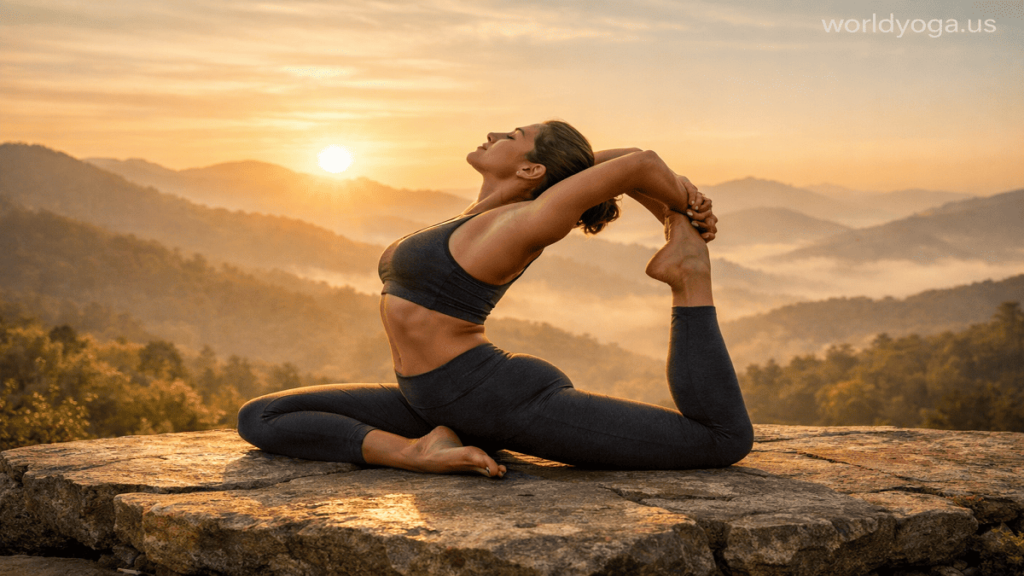
Which muscles are engaged during the posture?
Prapada Baddha Anjaneyasana is a dynamic and advanced yoga posture that activates multiple muscle groups throughout the body. As a bound crescent lunge variation, the pose combines balance, flexibility, strength, and mobility, requiring coordinated muscular engagement to maintain stability and proper alignment. Understanding which muscles are activated during the posture can help practitioners improve technique, deepen body awareness, and practice more safely.
The pose primarily targets the lower body, core, shoulders, and spinal muscles while simultaneously stretching the hips and chest. Because it integrates both strengthening and flexibility elements, it is considered a full-body yoga posture.
Lower Body Muscle Engagement
The lower body performs most of the stabilizing work in Prapada Baddha Anjaneyasana. The front leg strongly engages the quadriceps, hamstrings, and gluteal muscles to maintain balance and support the body’s weight. The quadriceps stabilize the bent knee, while the hamstrings and glutes assist in controlling hip movement and maintaining alignment.
The back leg activates the calf muscles, particularly the gastrocnemius and soleus, because the practitioner balances on the toes in the “Prapada” variation. The hip flexors of the back leg, especially the psoas and iliacus muscles, receive a deep stretch while remaining partially engaged for stability.
According to Yoga Anatomy by Leslie Kaminoff, lunge-based yoga postures strongly activate the lower-body stabilizers while simultaneously improving hip mobility and muscular endurance.
Core Muscle Activation
Core engagement is essential in this posture to protect the lower back and maintain balance. The rectus abdominis, transverse abdominis, and oblique muscles work together to stabilize the torso and support the spine during the bind and slight backbend.
The deeper core muscles help prevent excessive arching in the lumbar spine, especially when the chest opens and the shoulders rotate during the binding action. Without active core support, the posture can become unstable and place strain on the lower back.
The pelvic floor muscles also contribute subtly to balance and postural control, particularly when holding the pose for several breaths.
Shoulder, Chest, and Upper Back Muscles
The binding variation engages several upper-body muscle groups. The deltoids, trapezius, rhomboids, and rotator cuff muscles assist in shoulder stability and mobility. As the shoulders open and the chest expands, the pectoral muscles stretch while the upper back muscles contract to maintain posture.
The latissimus dorsi and triceps may also become active depending on the depth of the bind. These muscles help maintain arm positioning and shoulder alignment throughout the pose.
Further information on shoulder engagement in yoga postures can be explored through Yoga Journal.
Spinal and Stabilizing Muscles
The erector spinae muscles along the back work continuously to keep the spine elongated and upright. Smaller stabilizing muscles around the hips, ankles, and knees also remain active to maintain equilibrium and prevent wobbling.
Because Prapada Baddha Anjaneyasana demands coordinated muscle activation across the entire body, it helps improve overall strength, posture, flexibility, and balance. With regular practice, the posture can develop greater muscular endurance and body control while enhancing functional mobility for both yoga and everyday movement.
#Prapada Baddha Anjaneyasana in Hyderabad
What preparatory poses are recommended before practicing it?
Prapada Baddha Anjaneyasana is an advanced bound crescent lunge variation that requires a combination of hip flexibility, spinal mobility, shoulder openness, balance, and lower-body strength. Because the posture places significant demands on multiple muscle groups and joints, proper preparation is essential for safe and effective practice. Preparatory poses help warm up the body, improve flexibility, activate stabilizing muscles, and reduce the risk of strain or injury.
A well-structured sequence before practicing Prapada Baddha Anjaneyasana should focus on opening the hips, stretching the quadriceps and hip flexors, mobilizing the spine, and strengthening the core and legs. These foundational poses gradually prepare the body for the deeper bind and balancing elements of the posture.
Anjaneyasana (Low Lunge Pose)
The most important preparatory pose is Anjaneyasana, or Low Lunge Pose. This posture stretches the hip flexors, quadriceps, and groin while helping practitioners develop stability in the lower body. It also teaches proper alignment of the front knee and pelvis, which is crucial for safely entering more advanced lunge variations.
Practicing Anjaneyasana with controlled breathing improves balance and helps lengthen the spine before adding the binding movement.
Detailed guidance on this foundational pose is available through Yoga Journal – Anjaneyasana.
Crescent Lunge (High Lunge Pose)
Crescent Lunge strengthens the legs, activates the core, and improves balance. Since Prapada Baddha Anjaneyasana involves maintaining stability while balancing on the toes of the back foot, High Lunge effectively prepares the ankles, calves, and thighs for the challenge.
This posture also encourages hip alignment and teaches practitioners to engage the abdominal muscles to support the spine. Holding Crescent Lunge for several breaths builds endurance and body awareness.
Low Lunge Quad Stretch
A low lunge quadriceps stretch is highly beneficial before attempting deeper back-leg engagement in Prapada Baddha Anjaneyasana. In this variation, the practitioner bends the back knee and holds the foot, creating a deeper stretch through the quadriceps and hip flexors.
This preparatory movement improves flexibility in the front of the thigh and opens the pelvis, making the final posture more accessible and comfortable.
Parivrtta Anjaneyasana (Revolved Lunge Pose)
Twisting variations such as Parivrtta Anjaneyasana help prepare the spine and shoulders for the binding action in the posture. Revolved Lunge improves spinal mobility, activates the oblique muscles, and encourages deeper chest opening.
It also enhances balance and coordination, both of which are essential when transitioning into advanced bound poses.
Additional alignment insights for revolved lunge postures can be explored through Yoga International.
Shoulder and Chest Openers
Since Prapada Baddha Anjaneyasana includes a binding movement, shoulder mobility is equally important. Poses such as Gomukhasana Arms (Cow Face Pose Arms) and Reverse Prayer Pose help increase flexibility in the shoulders, chest, and upper back.
These stretches reduce tension around the shoulder joints and improve the ability to perform the bind comfortably without strain.
Preparing the body gradually through these foundational yoga poses allows practitioners to approach Prapada Baddha Anjaneyasana with greater stability, flexibility, and confidence. Consistent preparation not only improves posture alignment but also creates a safer and more mindful yoga practice overall.
#Prapada Baddha Anjaneyasana in Delhi
What are the benefits and precautions of this advanced lunge variation?
Prapada Baddha Anjaneyasana is an advanced yoga posture that combines a crescent lunge with a binding movement and toe balance. This dynamic variation challenges flexibility, strength, balance, and concentration simultaneously, making it a powerful addition to intermediate and advanced yoga practices. While the posture offers numerous physical and mental benefits, it also requires careful alignment and preparation to avoid strain or injury.
Because this asana deeply engages the lower body, core, spine, and shoulders, practitioners should approach it mindfully and progressively. Understanding both the benefits and necessary precautions can help create a safer and more effective yoga experience.
Physical Benefits of Prapada Baddha Anjaneyasana
One of the primary benefits of this posture is improved hip flexibility. The deep lunge position stretches the hip flexors, groin, and quadriceps, which can help release tension caused by prolonged sitting or limited mobility. The pose also lengthens the psoas muscles, supporting better posture and spinal alignment.
The posture significantly strengthens the legs, glutes, calves, and core muscles. The balancing action on the toes activates stabilizing muscles throughout the lower body, improving coordination and muscular endurance. At the same time, the abdominal muscles engage to protect the spine and maintain balance.
The binding element opens the shoulders and chest, helping improve upper-body flexibility and breathing capacity. Expanding the chest encourages deeper inhalation and may enhance lung function during yoga practice.
According to Yoga Journal, lunge-based yoga poses are effective for developing lower-body strength, hip mobility, and postural awareness.
Mental and Energetic Benefits
Beyond physical conditioning, Prapada Baddha Anjaneyasana also supports mental focus and mindfulness. Because the posture requires balance and controlled movement, practitioners must remain fully present and attentive throughout the pose.
Steady breathing combined with concentration can help calm the mind and improve body awareness. In yogic philosophy, heart-opening and twisting postures are often associated with increased energy flow and emotional release.
The posture may also stimulate the Manipura Chakra, which is linked to confidence, willpower, and inner strength. Additional information on advanced Anjaneyasana variations can be explored through Yogapedia.
Precautions and Safety Considerations
Despite its benefits, Prapada Baddha Anjaneyasana should be practiced carefully. Individuals with knee injuries, hip problems, lower back pain, or shoulder limitations should avoid forcing the posture. Excessive pressure on the front knee or collapsing into the lower back can lead to discomfort or strain.
Beginners should not attempt the full binding variation without first developing adequate flexibility and balance through foundational lunges and hip-opening poses. Using yoga blocks or practicing near a wall can provide additional support during the learning process.
Proper warm-up is essential before entering the posture. Cold muscles are more vulnerable to overstretching, particularly in the hip flexors and shoulders. Practitioners should also avoid holding the breath, as steady breathing helps maintain stability and relaxation.
Pregnant practitioners or individuals with balance-related conditions should consult a qualified yoga instructor or healthcare professional before attempting advanced lunge variations.
#Prapada Baddha Anjaneyasana in Banglore
Case Study of Prapada Baddha Anjaneyasana
Prapada Baddha Anjaneyasana is an advanced yoga posture that combines elements of balance, flexibility, strength, and concentration. As a bound crescent lunge variation, the pose is often practiced in intermediate and advanced yoga sequences to enhance lower-body stability, spinal mobility, and mental focus. This case study examines the practical application, physical effects, and overall impact of regular practice of Prapada Baddha Anjaneyasana in a structured yoga routine.
The study highlights how consistent practice of this posture can improve mobility, posture, muscular endurance, and body awareness while also emphasizing the importance of alignment and gradual progression.
Background of the Practitioner
A 35-year-old yoga practitioner with three years of Vinyasa Yoga experience incorporated Prapada Baddha Anjaneyasana into their routine over a period of eight weeks. Prior to beginning the practice, the individual experienced tight hip flexors, mild lower-back stiffness, and difficulty maintaining balance in advanced lunge postures.
The practitioner attended guided yoga sessions four times per week, with each session including preparatory poses such as Anjaneyasana, Crescent Lunge, hip openers, spinal twists, and shoulder mobility exercises. The posture was initially held for 15 seconds on each side and gradually increased to 45 seconds as stability and flexibility improved.
Foundational alignment principles for lunging yoga poses can be explored through Yoga Journal.
Observed Physical Improvements
After eight weeks of consistent practice, several noticeable physical improvements were observed. The practitioner reported increased flexibility in the hip flexors, quadriceps, and groin muscles. Improved pelvic mobility also contributed to reduced tension in the lower back.
Core strength and lower-body endurance showed measurable progress. The practitioner was able to maintain balance more effectively while engaging the abdominal and leg muscles with greater control. Increased ankle and calf stability were also noted due to balancing on the toes during the posture.
Shoulder mobility improved significantly as a result of the binding action. The chest-opening component of the pose contributed to better posture and reduced stiffness in the upper back and shoulders.
According to Yoga International, lunge-based yoga postures can improve functional mobility, muscular activation, and postural alignment when practiced consistently.
Mental and Breathing Benefits
In addition to physical gains, the practitioner experienced improved concentration and breath awareness. Maintaining balance in Prapada Baddha Anjaneyasana required focused attention and controlled breathing, which helped cultivate mindfulness during practice.
The practitioner also reported feeling more confident while attempting advanced yoga transitions and balancing postures. The meditative aspect of maintaining steady breathing in a challenging pose contributed to reduced stress and improved mental clarity.
Challenges Encountered
During the initial weeks, the practitioner experienced difficulty maintaining hip alignment and balancing while performing the bind. Tightness in the shoulders limited the depth of the binding movement, and occasional lower-back compression occurred due to insufficient core engagement.
To address these challenges, modifications such as using yoga straps and reducing the depth of the backbend were introduced. Additional hip-opening and shoulder-mobility exercises were also included in the practice routine.
Conclusion
This case study demonstrates that regular and mindful practice of Prapada Baddha Anjaneyasana can significantly improve flexibility, balance, strength, posture, and concentration. However, the posture requires patience, proper preparation, and careful alignment to achieve its full benefits safely.
#Prapada Baddha Anjaneyasana in Pune
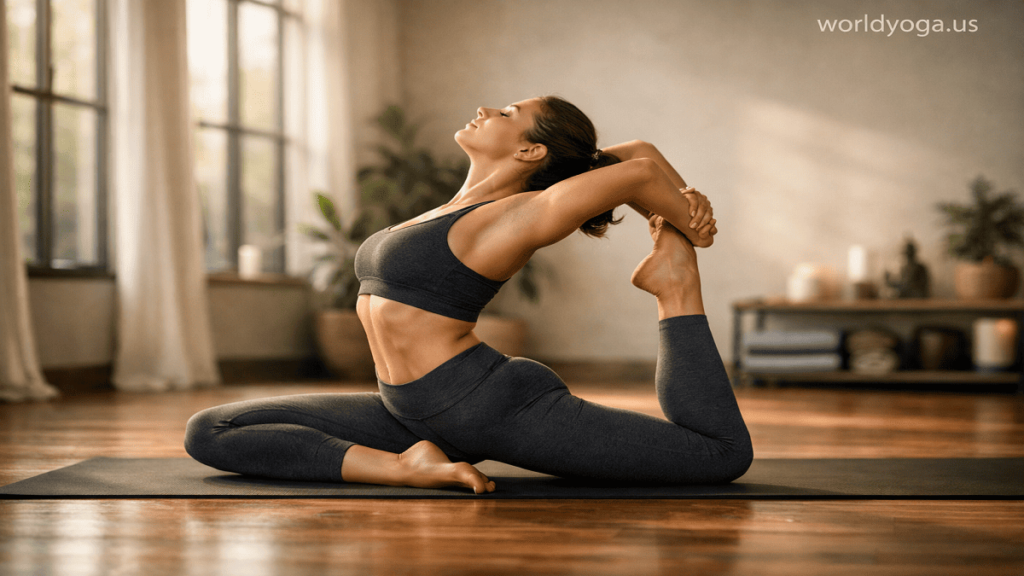
White Paper of Prapada Baddha Anjaneyasana
Introduction
Prapada Baddha Anjaneyasana is an advanced yoga posture derived from the traditional Anjaneyasana, or Crescent Lunge Pose. The posture integrates balance, muscular strength, flexibility, spinal extension, and a binding movement into a single asana. In Sanskrit, “Prapada” refers to balancing on the toes, “Baddha” means bound, and “Anjaneyasana” is associated with the mythological figure Hanuman, symbolizing strength and devotion.
This white paper explores the anatomical, physiological, and functional aspects of Prapada Baddha Anjaneyasana while examining its benefits, biomechanical demands, alignment principles, and safety considerations. The objective is to provide a professional overview of the posture for yoga practitioners, instructors, wellness professionals, and researchers interested in advanced yoga methodologies.
Overview of the Posture
Prapada Baddha Anjaneyasana combines a deep lunge with a chest-opening bind and toe-supported balance. The posture requires coordinated activation of the lower body, core, spine, and shoulders. Unlike basic lunge variations, this advanced form challenges postural stability and neuromuscular coordination simultaneously.
The pose is commonly practiced within Vinyasa Yoga and advanced Hatha Yoga sequences due to its dynamic nature and its ability to improve mobility and functional strength.
Detailed foundational information regarding Anjaneyasana can be referenced through Yoga Journal.
Biomechanical and Anatomical Analysis
Lower Body Activation
The posture strongly engages the quadriceps, gluteal muscles, hamstrings, calves, and ankle stabilizers. The front leg stabilizes the body while the back leg remains extended and active through the toes. The hip flexors, particularly the psoas and iliacus muscles, experience a deep stretch that contributes to improved pelvic mobility.
Core Stabilization
Core engagement is essential for maintaining spinal integrity and balance. The transverse abdominis, obliques, and rectus abdominis work together to stabilize the torso and prevent excessive lumbar compression.
Spinal and Shoulder Mobility
The binding action promotes thoracic extension and shoulder mobility. Muscles involved include the trapezius, rhomboids, deltoids, and rotator cuff stabilizers. Simultaneously, the erector spinae support spinal elongation and upright posture.
Further anatomical insights into yoga posture mechanics are available through Yoga Anatomy.
Functional Benefits
Improved Flexibility
Prapada Baddha Anjaneyasana effectively stretches the hip flexors, quadriceps, groin, shoulders, and chest. Regular practice can reduce muscular tightness caused by sedentary lifestyles and limited movement patterns.
Enhanced Strength and Stability
The posture strengthens the lower body and core while improving balance and coordination. Stabilizing on the toes activates smaller supporting muscles around the ankles and knees, enhancing joint stability.
Postural Improvement
Opening the chest and lengthening the spine can support improved posture and breathing efficiency. This may help counteract rounded shoulders and spinal compression associated with prolonged sitting.
Mental Focus and Mindfulness
The balancing and binding elements require concentration, controlled breathing, and body awareness. These factors contribute to mindfulness, stress reduction, and improved mental discipline during yoga practice.
Safety and Risk Considerations
Despite its benefits, Prapada Baddha Anjaneyasana presents challenges for practitioners with limited mobility or pre-existing injuries. Incorrect alignment may place strain on the knees, lower back, hips, or shoulders.
Key precautions include:
- Avoid forcing the binding movement
- Maintain knee alignment above the ankle
- Engage the core to support the lumbar spine
- Warm up thoroughly before practice
- Use props or modified variations when necessary
Practitioners with knee injuries, spinal instability, or balance disorders should consult a qualified yoga instructor or healthcare professional before attempting the posture.
Alignment recommendations and safe progression techniques are discussed further by Yoga International.
Conclusion
Prapada Baddha Anjaneyasana represents a sophisticated integration of flexibility, strength, balance, and mindful movement. Its physical and mental benefits make it a valuable posture within advanced yoga practice, particularly for improving mobility, posture, muscular endurance, and concentration.
#Prapada Baddha Anjaneyasana in Kolkata
Industry Application of Prapada Baddha Anjaneyasana
Introduction
Prapada Baddha Anjaneyasana is an advanced yoga posture that combines a crescent lunge, toe balance, spinal extension, and a binding movement into a single integrated asana. Traditionally practiced within Hatha and Vinyasa Yoga systems, the posture is increasingly gaining relevance beyond conventional yoga studios. Modern wellness industries, fitness programs, rehabilitation centers, corporate wellness initiatives, and sports performance sectors are recognizing the value of advanced yoga postures like Prapada Baddha Anjaneyasana for improving mobility, balance, flexibility, and mental focus.
As the global wellness industry continues to expand, yoga-based movement practices are being incorporated into diverse professional environments to support physical health, injury prevention, stress management, and functional performance. This article explores the practical applications of Prapada Baddha Anjaneyasana across multiple industries and highlights its growing significance in contemporary health and wellness programs.
Application in the Fitness Industry
The fitness industry has increasingly integrated yoga into strength training and mobility programs. Prapada Baddha Anjaneyasana is particularly useful in functional fitness routines because it combines lower-body strength, hip mobility, balance, and core engagement in one movement.
Fitness trainers often include advanced lunge variations to improve athletic performance and joint stability. The posture helps strengthen the quadriceps, glutes, calves, and core muscles while enhancing flexibility in the hip flexors and shoulders. These benefits support better movement efficiency during resistance training, running, and high-intensity workouts.
Organizations such as Yoga Journal regularly discuss how yoga postures can complement modern fitness and mobility practices.
Role in Corporate Wellness Programs
Corporate wellness programs increasingly use yoga to reduce workplace stress and improve employee well-being. Sedentary office environments often contribute to poor posture, tight hips, reduced spinal mobility, and mental fatigue. Prapada Baddha Anjaneyasana addresses many of these issues by opening the chest, stretching the hip flexors, and encouraging postural alignment.
Although the full advanced variation may not be suitable for beginners, modified preparatory versions are frequently introduced in workplace yoga sessions. These movements help employees improve flexibility, breathing patterns, and concentration while reducing physical discomfort associated with prolonged sitting.
Global wellness organizations like International WELL Building Institute promote movement-based wellness strategies in modern workspaces.
Use in Sports Performance and Athletic Training
Athletes require flexibility, balance, coordination, and muscular endurance to optimize performance and reduce injury risk. Prapada Baddha Anjaneyasana supports these objectives by activating stabilizing muscles throughout the lower body and core while improving hip and shoulder mobility.
Sports trainers often integrate yoga-based mobility exercises into athletic conditioning programs for runners, dancers, martial artists, and cyclists. The posture can improve dynamic balance, body control, and movement efficiency, all of which are essential for athletic performance.
Research and educational resources from Yoga International highlight the connection between yoga, mobility training, and sports conditioning.
Rehabilitation and Physical Therapy Applications
In rehabilitation settings, modified lunge variations inspired by Anjaneyasana are used to improve lower-body mobility, postural awareness, and muscular activation. While the complete bound variation may be too advanced for clinical rehabilitation, selected components of the posture can support recovery programs.
Physical therapists may adapt elements of the pose to help improve hip extension, ankle stability, and spinal mobility in patients recovering from inactivity or muscular imbalances. Controlled breathing and mindful movement also contribute to neuromuscular coordination and body awareness.
Healthcare and movement professionals increasingly recognize yoga-informed therapeutic exercises as complementary approaches to physical rehabilitation.
Application in the Wellness and Mindfulness Industry
The wellness industry emphasizes holistic health practices that integrate physical movement, breath control, and mental focus. Prapada Baddha Anjaneyasana aligns with these goals by combining mindful breathing with challenging physical engagement.
Advanced yoga retreats, teacher training programs, and mindfulness workshops often use postures like this to encourage concentration, discipline, and mind-body awareness. The balancing and binding elements of the pose require practitioners to remain mentally present, supporting stress reduction and emotional regulation.
Wellness education platforms such as Yoga Alliance continue to promote the integration of advanced yoga methodologies into professional wellness training.
Conclusion
Prapada Baddha Anjaneyasana has evolved beyond a traditional yoga posture into a valuable movement practice with applications across fitness, corporate wellness, sports performance, rehabilitation, and holistic health industries. Its combination of strength, flexibility, balance, and mindfulness makes it relevant in modern programs focused on mobility, injury prevention, stress management, and functional performance.
#Prapada Baddha Anjaneyasana in Mumbai
Ask FAQs
What is Prapada Baddha Anjaneyasana?
Prapada Baddha Anjaneyasana is an advanced yoga posture that combines a crescent lunge with a toe balance and a binding movement. It is a variation of Anjaneyasana designed to improve flexibility, balance, strength, and concentration while deeply stretching the hips, shoulders, and spine.
Who can practice Prapada Baddha Anjaneyasana?
This posture is best suited for intermediate and advanced yoga practitioners who already have experience with lunges, hip openers, and balance-focused yoga poses. Beginners should first develop flexibility and stability through foundational poses before attempting the full variation.
What are the main benefits of this posture?
Prapada Baddha Anjaneyasana helps improve hip flexibility, strengthen the legs and core, enhance posture, and increase shoulder mobility. The posture also supports better balance, concentration, and body awareness through controlled breathing and mindful movement.
Are there any precautions to consider before practicing it?
Yes. Individuals with knee injuries, lower-back pain, hip issues, or shoulder limitations should practice cautiously or avoid the pose altogether. Proper warm-up, alignment, and gradual progression are essential to reduce the risk of strain or injury.
Which preparatory poses help before attempting this asana?
Helpful preparatory poses include Anjaneyasana (Low Lunge), Crescent Lunge, Parivrtta Anjaneyasana (Revolved Lunge), hip-opening stretches, and shoulder mobility exercises. These poses prepare the body for the flexibility and balance required in the advanced variation.
Table of Contents
Disclaimer:
The information provided in this article is for educational and informational purposes only and should not be considered medical or professional health advice. Practice Prapada Baddha Anjaneyasana under the guidance of a qualified yoga instructor, especially if you have injuries, medical conditions, or physical limitations. Always consult a healthcare professional before starting any advanced yoga practice.