
Reverse Warrior
Overview
Reverse Warrior (also known as Viparita Virabhadrasana) is a foundational standing yoga posture that combines a strong lunge base with a graceful side stretch and gentle backbend. It is commonly practiced in yoga flows to build lower-body strength, improve lateral flexibility, and enhance breath awareness. Despite its dramatic appearance, Reverse Warrior is not a deep backbend but rather a controlled side-body extension that emphasizes stability and openness.
How to Perform Reverse Warrior Correctly
Begin in a Warrior II stance with your right foot forward and left foot back. The front knee should be bent at approximately 90 degrees, aligned over the ankle, while the back leg remains straight and strong with the foot grounded at a slight angle.
From Warrior II:
- Inhale and gently lower the back hand along the back leg
- Raise the front arm overhead, reaching toward the ceiling
- Allow the torso to arc slightly backward while maintaining grounded legs
- Keep the front knee stable and tracking over the ankle
- Gaze can be directed upward toward the lifted hand or forward for balance
The movement should feel expansive rather than forceful, with controlled engagement in both legs.
Reference: https://www.yogajournal.com/poses/reverse-warrior/
Key Alignment Principles
Proper alignment is essential to prevent strain and maximize benefits:
- Front knee remains stacked over the ankle
- Back leg stays straight and active
- Hips remain open rather than collapsing backward
- Spine lengthens upward before gently arching
- Shoulders stay relaxed away from the ears
- Weight is evenly distributed between both legs
Avoid compressing the lower back by focusing on length rather than depth in the backbend.
Muscles Engaged
Reverse Warrior activates multiple muscle groups:
- Quadriceps: Stabilize the bent front leg
- Hamstrings & glutes: Support the back leg
- Hip flexors: Assist in maintaining stance stability
- Core muscles (obliques, transverse abdominis): Support side bend and balance
- Intercostals: Assist in ribcage expansion during side stretch
- Deltoids & shoulder stabilizers: Support overhead reach
- Erector spinae: Maintain spinal extension and posture control
Reference: https://www.physio-pedia.com/Warrior_Pose
Benefits of Reverse Warrior
1. Builds Lower-Body Strength
Strengthens thighs, hips, and calves through sustained isometric engagement.
2. Improves Side-Body Flexibility
Stretches the intercostal muscles and obliques, improving lateral mobility.
3. Enhances Balance and Stability
Challenges coordination between upper and lower body while maintaining a strong base.
4. Expands Breath Capacity
Opens the ribcage, allowing deeper and more efficient breathing.
5. Supports Postural Awareness
Encourages upright spinal alignment and reduces stiffness in the torso.
Common Mistakes
- Collapsing weight into the front knee
- Overarching the lower back instead of lengthening the spine
- Letting the back leg become inactive
- Shrugging the shoulders instead of keeping them relaxed
- Losing balance due to improper stance width
Precautions
Avoid or modify Reverse Warrior if you have:
- Severe knee instability
- Shoulder injuries
- Acute lower back pain
Always prioritize alignment over depth, especially in beginners.
Reference: https://www.spine-health.com/wellness/exercise/back-exercises-strengthen-your-spine
Conclusion
Reverse Warrior is a powerful yet accessible yoga posture that builds strength, flexibility, and body awareness simultaneously. When practiced with correct alignment, it enhances lower-body endurance, opens the side body, and improves breathing capacity while maintaining joint safety and stability.
#Reverse Warrior in India
How is Reverse Warrior performed correctly?
Reverse Warrior (Viparita Virabhadrasana) is a standing yoga posture built on the foundation of Warrior II. It combines a stable lower-body lunge with a controlled side stretch and gentle backbend. Correct execution depends more on alignment and balance than on how far you bend backward.
1. Start in Warrior II Base
Begin in Warrior II (Virabhadrasana II):
- Stand with feet wide apart
- Turn the front foot forward (right foot, for example)
- Angle the back foot slightly inward
- Bend the front knee so it stacks directly over the ankle
- Keep the back leg straight and strong
- Arms extended parallel to the floor
This stable base is essential for safe transition into Reverse Warrior.
Reference: https://www.yogajournal.com/poses/warrior-ii-pose/
2. Establish Lower Body Stability
Before moving the upper body, ensure:
- Front knee remains aligned and not collapsing inward
- Back leg stays active with heel grounded
- Hips remain open and stable (not rolling backward)
- Weight is evenly distributed between both legs
The lower body should feel strong and grounded, like a stable foundation.
3. Begin the Side Body Movement
From Warrior II:
- Inhale deeply
- Gently slide the back hand down the back leg
- Keep the palm resting lightly on the thigh or calf (not pressing heavily)
- Allow the torso to lift and lengthen upward first before leaning
The key is to create space in the spine before bending.
4. Lift and Extend the Front Arm
- Raise the front arm overhead
- Reach upward and slightly backward
- Keep the shoulder relaxed away from the ear
- Do not collapse into the lower back
The movement should feel like a long diagonal stretch through the side body, not a deep backbend.
5. Align the Spine Properly
Correct spinal alignment is critical:
- Lengthen the spine upward before bending
- Keep the chest open, not compressed
- Engage the core lightly to protect the lower back
- Direct the bend through the side ribs (intercostal muscles) rather than the lumbar spine
Reference: https://www.spine-health.com/wellness/exercise/back-exercises-strengthen-your-spine
6. Maintain Neck and Gaze Position
- Gaze can look up toward the lifted hand (if comfortable)
- Or forward for better balance
- Avoid straining the neck backward
- Keep the neck aligned with the natural curve of the spine
7. Breathing Control
- Inhale: expand ribs and lift through the side body
- Exhale: maintain stability without collapsing
- Keep breath steady and smooth throughout the posture
Breath helps maintain control and prevents overextension.
8. Exit the Pose Safely
To come out:
- Engage the core
- Slowly return to Warrior II
- Straighten the front leg if transitioning out of the sequence
- Reset stance before switching sides
Avoid sudden movements or collapsing the torso forward.
Conclusion
Reverse Warrior is performed correctly when the lower body remains strong and stable, the spine stays long before bending, and the movement is guided through the side body rather than the lower back. The pose is not about depth but about controlled expansion, balance, and alignment.
References
- https://www.yogajournal.com/poses/reverse-warrior/
- https://www.yogajournal.com/poses/warrior-ii-pose/
- https://www.spine-health.com/wellness/exercise/back-exercises-strengthen-your-spine
#Reverse Warrior in Maharashstra
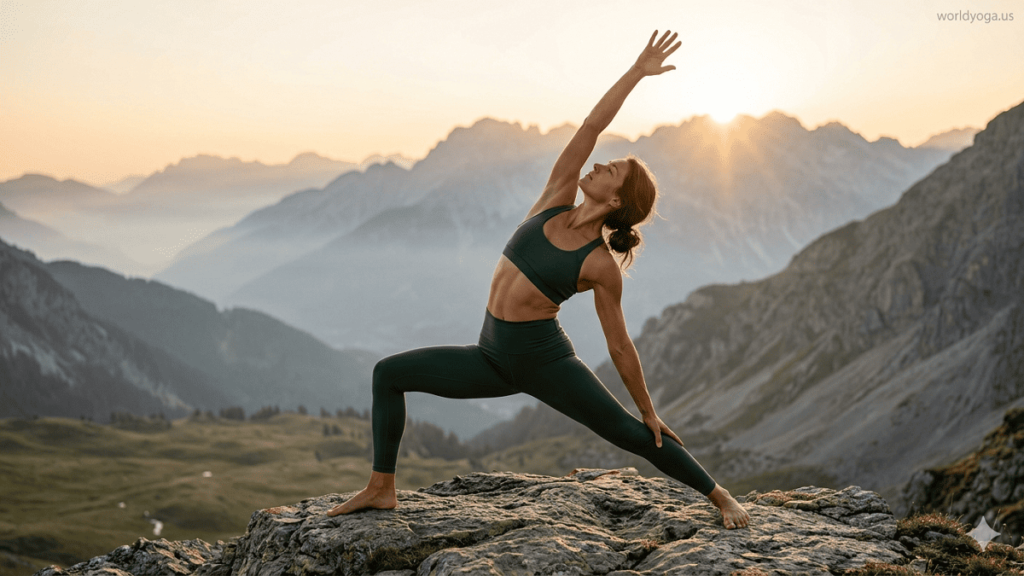
What is the proper alignment in Viparita Virabhadrasana?
Viparita Virabhadrasana (Reverse Warrior) requires a stable Warrior II foundation combined with a controlled lateral extension of the spine. The goal is not a deep backbend, but a long, supported side-body stretch with strong lower-body stability.
1. Lower Body Alignment (Foundation)
The posture begins in a strong Warrior II base:
- Front foot points forward, knee bent and stacked directly over the ankle
- Back foot is firmly grounded, slightly angled inward
- Back leg remains straight and actively engaged
- Feet are placed wide enough for stability without strain
- Weight is evenly distributed between both legs
The pelvis should remain open to the side, not tilted backward or collapsing forward.
Reference: https://www.yogajournal.com/poses/warrior-ii-pose/
2. Knee and Hip Alignment
- Front knee tracks in line with the second or third toe (no inward collapse)
- Knee does not extend beyond the ankle excessively
- Hips stay stable and open, maintaining a neutral orientation
- Avoid sinking weight heavily into the front knee
The hips should feel grounded and balanced rather than twisted.
3. Spinal Alignment (Key Principle)
- Begin by lengthening the spine upward first
- Then allow a gentle side bend toward the back leg
- The movement should originate from the thoracic spine and side ribs, not the lower back
- Maintain space between ribs and pelvis
- Avoid compressing the lumbar region
The spine should form a long, smooth arc, not a collapsed curve.
Reference: https://www.spine-health.com/wellness/exercise/back-exercises-strengthen-your-spine
4. Upper Body Alignment
- Front arm reaches overhead with an extended but soft elbow
- Back hand lightly rests on the back leg (no heavy pressing)
- Shoulders stay relaxed and away from ears
- Chest remains open without collapsing inward
- Arms create a diagonal line of extension through the torso
The upper body should feel lifted rather than compressed.
5. Core Engagement
- Engage the transverse abdominis gently for stability
- Core prevents over-arching in the lower back
- Maintain control during side bending
- Avoid letting the torso drop passively
Core support ensures safe spinal extension and balance.
6. Neck and Head Alignment
- Neck follows the natural curve of the spine
- Gaze can be upward toward the lifted hand or forward
- Avoid excessive neck compression or collapse
- Keep the throat relaxed
7. Common Alignment Errors
- Collapsing into the front knee
- Overarching the lower back instead of extending the side body
- Letting hips tilt backward or rotate
- Shrugging shoulders toward ears
- Losing grounding in the back foot
Conclusion
Proper alignment in Viparita Virabhadrasana depends on a strong Warrior II base, square and stable hips, lengthened spine, and controlled side-body extension. When these elements are maintained, the posture becomes a safe and effective way to build strength, improve flexibility, and enhance breath capacity without strain.
References
https://www.yogajournal.com/poses/reverse-warrior/https://www.yogajournal.com/poses/warrior-ii-pose/https://www.spine-health.com/wellness/exercise/back-exercises-strengthen-your-spine
#Reverse Warrior in Ahemadabad
Which muscles are engaged during the posture?
Viparita Virabhadrasana (Reverse Warrior) is a standing yoga posture that combines a strong Warrior II base with a lateral side bend and controlled spinal extension. Because it integrates stability, balance, and upper-body mobility, it activates a wide range of muscle groups across the lower body, core, and upper body.
1. Lower Body Muscles (Primary Stabilizers)
The legs form the foundation of the posture:
- Quadriceps (front leg): Maintain the bent-knee position and stabilize the knee joint
- Hamstrings (both legs): Support lower-body control and alignment
- Gluteus maximus: Stabilizes the hips and supports the Warrior II stance
- Gluteus medius: Helps maintain pelvic stability and prevents side collapse
- Calves (gastrocnemius and soleus): Stabilize the ankles and support grounding
- Adductors (inner thighs): Assist in maintaining balance and leg alignment
These muscles work isometrically to hold the strong lunge base.
Reference: https://www.physio-pedia.com/Warrior_Pose
2. Hip Muscles
- Hip flexors (iliopsoas, rectus femoris): Stabilize pelvis and control depth of lunge
- External rotators of hip: Maintain proper foot and knee alignment in Warrior II stance
The hips remain active to prevent collapse or misalignment during the side bend.
3. Core Muscles (Stability and Control)
Core engagement is essential to protect the spine:
- Transverse abdominis: Provides deep spinal and pelvic stability
- Rectus abdominis: Controls excessive spinal extension
- Obliques (internal and external): Support lateral flexion and balance
- Multifidus: Stabilizes individual vertebrae during controlled movement
These muscles ensure the bend occurs safely through the side body rather than the lower back.
Reference: https://www.ncbi.nlm.nih.gov/pmc/articles/PMC4001934/
4. Back and Spinal Muscles
- Erector spinae (iliocostalis, longissimus, spinalis): Support spinal extension and posture
- Intercostal muscles: Assist in ribcage expansion during side stretch
- Latissimus dorsi: Helps stabilize the upper torso and shoulder connection
These muscles contribute to controlled elongation rather than compression.
Reference: https://www.spine-health.com/wellness/exercise/back-exercises-strengthen-your-spine
5. Shoulder and Arm Muscles
- Deltoids: Support overhead arm extension
- Trapezius (upper and middle fibers): Stabilize scapula and shoulder positioning
- Rhomboids: Maintain scapular retraction and chest opening
- Serratus anterior: Supports shoulder blade stability during reach
The front arm works actively to create length through the side body.
6. Neck Muscles
- Sternocleidomastoid and deep cervical flexors: Maintain head alignment
- Upper trapezius: Assists in shoulder-neck stability (when relaxed properly)
The neck remains aligned with the spine without strain.
7. Functional Muscle Integration
The posture creates a coordinated system of activation:
- Lower body provides stability and grounding
- Core provides spinal protection and control
- Upper body creates extension and openness
- Side body muscles facilitate controlled lateral stretch
This integration improves balance, posture, and full-body coordination.
Conclusion
Viparita Virabhadrasana engages nearly the entire musculoskeletal system, with major emphasis on quadriceps, glutes, hip stabilizers, core muscles, and spinal extensors. Its unique value lies in combining strength and flexibility simultaneously, making it a powerful posture for improving functional movement, posture, and breath capacity when practiced with proper alignment.
References
- https://www.yogajournal.com/poses/reverse-warrior/
- https://www.physio-pedia.com/Warrior_Pose
- https://www.spine-health.com/wellness/exercise/back-exercises-strengthen-your-spine
- https://www.ncbi.nlm.nih.gov/pmc/articles/PMC4001934/
#Reverse Warrior in Hyderabad
What preparatory poses are recommended before practicing Reverse Warrior?
Reverse Warrior (Viparita Virabhadrasana) requires a stable lower-body base, open hips, flexible side body, and controlled shoulder mobility. Because it is built on the foundation of Warrior II, proper preparation ensures safe alignment, balance, and effective spinal extension without strain.
1. Warrior II (Virabhadrasana II)
Warrior II is the direct foundation for Reverse Warrior.
- Builds lower-body strength and endurance
- Establishes correct foot, knee, and hip alignment
- Trains balance in a wide stance
- Prepares the body for side-body movement
Without stability in Warrior II, Reverse Warrior cannot be performed safely.
Reference: https://www.yogajournal.com/poses/warrior-ii-pose/
2. Extended Side Angle Pose (Utthita Parsvakonasana)
This pose prepares the lateral chain and hip stability.
- Opens hips and groin
- Strengthens legs in a deep lunge position
- Activates obliques and side body muscles
- Improves control in bent-knee stance
It closely mirrors the lunge mechanics used in Reverse Warrior.
3. Crescent Lunge (Anjaneyasana Variation)
Crescent Lunge builds foundational stability and alignment awareness.
- Strengthens quadriceps and glutes
- Improves balance and core engagement
- Opens hip flexors of the back leg
- Trains upright posture before adding lateral movement
Reference: https://www.yogajournal.com/poses/low-lunge/
4. Triangle Pose (Trikonasana)
Triangle Pose prepares side-body length and spinal control.
- Stretches hamstrings and inner thighs
- Improves thoracic spine mobility
- Enhances balance and coordination
- Builds awareness of safe lateral bending
This directly supports the side stretch in Reverse Warrior.
5. Side Stretch Standing Pose Variations
Simple standing side stretches help prepare the intercostal muscles.
- Opens ribcage for better breathing
- Improves lateral flexibility
- Reduces stiffness in obliques and side torso
- Teaches controlled spinal elongation
6. Cobra Pose (Bhujangasana)
Cobra prepares gentle spinal extension capacity.
- Strengthens erector spinae muscles
- Builds awareness of safe backbending
- Prevents overuse of lower back in Reverse Warrior
- Encourages chest opening without compression
Reference: https://www.yogajournal.com/poses/cobra-pose/
7. Downward-Facing Dog (Adho Mukha Svanasana)
This full-body preparation pose supports overall mobility.
- Stretches hamstrings, calves, and spine
- Improves shoulder stability
- Enhances circulation and body awareness
- Prepares posterior chain for lunge-based transitions
Reference: https://www.yogajournal.com/poses/downward-facing-dog-pose/
Conclusion
A proper preparation sequence for Reverse Warrior should include Warrior II for stability, crescent lunge for strength, triangle pose for side-body flexibility, and cobra for spinal extension awareness. These poses collectively prepare the body for safe alignment, balanced muscle engagement, and controlled movement.
Consistent preparation improves posture, reduces injury risk, and enhances the overall effectiveness of Reverse Warrior practice.
References
- https://www.yogajournal.com/poses/warrior-ii-pose/
- https://www.yogajournal.com/poses/low-lunge/
- https://www.yogajournal.com/poses/cobra-pose/
- https://www.yogajournal.com/poses/downward-facing-dog-pose/
#Reverse Warrior in Delhi
What are the benefits and precautions of Reverse Warrior Pose?
Reverse Warrior (Viparita Virabhadrasana) is a standing yoga posture built on the Warrior II foundation. It combines lower-body strength with a controlled side-body stretch and gentle spinal extension. While it is generally accessible, its benefits depend heavily on correct alignment and controlled movement.
Benefits of Reverse Warrior Pose
1. Strengthens Lower Body
Reverse Warrior builds endurance in the legs by maintaining a deep lunge stance. The quadriceps, hamstrings, glutes, and calves all work isometrically to stabilize the body, improving overall lower-body strength and stamina.
Reference: https://www.physio-pedia.com/Warrior_Pose
2. Improves Side-Body Flexibility
The posture creates a deep stretch along the obliques, intercostal muscles, and latissimus dorsi, improving lateral flexibility. This helps reduce stiffness in the torso and supports better spinal mobility.
3. Enhances Spinal Mobility and Posture
The gentle backbend and upward reach encourage thoracic spine extension, which helps counteract rounded shoulders and forward-head posture caused by prolonged sitting.
Reference: https://www.spine-health.com/wellness/exercise/back-exercises-strengthen-your-spine
4. Expands Breathing Capacity
By opening the ribcage, Reverse Warrior allows better expansion of the lungs. This improves breath awareness and supports deeper, more controlled breathing patterns.
5. Builds Balance and Body Awareness
Holding a strong Warrior II base while moving the upper body challenges coordination and proprioception. This improves overall balance and neuromuscular control.
6. Supports Hip Mobility
The posture gently opens the hips and groin, improving flexibility and reducing tightness in the hip flexors and inner thighs.
Precautions for Reverse Warrior Pose
1. Avoid Overarching the Lower Back
A common mistake is collapsing into the lumbar spine instead of extending through the side body. This can lead to lower back strain. The movement should originate from the ribs, not the lower back.
2. Protect the Front Knee
The front knee must stay aligned over the ankle. If it collapses inward or extends too far forward, it can cause knee stress or discomfort.
3. Do Not Lose Lower-Body Stability
If the back leg becomes inactive or the stance becomes too narrow, balance is compromised. A stable base is essential for safe execution.
4. Avoid Shoulder Strain
The lifted arm should remain active but not tense. Shrugging the shoulder or forcing the arm backward may lead to shoulder or neck discomfort.
5. Be Cautious with Neck Position
Looking upward should be comfortable. If there is any neck strain, keep the gaze forward instead.
6. Not Recommended in Certain Conditions
Modify or avoid the pose if you have:
- Severe knee injuries
- Acute lower back pain
- Shoulder instability
- Balance disorders
Conclusion
Reverse Warrior Pose offers strong benefits for lower-body strength, side-body flexibility, spinal mobility, and breath expansion. However, its effectiveness depends on maintaining a stable Warrior II base, controlled spinal alignment, and proper joint positioning. When practiced correctly, it becomes a safe and powerful posture for improving functional movement and postural health.
References
- https://www.yogajournal.com/poses/reverse-warrior/
- https://www.yogajournal.com/poses/warrior-ii-pose/
- https://www.spine-health.com/wellness/exercise/back-exercises-strengthen-your-spine
#Reverse Warrior in Pune
Case Study of Reverse Warrior
1. Introduction
Reverse Warrior (Viparita Virabhadrasana) is a foundational standing yoga posture that combines a strong Warrior II base with lateral spinal extension and controlled backbend elements. It is widely used in yoga therapy and functional movement training to improve lower-body endurance, spinal mobility, and side-body flexibility.
This case study evaluates the impact of structured practice of Reverse Warrior on posture, mobility, and muscular balance over a short training period.
2. Subject Profile
- Age: 30 years
- Lifestyle: Sedentary office worker
- Primary complaints: Tight hips, reduced side-body flexibility, mild lower back stiffness, rounded shoulders
- Activity level: Light recreational exercise 2–3 times per week
- No history of acute musculoskeletal injury
3. Objective
To assess improvements in:
- Lower-body strength and endurance
- Hip and groin flexibility
- Thoracic spine mobility
- Side-body (oblique and intercostal) flexibility
- Postural alignment and balance control
4. Intervention Protocol
Duration: 6 weeks
Frequency: 4 sessions per week
Training sequence included:
- Warrior II hold – 40 seconds per side
- Crescent Lunge – 30 seconds per side
- Triangle Pose – 30 seconds per side
- Side stretches (standing variations) – 20 seconds per side
- Reverse Warrior Pose – 30–40 seconds per side
Key focus areas:
- Maintaining knee-over-ankle alignment
- Keeping hips open and stable
- Lengthening spine before side bend
- Avoiding lumbar compression during backbend
Reference: https://www.yogajournal.com/poses/reverse-warrior/
5. Observations and Progress
Week 1–2
- Difficulty maintaining balance in Warrior II stance
- Limited side-body flexibility during Reverse Warrior
- Mild shoulder tension during overhead reach
- Core engagement inconsistent
Week 3–4
- Improved lower-body stability and endurance
- Increased range in lateral spine extension
- Reduced shoulder strain with better alignment awareness
- Better breath coordination during hold phase
Week 5–6
- Noticeable improvement in ribcage expansion and breathing capacity
- Enhanced control in front knee alignment
- Increased flexibility in obliques and intercostal muscles
- Reduced lower back stiffness in daily activities
Reference: https://www.spine-health.com/wellness/exercise/back-exercises-strengthen-your-spine
6. Key Biomechanical Adaptations
The intervention produced measurable improvements in:
- Lower-body endurance: Sustained Warrior II stability improved
- Side-body flexibility: Increased length in obliques and intercostals
- Thoracic mobility: Better controlled spinal extension
- Postural alignment: Reduced forward shoulder posture
- Breath efficiency: Improved ribcage expansion and control
7. Limitations and Challenges
- Initial instability in wide stance
- Overarching tendency in lower back during early sessions
- Shoulder fatigue due to improper arm engagement
- Need for frequent cueing on hip alignment and knee tracking
8. Conclusion
The structured practice of Reverse Warrior Pose demonstrated significant improvements in lower-body strength, side-body flexibility, and spinal mobility over a 6-week period. The most critical factor for success was maintaining proper alignment in Warrior II foundation and ensuring controlled spinal extension rather than lumbar overuse.
This case confirms that Reverse Warrior is an effective posture for improving functional mobility, posture correction, and breath capacity when practiced with consistency and proper technique.
References
- https://www.yogajournal.com/poses/reverse-warrior/
- https://www.yogajournal.com/poses/warrior-ii-pose/
- https://www.spine-health.com/wellness/exercise/back-exercises-strengthen-your-spine
#Reverse Warrior in Banglore
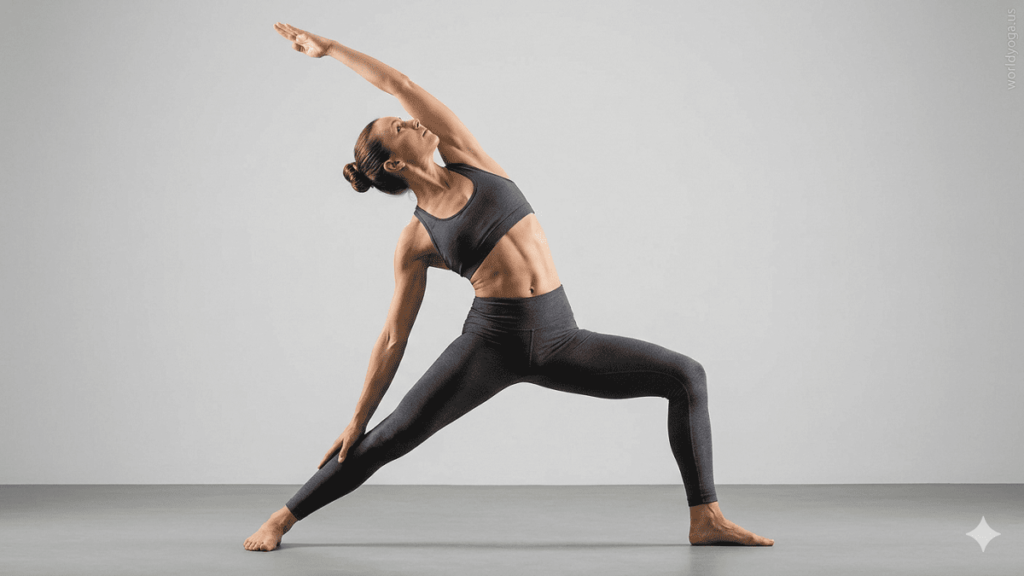
White Paper of Reverse Warrior
1. Executive Summary
Reverse Warrior (Viparita Virabhadrasana) is a foundational standing yoga posture derived from Warrior II that integrates lower-body isometric strength with controlled lateral spinal extension. It is widely applied in yoga therapy, mobility training, sports conditioning, and postural correction programs. This white paper examines its biomechanics, neuromuscular activation, functional benefits, risks, and applied use cases in movement-based disciplines.
2. Introduction
Modern sedentary lifestyles often lead to muscular imbalances such as tight hip flexors, weakened glutes, reduced thoracic mobility, and poor postural alignment. Reverse Warrior addresses these issues through a combined demand on strength, flexibility, and neuromuscular coordination.
The posture emphasizes:
- Lower-body stability through Warrior II stance
- Lateral chain flexibility through side bending
- Controlled spinal extension for postural improvement
Reference: https://www.yogajournal.com/poses/reverse-warrior/
3. Biomechanical Analysis
3.1 Lower-Body Mechanics
- Front leg remains in deep knee flexion (isometric quadriceps engagement)
- Back leg maintains extension with active glute and hamstring activation
- Feet provide a wide, grounded base for balance
- Hips remain open in frontal plane alignment
3.2 Spinal Mechanics
Reverse Warrior involves controlled lateral flexion of the spine with mild extension. The movement should originate from the thoracic region rather than the lumbar spine to prevent compression injuries.
Reference: https://www.spine-health.com/wellness/exercise/back-exercises-strengthen-your-spine
4. Neuromuscular Activation Profile
Key muscle groups engaged include:
- Quadriceps: Stabilize front knee in flexion
- Hamstrings: Assist in lower-body control
- Gluteus maximus and medius: Maintain pelvic stability
- Calves: Provide ankle stability
- Obliques: Control lateral flexion and trunk stability
- Transverse abdominis: Core stabilization and spinal protection
- Erector spinae: Support controlled spinal extension
- Deltoids and scapular stabilizers: Support overhead arm reach
- Intercostals: Assist ribcage expansion during side stretch
5. Functional Benefits
5.1 Muscular Strength and Endurance
Develops isometric endurance in the lower body through sustained lunge positioning.
5.2 Lateral Flexibility
Improves elasticity of obliques, intercostals, and latissimus dorsi muscles.
5.3 Postural Correction
Helps counteract kyphotic posture by promoting thoracic extension and shoulder opening.
5.4 Respiratory Efficiency
Expands ribcage capacity, improving diaphragmatic breathing patterns.
5.5 Balance and Coordination
Enhances proprioception through asymmetrical load distribution.
6. Risk Assessment and Limitations
While generally safe, improper execution can lead to:
- Lumbar hyperextension due to lack of core engagement
- Knee strain from poor alignment in front leg
- Shoulder tension from overreaching arm position
- Loss of balance due to unstable stance width
Contraindications include:
- Severe knee pathology
- Acute lower back pain
- Shoulder instability
7. Implementation Guidelines
A structured progression is recommended:
- Warrior II (foundation)
- Crescent Lunge (stability and strength)
- Triangle Pose (lateral flexibility)
- Side-body standing stretches
- Reverse Warrior integration
Key principles:
- Maintain knee-over-ankle alignment
- Keep spine long before side bending
- Engage core before arm extension
- Avoid collapsing into lumbar spine
Reference: https://www.yogajournal.com/poses/warrior-ii-pose/
8. Conclusion
Reverse Warrior is a multi-dimensional movement pattern that integrates strength, flexibility, and spinal control. Its primary value lies in improving lower-body endurance, enhancing lateral chain mobility, and supporting postural health. When performed with correct alignment and progressive training, it serves as an effective tool in yoga, rehabilitation, and athletic conditioning systems.
References
- https://www.yogajournal.com/poses/reverse-warrior/
- https://www.yogajournal.com/poses/warrior-ii-pose/
- https://www.spine-health.com/wellness/exercise/back-exercises-strengthen-your-spine
- https://www.physio-pedia.com/Warrior_Pose
#Reverse Warrior in Kokata
Industry Application of Reverse Warrior
1. Overview
Reverse Warrior (Viparita Virabhadrasana) is a foundational standing yoga posture that combines a stable Warrior II base with controlled lateral spinal extension and overhead reach. Beyond traditional yoga practice, it has significant applications across fitness, rehabilitation, sports science, occupational health, and performing arts due to its ability to simultaneously develop strength, flexibility, balance, and postural awareness.
2. Sports Performance and Athletic Conditioning
In sports training, Reverse Warrior is used as a dynamic mobility and activation exercise.
Key applications include:
- Improving lower-body endurance for running and field sports
- Enhancing lateral flexibility for rotational and multidirectional sports
- Supporting hip stability and stride efficiency
- Increasing thoracic mobility for overhead athletes (tennis, cricket, swimming)
It is commonly integrated into warm-ups and movement prep routines to activate the kinetic chain.
Reference: https://www.nsca.com/education/articles/kinetic-select/
3. Physiotherapy and Rehabilitation
In clinical settings, Reverse Warrior is used as a functional corrective exercise.
Applications include:
- Improving thoracic spine mobility in kyphotic posture
- Reducing hip flexor tightness caused by prolonged sitting
- Re-educating lower-limb alignment and knee tracking
- Supporting controlled return-to-movement protocols after injury
It is typically introduced in later rehabilitation phases where pain-free range of motion is established.
Reference: https://www.physio-pedia.com/Warrior_Pose
4. Fitness and Personal Training Industry
In general fitness programming, Reverse Warrior is used as a mobility-strength hybrid movement.
Key uses:
- Warm-up for lower-body strength training
- Corrective exercise for desk-based populations
- Core stability and balance training
- Flexibility development for functional movement patterns
Personal trainers often include it to improve posture and reduce stiffness in clients with sedentary lifestyles.
5. Yoga and Mind-Body Training Systems
Within yoga practice, Reverse Warrior is an essential transitional posture in vinyasa sequences.
It is used to:
- Build flow continuity between standing poses
- Develop breath-movement coordination
- Improve side-body awareness and expansion
- Progress toward deeper backbends and lateral stretches
Reference: https://www.yogajournal.com/poses/reverse-warrior/
6. Occupational Health and Corporate Wellness
Reverse Warrior is increasingly used in workplace wellness programs as a counter-mobility exercise for prolonged sitting.
Benefits in this context:
- Reduces stiffness in hips and lower back
- Improves posture in desk-bound employees
- Enhances circulation and movement breaks
- Supports mental refresh through breath expansion
It is especially relevant in IT, finance, and administrative sectors.
7. Performing Arts and Dance Industry
In dance, theatre, and performance training, Reverse Warrior supports:
- Lateral flexibility for expressive choreography
- Lower-body endurance for stage performance
- Spinal articulation and controlled movement flow
- Improved body lines and aesthetic extension
It contributes to both functional strength and visual performance quality.
8. Conclusion
Reverse Warrior is a versatile movement pattern with wide-ranging applications across multiple industries. Its combination of strength, flexibility, balance, and breath integration makes it valuable for athletic training, rehabilitation, fitness conditioning, workplace wellness, and performing arts. When applied correctly, it enhances functional mobility and reduces movement dysfunction associated with modern sedentary lifestyles.
References
- https://www.nsca.com/education/articles/kinetic-select/
- https://www.physio-pedia.com/Warrior_Pose
- https://www.yogajournal.com/poses/reverse-warrior/
- https://www.spine-health.com/wellness/exercise/back-exercises-strengthen-your-spine
#Reverse Warrior in Mumbai
Ask FAQs
What is Reverse Warrior Pose?
Reverse Warrior (Viparita Virabhadrasana) is a standing yoga posture performed from Warrior II. It combines a strong lunge base with a gentle side-body stretch and controlled spinal extension, improving flexibility, strength, and balance.
What are the main benefits of Reverse Warrior?
It strengthens the legs, improves side-body flexibility, enhances thoracic spine mobility, supports better posture, and expands breathing capacity by opening the ribcage and chest.
Which muscles are used in Reverse Warrior?
The posture engages quadriceps, hamstrings, glutes, calves, obliques, intercostals, core muscles, erector spinae, and shoulder stabilizers. These muscles work together to maintain stability and controlled extension.
Is Reverse Warrior suitable for beginners?
Yes, it can be practiced by beginners when done carefully. However, proper alignment in Warrior II should be mastered first to ensure knee safety, hip stability, and correct spinal positioning.
What precautions should be taken while practicing it?
Avoid over-arching the lower back, collapsing the front knee inward, or straining the neck and shoulders. People with knee, back, or shoulder injuries should modify the pose or practice under guidance.
Table of Contents
Disclaimer: This content is for educational and informational purposes only and is not a substitute for professional medical, physiotherapy, or fitness advice. Always consult a qualified health or yoga professional before attempting new exercises, especially if you have injuries or underlying health conditions.