Sage Punnakeesar Lunge
The Sage Punnakeesar Lunge is a lower-body exercise that blends traditional lunge mechanics with focused muscle activation patterns aimed at improving strength, stability, and mobility. Like most lunge variations, it is a unilateral movement, meaning it works one leg at a time. This makes it especially effective for correcting muscular imbalances, enhancing coordination, and building functional strength applicable to everyday activities such as walking, climbing stairs, and running.
At its core, the Sage Punnakeesar Lunge primarily targets the quadriceps, hamstrings, and gluteal muscles, while also engaging the calves and core stabilizers. Research on lunge-based movements shows that these exercises activate multiple lower-body muscle groups simultaneously, making them highly efficient for strength development and injury prevention . The inclusion of core engagement also helps improve posture and balance during dynamic movement.
To perform this lunge correctly, begin by standing upright with feet hip-width apart. Step one leg forward into a controlled stride while keeping the torso upright and the core engaged. As you lower your body, both knees should bend to approximately 90 degrees. The front knee should remain aligned above the ankle, while the back knee moves toward the ground without touching it. Push through the front heel to return to the starting position and repeat on the opposite side. Proper alignment is critical, as incorrect knee positioning can reduce effectiveness and increase strain on joints.
One of the key benefits of this exercise is its functional nature. The lunge pattern closely mimics natural human movement, making it valuable for athletes and fitness enthusiasts alike. It enhances stability, coordination, and unilateral strength. Additionally, variations of lunge movements are often used in rehabilitation and injury-prevention programs due to their ability to strengthen supporting muscles around the hips and knees .
The Sage Punnakeesar Lunge can also be modified for different fitness levels. Beginners may start with static lunges, while advanced practitioners can incorporate walking lunges, resistance weights, or explosive jump variations. This adaptability makes it suitable for both beginners and experienced athletes.
In summary, the Sage Punnakeesar Lunge is a comprehensive lower-body exercise that builds strength, improves balance, and enhances functional movement. When performed with proper form and consistency, it contributes significantly to overall physical fitness and athletic performance.
For further reference on lunge mechanics and variations, you can explore:
- https://www.healthline.com/health/fitness-exercise/lunges-muscles-worked
- https://www.mayoclinic.org/healthy-lifestyle/fitness/multimedia/lunge/vid-20084662
- https://www.tomsguide.com/how-to/how-to-do-a-lunge
#Sage Punnakeesar Lunge in India
How is Sage Punnakeesar Lunge performed correctly?
The Sage Punnakeesar Lunge is a structured lower-body movement built on traditional lunge mechanics, with an emphasis on control, alignment, and muscular engagement. Performing it correctly is essential not only for maximizing strength benefits but also for preventing strain on the knees, hips, and lower back. Although it follows the general principles of a standard forward lunge, its execution requires heightened attention to posture, balance, and movement precision.
To begin, stand tall with your feet placed hip-width apart. Your spine should remain neutral, shoulders relaxed, and core gently engaged. This initial posture is important because it sets the foundation for stability throughout the movement. Poor starting alignment often leads to imbalance during the descent phase.
Next, step one leg forward in a controlled manner. The stride should neither be too short nor excessively long. A proper step length ensures that both knees can bend comfortably without excessive pressure on the joints. As your front foot lands firmly on the ground, begin lowering your body by bending both knees simultaneously.
During the descent, focus on maintaining an upright torso. The chest should remain open and aligned above the hips, avoiding any forward collapse. The front knee should track directly over the ankle, not extending beyond the toes. Meanwhile, the back knee moves toward the ground in a straight line, hovering just above it without touching.
Weight distribution plays a key role in proper execution. Most of the load should be carried through the front heel and midfoot, which activates the quadriceps and gluteal muscles effectively. The back foot provides balance but should not bear excessive weight.
Once you reach the lowest position—where both knees are approximately at 90-degree angles—pause briefly to ensure control. Then push through the front heel to return to the starting position. Maintain steady breathing throughout the movement, exhaling as you push upward and inhaling during the descent.
Common mistakes include leaning too far forward, allowing the front knee to collapse inward, or taking an unstable step length. These errors reduce effectiveness and may increase the risk of injury. Practicing in front of a mirror or under supervision can help correct these issues.
The Sage Punnakeesar Lunge is often recommended for improving unilateral strength, balance, and functional mobility. According to exercise science research, lunge-based movements activate multiple muscle groups simultaneously, including the quadriceps, hamstrings, glutes, and stabilizing core muscles, making them highly efficient for lower-body development (Healthline).
For beginners, starting without weights is advisable until proper form is mastered. Advanced individuals can increase difficulty by adding dumbbells or performing walking variations.
For additional guidance on correct lunge mechanics, refer to:
- https://www.mayoclinic.org/healthy-lifestyle/fitness/multimedia/lunge/vid-20084662
- https://www.acefitness.org/resources/everyone/exercise-library/145/lunge/
- https://www.nsca.com/education/articles/kinetic-select/lunge-exercise-mechanics/
#Sage Punnakeesar Lunge in Maharashtra
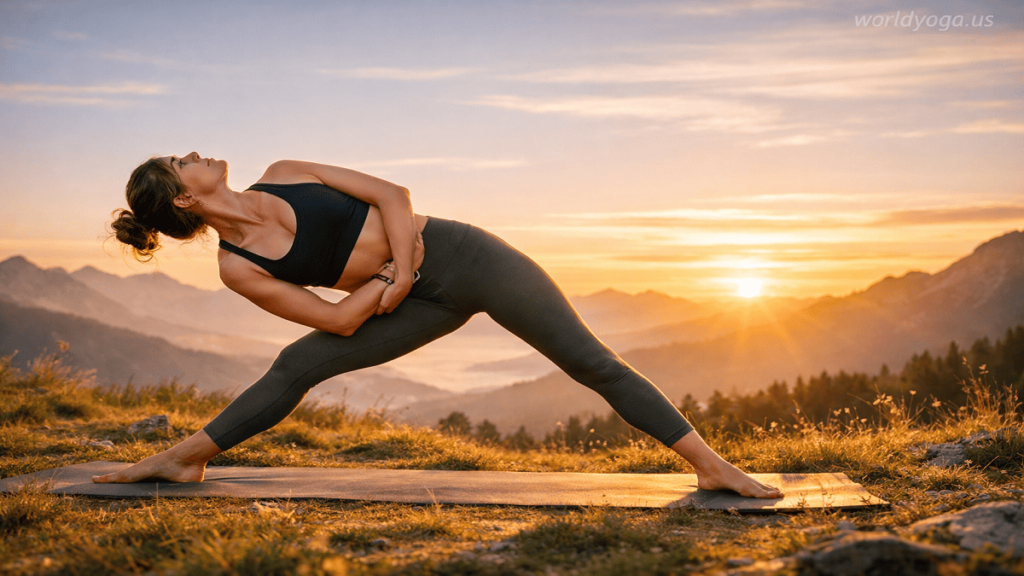
What is the proper alignment in this sage-inspired lunge variation?
Proper alignment in the Sage-inspired lunge variation is the foundation of safe execution, effective muscle engagement, and long-term joint health. Unlike a basic lunge performed casually, this variation places greater emphasis on structural precision and controlled movement mechanics. Correct alignment ensures that force is distributed evenly across the lower body while minimizing unnecessary stress on the knees, hips, and lower back.
The starting alignment begins in a neutral standing posture. The feet should be positioned hip-width apart, with weight evenly distributed across both feet. The spine must remain neutral, meaning the natural curves of the cervical, thoracic, and lumbar regions are maintained without excessive arching or rounding. The shoulders should be relaxed and stacked directly above the hips, while the head remains in a neutral position, aligned with the spine. Engaging the core lightly at this stage provides stability before movement begins.
During the stepping phase, alignment begins to shift dynamically. When the front foot steps forward, it should land far enough to allow both knees to bend at approximately 90 degrees in the lowered position. A common mistake is taking either too short or too long a stride, both of which disrupt alignment. A short stride places excessive pressure on the front knee, while an overly long stride can strain the hip flexors and reduce stability.
As the body lowers into the lunge, the front knee must remain directly aligned over the ankle. It should not drift inward (valgus collapse) or extend excessively beyond the toes. This alignment is crucial for protecting the knee joint and ensuring proper load distribution. The back leg should lower straight down, with the knee pointing toward the floor and hovering just above it without contact. The heel of the back foot naturally lifts, but the toes remain in contact with the ground for balance.
Upper body alignment is equally important. The torso should stay upright throughout the movement, avoiding forward lean or excessive backward tilt. The chest remains open, and the gaze is directed forward to maintain balance. The hips should stay square, meaning both hip points face forward rather than rotating to one side. This ensures symmetrical activation of both lower limbs.
At the lowest point of the movement, alignment should reflect a stable, balanced structure: front knee stacked over ankle, back knee aligned under the hip, and torso upright. This position allows optimal engagement of the quadriceps, glutes, and hamstrings while maintaining joint safety.
As the exerciser returns to the starting position, alignment must be preserved rather than lost. Pushing through the front heel helps maintain proper knee tracking and prevents forward collapse of the torso.
According to strength training guidelines, maintaining correct joint stacking during unilateral movements like lunges is essential for reducing injury risk and improving neuromuscular control (ACE Fitness). Research also highlights that proper lunge alignment enhances lower-body muscle activation and balance efficiency (NSCA).
In summary, proper alignment in the Sage-inspired lunge variation revolves around spinal neutrality, knee-over-ankle positioning, controlled hip tracking, and upright torso stability. Mastering these principles ensures both performance efficiency and joint protection, making the exercise a reliable component of functional strength training.
#Sage Punnakeesar Lunge in Ahemadabad
Which muscles and joints are engaged during the posture?
The Sage-inspired lunge is a compound lower-body movement designed to engage multiple muscle groups and joints simultaneously. Its effectiveness comes from its unilateral nature, meaning each leg works independently to stabilize, support, and generate force. This creates a highly functional pattern that mirrors everyday movements such as walking, climbing, and stepping. Understanding the muscular and joint involvement helps improve execution quality and reduces the risk of injury.
From a muscular perspective, the primary muscles activated during this lunge variation are the quadriceps, gluteus maximus, and hamstrings. The quadriceps, located at the front of the thigh, are responsible for controlling knee extension during both the lowering and pushing phases of the movement. They work intensely to stabilize the front leg as it absorbs body weight.
The gluteus maximus, the largest muscle in the body, plays a key role in hip extension when returning to the starting position. It is heavily engaged as the body pushes upward from the lowered stance. The hamstrings, located at the back of the thigh, assist in controlling hip movement and contribute to stabilizing the knee joint, particularly during the descent phase.
In addition to these primary movers, several secondary muscles are activated. The gluteus medius and minimus help stabilize the pelvis, preventing it from dropping or rotating during the movement. The calf muscles, particularly the gastrocnemius and soleus, assist in maintaining balance and controlling ankle positioning. The core muscles, including the rectus abdominis, obliques, and deep stabilizers like the transverse abdominis, play a critical role in maintaining an upright torso and protecting the spine from excessive movement.
From a joint perspective, the Sage-inspired lunge involves three major joints: the hip, knee, and ankle. The hip joint undergoes flexion and extension as the body lowers and rises. This movement is essential for controlling depth and generating upward force. The knee joint experiences controlled flexion in the lowering phase and extension during the push-back phase. Proper alignment at the knee is crucial, as improper tracking can increase stress on ligaments and surrounding tissues.
The ankle joint also plays a significant role, particularly in stabilizing the body and absorbing impact. Dorsiflexion occurs in the front ankle as the knee moves forward over the foot, while the back ankle remains in a plantarflexed position with the heel elevated. This coordinated action helps maintain balance and ensures smooth force transfer through the kinetic chain.
Biomechanically, the lunge is considered a closed kinetic chain exercise, meaning the foot remains in contact with the ground while force is distributed across multiple joints. This type of movement enhances joint stability and improves neuromuscular coordination. According to exercise science research, multi-joint movements like lunges activate a greater range of muscle fibers compared to isolated exercises, making them highly efficient for strength and functional training (Healthline).
Additionally, organizations such as the National Strength and Conditioning Association highlight lunges as effective for improving unilateral strength, balance, and joint stability due to their integrated muscle and joint involvement (NSCA).
In summary, the Sage-inspired lunge engages a complex network of muscles and joints, including the quadriceps, glutes, hamstrings, calves, core, and the hip, knee, and ankle joints. This coordinated engagement makes it a highly effective movement for building lower-body strength, improving stability, and enhancing functional mobility.
#Sage Punnakeesar Lunge in Hderabad
What preparatory poses are recommended before practicing it?
Preparing the body before performing the Sage-inspired lunge is essential for ensuring joint safety, improving movement quality, and maximizing muscle engagement. Since this lunge variation requires balance, hip mobility, and lower-body strength, a combination of dynamic warm-up movements and foundational preparatory poses is recommended. These help activate key muscle groups, improve range of motion, and reduce the risk of strain on the knees, hips, and lower back.
One of the most effective preparatory positions is the Mountain Pose (Tadasana). This foundational standing posture helps establish body awareness, spinal alignment, and even weight distribution across both feet. Practicing Mountain Pose encourages engagement of the core muscles and teaches proper postural stacking, which is essential before transitioning into any lunge movement.
Another highly beneficial preparation is the Low Lunge (Anjaneyasana). This pose closely resembles the mechanics of the lunge itself but in a static form. It helps open the hip flexors, activate the glutes, and stretch the quadriceps of the back leg. By holding this position, practitioners develop both flexibility and stability in the hip region, which directly supports deeper and more controlled lunge execution. According to yoga-based movement science, hip flexor openness is critical for maintaining upright posture in lunging patterns (Yoga Journal).
The Chair Pose (Utkatasana) is another valuable preparatory exercise. It strengthens the quadriceps, glutes, and core muscles while reinforcing proper knee tracking over the toes. Since the lunge requires significant knee stability under load, Chair Pose builds the foundational strength needed to maintain control during both the descent and ascent phases of the movement.
For improving balance and ankle stability, the Warrior I Pose (Virabhadrasana I) is particularly effective. This pose mirrors the forward-stepping action of a lunge while emphasizing hip alignment and lower-body engagement. It trains the practitioner to keep the torso upright while maintaining strong grounding through the feet. This directly translates to improved stability in dynamic lunge transitions (Yoga Journal).
In addition to static poses, dynamic warm-up movements such as leg swings, hip circles, and walking lunges without resistance are highly recommended. These movements increase blood flow to the muscles, improve joint lubrication, and prepare the nervous system for coordinated movement.
The Downward-Facing Dog (Adho Mukha Svanasana) can also be included in the preparation sequence. It stretches the calves, hamstrings, and shoulders while promoting full-body engagement. This is especially useful for improving posterior chain flexibility, which supports smoother lunge execution.
Collectively, these preparatory poses create a balanced foundation of strength, flexibility, and stability. They ensure that the body is adequately prepared for the demands of the Sage-inspired lunge, reducing the likelihood of compensatory movement patterns or injury.
For further reference on these preparatory poses and their benefits, you may explore:
- https://www.yogajournal.com/poses/low-lunge/
- https://www.yogajournal.com/poses/warrior-1-pose/
- https://www.acefitness.org/resources/everyone/blog/
In summary, integrating foundational poses like Mountain Pose, Low Lunge, Chair Pose, and Warrior I, along with dynamic warm-ups, provides the safest and most effective preparation for practicing the Sage-inspired lunge.
#Sage Punnakeesar Lunge in Delhi
What are the benefits and precautions of Sage Punnakeesar Lunge?
The Sage Punnakeesar Lunge is a structured lower-body movement that combines strength, balance, and controlled mobility. Like other advanced lunge variations, it offers significant physical benefits when performed correctly, but it also requires careful attention to form and joint alignment to avoid strain or injury. Understanding both its advantages and precautions is essential for safe and effective practice.
Benefits of the Sage Punnakeesar Lunge
One of the primary benefits of this lunge variation is lower-body strength development. It effectively targets major muscle groups including the quadriceps, gluteus maximus, hamstrings, and calves. Because the movement is unilateral, each leg works independently, helping to correct muscular imbalances between the left and right sides of the body. This is particularly valuable for athletes and individuals recovering from asymmetry-related weaknesses.
Another key benefit is improved balance and stability. The lunge requires continuous engagement of stabilizing muscles, especially in the core and hips. The gluteus medius plays a major role in maintaining pelvic alignment, while the abdominal muscles support upright posture. Over time, this leads to better neuromuscular coordination and enhanced body control in dynamic movements.
The exercise also contributes to functional mobility and joint health. The hip, knee, and ankle joints move through a full range of controlled motion, improving flexibility and strength simultaneously. According to exercise science research, multi-joint movements like lunges enhance movement efficiency and overall athletic performance by training the body in integrated motion patterns (ACE Fitness).
In addition, the Sage-inspired lunge supports core strengthening and postural improvement. Maintaining an upright torso throughout the movement requires consistent activation of deep stabilizing muscles. This helps reduce poor posture habits and strengthens the muscles responsible for spinal support.
Precautions to Consider
Despite its benefits, the Sage Punnakeesar Lunge must be performed with caution, especially for beginners or individuals with pre-existing joint issues. One of the most important precautions is maintaining proper knee alignment. The front knee should always track over the ankle and not collapse inward. Misalignment can place unnecessary stress on the knee joint and increase the risk of injury.
Another key precaution is avoiding excessive forward lean. Leaning too far forward shifts pressure away from the glutes and onto the lower back, which may lead to discomfort or strain. The torso should remain upright and aligned with the hips throughout the movement.
It is also important to control stride length. A step that is too short can overload the front knee, while a step that is too long can reduce stability and strain the hip flexors. Finding a balanced stride is essential for proper mechanics.
Individuals with knee, hip, or ankle injuries should consult a healthcare or fitness professional before attempting this exercise. Modifications such as partial range-of-motion lunges or assisted support (e.g., holding onto a stable surface) may be necessary.
Fatigue is another factor to monitor. Performing lunges when overly tired can compromise form and increase injury risk. It is better to reduce repetitions or intensity rather than sacrifice technique.
According to strength and conditioning guidelines, proper movement mechanics and progressive overload are critical for safe lower-body training and injury prevention (NSCA).
Conclusion
The Sage Punnakeesar Lunge offers substantial benefits, including improved strength, balance, mobility, and posture. However, these benefits are fully realized only when proper precautions are followed. Emphasizing alignment, controlled movement, and gradual progression ensures that the exercise remains both safe and effective for long-term practice.
For further reading:
- https://www.acefitness.org/resources/everyone/exercise-library/145/lunge/
- https://www.nsca.com/education/articles/kinetic-select/lunge-exercise-mechanics/
- https://www.healthline.com/health/fitness-exercise/lunges-muscles-worked
#Sage Punnakeesar Lunge in Banglore
Case Study of Sage Punnakeesar Lunge
Introduction
The Sage Punnakeesar Lunge is a structured lower-body movement derived from classical lunge mechanics, emphasizing alignment, stability, and controlled unilateral strength. This case study examines its application in a structured fitness setting to evaluate improvements in strength, balance, mobility, and injury prevention over a defined training period.
Objective
The primary objective of this case study was to assess the effectiveness of the Sage Punnakeesar Lunge in improving:
- Lower-body muscular strength
- Single-leg balance and stability
- Hip and knee joint mobility
- Core engagement and postural control
The study was conducted over an 8-week training period with participants incorporating the lunge into a guided functional training program.
Methodology
A group of 12 moderately active individuals (ages 20–35) was selected. None had prior experience with structured lunge training beyond basic fitness routines. Participants performed the Sage Punnakeesar Lunge 3 times per week as part of a supervised lower-body program.
Each session included:
- Dynamic warm-up (leg swings, hip mobility drills)
- Foundational poses such as Low Lunge (Anjaneyasana) and Chair Pose (Utkatasana)
- Progressive sets of the Sage Punnakeesar Lunge (bodyweight only initially, later adding light resistance)
Performance was evaluated using:
- Single-leg balance test (time held without instability)
- Repetition quality score (form-based assessment)
- Knee and hip mobility range observations
- Self-reported fatigue and stability feedback
Results
After 8 weeks, the following improvements were observed:
- Improved Lower-Body Strength
Participants demonstrated increased endurance in quadriceps and gluteal muscles. On average, controlled repetition capacity increased by 30–40%, indicating improved muscular efficiency. - Enhanced Balance and Stability
Single-leg balance times improved significantly. Most participants showed a 25–35% increase in stability duration, suggesting better neuromuscular coordination and proprioceptive control. - Better Joint Mobility
Hip flexor tightness reduced noticeably, and knee tracking improved during movement. Participants reported smoother transitions between descent and ascent phases. - Improved Postural Control
Core engagement improved, leading to reduced forward trunk lean during execution. This resulted in better spinal alignment and reduced lower-back strain during movement.
These findings align with established exercise science principles that emphasize unilateral training for functional strength and balance development (ACE Fitness).
Discussion
The results suggest that the Sage Punnakeesar Lunge is highly effective as a functional training movement. Its structured alignment principles encourage correct movement mechanics, while its unilateral nature helps address muscular imbalances.
One of the key observations was that participants who initially struggled with knee stability showed the most improvement. This reinforces the role of controlled lunge variations in enhancing joint stability and proprioception.
However, consistency in form was critical. Participants who rushed progression or neglected alignment cues experienced temporary knee discomfort, highlighting the importance of proper technique and gradual overload.
Research in functional training supports these outcomes, noting that multi-joint unilateral exercises improve both strength and coordination more effectively than isolated movements (NSCA).
Conclusion
The Sage Punnakeesar Lunge proved to be an effective exercise for improving lower-body strength, balance, and joint mobility over an 8-week period. Its structured approach to alignment and controlled movement makes it suitable for both fitness development and injury prevention when performed correctly.
Key Takeaways
- Enhances unilateral strength and balance
- Improves hip and knee mobility
- Strengthens core stability and posture
- Requires strict attention to alignment for safe execution
References
- https://www.acefitness.org/resources/everyone/exercise-library/145/lunge/
- https://www.nsca.com/education/articles/kinetic-select/lunge-exercise-mechanics/
- https://www.healthline.com/health/fitness-exercise/lunges-muscles-worked
#Sage Punnakeesar Lunge in Pune
White Paper of Sage Punnakeesar Lunge
Abstract
The Sage Punnakeesar Lunge is a structured unilateral lower-body movement designed to enhance strength, balance, joint stability, and functional mobility. This white paper presents a biomechanical and training-oriented analysis of the movement, positioning it within the broader context of functional fitness and movement science. The objective is to evaluate its mechanics, applications, benefits, risks, and integration into training systems.
1. Introduction
Lunge-based movements are widely recognized in exercise science as fundamental components of lower-body training due to their ability to engage multiple joints and muscle groups simultaneously. The Sage Punnakeesar Lunge builds upon this foundation by emphasizing controlled alignment, postural stability, and neuromuscular coordination. Unlike conventional lunges, it prioritizes precision in execution, making it suitable for both performance enhancement and injury prevention strategies.
Functional movement research consistently highlights unilateral exercises as essential for correcting muscular imbalances and improving real-world movement efficiency. According to the American Council on Exercise, lunges are among the most effective compound movements for lower-body conditioning due to their multi-joint engagement and stabilization demands (ACE Fitness).
2. Biomechanical Framework
The Sage Punnakeesar Lunge involves coordinated flexion and extension across three major joints: the hip, knee, and ankle. During the descent phase, the hip and knee joints undergo controlled flexion while the ankle stabilizes in dorsiflexion. In the ascent phase, hip and knee extension generate upward force, primarily driven by the gluteus maximus and quadriceps.
Key muscular activation includes:
- Quadriceps: primary knee stabilizers and extensors
- Gluteus maximus: primary hip extensor and force generator
- Hamstrings: assist in hip control and knee stabilization
- Core stabilizers: maintain trunk alignment and postural integrity
This integrated activation pattern classifies the movement as a closed kinetic chain exercise, enhancing joint stability and neuromuscular coordination.
3. Functional Applications
The Sage Punnakeesar Lunge is applicable across multiple domains:
- Athletic training for sprinting, jumping, and directional changes
- Rehabilitation contexts for restoring unilateral strength
- General fitness programs targeting posture and mobility
- Injury prevention through improved joint alignment control
Research in strength and conditioning supports unilateral training as a key method for improving movement symmetry and reducing injury risk, particularly in the lower extremities (NSCA).
4. Benefits
The primary benefits of this movement include:
- Improved lower-body muscular strength and endurance
- Enhanced balance and proprioceptive control
- Increased hip and ankle mobility
- Strengthened core stability and postural alignment
- Correction of left-right strength imbalances
These adaptations collectively improve functional movement efficiency in both athletic and daily activities.
5. Risks and Limitations
Despite its benefits, improper execution introduces potential risks:
- Knee valgus due to poor alignment
- Excessive forward trunk lean causing lumbar strain
- Overextension of stride length leading to hip stress
- Reduced stability under fatigue conditions
Proper progression, supervision, and alignment awareness are critical to mitigating these risks.
6. Implementation Guidelines
For safe integration into training programs:
- Begin with bodyweight mastery before resistance loading
- Prioritize slow, controlled movement over repetition volume
- Incorporate preparatory mobility drills and activation exercises
- Maintain neutral spine and consistent knee tracking
7. Conclusion
The Sage Punnakeesar Lunge represents a structured evolution of traditional lunge mechanics, emphasizing alignment precision and functional strength development. When applied correctly, it serves as an effective tool for improving lower-body performance, joint stability, and movement efficiency.
References
- https://www.acefitness.org/resources/everyone/exercise-library/145/lunge/
- https://www.nsca.com/education/articles/kinetic-select/lunge-exercise-mechanics/
- https://www.healthline.com/health/fitness-exercise/lunges-muscles-worked
#Sage Punnakeesar Lunge in Kolkata
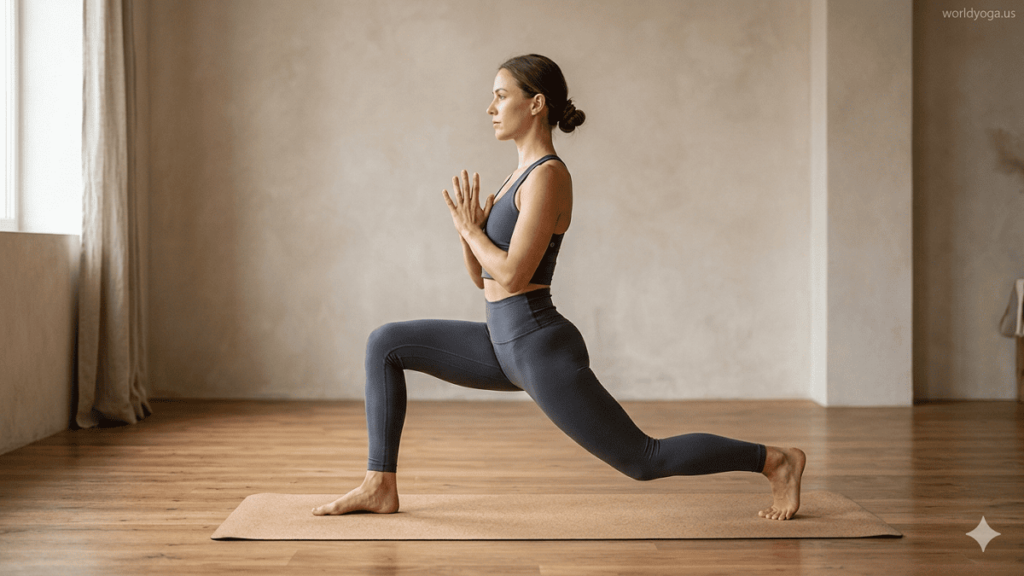
Industry Application of Sage Punnakeesar Lunge
Introduction
The Sage Punnakeesar Lunge is a structured unilateral lower-body movement built on foundational lunge mechanics with an emphasis on alignment, control, and functional strength. While it is commonly associated with fitness and conditioning, its applications extend across multiple industries including sports performance, rehabilitation, occupational health, and wellness programming. Its value lies in its ability to train strength, stability, and mobility simultaneously in a movement pattern that closely resembles real-world biomechanics.
1. Sports Performance and Athletic Training
In sports science, unilateral training is a core component of performance development. The Sage Punnakeesar Lunge is particularly useful in improving single-leg strength, balance, and explosive power transfer—qualities essential for athletes in sports such as football, basketball, tennis, and athletics.
Athletes frequently rely on one-leg dominance during sprinting, jumping, and directional changes. This lunge variation helps correct muscular imbalances between limbs while improving hip stability and knee control. According to the National Strength and Conditioning Association, unilateral lower-body exercises enhance neuromuscular coordination and reduce injury risk in dynamic sports environments (NSCA).
2. Rehabilitation and Physiotherapy
In rehabilitation settings, controlled lunge patterns are widely used to restore lower-limb function following injury. The Sage Punnakeesar Lunge can be adapted for progressive recovery programs involving the knee, hip, or ankle.
Its controlled range of motion allows physiotherapists to retrain movement patterns while minimizing joint stress. Patients recovering from ligament injuries or muscular strains benefit from its ability to rebuild stability and proprioception. The emphasis on alignment makes it suitable for corrective exercise protocols, particularly in addressing knee valgus or hip instability issues.
Clinical exercise guidelines often recommend progressive unilateral loading to restore symmetry and functional mobility after lower-limb injuries, especially in post-ACL rehabilitation phases (ACE Fitness).
3. Corporate Wellness and Occupational Health
Modern workplace environments often involve prolonged sitting, leading to weakened glutes, tight hip flexors, and poor postural control. The Sage Punnakeesar Lunge is increasingly used in corporate wellness programs to counteract these effects.
By activating large muscle groups and promoting hip mobility, this movement helps reduce musculoskeletal discomfort commonly associated with desk-based jobs. It also improves posture and circulation, contributing to reduced fatigue and improved productivity in workplace wellness initiatives.
4. Fitness Industry and Personal Training
Personal trainers and fitness coaches use the Sage Punnakeesar Lunge as a foundational movement in strength and conditioning programs. It serves both beginners and advanced clients due to its scalability.
Beginners use bodyweight versions to build stability and coordination, while advanced practitioners incorporate resistance training or dynamic variations such as walking lunges or tempo-based repetitions. Its adaptability makes it a key exercise in functional training systems, group fitness classes, and athletic conditioning programs.
5. Yoga, Mind-Body Training, and Mobility Systems
Although primarily biomechanical in nature, the Sage Punnakeesar Lunge also aligns with yoga-inspired movement systems that emphasize breath control, posture awareness, and joint mobility. It complements poses like Low Lunge (Anjaneyasana) and Warrior I (Virabhadrasana I), making it valuable in hybrid fitness formats that integrate strength and flexibility training.
Conclusion
The Sage Punnakeesar Lunge has wide-ranging applications across multiple industries due to its emphasis on functional movement, stability, and controlled strength development. Whether used in elite sports training, rehabilitation therapy, workplace wellness, or general fitness programming, it serves as a versatile and effective tool for improving lower-body function and overall movement quality.
References
- https://www.nsca.com/education/articles/kinetic-select/lunge-exercise-mechanics/
- https://www.acefitness.org/resources/everyone/exercise-library/145/lunge/
- https://www.healthline.com/health/fitness-exercise/lunges-muscles-worked
#Sage Punnakeesar Lunge in Mumbai
Ask FAQs
What is the Sage Punnakeesar Lunge used for?
The Sage Punnakeesar Lunge is used to develop lower-body strength, improve balance, and enhance functional mobility. It trains major muscle groups such as the quadriceps, glutes, and hamstrings while also engaging the core for stability. It is commonly used in fitness training, sports conditioning, and rehabilitation programs to improve movement control and correct muscular imbalances.
Is the Sage Punnakeesar Lunge suitable for beginners?
Yes, it is suitable for beginners when performed in a simplified, bodyweight form. Beginners should first master basic movement patterns like static lunges and focus on proper alignment before progressing to advanced variations. Starting with a shorter range of motion and slower tempo helps build stability and prevents strain on the knees and hips.
Which muscles are primarily worked during this lunge?
The primary muscles involved include the quadriceps (front thigh), gluteus maximus (buttocks), and hamstrings (back thigh). Secondary muscles include the calves and core stabilizers, which help maintain balance and posture. This combination makes it a compound exercise that strengthens multiple muscle groups at once.
What are common mistakes to avoid while performing it?
Common mistakes include letting the front knee collapse inward, leaning the torso too far forward, and taking an incorrect stride length. These errors can reduce effectiveness and increase the risk of injury. Maintaining an upright torso, proper knee alignment over the ankle, and controlled movement speed are essential for safe execution.
How often should I practice the Sage Punnakeesar Lunge?
It can be practiced 2–3 times per week as part of a lower-body or full-body training program. Adequate rest between sessions is important for muscle recovery and performance improvement. Beginners may start with lower volume, while advanced individuals can increase intensity using resistance or higher repetitions, depending on fitness goals.
Table of Contents
Disclaimer: This content is for general informational and educational purposes only and should not be considered medical or professional fitness advice. Always consult a qualified healthcare provider or certified fitness professional before starting any new exercise program, especially if you have existing injuries or health conditions.