Supine: Garuda Legs on the Back
Supine: Garuda Legs on the Back is a restorative yoga posture inspired by the leg positioning used in Garudasana, commonly known as Eagle Pose. Practiced while lying on the back, this variation offers a gentler approach to hip opening, spinal release, and muscular relaxation. It is widely used in restorative yoga, mobility routines, and therapeutic stretching sessions because it allows practitioners to experience the benefits of deep leg crossing without the balance demands of standing postures.
The pose is especially effective for relieving tension in the hips, lower back, glutes, and outer thighs. Because the body is supported by the floor, practitioners can focus more deeply on breathing, alignment, and controlled muscular release.
How to Perform Supine: Garuda Legs on the Back
Begin by lying flat on the back on a yoga mat with both legs extended and the arms relaxed beside the body. Bend the knees and place both feet flat on the floor.
Lift one leg and cross it over the opposite thigh, wrapping the legs in a similar manner to Eagle Pose. If possible, hook the top foot behind the lower calf. Keep the pelvis grounded and the spine neutral.
Once the legs are wrapped, gently allow the knees to move slightly toward the chest or to one side depending on the variation being practiced. The arms may remain relaxed or extend outward for additional spinal release.
Hold the posture for 30 seconds to one minute while maintaining slow and steady breathing. Repeat on the opposite side to maintain muscular balance.
Benefits of the Pose
Releases Hip and Glute Tension
The deep crossing of the legs creates an effective stretch through the outer hips, glutes, and piriformis muscles. This can help reduce tightness caused by prolonged sitting or repetitive movement patterns.
Supports Lower Back Relaxation
Because the spine is supported by the floor, the posture encourages gentle decompression of the lower back. Many practitioners use this pose to relieve muscular tension and improve comfort after long periods of standing or sitting.
Improves Hip Mobility
The wrapping action of the legs mobilizes the hip joints and stretches surrounding connective tissues. Consistent practice may improve range of motion and movement efficiency.
Encourages Nervous System Relaxation
As a restorative posture, Supine: Garuda Legs on the Back promotes relaxation through controlled breathing and supported positioning. It is commonly included in calming yoga sequences and recovery sessions.
Enhances Body Awareness
The pose encourages mindful attention to alignment, muscular engagement, and breathing patterns, helping practitioners develop greater physical awareness.
Alignment Tips
Proper alignment improves comfort and effectiveness during the pose:
- Keep the shoulders relaxed against the floor
- Avoid excessive twisting of the knees
- Maintain a neutral neck position
- Keep breathing slow and steady
- Use props for support if necessary
Practitioners with limited flexibility can modify the pose by crossing the thighs without wrapping the feet completely.
Precautions
Individuals with knee injuries, severe hip pain, or recent lower back issues should practice cautiously and avoid forcing the leg wrap. The posture should create a stretching sensation without discomfort or joint strain.
Using a folded blanket beneath the hips or head can improve support and alignment.
Helpful Yoga Resources
For additional guidance on restorative yoga and alignment techniques, visit:
Supine: Garuda Legs on the Back is a gentle yet highly effective posture for releasing tension, improving flexibility, and supporting relaxation through mindful movement and breath awareness.
#Supine: Garuda Legs on the Back in India
How is Supine Garuda Legs on the Back performed correctly?
Supine Garuda Legs on the Back is a restorative yoga posture that adapts the leg positioning of Garudasana into a reclined variation. This pose is commonly practiced to release tension in the hips, glutes, lower back, and outer thighs while encouraging relaxation and improved body awareness. Because the body is supported by the floor, practitioners can focus on alignment, breathing, and controlled stretching without the balance challenges found in standing yoga poses.
Performing the posture correctly is important for maximizing its benefits and avoiding unnecessary strain on the knees, hips, or spine. Proper alignment and gradual movement help create a safe and effective stretching experience.
Step-by-Step Instructions
Begin by lying comfortably on your back on a yoga mat. Extend both legs fully and allow the arms to rest naturally beside the body. Take a few slow breaths to relax the shoulders and settle the spine into a neutral position.
Bend both knees and place the feet flat on the floor, hip-width apart. Lift the right leg and cross it over the left thigh, similar to the leg position used in Eagle Pose. If flexibility allows, wrap the right foot behind the left calf. If this is uncomfortable, simply crossing the thighs is sufficient.
Keep the pelvis evenly grounded on the floor. The hips should remain stable without excessive lifting or twisting.
Once the legs are crossed, gently draw the knees toward the chest or allow them to move slightly to one side depending on the variation being practiced. The movement should feel controlled and comfortable rather than forced.
The arms may remain relaxed by the sides, extend outward in a T-shape, or rest on the abdomen to support relaxation and breathing awareness.
Hold the pose for 30 seconds to one minute while maintaining slow, steady breathing. Release the legs carefully and repeat on the opposite side.
Proper Alignment Tips
Correct alignment improves both safety and effectiveness during the posture. Important points to remember include:
- Keep the spine neutral and supported by the floor
- Relax the shoulders away from the ears
- Avoid pulling the knees aggressively
- Maintain gentle engagement through the core
- Keep breathing smooth and natural
- Use props if flexibility is limited
A folded blanket beneath the hips or head can help improve comfort and spinal alignment.
Breathing Technique
Breathing plays an important role in restorative yoga poses. In Supine Garuda Legs on the Back, slow inhalations help create space in the torso and hips, while relaxed exhalations encourage deeper muscular release.
Avoid holding the breath during the stretch. Controlled breathing supports relaxation and reduces unnecessary tension throughout the body.
Common Mistakes to Avoid
One of the most common mistakes is forcing the leg wrap beyond the body’s natural flexibility. This can create strain in the knees or hips. Another mistake is lifting the shoulders or tightening the neck during the posture.
Practitioners should also avoid twisting the pelvis excessively or collapsing the lower back into discomfort.
Benefits of Correct Practice
When performed properly, the pose may help:
- Release tension in the hips and glutes
- Improve lower body flexibility
- Reduce lower back stiffness
- Encourage relaxation and stress relief
- Improve body awareness and posture
Additional Yoga Resources
For professional yoga tutorials and restorative yoga guidance, visit:
With mindful alignment and consistent practice, Supine Garuda Legs on the Back can become an effective posture for flexibility, relaxation, and muscular recovery.
#Supine: Garuda Legs on the Back in Maharashtra
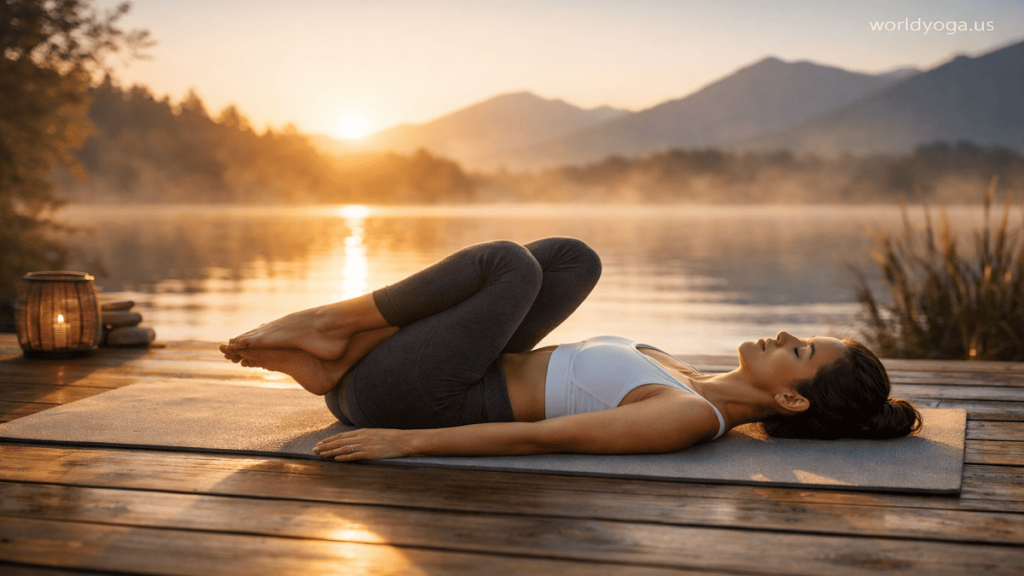
What is the proper alignment in this reclined Eagle Legs variation?
Proper alignment in the reclined Eagle Legs variation is essential for achieving the full benefits of the posture while protecting the hips, knees, lower back, and spine from unnecessary strain. Inspired by the leg positioning of Garudasana, this supine variation is commonly practiced in restorative yoga, flexibility training, and recovery-focused routines. Because the body is supported by the floor, practitioners can focus more deeply on controlled stretching, breathing, and muscular release.
Correct alignment allows the pose to effectively target the outer hips, glutes, lower back, and thighs while promoting relaxation and spinal support. Practicing with awareness also improves body balance and reduces the risk of overstretching sensitive joints.
Establishing a Neutral Foundation
Begin by lying flat on the back with the spine in a neutral position. The head, shoulders, and pelvis should feel evenly supported by the floor. Relax the shoulders away from the ears and keep the neck long and comfortable.
Bend both knees and place the feet flat on the mat before crossing one thigh over the other. If flexibility allows, wrap the top foot behind the opposite calf. However, the foot does not need to hook completely for the pose to be effective.
The pelvis should remain level and grounded throughout the posture. Avoid allowing one hip to lift excessively off the floor, as this may create unnecessary twisting in the lower back.
Knee and Hip Alignment
The knees should remain stacked as comfortably as possible without forcing the wrap. The sensation should be focused in the outer hips and glutes rather than the knee joints.
One of the most important alignment principles is protecting the knees from rotational strain. The legs should wrap naturally without pulling aggressively into deeper positioning.
The hips should remain stable and relaxed. If the posture creates discomfort in the lower back or pelvis, placing a folded blanket beneath the hips can improve support and alignment.
Spinal Positioning
The spine should maintain a gentle natural curve rather than flattening forcefully into the floor. Avoid arching the lower back excessively or pushing it aggressively downward.
If the variation includes moving the knees slightly toward one side, the movement should come gradually from the hips while keeping the shoulders grounded and relaxed.
The upper body should remain passive and supported throughout the pose.
Shoulder and Arm Placement
The shoulders should stay broad and relaxed against the mat. Tension in the neck or upper trapezius muscles can reduce the restorative effect of the posture.
The arms may rest beside the body, extend outward in a T-shape, or remain on the abdomen. The goal is to maintain ease and stability in the upper body.
Breathing and Relaxation
Slow and controlled breathing enhances the effectiveness of the stretch. Deep inhalations help create space around the hips and torso, while exhalations encourage muscular release.
Relaxed breathing also supports nervous system regulation and stress reduction, which is why this posture is commonly used in restorative yoga sequences.
Common Alignment Mistakes
Practitioners should avoid these common errors:
- Forcing the leg wrap beyond natural flexibility
- Twisting the knees aggressively
- Lifting the shoulders off the floor
- Holding tension in the neck or jaw
- Allowing the pelvis to become unstable
Using yoga props can help maintain comfort and improve posture quality.
Helpful Learning Resources
For expert yoga alignment guidance and restorative yoga instruction, visit:
Practicing proper alignment in the reclined Eagle Legs variation can improve flexibility, muscular relaxation, hip mobility, and overall body awareness while supporting safe and mindful movement.
#Supine: Garuda Legs on the Back in Ahemadabad
Which muscles and joints are engaged during the posture?
Supine Garuda Legs on the Back is a restorative yoga posture that primarily targets the hips, glutes, lower back, and thighs through deep leg crossing and controlled stretching. Inspired by the leg positioning of Garudasana, this reclined variation engages several muscle groups and joints while promoting relaxation, flexibility, and mobility.
Although the pose appears gentle, multiple stabilizing and stretching mechanisms work together to maintain alignment and support controlled movement. Understanding the muscles and joints involved can help practitioners improve body awareness, refine technique, and practice more safely.
Primary Muscles Engaged
Gluteal Muscles
The gluteus maximus and gluteus medius are among the most actively affected muscles during the posture. The crossing of the legs creates a deep stretch through the outer hips and gluteal region.
This release can help reduce muscular tightness caused by prolonged sitting, repetitive movement, or physical inactivity.
Hip Rotator Muscles
The deep hip rotators, including the piriformis, gemellus, and obturator muscles, are significantly engaged during the pose. These muscles help stabilize and rotate the hip joints while controlling the leg crossing action.
Stretching these muscles may improve hip mobility and reduce tension around the pelvis and lower back.
Adductor Muscles
The inner thigh muscles, or adductors, work to stabilize the legs as they cross and wrap around each other. Depending on the depth of the posture, these muscles may experience both activation and stretching.
Hamstrings
The hamstrings support pelvic positioning and lower-body stability during the pose. While not stretched as intensely as in forward folds, they contribute to maintaining proper leg alignment and joint support.
Core Muscles
The abdominal muscles, especially the transverse abdominis and obliques, provide light stabilization for the pelvis and lower back. Gentle core engagement helps maintain spinal support and prevents excessive twisting.
Secondary Muscles Involved
Additional muscular involvement may include:
- Erector spinae muscles supporting spinal positioning
- Quadriceps assisting knee stability
- Tensor fasciae latae contributing to hip stabilization
- Lower back muscles maintaining pelvic balance
In restorative versions of the posture, muscular activation remains gentle and supportive rather than intense.
Joints Engaged During the Posture
Hip Joints
The hip joints are the primary joints involved in this variation. The crossing and wrapping of the legs create external rotation, adduction, and mild flexion at the hips.
This movement pattern improves joint mobility and flexibility around the pelvis and lower body.
Knee Joints
The knees remain flexed throughout the posture and experience rotational positioning due to the Eagle-leg wrap. Proper alignment is essential to avoid placing excessive stress on the knee ligaments.
The movement should always feel stable and comfortable rather than compressed.
Sacroiliac Joint
The sacroiliac joint, located between the pelvis and spine, may experience gentle mobilization during the pose. Proper pelvic alignment helps support healthy movement in this region.
Lumbar Spine
Although the posture is primarily hip-focused, the lower spine receives mild rotational and decompressive effects, especially if the knees move slightly toward one side.
Benefits of Muscular and Joint Engagement
Consistent practice of Supine Garuda Legs on the Back may support:
- Improved hip mobility
- Reduced glute and piriformis tightness
- Better pelvic stability
- Enhanced lower-body flexibility
- Reduced muscular tension in the lower back
Because the posture is floor-supported, it is commonly used in restorative yoga and recovery sessions.
Helpful Yoga Resources
For professional guidance on yoga anatomy and alignment, visit:
Understanding the muscular and joint involvement in this posture can help practitioners practice more effectively while improving flexibility, stability, and overall body awareness.
#Supine: Garuda Legs on the Back in Hyderabad
What preparatory poses are recommended before practicing it?
Preparing the body before practicing Supine Garuda Legs on the Back is important for improving flexibility, protecting the joints, and enhancing overall comfort in the posture. Since this reclined variation involves deep hip crossing, outer glute stretching, and gentle spinal stabilization, warming up the hips, lower back, thighs, and core muscles can help the body move more safely and effectively.
Inspired by the leg positioning of Garudasana, this posture benefits from preparatory poses that improve hip mobility, spinal relaxation, and muscular awareness. Gentle stretching before practice also helps reduce tension and lowers the risk of knee or lower back discomfort.
Cat-Cow Stretch
The Cat-Cow Stretch is one of the best warm-up movements for preparing the spine and pelvis. This flowing motion increases spinal mobility, improves circulation, and gently activates the abdominal muscles.
Because Supine Garuda Legs on the Back requires pelvic stability and lower back relaxation, warming up the spine beforehand can improve alignment and movement quality.
Reclined Knee-to-Chest Pose
This gentle reclined stretch helps release tension in the lower back and hips while preparing the pelvis for deeper leg crossing movements.
Bringing one or both knees toward the chest encourages relaxation around the lumbar spine and improves body awareness before entering more complex hip-focused postures.
Supine Figure Four Stretch
The Supine Figure Four Stretch effectively opens the outer hips and glutes, particularly the piriformis muscle. Since the reclined Eagle Legs variation creates a deep stretch through similar areas, this pose is highly beneficial as preparation.
It also helps improve hip external rotation while reducing muscular tightness around the pelvis.
Bound Angle Pose
Bound Angle Pose stretches the inner thighs and hips while promoting relaxation in the lower body. Flexible adductor muscles help improve comfort when crossing and wrapping the legs during the posture.
This pose also encourages upright breathing and pelvic grounding, both of which support better alignment in restorative yoga variations.
Happy Baby Pose
Happy Baby Pose gently mobilizes the hips, lower back, and groin area. The posture increases hip flexibility while relieving tension around the sacrum and pelvis.
Practicing this pose before Supine Garuda Legs on the Back can help the hips feel more open and relaxed during the leg wrap.
Supine Twist
A gentle Supine Twist helps prepare the spine and waist for rotational movement. Although the reclined Eagle Legs variation is not a deep spinal twist, mild rotational mobility around the pelvis and lower back can improve overall comfort.
This preparatory posture also supports nervous system relaxation and breathing awareness.
Seated Forward Fold
A light forward fold stretches the hamstrings and lower back while calming the nervous system. Although the primary focus of Supine Garuda Legs on the Back is the hips and glutes, improved hamstring flexibility contributes to better pelvic positioning.
Benefits of Proper Preparation
Using preparatory poses before practice may help:
- Improve hip and glute flexibility
- Reduce lower back tension
- Increase pelvic mobility
- Protect the knees and hips
- Improve breathing and relaxation
- Enhance posture and alignment awareness
Gradual preparation allows practitioners to enter the posture more comfortably and safely.
Helpful Yoga Resources
For guided yoga warm-ups and restorative yoga instruction, visit:
Incorporating these preparatory poses into a regular yoga routine can improve flexibility, support joint health, and make Supine Garuda Legs on the Back more comfortable and effective.
#Supine: Garuda Legs on the Back in Delhi
What are the benefits and precautions of this supine twist and stretch variation?
Supine Garuda Legs on the Back is a restorative yoga posture that combines gentle twisting, hip opening, and lower-body stretching while the body remains supported on the floor. Inspired by the leg positioning of Garudasana, this variation is widely practiced in restorative yoga, mobility routines, and relaxation-focused sequences because it promotes muscular release without placing stress on balance or weight-bearing joints.
The posture primarily targets the hips, glutes, lower back, and thighs while encouraging controlled breathing and nervous system relaxation. Although it is considered a gentle pose, proper alignment and awareness are important to ensure safety and effectiveness.
Benefits of the Pose
Releases Hip and Glute Tension
One of the main benefits of this posture is deep stretching through the outer hips and gluteal muscles. The crossing and wrapping of the legs help release tightness in the piriformis and surrounding hip rotator muscles.
This can be especially beneficial for individuals who spend long hours sitting or experience stiffness from repetitive movement patterns.
Improves Hip Mobility
The pose encourages healthy movement in the hip joints by combining adduction and rotational positioning. Regular practice may improve flexibility and support smoother movement patterns in daily activities.
Improved hip mobility can also contribute to better posture and reduced muscular compensation in the lower back.
Supports Lower Back Relaxation
Because the body is fully supported by the floor, the lower back can relax more effectively than in many seated or standing stretches. Gentle spinal decompression and pelvic stabilization may help reduce tension in the lumbar region.
Many practitioners use this posture as part of recovery routines or evening relaxation sequences.
Enhances Flexibility
The posture stretches multiple muscle groups simultaneously, including the glutes, outer thighs, lower back, and inner legs. This integrated stretching effect may gradually improve overall lower-body flexibility.
Encourages Nervous System Relaxation
As a restorative yoga variation, Supine Garuda Legs on the Back promotes calm breathing and muscular release. Slow breathing combined with supported positioning may help reduce stress and physical tension.
This makes the posture valuable for relaxation-focused yoga sessions and mindfulness practices.
Improves Body Awareness
The pose encourages mindful attention to alignment, breathing, and muscular sensations. Consistent practice can improve coordination and awareness of pelvic and spinal positioning.
Precautions and Safety Considerations
Avoid Forcing the Leg Wrap
One of the most important precautions is avoiding excessive pressure while crossing the legs. Forcing the wrap can strain the knees, hips, or lower back.
The legs should cross naturally within a comfortable range of motion.
Protect the Knees
The knees remain flexed throughout the posture and may experience rotational stress if alignment is poor. Practitioners should avoid twisting the knees aggressively or pulling the legs too tightly.
If discomfort occurs, reducing the depth of the wrap or using props can help.
Maintain Pelvic Stability
The pelvis should remain relatively grounded and stable during the posture. Excessive lifting or twisting of the hips can create unnecessary strain on the lumbar spine.
Use Props if Necessary
Yoga props such as folded blankets, bolsters, or cushions can improve comfort and alignment, particularly for beginners or individuals with limited flexibility.
Contraindications
Individuals with the following conditions should practice cautiously or seek professional guidance:
- Knee injuries
- Severe hip pain
- Recent lower back injuries
- Sacroiliac joint dysfunction
- Post-surgical recovery conditions
Pregnant practitioners should consult a qualified instructor before attempting deep leg-crossing variations.
Helpful Yoga Resources
For expert restorative yoga guidance and alignment education, visit:
When practiced mindfully and with proper alignment, this supine twist and stretch variation can support flexibility, relaxation, hip mobility, and overall muscular recovery.
#Supine: Garuda Legs on the Back in Banglore
Case Study of Supine: Garuda Legs on the Back
Supine Garuda Legs on the Back is a restorative yoga posture inspired by the leg configuration of Garudasana. Unlike the standing balance variation, this reclined form removes load from the joints and allows deeper muscular release through supported positioning. It is commonly used in yoga therapy, mobility training, and stress-reduction programs due to its ability to target the hips, glutes, lower back, and inner thighs in a safe and controlled manner.
This case study explores the application, progression, outcomes, and therapeutic relevance of the posture in a structured wellness setting.
Participant Profile
A 38-year-old administrative professional with a predominantly sedentary lifestyle participated in a 10-week restorative yoga program. The individual reported:
- Chronic tightness in hips and outer thighs
- Lower back stiffness after long sitting hours
- Reduced hip mobility
- Occasional stress-related muscular tension
The program included gentle mobility work, breathing techniques, and restorative postures, with Supine Garuda Legs on the Back introduced in the second week after foundational hip-opening exercises.
Intervention Approach
The posture was practiced 3–4 times per week, typically held for 45–60 seconds per side. Early sessions focused on modified versions where only the thighs were crossed without full foot wrapping to ensure joint safety.
Supporting practices included:
- Supine Figure Four stretch
- Cat-Cow spinal mobility exercises
- Reclined knee-to-chest variations
- Gentle supine twisting for spinal awareness
Breathing was emphasized throughout, with slow inhalation to expand the hips and relaxed exhalation to encourage muscular release.
Initial Challenges
During early stages of practice, the participant experienced:
- Limited hip external rotation
- Mild discomfort in outer knee during deeper crossing
- Difficulty relaxing lower back muscles
- Awareness of asymmetry between left and right hips
These challenges were addressed through progressive modification, use of props, and reduced intensity of the leg wrap.
Observed Outcomes After 10 Weeks
Improved Hip Mobility
A significant increase in hip external rotation and flexibility was observed. The participant was able to achieve a deeper yet more comfortable leg wrap without knee strain.
Reduced Lower Back Tension
Regular practice contributed to noticeable reduction in lumbar stiffness, particularly after prolonged sitting. The supported nature of the posture helped decompress the lower spine.
Enhanced Muscular Relaxation
The gluteal and piriformis muscles showed improved release response, leading to reduced tightness in the outer hips and thighs.
Improved Body Awareness
The participant demonstrated better awareness of pelvic alignment and breathing coordination during movement and daily posture habits.
Stress Reduction Effects
Restorative holding of the posture contributed to a calming effect on the nervous system, improving perceived relaxation and reducing physical tension after work hours.
Key Findings
The case study highlights several important principles:
- Gradual progression is essential for knee and hip safety
- Supported supine positioning enhances relaxation outcomes
- Breathing plays a critical role in muscular release
- Asymmetry in hips is common and improves with consistency
- Props significantly improve accessibility and comfort
Safety Observations
No adverse effects were reported when proper modifications were used. However, deeper variations without preparation led to mild knee discomfort, reinforcing the importance of gradual progression and alignment awareness.
Practical Applications
Supine Garuda Legs on the Back is widely applicable in:
- Restorative yoga sessions
- Corporate wellness programs
- Physical therapy mobility routines
- Stress management practices
- Evening relaxation sequences
Reference Resources
Conclusion
The case study demonstrates that Supine Garuda Legs on the Back is an effective restorative posture for improving hip mobility, reducing lower back tension, and enhancing overall relaxation. With consistent practice and proper modification, it offers significant therapeutic value for both general wellness and structured yoga therapy programs.
#Supine: Garuda Legs on the Back in Pune
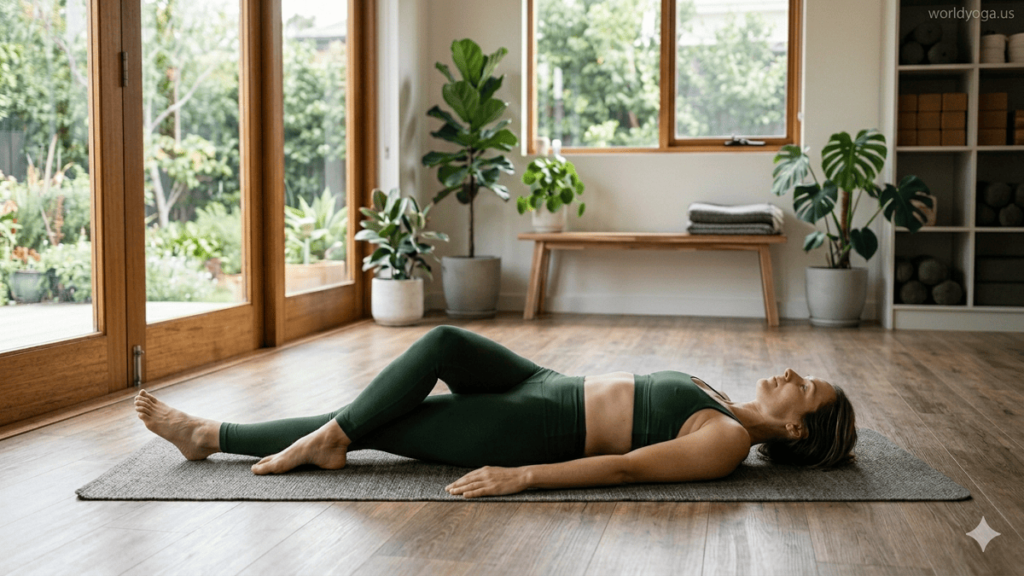
White Paper of Supine: Garuda Legs on the Back
Introduction
Supine Garuda Legs on the Back is a restorative yoga posture derived from the leg configuration of Garudasana, adapted into a reclined position to eliminate balance demands and enhance accessibility. This variation is widely used in yoga therapy, mobility training, rehabilitation support, and stress management practices due to its ability to safely target the hips, glutes, lower back, and inner thighs.
In modern wellness contexts, prolonged sitting, reduced mobility, and stress-related muscular tension have increased the need for low-impact restorative movement strategies. This posture addresses these concerns by combining passive stretching with supported spinal alignment and controlled breathing.
This white paper examines the biomechanics, muscular engagement, physiological benefits, therapeutic applications, and safety considerations of Supine Garuda Legs on the Back.
Biomechanical Overview
The posture involves:
- Hip external rotation and adduction
- Knee flexion and controlled crossing
- Mild pelvic stabilization
- Low-load spinal positioning
- Passive gravitational stretching
Because the body is supine, gravitational force assists in relaxation rather than resistance. This reduces compressive stress on joints while allowing deeper neuromuscular release in the lower body.
The spine remains in a neutral, supported position, minimizing axial load and enabling safe hip-focused mobility work.
Muscular Engagement
Primary Muscle Groups
- Gluteus maximus and medius
- Piriformis and deep hip rotators
- Adductor group (inner thighs)
- Hamstrings (stabilization role)
Secondary Muscle Groups
- Erector spinae (postural support)
- Core stabilizers (transverse abdominis, obliques)
- Quadriceps (knee positioning control)
Unlike active strength training, muscular engagement in this posture is primarily isometric and supportive, facilitating relaxation rather than exertion.
Physiological and Functional Benefits
1. Hip Mobility Enhancement
The posture improves external rotation and flexibility in the hip joint complex, supporting smoother movement patterns in daily life.
2. Lower Back Decompression
By supporting the spine on the floor, the posture reduces lumbar compression and encourages gentle relaxation of surrounding musculature.
3. Myofascial Release
Deep stretching of the gluteal and piriformis regions helps reduce fascial tension commonly associated with prolonged sitting.
4. Stress and Nervous System Regulation
As a restorative posture, it promotes parasympathetic activation through slow breathing and supported positioning, contributing to reduced stress response.
5. Postural Awareness
Regular practice improves awareness of pelvic alignment, hip symmetry, and lower-body movement patterns.
Clinical and Industry Applications
Yoga Therapy
Used in restorative sequences to support individuals with:
- Mild lower back tension
- Hip stiffness
- Postural imbalances
- Stress-related muscular tightness
Physical Rehabilitation
When appropriately modified, the posture may support mobility recovery programs focused on hip and lower-back function.
Corporate Wellness
Used in workplace wellness programs to counteract prolonged sitting and improve musculoskeletal comfort.
Sports Recovery
Included in recovery routines for athletes requiring hip flexibility, especially in running, cycling, and rotational sports.
Safety and Contraindications
While generally safe, precautions include:
- Avoid forcing the leg wrap beyond natural range
- Protect knee joints from rotational strain
- Use props for hip or lumbar support if needed
- Avoid deep variations in acute knee or hip injuries
Contraindicated or requires supervision in cases of:
- Severe knee ligament injuries
- Acute sacroiliac dysfunction
- Post-operative lower limb recovery
- Advanced hip joint pathology
Implementation Guidelines
Recommended practice structure:
- Duration: 30–90 seconds per side
- Frequency: 3–5 times per week in mobility routines
- Environment: quiet, supportive surface (yoga mat or padded floor)
- Support tools: bolsters, blankets, or blocks as needed
Breathwork should remain slow and continuous to optimize relaxation response.
Conclusion
Supine Garuda Legs on the Back is a highly effective restorative yoga posture that supports hip mobility, spinal relaxation, and muscular release with minimal joint stress. Its adaptability makes it suitable across yoga therapy, rehabilitation, fitness recovery, and workplace wellness settings.
When practiced with proper alignment and gradual progression, it serves as a safe and efficient method for improving lower-body flexibility, reducing tension, and enhancing overall physical awareness.
References
#Supine: Garuda Legs on the Back in Kolkata
Industry Application of Supine: Garuda Legs on the Back
Supine Garuda Legs on the Back, inspired by the lower-body positioning of Garudasana, is a restorative yoga variation widely used across multiple professional sectors focused on movement, rehabilitation, wellness, and performance optimization. By removing balance demands and supporting the body in a reclined position, this posture allows safe access to deep hip opening, glute release, and lower-back relaxation.
Its adaptability, low impact, and accessibility make it highly valuable in both clinical and non-clinical environments where mobility, stress reduction, and musculoskeletal health are priorities.
1. Fitness and Functional Training Industry
In fitness settings, Supine Garuda Legs on the Back is often used as part of mobility, cooldown, and recovery sessions. Trainers incorporate it to complement strength training and high-intensity workouts.
Key applications include:
- Improving hip external rotation and flexibility
- Supporting recovery after leg-intensive workouts
- Reducing glute and piriformis tightness
- Enhancing movement efficiency for squats, lunges, and running
It is especially useful in functional training programs where hip mobility directly influences athletic performance and injury prevention.
2. Physical Therapy and Rehabilitation
In rehabilitation environments, this posture is used as a gentle, supported mobility exercise under professional supervision.
Applications include:
- Early-stage hip mobility recovery
- Lower-back tension management
- Postural correction support
- Soft tissue relaxation in the gluteal region
Because the posture is performed in a supine position, it minimizes joint load and is easier to modify for individuals with limited mobility. However, it is always adjusted based on patient condition and clinical assessment.
3. Corporate Wellness Programs
With sedentary work becoming increasingly common, corporate wellness programs use restorative yoga techniques to counteract musculoskeletal strain.
Supine Garuda Legs on the Back helps employees by:
- Reducing hip stiffness from prolonged sitting
- Improving lower-back comfort
- Supporting stress reduction and relaxation
- Enhancing post-work recovery routines
It is often included in short guided stretch breaks or desk-to-mat wellness sessions to improve employee well-being and productivity.
4. Sports Performance and Athletic Recovery
Athletes in rotational and lower-body dominant sports benefit significantly from this posture.
Common users include runners, cyclists, football players, and martial artists.
Performance applications include:
- Enhancing hip mobility for stride efficiency
- Supporting recovery after intense training sessions
- Reducing tightness in glutes and outer thighs
- Improving neuromuscular relaxation after competition
The posture is often integrated into cooldown routines and mobility circuits designed by strength and conditioning coaches.
5. Yoga Therapy and Mind-Body Wellness Industry
In yoga therapy and wellness programs, Supine Garuda Legs on the Back is used for both physical and psychological benefits.
It supports:
- Nervous system regulation through restorative positioning
- Deep relaxation in Yin and Restorative Yoga classes
- Emotional stress release through breath awareness
- Gentle body-mind reconnection practices
Because of its calming effect, it is frequently included in evening yoga sequences and therapeutic relaxation sessions.
6. Digital Wellness and Online Fitness Platforms
With the growth of virtual fitness platforms, this posture has become a standard component in guided mobility and relaxation content.
Applications include:
- On-demand yoga classes
- Guided sleep and relaxation routines
- Mobility-focused video programs
- Stress management content libraries
Its simplicity makes it ideal for home practice users with varying skill levels.
Professional Resources
Conclusion
Supine Garuda Legs on the Back is a versatile restorative yoga posture with wide-ranging applications across fitness, rehabilitation, corporate wellness, athletic performance, and digital health platforms. Its accessibility, low impact nature, and strong focus on hip mobility and relaxation make it a valuable tool in modern movement and wellness industries.
#Supine: Garuda Legs on the Back in Mumbai
Ask FAQs
What is Supine Garuda Legs on the Back?
Supine Garuda Legs on the Back is a restorative yoga variation inspired by Garudasana, performed while lying on the back. It involves crossing and optionally wrapping the legs to stretch the hips, glutes, and outer thighs in a supported position.
What are the main benefits of this pose?
This posture helps improve hip flexibility, release glute and lower-back tension, enhance circulation in the lower body, and promote relaxation. It is also commonly used to reduce stiffness caused by prolonged sitting and improve overall mobility.
Is this pose suitable for beginners?
Yes, it is beginner-friendly because it is performed in a supine position with full floor support. Beginners can modify the depth of the leg crossing and use props like blankets or cushions for comfort and alignment.
Which muscles are most affected in this pose?
The pose primarily stretches the gluteus maximus, piriformis, hip rotators, and adductor muscles. It also engages stabilizing muscles in the core and lower back to support alignment and controlled positioning.
Are there any precautions to consider?
Yes. Practitioners should avoid forcing the leg wrap or applying pressure to the knees. Individuals with knee injuries, hip issues, or lower-back conditions should practice gently or consult a qualified yoga instructor before attempting deeper variations.
Table of Contents
Disclaimer: The information provided is for educational and informational purposes only and is not a substitute for professional medical advice, diagnosis, or treatment. Always consult a qualified healthcare provider or certified yoga instructor before beginning any new exercise or yoga practice, especially if you have any existing injuries or medical conditions.