
Uttana Manibandha Malasana
Uttana Manibandha Malasana is a specialized yoga posture that combines the grounding effects of a deep squat with an intensive wrist and forearm stretch. The Sanskrit term “Uttana” means intense stretch, “Manibandha” refers to the wrists, and “Malasana” translates to Garland Pose. Together, the posture focuses on improving flexibility, mobility, and muscular endurance in both the lower body and upper extremities. It is commonly practiced in advanced yoga and mobility routines to prepare the body for weight-bearing arm balances and functional movement patterns.
The pose begins in a deep squat position similar to traditional Garland Pose. The feet are placed slightly wider than hip-width apart, and the hips lower toward the floor while maintaining an upright spine. From this squat, the hands are placed on the floor with the palms turned outward or backward depending on flexibility and comfort. This wrist positioning creates a deep stretch through the wrists, forearms, and fingers while the lower body remains grounded.
One of the most important benefits of Uttana Manibandha Malasana is improved wrist mobility. In modern lifestyles, repetitive typing, device usage, and limited movement patterns often contribute to wrist stiffness and reduced joint flexibility. Practicing this pose regularly may help improve circulation and mobility in the wrists and forearms while strengthening the supporting muscles around the joints.
The posture also provides significant benefits for the hips, ankles, and lower back. The deep squat stretches the hips and groin while activating the thighs, glutes, and core muscles. Maintaining balance in the squat position requires muscular coordination and postural control, making the pose beneficial for both flexibility and stability training.
In addition to physical benefits, the pose encourages mindful breathing and concentration. Holding the posture with controlled breathing helps practitioners develop body awareness and mental focus. Yoga instructors often include this pose in mobility-based sequences or preparatory routines for advanced yoga postures such as arm balances and inversions.
Proper alignment is essential when practicing Uttana Manibandha Malasana. The knees should track in the same direction as the toes, and the spine should remain elongated rather than rounded. Beginners should avoid forcing the wrist stretch beyond a comfortable range of motion. Modifications such as reducing squat depth or adjusting hand placement may help reduce strain while building flexibility gradually.
Individuals with wrist injuries, severe knee pain, or limited ankle mobility should practice carefully and seek guidance from a qualified yoga instructor. Slow progression and proper warm-up exercises are recommended before attempting deeper variations of the posture.
For additional yoga tutorials and mobility guidance, readers can explore Yoga Journal, Yoga International, and DoYogaWithMe.
When practiced consistently with mindful alignment, Uttana Manibandha Malasana can improve wrist flexibility, lower-body mobility, balance, and overall functional movement, making it a valuable addition to modern yoga and wellness routines.
#Uttana Manibandha Malasana in India
How is Uttana Manibandha Malasana performed correctly?
Uttana Manibandha Malasana is a deep squatting yoga posture designed to improve wrist mobility, hip flexibility, lower-body strength, and body awareness. Because the pose combines an intense wrist stretch with a grounded squat position, proper alignment and controlled movement are essential for safe and effective practice. Performing the posture correctly helps maximize its benefits while reducing unnecessary strain on the joints and muscles.
To begin, stand with the feet slightly wider than hip-width apart. Turn the toes outward at a comfortable angle to allow the hips and knees to open naturally. Slowly bend the knees and lower the hips into a deep squat position, similar to Garland Pose. The heels should remain grounded on the floor as much as possible. If ankle mobility is limited, placing a folded blanket or yoga mat under the heels can provide support and improve balance.
Once settled into the squat, lengthen the spine and lift the chest slightly to maintain an upright posture. Avoid rounding the lower back or leaning excessively forward. Engaging the core muscles helps stabilize the torso and protect the lumbar spine throughout the pose.
The defining movement of Uttana Manibandha Malasana involves the placement of the hands. Extend the arms forward and place the palms on the floor between or slightly in front of the feet. Rotate the fingers outward or backward depending on flexibility and comfort level. This positioning creates a deep stretch through the wrists, forearms, and fingers. The elbows may remain slightly bent initially if flexibility is limited.
As the palms press gently into the floor, maintain steady breathing and avoid forcing the wrists into discomfort. The stretch should feel controlled and gradual rather than painful. Beginners should focus on mild wrist extension before attempting deeper variations of the pose.
Proper knee alignment is important throughout the posture. The knees should track in the same direction as the toes instead of collapsing inward. This helps protect the joints and improves muscular engagement in the thighs and hips. Keeping the weight evenly distributed through the feet also improves balance and stability.
Breathing plays a significant role in maintaining comfort and relaxation during the pose. Slow inhalations help lengthen the spine and create space in the torso, while controlled exhalations allow the hips to relax deeper into the squat naturally. Practitioners are encouraged to hold the pose for several breaths before slowly releasing and returning to a standing position.
Warm-up exercises are highly recommended before practicing Uttana Manibandha Malasana. Wrist circles, gentle forearm stretches, ankle mobility drills, and hip-opening poses can prepare the joints and muscles for the deeper stretch involved in the posture.
Individuals with wrist injuries, severe knee pain, or lower back discomfort should approach the pose cautiously and practice under the guidance of a qualified yoga instructor. Modifications may be necessary depending on flexibility and physical limitations.
For detailed yoga tutorials and alignment guidance, readers can explore Yoga Journal, Yoga International, and DoYogaWithMe.
With consistent and mindful practice, Uttana Manibandha Malasana can improve wrist flexibility, strengthen the lower body, enhance mobility, and support overall functional movement and posture.
#Uttana Manibandha Malasana in Maharashtra
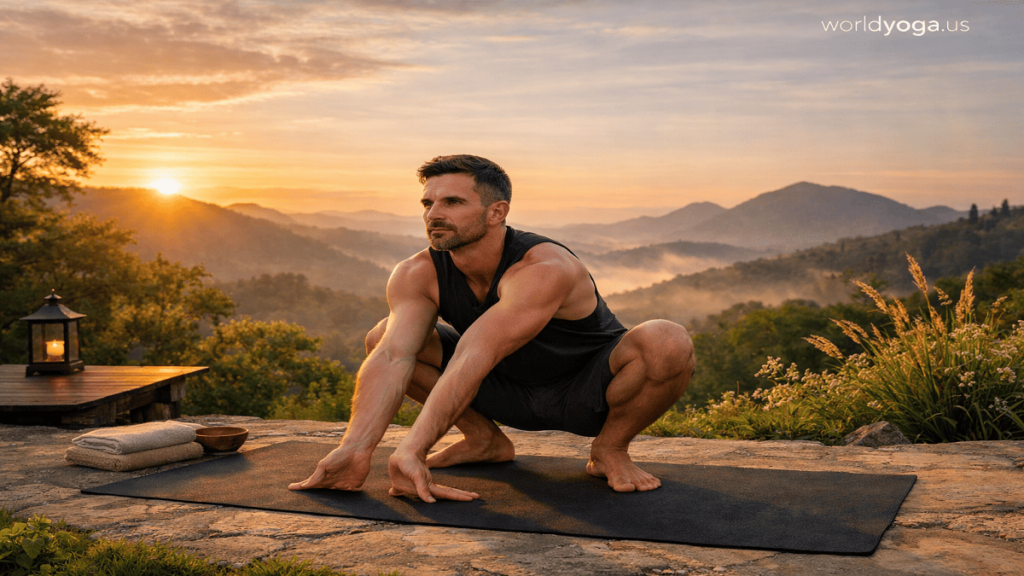
What is the proper alignment in this squat variation?
Uttana Manibandha Malasana requires careful alignment to ensure stability, flexibility, and joint safety. This yoga squat variation combines a deep Garland-style squat with an intensive wrist stretch, making proper body positioning essential for maximizing benefits while minimizing strain. Correct alignment supports balance, improves muscular engagement, and allows practitioners to experience the posture more comfortably and effectively.
The alignment begins with the feet and lower body foundation. Stand with the feet slightly wider than hip-width apart and turn the toes outward at a comfortable angle. The exact angle may vary depending on individual hip mobility, but the knees and toes should always point in the same direction. This alignment helps protect the knee joints and creates a stable base for the squat.
As the body lowers into the deep squat, the hips should move downward while the spine remains upright and elongated. Avoid collapsing forward or excessively rounding the lower back. Lifting the chest slightly and engaging the abdominal muscles helps maintain a neutral spine throughout the pose. Proper spinal alignment reduces pressure on the lumbar region and improves postural stability.
The heels should stay grounded on the floor whenever possible. Grounding through the feet evenly distributes body weight and enhances balance. If the heels lift due to tight ankles or limited mobility, placing a folded blanket beneath them can improve alignment and support.
Knee positioning is one of the most important aspects of the pose. The knees should track directly over the toes rather than collapsing inward. Engaging the thighs and gluteal muscles helps stabilize the knees and maintain control during the squat. This alignment also improves activation of the lower-body muscles and reduces stress on the joints.
The upper-body alignment focuses on wrist placement and shoulder positioning. Place the palms on the floor between or slightly in front of the feet, with the fingers rotated outward or backward depending on flexibility. The wrists should feel a gradual stretch rather than sharp discomfort. Beginners may slightly bend the elbows to reduce intensity while maintaining proper positioning.
The shoulders should remain relaxed and away from the ears. Excess tension in the shoulders or neck can reduce mobility and create unnecessary strain. Keeping the chest open and the collarbones broad supports better breathing and upper-body alignment.
Head and neck alignment should remain neutral throughout the pose. The gaze may be directed forward or slightly downward without compressing the neck. Maintaining a long neck and aligned head position contributes to overall balance and spinal stability.
Breathing is closely connected to alignment in Uttana Manibandha Malasana. Deep inhalations help lengthen the spine and open the chest, while controlled exhalations allow the hips and wrists to relax more naturally into the stretch. Breath awareness also improves concentration and body control.
Because the pose places pressure on the wrists, gradual progression is important. Individuals with limited wrist mobility should avoid forcing the stretch and may use modifications to reduce strain while building flexibility over time.
For professional yoga instruction and alignment tutorials, readers can explore Yoga Journal, Yoga International, and DoYogaWithMe.
When practiced with mindful alignment and controlled breathing, Uttana Manibandha Malasana becomes an effective posture for improving mobility, posture, flexibility, and overall body awareness.
#Uttana Manibandha Malasana in Ahemadabad
Which muscles and joints are engaged during the pose?
Uttana Manibandha Malasana is a functional yoga posture that activates multiple muscles and joints simultaneously. Combining a deep squat with an intense wrist stretch, the pose engages the lower body, core, upper extremities, and stabilizing muscles throughout the body. Understanding which muscles and joints are involved helps practitioners improve alignment, movement control, and overall performance during the posture.
The lower body muscles play a major role in supporting the squat position. The quadriceps, located at the front of the thighs, remain actively engaged to stabilize the knees and control the body’s descent into the squat. The hamstrings and gluteal muscles support hip movement and maintain balance while the hips remain lowered close to the floor.
The glute muscles are especially important because they help stabilize the pelvis and provide strength in the deep squat position. At the same time, the calf muscles and ankle stabilizers work continuously to maintain grounded heels and support balance. Because the posture requires flexibility in the ankles, these muscles also experience a gentle stretch during the pose.
The hip muscles, including the hip flexors and adductors, are both activated and stretched. The deep squat position opens the hips and groin area while encouraging greater joint mobility. This makes the pose particularly beneficial for individuals experiencing stiffness from prolonged sitting or limited lower-body movement.
Core muscles are heavily engaged throughout the posture. The abdominal muscles, including the transverse abdominis and obliques, stabilize the torso and help maintain an upright spine. Engaging the core prevents excessive rounding of the back and protects the lumbar spine from strain.
One of the defining features of Uttana Manibandha Malasana is the intense wrist engagement. The wrists experience a deep extension stretch as the palms press against the floor with the fingers rotated outward or backward. This movement activates the muscles of the forearms, wrists, and hands, including the wrist flexors and extensors. These muscles help improve wrist mobility and strengthen the supporting structures around the joints.
The shoulders and upper back muscles also contribute to the posture. The deltoids, trapezius, and scapular stabilizers help maintain arm positioning and shoulder alignment while preventing excessive tension in the upper body.
Several joints are actively involved during the pose. The ankle joints support dorsiflexion as the knees move forward in the squat. The knee joints bend deeply while remaining aligned with the toes for stability and safety. The hip joints experience significant flexion and opening, improving mobility and flexibility in the pelvic region.
The wrist joints are among the most intensely engaged areas in the posture. Controlled weight-bearing through the palms helps increase flexibility and range of motion in the wrists over time. The shoulder joints also remain active to stabilize the upper body and maintain proper arm positioning.
Because the pose engages both major muscle groups and smaller stabilizing muscles, it contributes to improved balance, mobility, and body awareness. Yoga instructors often include this posture in mobility and strength-focused yoga sequences to support functional movement patterns.
For additional anatomical insights and yoga tutorials, readers can explore Yoga Journal, Yoga International, and DoYogaWithMe.
With regular and mindful practice, Uttana Manibandha Malasana can improve muscular coordination, joint mobility, wrist flexibility, and overall movement efficiency throughout the body.
#Uttana Manibandha Malasana in Hyderabad
What preparatory poses are recommended?
Uttana Manibandha Malasana is a deep squat yoga posture that combines hip opening with an intense wrist and forearm stretch. Because the pose places demands on the wrists, ankles, hips, knees, and spine, practicing appropriate preparatory poses is important for improving flexibility, mobility, and joint stability before attempting the full posture. A proper warm-up routine also helps reduce the risk of discomfort or strain during practice.
One of the most effective preparatory poses is Garland Pose, also known as Malasana. This posture introduces the foundational deep squat position used in Uttana Manibandha Malasana. Practicing Garland Pose helps open the hips, improve ankle flexibility, and strengthen the lower body while teaching proper squat alignment and balance.
Wrist warm-up exercises are equally important because the posture involves significant wrist extension. Simple wrist circles, palm stretches, and tabletop wrist mobility drills help prepare the wrist joints and forearm muscles for the deeper stretch required in the pose. These movements gradually increase flexibility and improve circulation in the wrists and hands.
Cat-Cow Pose is commonly recommended to mobilize the spine and improve body awareness. The gentle movement between spinal flexion and extension helps warm up the back muscles while encouraging better posture and alignment. This preparation is useful for maintaining an upright spine during the squat.
Low Lunge is another beneficial preparation posture because it stretches the hip flexors and improves pelvic mobility. Tight hips often make deep squatting difficult, so practicing lunges beforehand allows the hips to open more comfortably and naturally.
Wide-Legged Forward Fold is also effective for preparing the lower body. This pose stretches the inner thighs, hamstrings, calves, and lower back while increasing circulation and flexibility throughout the legs. It can help practitioners feel more stable and relaxed when entering the deep squat position.
Chair Pose is useful for strengthening the thighs, glutes, and core muscles. Because Uttana Manibandha Malasana requires lower-body endurance and postural control, Chair Pose helps build muscular engagement and balance. It also improves awareness of knee alignment and spinal positioning.
Child’s Pose can be included before or after practice to gently stretch the hips, lower back, and shoulders while promoting relaxation. It is particularly beneficial for releasing tension and calming the body before deeper mobility work.
Ankle mobility stretches are another important preparation technique. Limited ankle flexibility is one of the most common obstacles in deep squat postures. Gentle calf stretches and ankle dorsiflexion exercises help improve range of motion and support grounded heels during the pose.
For individuals with tight wrists or limited flexibility, tabletop wrist stretches are highly recommended. Practicing weight-bearing wrist exercises gradually conditions the joints and helps the body adapt to increased pressure safely.
Yoga practitioners are encouraged to move slowly through these preparatory poses while focusing on controlled breathing and proper alignment. Gradual progression improves mobility and reduces the likelihood of overstraining muscles or joints.
For additional yoga tutorials and guided warm-up sequences, readers can explore Yoga Journal, Yoga International, and DoYogaWithMe.
With consistent preparation and mindful practice, these poses can help improve flexibility, strengthen supportive muscles, and make Uttana Manibandha Malasana safer and more accessible for practitioners of different experience levels.
#Uttana Manibandha Malasana in Delhi
What are the benefits and precautions of Uttana Manibandha Malasana?
Uttana Manibandha Malasana is a specialized yoga posture that combines a deep squat with an intensive wrist and forearm stretch. This pose is valued in yoga and mobility practices for improving flexibility, strengthening stabilizing muscles, and enhancing overall body awareness. Because it engages multiple joints and muscle groups simultaneously, the posture offers both physical and mental benefits when practiced correctly. However, proper precautions are essential to avoid strain and ensure safe practice.
One of the primary benefits of Uttana Manibandha Malasana is improved wrist mobility and flexibility. Modern lifestyles often involve repetitive hand and wrist movements from typing, device usage, and desk work, which can lead to stiffness and reduced joint mobility. The posture stretches and activates the wrists, fingers, and forearm muscles, helping improve flexibility and circulation in these areas over time.
The deep squat component of the pose also provides significant lower-body benefits. It stretches the hips, groin, ankles, and calves while strengthening the quadriceps, glutes, and hamstrings. Regular practice may improve squat mechanics, joint mobility, and overall lower-body stability. The posture is particularly beneficial for individuals seeking to counteract stiffness caused by prolonged sitting or limited movement.
Another important advantage is improved posture and spinal alignment. Maintaining an upright torso in the squat position engages the core muscles and spinal stabilizers, helping support better posture and body awareness. The pose also encourages mindful breathing, which may help reduce stress and improve concentration during yoga practice.
The posture supports functional movement patterns that are useful in daily activities and athletic performance. Improved ankle mobility, hip flexibility, and wrist strength can contribute to better movement efficiency in sports, fitness training, and everyday tasks involving bending, lifting, or weight-bearing movements.
Despite these benefits, certain precautions should be considered before practicing Uttana Manibandha Malasana. Because the pose places direct pressure on the wrists, individuals with wrist injuries, carpal tunnel syndrome, or severe joint discomfort should practice cautiously or avoid the posture entirely unless advised by a healthcare professional or experienced yoga instructor.
Knee and ankle sensitivity are also important considerations. The deep squat position can place stress on the knees if alignment is incorrect or flexibility is limited. Practitioners should ensure that the knees track in the same direction as the toes and avoid forcing the squat deeper than their current mobility allows.
People with lower back pain should maintain a neutral spine throughout the pose and avoid excessive forward rounding. Engaging the core muscles helps protect the lumbar spine and improve stability. Beginners may benefit from using props such as folded blankets under the heels or practicing modified variations before attempting the full posture.
Warm-up exercises for the wrists, hips, ankles, and spine are strongly recommended before practicing this pose. Gradual progression and mindful breathing help reduce tension and minimize the risk of strain or injury.
For additional yoga guidance and instructional resources, readers can explore Yoga Journal, Yoga International, and DoYogaWithMe.
When practiced with proper alignment, preparation, and awareness, Uttana Manibandha Malasana can improve mobility, flexibility, posture, and overall functional strength while supporting mindful movement and body control.
#Uttana Manibandha Malasana in Banglore
Case Study of Uttana Manibandha Malasana
Introduction
Uttana Manibandha Malasana is a mobility-focused yoga posture that combines a deep squat with an intensive wrist and forearm stretch. The pose is increasingly used in yoga therapy, mobility training, and wellness programs to improve joint flexibility, posture, and muscular coordination. This case study examines the impact of regular practice of Uttana Manibandha Malasana on wrist mobility, lower-body flexibility, posture, and overall functional movement in an office-based professional with movement limitations caused by prolonged sitting and repetitive wrist activity.
Background of the Practitioner
The subject of this case study was a 34-year-old office employee working in a computer-based environment for more than eight hours daily. The practitioner reported wrist stiffness, mild forearm tension, hip tightness, ankle immobility, and lower back discomfort resulting from extended periods of sitting and repetitive keyboard use. The individual had beginner-level yoga experience and no major medical conditions or injuries.
A certified yoga instructor developed an eight-week mobility-focused yoga program that included Uttana Manibandha Malasana as one of the primary postures. The program was practiced four times per week and included preparatory movements such as Garland Pose, wrist mobility drills, Cat-Cow Pose, Low Lunge, and ankle stretching exercises.
Implementation of the Practice
During the initial phase of practice, the practitioner experienced difficulty maintaining grounded heels and felt limited wrist flexibility when placing the palms on the floor. To reduce discomfort and improve alignment, modifications were introduced. A folded blanket was placed under the heels, and the wrists were gradually conditioned using gentle mobility exercises before entering the full posture.
The instructor emphasized slow progression, proper knee alignment, spinal elongation, and controlled breathing throughout the practice. The practitioner initially held the pose for 15 to 20 seconds and gradually progressed to one-minute holds by the end of the eight-week program.
Observed Results
At the conclusion of the study period, several physical improvements were observed. Wrist flexibility increased noticeably, and the practitioner reported reduced stiffness during daily computer work. Forearm tension also decreased significantly due to regular stretching and mobility training.
Lower-body mobility improved considerably, particularly in the hips and ankles. The practitioner was eventually able to maintain a deep squat position with grounded heels and improved balance. Core engagement and spinal awareness developed through repeated practice contributed to better sitting posture and reduced lower back discomfort during work hours.
Additional improvements included enhanced lower-body strength, better coordination, and improved body awareness. The practitioner also reported reduced stress levels and improved mental focus during yoga sessions, largely attributed to controlled breathing and mindful movement.
Key Findings
This case study demonstrates that Uttana Manibandha Malasana can be an effective yoga posture for improving wrist mobility, lower-body flexibility, posture, and muscular coordination when practiced consistently and with proper guidance. The use of preparatory exercises and modifications was essential in ensuring safe progression and minimizing strain during the early stages of practice.
The findings also highlight the growing relevance of mobility-focused yoga practices for individuals with sedentary lifestyles and repetitive work-related movement patterns. Yoga professionals and movement specialists increasingly recognize the value of deep squat and wrist mobility training in modern wellness programs.
For additional yoga tutorials and mobility guidance, readers can explore Yoga Journal, Yoga International, and DoYogaWithMe.
Conclusion
The results of this case study suggest that Uttana Manibandha Malasana can support functional movement improvement, postural correction, joint mobility, and stress reduction when integrated into a consistent yoga practice. With proper alignment, gradual progression, and mindful breathing, the pose can become a valuable component of modern mobility and wellness routines.
#Uttana Manibandha Malasana in Pune
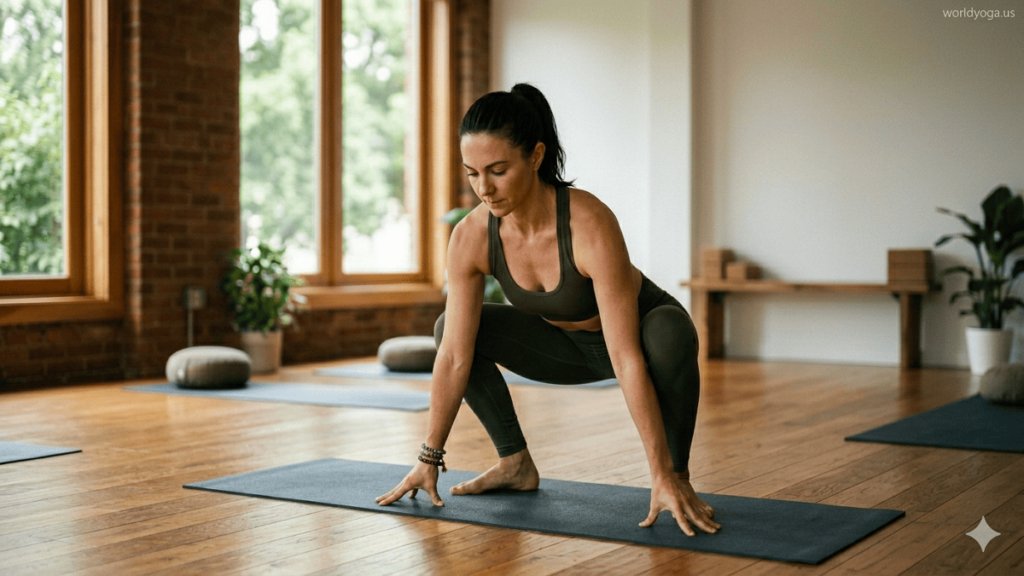
White Paper of Uttana Manibandha Malasana
Uttana Manibandha Malasana is a mobility-focused yoga posture that integrates a deep squat with an intensive wrist and forearm stretch. Rooted in traditional yogic movement principles, the pose is increasingly recognized in modern wellness, rehabilitation, and functional movement training for its role in improving flexibility, joint mobility, postural stability, and muscular coordination. This white paper examines the biomechanical structure, physiological benefits, practical applications, and safety considerations associated with Uttana Manibandha Malasana.
Biomechanical Overview
The posture combines two major movement patterns: deep hip and ankle flexion through the squat position, and wrist extension through palm placement on the floor. This integrated movement creates simultaneous activation and stretching across multiple joints and muscle groups.
The squat position primarily engages the quadriceps, hamstrings, gluteal muscles, calves, and hip stabilizers. The deep lowering of the hips increases mobility in the ankles and hips while strengthening the lower body. Maintaining balance in this posture also activates the core muscles and spinal stabilizers, helping support proper posture and movement control.
The wrist positioning is one of the defining elements of the posture. By placing the palms on the floor with the fingers rotated outward or backward, the wrists move into deep extension. This movement activates the wrist flexors, extensors, forearm muscles, and connective tissues surrounding the joint. Over time, controlled weight-bearing through the wrists may improve flexibility, circulation, and joint resilience.
From a movement science perspective, the posture reinforces functional mobility patterns relevant to squatting, lifting, balancing, and upper-body support mechanics.
Physiological Benefits
One of the primary benefits of Uttana Manibandha Malasana is improved joint mobility. Regular practice may increase flexibility in the wrists, ankles, hips, and lower back, areas commonly affected by sedentary behavior and repetitive occupational movements.
The posture also contributes to muscular endurance and stability. The lower body remains actively engaged to support the deep squat while the upper extremities stabilize the wrist stretch. This combination improves coordination between major muscle groups and smaller stabilizing muscles.
The deep squat position encourages circulation in the pelvic region and lower extremities, while mindful breathing during the pose supports respiratory efficiency and nervous system relaxation. Many yoga practitioners report improved body awareness, concentration, and stress management through regular mobility-based yoga practice.
The wrist-focused component of the pose is especially relevant in modern environments where repetitive keyboard and device use often contribute to stiffness and limited wrist mobility.
Practical Applications
Uttana Manibandha Malasana has applications across multiple industries related to health, wellness, movement therapy, and fitness training.
In yoga instruction, the pose is frequently included in mobility-focused sequences, wrist conditioning programs, and preparatory routines for arm balances and inversions. Yoga therapists may also use modified versions of the posture to improve functional movement patterns and postural awareness.
Physical therapists and rehabilitation specialists increasingly recognize the importance of squat-based mobility exercises and controlled wrist extension training in recovery and injury prevention programs. The posture may support rehabilitation strategies aimed at improving flexibility, balance, and movement efficiency.
Fitness professionals integrate similar mobility exercises into warm-up routines and functional training programs to improve squat depth, joint stability, and athletic performance. The posture is also relevant in workplace wellness programs designed to address musculoskeletal discomfort caused by prolonged sitting and repetitive hand movements.
Safety Considerations
Despite its benefits, the posture should be practiced with caution by individuals with wrist injuries, carpal tunnel syndrome, severe knee pain, ankle instability, or lower back conditions. Excessive pressure on the wrists or forcing the body into a deep squat without adequate preparation may increase injury risk.
Gradual progression, proper alignment, and preparatory mobility exercises are strongly recommended. Beginners may benefit from using props such as folded blankets under the heels or practicing modified wrist positions while developing flexibility and strength.
Professional guidance from qualified yoga instructors or healthcare providers is advised for individuals with existing medical concerns or movement limitations.
Additional educational resources and instructional support are available through Yoga Journal, Yoga International, and DoYogaWithMe.
Conclusion
Uttana Manibandha Malasana represents a valuable integration of mobility, strength, flexibility, and mindful movement. Its applications extend beyond traditional yoga into rehabilitation, workplace wellness, athletic training, and functional movement education. When practiced consistently with proper alignment and preparation, the posture can contribute significantly to improved joint mobility, posture, muscular coordination, and overall physical well-being.
#Uttana Manibandha Malasana in Kolkata
Industry Application of Uttana Manibandha Malasana
Introduction
Uttana Manibandha Malasana is a mobility-centered yoga posture that combines a deep squat with a focused wrist and forearm stretch. While traditionally practiced in yoga sequences, the pose has gained relevance across multiple industries related to wellness, rehabilitation, occupational health, sports performance, and functional movement training. Its ability to improve flexibility, posture, joint mobility, and muscular coordination makes it a practical movement solution for modern physical health challenges associated with sedentary lifestyles and repetitive movement patterns.
Application in the Health and Wellness Industry
The health and wellness sector widely incorporates mobility-focused yoga postures like Uttana Manibandha Malasana into yoga classes, wellness retreats, and preventive health programs. Wellness professionals recognize the pose for its effectiveness in improving hip flexibility, ankle mobility, and wrist function while promoting mindful breathing and stress reduction.
Yoga instructors often include the posture in flexibility and joint-mobility routines aimed at improving functional movement patterns. Since modern lifestyles frequently involve prolonged sitting and repetitive hand movements, the posture is especially beneficial for improving circulation and reducing stiffness in the hips, lower back, wrists, and forearms.
Wellness education platforms such as Yoga Journal and Yoga International regularly highlight the role of mobility-based yoga in improving physical health and body awareness.
Corporate Wellness and Ergonomic Programs
Corporate wellness programs increasingly integrate yoga and mobility exercises to address workplace-related musculoskeletal discomfort. Uttana Manibandha Malasana is particularly relevant in office environments where employees spend long hours typing, sitting, and using digital devices.
The wrist stretch component of the pose helps reduce stiffness caused by repetitive keyboard and mouse use, while the deep squat counteracts the effects of prolonged sitting on the hips and lower back. Human resource departments and occupational wellness consultants may include the posture in workplace stretching sessions, ergonomic education programs, and virtual wellness workshops.
Organizations focused on employee well-being often use yoga-based mobility practices to support posture correction, stress management, and physical recovery during the workday. Improved movement efficiency and reduced physical discomfort can contribute to higher productivity and employee satisfaction.
Rehabilitation and Physical Therapy
Rehabilitation specialists and physical therapists increasingly recognize the value of mobility-focused yoga postures in injury prevention and recovery programs. Uttana Manibandha Malasana may be used to improve wrist flexibility, ankle mobility, and lower-body coordination in controlled therapeutic settings.
The posture supports rehabilitation goals related to movement efficiency, balance, and postural stability. Therapists often modify the pose based on an individual’s flexibility level and physical condition. Controlled progression and proper alignment are emphasized to avoid strain on sensitive joints.
Because the pose engages stabilizing muscles throughout the body, it may also support recovery from movement limitations caused by inactivity or repetitive stress injuries.
Fitness and Athletic Training
The fitness industry uses mobility-based yoga exercises to improve movement quality, flexibility, and athletic performance. Uttana Manibandha Malasana is valuable in functional fitness programs because it reinforces healthy squat mechanics and wrist conditioning.
Athletes and trainers often incorporate the pose into warm-up and recovery routines to improve hip mobility, ankle flexibility, and upper-body joint preparation. Sports requiring wrist strength, balance, and deep lower-body mobility may particularly benefit from this posture.
Online fitness and yoga platforms such as DoYogaWithMe provide guided mobility routines that integrate squat and wrist conditioning exercises similar to Uttana Manibandha Malasana.
Conclusion
Uttana Manibandha Malasana has become increasingly relevant across industries focused on wellness, rehabilitation, workplace health, and athletic performance. Its combination of deep squat mobility and wrist flexibility training addresses many of the physical challenges associated with modern sedentary lifestyles and repetitive movement patterns. As organizations continue emphasizing preventive health and functional movement education, yoga postures such as Uttana Manibandha Malasana are expected to play an expanding role in professional wellness and movement-based therapeutic practices.
#Uttana Manibandha Malasana in Mumbai
Ask FAQs
What is Uttana Manibandha Malasana?
Uttana Manibandha Malasana is a yoga posture that combines a deep squat with an intensive wrist and forearm stretch. The pose is designed to improve mobility, flexibility, posture, and muscular coordination throughout the body.
What are the main benefits of Uttana Manibandha Malasana?
The pose helps improve wrist flexibility, hip mobility, ankle movement, lower-body strength, balance, and posture. It may also reduce stiffness caused by prolonged sitting and repetitive hand movements such as typing.
Is Uttana Manibandha Malasana suitable for beginners?
Yes, beginners can practice the pose with modifications. Using a folded blanket under the heels or reducing the intensity of the wrist stretch can help make the posture safer and more comfortable while building flexibility gradually.
Which muscles and joints are most engaged during the pose?
The pose primarily engages the quadriceps, glutes, hamstrings, calves, core muscles, forearms, and wrist stabilizers. The hips, knees, ankles, wrists, and shoulders are the main joints involved during the movement.
Are there any precautions to consider before practicing this pose?
Individuals with wrist injuries, knee pain, ankle instability, or lower back issues should practice cautiously and avoid forcing the stretch. Proper alignment, gradual progression, and guidance from a qualified yoga instructor are recommended for safe practice.
Table of Contents
Disclaimer:
This content is provided for informational and educational purposes only and is not intended as medical advice. Always consult a qualified healthcare professional or certified yoga instructor before practicing new yoga poses, especially if you have existing injuries, medical conditions, or mobility limitations.