
Baddha Hasta Kulpasana
Baddha Hasta Kulpasana is an advanced yoga posture that combines arm balance, strength, flexibility, and concentration into a powerful physical practice. Known for its demanding structure and controlled body positioning, this pose challenges practitioners to develop upper-body stability, core engagement, and mental focus simultaneously. The Sanskrit term “Baddha” means bound, “Hasta” refers to the hands, and “Kulpasana” is associated with a balancing posture, reflecting the integrated and disciplined nature of the asana.
This advanced pose is commonly practiced in higher-level Hatha Yoga and Vinyasa Yoga sequences where strength, alignment, and body awareness are emphasized. Baddha Hasta Kulpasana requires strong wrists, shoulders, arms, and abdominal muscles to support the body while maintaining balance and smooth breathing. At the same time, the posture encourages flexibility in the hips, spine, and shoulders, creating a balance between stability and mobility.
One of the key reasons practitioners include Baddha Hasta Kulpasana in advanced yoga training is its ability to improve coordination and concentration. Maintaining the posture demands complete mental presence and controlled movement, making it both physically and mentally engaging. Regular practice can help enhance posture, body control, muscular endurance, and confidence in arm-balance transitions.
In addition to its physical benefits, the pose also reflects the deeper principles of yoga, including discipline, patience, and mindful awareness. Because it requires gradual progression and proper technique, practitioners are encouraged to prepare with foundational arm balances, core-strengthening exercises, and shoulder-opening postures before attempting the full variation.
#Baddha Hasta Kulpasana in Delhi
How is Baddha Hasta Kulpasana performed correctly?
Baddha Hasta Kulpasana is an advanced arm-balance yoga posture that requires strength, stability, flexibility, and focused concentration. The pose combines upper-body control with core engagement and balanced body alignment, making it an important posture in advanced yoga practice. Performing Baddha Hasta Kulpasana correctly is essential for maintaining stability, preventing injury, and achieving the full physical and mental benefits of the asana.
Because this posture places significant pressure on the wrists, shoulders, arms, and core muscles, practitioners should approach it gradually and with proper preparation. Foundational arm balances, wrist warm-ups, and core-strengthening exercises are highly recommended before attempting the full pose.
Step-by-Step Guide to Perform Baddha Hasta Kulpasana
Begin in a comfortable seated or squatting position on a yoga mat. Warm up the wrists, shoulders, and hips thoroughly before entering the posture. Place the hands firmly on the floor shoulder-width apart, spreading the fingers evenly to distribute body weight and improve balance.
Gradually shift the body weight forward into the hands while engaging the abdominal muscles. The shoulders should remain stable and aligned above the wrists to create a strong foundation. Lift the hips slowly while maintaining steady breathing and controlled movement.
As balance improves, draw the legs into the desired position according to the variation being practiced. Keep the core muscles actively engaged to stabilize the spine and prevent collapsing into the lower back. The gaze should remain focused slightly forward to help maintain equilibrium and concentration.
The chest should stay lifted while the shoulders move away from the ears to avoid unnecessary tension in the neck. Maintain smooth, controlled breathing throughout the pose and hold the posture only as long as stability and alignment can be maintained safely.
Important Alignment Tips
Proper alignment is essential in Baddha Hasta Kulpasana. The wrists should press evenly into the floor to reduce strain on the joints. Avoid placing excessive pressure on the outer wrists, as this can lead to discomfort or instability.
The elbows should remain slightly engaged rather than locked, allowing the arm muscles to support the body efficiently. Core activation is critical for protecting the lower back and maintaining body control during the balance.
Keeping the spine elongated and the shoulders stable helps create better posture and prevents collapsing through the chest. Practitioners should focus on controlled transitions rather than rushing into the deepest variation of the pose.
Common Mistakes to Avoid
One common mistake is placing too much body weight into the wrists without engaging the shoulders and core muscles. This can create wrist strain and reduce stability. Another frequent issue is holding the breath, which increases tension and disrupts balance.
Practitioners should also avoid forcing the posture before developing sufficient upper-body strength and flexibility. Attempting advanced arm balances too quickly may increase the risk of shoulder, wrist, or lower-back injuries.
Using yoga blocks or practicing under the supervision of a qualified yoga instructor can help improve technique and confidence during the learning process.
Conclusion
Baddha Hasta Kulpasana is a demanding yet rewarding yoga posture that develops strength, flexibility, balance, and concentration. Correct performance depends on proper alignment, gradual progression, steady breathing, and controlled muscular engagement. With consistent practice and mindful technique, the posture can significantly improve upper-body stability, core strength, and overall body awareness while deepening advanced yoga practice.
#Baddha Hasta Kulpasana in India
What is the proper alignment in this bound hand balancing posture?
Proper alignment is one of the most important aspects of safely practicing Baddha Hasta Kulpasana. As an advanced bound hand-balancing yoga posture, this asana requires precise body positioning, muscular engagement, and controlled breathing to maintain balance and stability. Correct alignment not only improves the effectiveness of the pose but also reduces unnecessary strain on the wrists, shoulders, spine, and core muscles.
Because the posture involves supporting body weight primarily through the hands and upper body, practitioners must focus on creating a strong and balanced foundation before attempting deeper variations. Alignment should always take priority over the duration or complexity of the pose.
Hand and Wrist Alignment
The hands create the primary support base in Baddha Hasta Kulpasana. The palms should press firmly and evenly into the floor with the fingers spread wide for stability. Distributing the weight across the entire hand helps reduce excessive pressure on the wrists and improves balance control.
The wrists should remain aligned directly under or slightly behind the shoulders, depending on the variation of the posture. Avoid collapsing into the outer wrists, as this may lead to discomfort or instability. Pressing through the fingertips can help maintain equilibrium and engage the forearm muscles effectively.
Keeping the wrists warm and mobile before entering the pose is essential because arm-balance postures place significant load on the joints.
Shoulder and Arm Position
The shoulders should remain active and stable throughout the posture. Instead of sinking into the shoulder joints, practitioners should engage the shoulder muscles and slightly protract the scapulae to create support and lift through the upper body.
The elbows should remain softly bent or engaged rather than completely locked. This controlled engagement helps the triceps, deltoids, and chest muscles support body weight more efficiently while protecting the joints from hyperextension.
Maintaining space between the shoulders and ears is important for preventing neck tension and promoting better posture during the balance.
Core and Spinal Alignment
Core engagement is critical in Baddha Hasta Kulpasana. The abdominal muscles stabilize the torso, support the spine, and help maintain controlled body positioning during the arm balance.
The spine should remain elongated and neutral rather than rounded excessively or overarched. Drawing the navel gently inward helps activate the deeper core muscles and prevents compression in the lower back.
A strong and stable core also allows smoother transitions into and out of the posture while improving overall body control.
Hip and Leg Alignment
Depending on the variation being practiced, the legs may remain lifted, crossed, or extended. The hips should stay balanced and aligned with the center of gravity to prevent tipping or instability.
The inner thighs and gluteal muscles should remain lightly engaged to support pelvic control and maintain steadiness during the posture. Flexed or active feet can further improve muscular engagement and overall alignment.
Breathing and Focus
Steady breathing is essential for maintaining alignment and reducing tension in advanced arm balances. Slow, controlled breaths help practitioners stay calm and focused while holding the posture.
A stable gaze point, or drishti, can also improve concentration and balance. Looking slightly forward instead of directly downward often creates better equilibrium and spinal alignment.
Conclusion
Proper alignment in Baddha Hasta Kulpasana relies on balanced weight distribution, active shoulder stabilization, strong core engagement, and controlled breathing. By focusing on safe technique and gradual progression, practitioners can develop greater strength, balance, flexibility, and confidence in advanced hand-balancing yoga postures.
#Baddha Hasta Kulpasana in Maharashtra
Which muscles and joints are engaged during the pose?
Baddha Hasta Kulpasana is an advanced hand-balancing yoga posture that demands full-body coordination, strength, stability, and flexibility. The pose heavily activates the upper body and core while also engaging several stabilizing muscles throughout the hips and legs. Because the body is supported primarily through the hands and arms, multiple joints work together to maintain balance and controlled movement.
Understanding which muscles and joints are engaged during Baddha Hasta Kulpasana helps practitioners improve technique, build strength safely, and reduce the risk of injury. The posture is considered a compound movement in yoga because it requires simultaneous activation of several major muscle groups and joint systems.
Upper Body Muscle Engagement
The upper body performs most of the weight-bearing work in Baddha Hasta Kulpasana. The shoulders, arms, chest, and upper back muscles remain continuously active to support balance and maintain posture.
The deltoids stabilize the shoulders and help control arm positioning. The triceps brachii engage strongly to support elbow extension and body weight, while the biceps assist in maintaining controlled movement and stabilization.
The pectoralis major and minor muscles contribute to upper-body stability and chest engagement. The trapezius and rhomboid muscles help stabilize the shoulder blades, preventing collapse through the upper back.
The forearm muscles and wrist flexors are highly active because they control hand pressure and balance distribution on the floor. These muscles play a critical role in maintaining equilibrium during the arm balance.
Core Muscle Activation
Core engagement is essential throughout the posture. The rectus abdominis, transverse abdominis, and oblique muscles stabilize the torso and protect the spine while balancing.
The transverse abdominis, often called the body’s natural corset muscle, helps maintain spinal stability and prevents excessive arching of the lower back. The oblique muscles assist with rotational control and balance during transitions into the pose.
Strong core activation improves body control and allows smoother movement while holding the posture.
Lower Body Muscle Engagement
Although the pose primarily emphasizes upper-body strength, the lower body also remains active. The hip flexors help lift and stabilize the legs, while the gluteal muscles contribute to pelvic control and balance.
The quadriceps engage to maintain leg positioning, especially in extended-leg variations. The inner thigh muscles, or adductors, assist in stabilizing the hips and maintaining alignment.
Even the calf muscles and feet may remain active depending on the variation being practiced, contributing to overall body tension and control.
Joints Involved in the Posture
Several major joints are engaged during Baddha Hasta Kulpasana. The wrists bear significant weight and require both flexibility and strength to support the posture safely.
The shoulder joints play a central role in stabilization and mobility. Proper shoulder alignment is critical for preventing strain and maintaining balance.
The elbow joints assist with controlled arm engagement, while the spine remains actively stabilized through core support and postural alignment.
The hip joints contribute to flexibility, balance, and leg positioning, particularly in bound or lifted variations of the posture.
Importance of Joint Stability
Because multiple joints are under load simultaneously, joint stability is essential. Proper muscular engagement helps protect the wrists, shoulders, elbows, and lower back from excessive stress.
Warm-up exercises targeting wrist mobility, shoulder activation, hip flexibility, and core stability are highly recommended before practicing advanced hand-balancing postures.
Conclusion
Baddha Hasta Kulpasana engages a wide range of muscles and joints throughout the entire body. The pose primarily strengthens the shoulders, arms, chest, wrists, and core while also activating the hips and legs for balance and control. With consistent practice and proper alignment, the posture can significantly improve upper-body strength, coordination, flexibility, and overall body awareness in advanced yoga training.
#Baddha Hasta Kulpasana in Ahemadabad
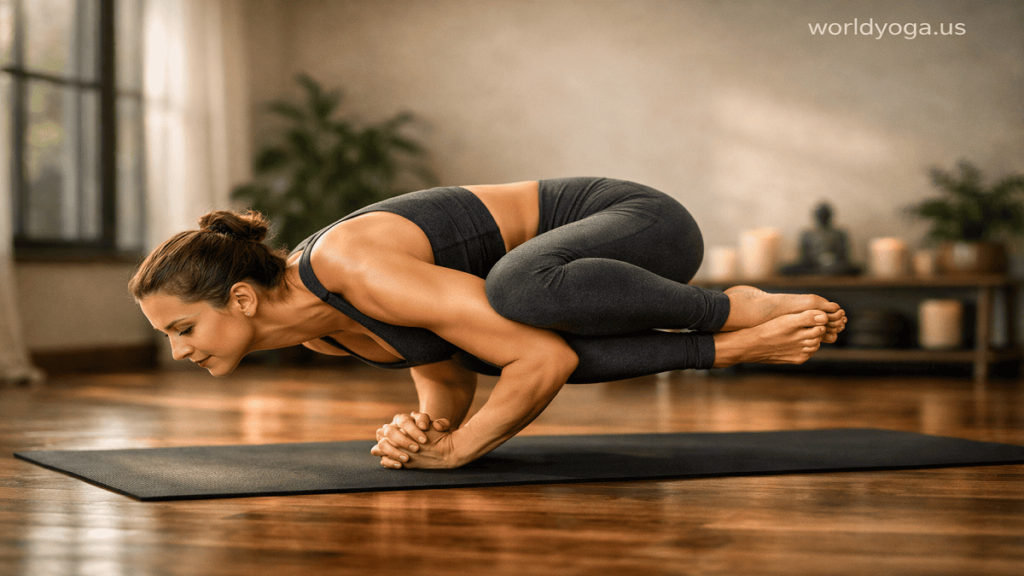
What preparatory poses are recommended before practicing it?
Baddha Hasta Kulpasana is an advanced hand-balancing yoga posture that requires significant upper-body strength, wrist stability, core engagement, flexibility, and concentration. Because the pose places substantial demand on the shoulders, arms, wrists, and abdominal muscles, proper preparation is essential for safe and effective practice. Preparatory poses help warm up the body, activate stabilizing muscles, improve flexibility, and build the strength necessary to maintain balance and alignment.
A structured preparation routine can reduce the risk of injury while improving confidence and body awareness before attempting the full posture. Most yoga practitioners gradually develop the required mobility and strength through foundational arm balances and core-strengthening poses.
Adho Mukha Svanasana (Downward Facing Dog)
Downward Facing Dog is one of the most effective preparatory poses for Baddha Hasta Kulpasana. This foundational posture stretches the shoulders, hamstrings, calves, and spine while strengthening the arms and wrists.
The pose also helps practitioners become comfortable bearing weight through the hands and shoulders. Maintaining proper shoulder engagement in Downward Facing Dog builds the awareness needed for more advanced arm balances.
Plank Pose
Plank Pose is essential for developing core strength, shoulder stability, and arm endurance. The posture activates the abdominal muscles, chest, shoulders, and wrists while teaching proper body alignment.
Because Baddha Hasta Kulpasana relies heavily on core stabilization, regular Plank practice helps practitioners maintain control and prevent collapsing into the lower back during balancing transitions.
Holding Plank Pose for controlled periods can significantly improve muscular endurance and postural awareness.
Chaturanga Dandasana (Four-Limbed Staff Pose)
Chaturanga Dandasana strengthens the shoulders, triceps, chest, and core muscles while improving upper-body control. This posture closely relates to arm-balance preparation because it teaches practitioners how to distribute body weight efficiently through the hands and arms.
Practicing Chaturanga with proper alignment helps build the shoulder stability necessary for safely entering advanced balancing postures.
Bakasana (Crow Pose)
Bakasana, or Crow Pose, is one of the best preparatory arm balances for Baddha Hasta Kulpasana. It develops wrist strength, balance, concentration, and core activation while teaching practitioners how to shift body weight forward safely.
Crow Pose also improves confidence in balancing on the hands and helps practitioners understand the importance of gaze control and muscular engagement.
Mastering Bakasana often creates a strong foundation for progressing into more advanced arm-balancing variations.
Dolphin Pose
Dolphin Pose strengthens the shoulders, upper back, and core while improving shoulder mobility and stability. Since Baddha Hasta Kulpasana requires strong shoulder support, Dolphin Pose helps prepare the upper body for weight-bearing balance work.
The posture also encourages spinal elongation and improves posture awareness, which are important for maintaining alignment during advanced yoga poses.
Wrist and Shoulder Mobility Exercises
In addition to yoga postures, wrist circles, shoulder openers, and forearm stretches are highly recommended before practicing Baddha Hasta Kulpasana. These exercises increase joint mobility, improve circulation, and reduce stiffness in areas under heavy load during arm balances.
Shoulder-opening poses such as Gomukhasana Arms and Puppy Pose can also improve flexibility and reduce tension around the upper body.
Core-Strengthening Preparations
Core-focused postures like Boat Pose (Navasana) and Forearm Plank are useful for developing abdominal strength and balance control. A strong core is critical for maintaining stability and protecting the spine during advanced yoga transitions.
Consistent core training also improves body awareness and helps practitioners lift and control the legs more effectively during the posture.
Conclusion
Preparing for Baddha Hasta Kulpasana requires a combination of strength-building, flexibility training, and balance-focused practice. Foundational poses such as Downward Facing Dog, Plank, Chaturanga, Crow Pose, and Dolphin Pose help develop the physical stability and confidence necessary for safely performing this advanced hand-balancing posture.
#Baddha Hasta Kulpasana in Hyderabad
What are the benefits and precautions of Baddha Hasta Kulpasana?
Baddha Hasta Kulpasana is an advanced hand-balancing yoga posture that combines upper-body strength, core stability, flexibility, and concentration. The pose requires precise alignment and controlled muscular engagement, making it both physically demanding and mentally rewarding. Practiced regularly and with proper technique, Baddha Hasta Kulpasana can improve balance, body awareness, endurance, and overall functional strength.
However, because the posture places considerable pressure on the wrists, shoulders, and core, practitioners must approach it carefully and progressively. Understanding both the benefits and precautions of the pose is essential for safe and effective practice.
Physical Benefits of Baddha Hasta Kulpasana
Improves Upper-Body Strength
One of the primary benefits of Baddha Hasta Kulpasana is the development of upper-body strength. The shoulders, arms, wrists, chest, and upper back muscles work continuously to support body weight during the balance.
The posture strengthens the deltoids, triceps, forearms, and stabilizing shoulder muscles, helping improve overall muscular endurance and control.
Enhances Core Stability
The pose requires strong activation of the abdominal and lower-back muscles to maintain balance and spinal alignment. Regular practice strengthens the core, improves posture, and supports better body control during movement.
A strong core also contributes to greater stability in other yoga postures and physical activities.
Improves Balance and Coordination
Because Baddha Hasta Kulpasana is an arm balance, it significantly enhances coordination, equilibrium, and neuromuscular awareness. Practitioners learn how to distribute body weight efficiently while maintaining control and focus.
Improved balance can support athletic performance, posture, and functional movement patterns in daily life.
Increases Wrist and Shoulder Stability
The posture develops wrist resilience and shoulder stability by strengthening the supporting muscles around these joints. Over time, this can improve weight-bearing capacity and upper-body mobility when practiced correctly.
Encourages Mental Focus
Advanced balancing poses require concentration, patience, and controlled breathing. Practicing Baddha Hasta Kulpasana can help improve mindfulness, mental discipline, and stress management through focused attention and breath awareness.
The pose also encourages confidence and perseverance as practitioners gradually master more challenging variations.
Flexibility and Mobility Benefits
Although primarily a strength-focused posture, Baddha Hasta Kulpasana also improves flexibility in the shoulders, spine, hips, and hamstrings depending on the variation practiced.
The posture encourages greater mobility while teaching the body to remain stable under physical demand.
Precautions Before Practicing
Avoid Practicing with Wrist or Shoulder Injuries
Because the wrists and shoulders bear significant weight during the pose, individuals with joint injuries, inflammation, or chronic pain should avoid practicing Baddha Hasta Kulpasana without professional guidance.
Excessive strain on weakened joints can worsen discomfort or lead to injury.
Warm Up Properly
A proper warm-up is essential before attempting advanced arm balances. Wrist mobility exercises, shoulder activation drills, core work, and preparatory yoga poses help prepare the body for the physical demands of the posture.
Cold muscles and stiff joints increase the risk of strain.
Do Not Force the Balance
Many practitioners attempt to lift into the posture too quickly without developing sufficient strength or body awareness. Forcing the pose may lead to wrist compression, shoulder instability, or falls.
Gradual progression through foundational arm balances such as Crow Pose and Plank Pose is recommended before attempting advanced variations.
Maintain Proper Alignment
Incorrect alignment can place excessive pressure on the wrists, elbows, lower back, and shoulders. Practitioners should keep the shoulders engaged, core activated, and weight evenly distributed through the hands.
Using yoga blocks or practicing under the supervision of a qualified yoga instructor can help improve technique and safety.
Practice with Controlled Breathing
Holding the breath during balancing postures can create unnecessary tension and reduce stability. Smooth, steady breathing helps maintain focus, relaxation, and muscular control throughout the pose.
Conclusion
Baddha Hasta Kulpasana is a powerful advanced yoga posture that offers numerous benefits for strength, balance, flexibility, posture, and mental focus. The pose strengthens the upper body and core while improving coordination and body awareness.
However, because it places substantial demand on the wrists, shoulders, and stabilizing muscles, it should be practiced carefully with proper preparation and alignment. With patience, gradual progression, and mindful technique, Baddha Hasta Kulpasana can become an effective tool for enhancing advanced yoga practice and overall physical performance.
#Baddha Hasta Kulpasana in Banglore
Case Study of Baddha Hasta Kulpasana
Introduction
Baddha Hasta Kulpasana is an advanced hand-balancing yoga posture that requires upper-body strength, core stability, flexibility, concentration, and precise body alignment. As a physically demanding arm-balance pose, it is often included in advanced Hatha Yoga and Vinyasa Yoga practices to improve muscular endurance, coordination, and mental focus.
This case study examines the impact of regular Baddha Hasta Kulpasana practice on physical strength, balance, flexibility, and body awareness over a structured training period. The study also highlights the challenges encountered during practice and the strategies used to improve performance safely and progressively.
Background of the Practitioner
A 32-year-old intermediate yoga practitioner with four years of consistent Vinyasa Yoga experience participated in an eight-week practice program focused on arm balances and upper-body strengthening. Before beginning the training, the practitioner had experience with foundational poses such as Plank Pose, Chaturanga Dandasana, and Bakasana (Crow Pose) but had limited exposure to advanced balancing transitions.
The practitioner attended five guided yoga sessions per week, each lasting approximately 60 minutes. Sessions included wrist warm-ups, shoulder mobility exercises, core strengthening drills, and preparatory arm-balance postures before attempting Baddha Hasta Kulpasana.
The pose was initially practiced with yoga blocks and wall support to improve confidence and stability during the balancing phase.
Practice Methodology
The practice routine emphasized gradual progression and alignment awareness. Early sessions focused on building wrist strength, improving shoulder stabilization, and enhancing core activation. Preparatory poses such as Dolphin Pose, Crow Pose, Forearm Plank, and Chaturanga Dandasana were consistently incorporated into the training sequence.
By the third week, the practitioner was able to hold Baddha Hasta Kulpasana for approximately five seconds with controlled breathing. The duration gradually increased to 20 seconds by the end of the eighth week.
Special attention was given to:
- Wrist alignment and weight distribution
- Core engagement during transitions
- Controlled breathing patterns
- Shoulder stability and scapular activation
- Safe exit techniques from the posture
Observed Physical Improvements
Increased Upper-Body Strength
After eight weeks of practice, the practitioner demonstrated noticeable improvements in upper-body muscular endurance and stability. The shoulders, triceps, forearms, and chest muscles became significantly stronger, allowing better control during arm-balance transitions.
The practitioner also reported improved wrist resilience and reduced fatigue during weight-bearing yoga poses.
Enhanced Core Stability
Regular practice strengthened the abdominal and lower-back muscles, resulting in improved spinal support and balance control. Greater core activation also contributed to smoother posture transitions and better alignment maintenance.
Improved Balance and Coordination
One of the most significant improvements observed was enhanced balance and body awareness. The practitioner developed greater control over weight shifting and learned to stabilize the body more efficiently during challenging arm balances.
Coordination between the upper and lower body also improved considerably throughout the training period.
Better Flexibility and Mobility
Shoulder mobility and hip flexibility increased due to the repeated use of preparatory stretches and balancing postures. The practitioner experienced reduced stiffness in the upper back and improved posture during both yoga practice and daily activities.
Mental and Psychological Benefits
The practitioner reported improved concentration, patience, and confidence during yoga practice. Holding a demanding arm balance required focused attention and controlled breathing, which contributed to greater mindfulness and stress reduction.
The gradual mastery of the posture also improved self-confidence and motivation to explore other advanced yoga techniques.
Challenges Encountered
Several challenges were identified during the early stages of training. Wrist discomfort and shoulder fatigue occurred during the first two weeks due to insufficient muscular adaptation and excessive pressure on the hands.
The practitioner also struggled with fear of falling forward during balancing attempts. These issues were addressed through:
- Progressive wrist-strengthening exercises
- Use of props and wall support
- Shorter hold durations
- Improved core activation techniques
- Breath-control training
By the sixth week, discomfort had significantly decreased as strength and stability improved.
Conclusion
This case study demonstrates that consistent and properly guided practice of Baddha Hasta Kulpasana can significantly improve upper-body strength, core stability, balance, flexibility, coordination, and mental focus.
However, the posture requires gradual progression, adequate preparation, and careful alignment to avoid unnecessary strain on the wrists and shoulders. The study also highlights the importance of patience, breath awareness, and foundational strength development when learning advanced hand-balancing yoga poses.
#Baddha Hasta Kulpasana in Pune
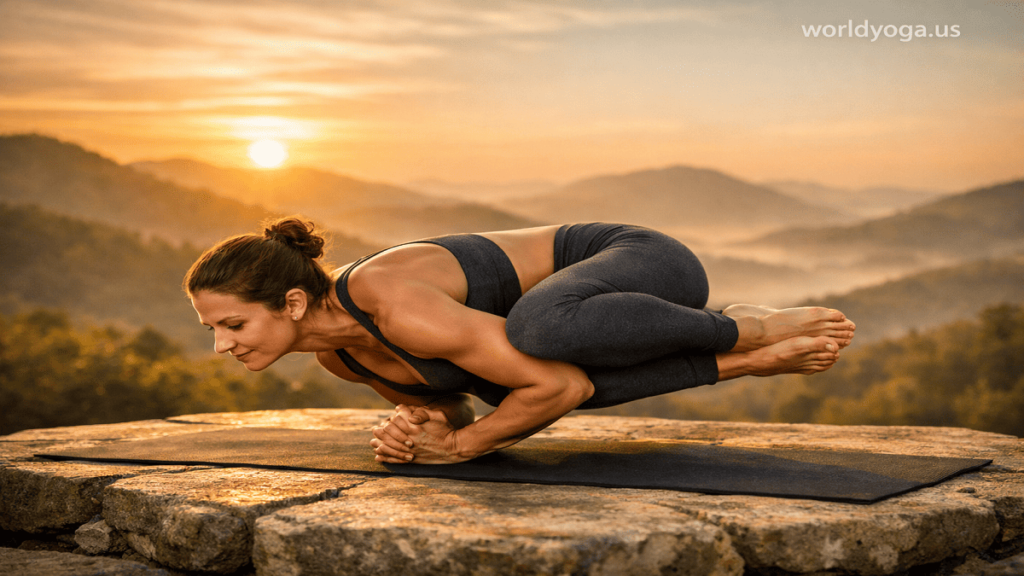
White Paper of Baddha Hasta Kulpasana
Introduction
Baddha Hasta Kulpasana is an advanced yoga posture that integrates arm balancing, upper-body strength, flexibility, and neuromuscular coordination into a single practice. The posture demands significant engagement of the shoulders, wrists, core, and stabilizing muscles while requiring precision in alignment and breath control. As modern yoga evolves beyond traditional flexibility-focused practices, advanced postures such as Baddha Hasta Kulpasana are increasingly recognized for their role in functional movement training, physical conditioning, and mindfulness-based wellness programs.
This white paper provides a comprehensive analysis of Baddha Hasta Kulpasana, including its anatomical framework, biomechanical demands, physiological benefits, training applications, and safety considerations. The purpose is to support yoga practitioners, instructors, fitness professionals, and wellness researchers in understanding the practical and therapeutic relevance of this advanced hand-balancing posture.
Overview of the Posture
Baddha Hasta Kulpasana is categorized as an advanced arm-balance posture commonly practiced in advanced Hatha Yoga and Vinyasa Yoga sequences. The posture combines upper-body support, controlled balance, and core stabilization while requiring flexibility in the hips and shoulders.
The Sanskrit terminology reflects the structure of the pose:
- “Baddha” means bound
- “Hasta” refers to the hands
- “Kulpasana” relates to a balancing posture
The pose emphasizes muscular integration, concentration, and controlled movement rather than passive flexibility alone.
Anatomical and Biomechanical Analysis
Upper-Body Activation
The posture heavily engages the deltoids, triceps, pectoral muscles, trapezius, rhomboids, and forearm stabilizers. These muscle groups work collectively to support body weight and maintain shoulder stability during the balance.
The wrists function as the primary load-bearing joints, requiring both flexibility and strength to tolerate compression forces effectively.
Core Stabilization
Core activation is fundamental in maintaining spinal integrity during the posture. The transverse abdominis, rectus abdominis, oblique muscles, and spinal stabilizers contribute to body control and balance maintenance.
Effective core engagement reduces lumbar strain and improves movement efficiency during posture transitions.
Lower-Body Contribution
Although primarily an upper-body posture, the hips, quadriceps, gluteal muscles, and adductors remain engaged to maintain leg positioning and pelvic stability. The lower body contributes to balance regulation and controlled movement throughout the posture.
Physiological Benefits
Muscular Strength Development
Baddha Hasta Kulpasana strengthens the upper body, particularly the shoulders, chest, arms, and wrists. Regular practice improves muscular endurance and functional pushing strength.
Enhanced Neuromuscular Coordination
The balancing component improves proprioception, coordination, and motor control. Practitioners develop greater awareness of body positioning and movement precision.
Improved Core Stability
The posture strengthens the abdominal and spinal stabilizing muscles, supporting better posture, movement control, and spinal protection during physical activity.
Joint Stabilization
The posture encourages muscular support around the wrists, elbows, and shoulders, potentially improving joint stability and load tolerance when practiced with correct alignment.
Mental Focus and Mindfulness
As a balance-intensive posture, Baddha Hasta Kulpasana requires concentration, breath awareness, and controlled movement. This contributes to mindfulness development and stress reduction through focused attention.
Applications in Modern Wellness and Fitness
Baddha Hasta Kulpasana has practical applications in multiple wellness and performance-based disciplines:
Yoga Training Programs
Advanced yoga schools and teacher training programs use the posture to teach arm-balance progression, body mechanics, and alignment awareness.
Functional Fitness
Fitness professionals integrate yoga arm balances into mobility and bodyweight-strength programs to improve coordination and stability.
Athletic Conditioning
Athletes may benefit from improved shoulder strength, balance, core control, and body awareness developed through advanced balancing practices.
Mindfulness-Based Wellness
The posture supports mental discipline, breath control, and concentration, making it relevant in stress-management and mindfulness-focused wellness systems.
Risks and Safety Considerations
Despite its benefits, Baddha Hasta Kulpasana presents risks when practiced without preparation or proper alignment.
Potential Risk Areas
- Wrist strain or compression
- Shoulder instability
- Elbow hyperextension
- Lower-back discomfort
- Falls due to balance loss
Recommended Safety Measures
- Perform wrist and shoulder warm-ups
- Develop foundational arm-balance strength first
- Engage the core consistently
- Avoid forcing posture depth
- Use props or wall support when learning
- Practice under qualified supervision
Individuals with wrist injuries, shoulder disorders, or balance-related conditions should consult a healthcare or movement professional before practicing advanced arm balances.
Training Recommendations
To safely progress toward Baddha Hasta Kulpasana, practitioners should incorporate:
- Plank variations
- Chaturanga Dandasana
- Crow Pose (Bakasana)
- Dolphin Pose
- Wrist-strengthening drills
- Core stabilization exercises
- Shoulder mobility work
Gradual progression is essential for developing the structural strength and neuromuscular control required for advanced balancing postures.
Conclusion
Baddha Hasta Kulpasana is a highly demanding yet effective advanced yoga posture that develops strength, balance, flexibility, coordination, and mental focus. Its integration of upper-body support, core stabilization, and controlled movement makes it valuable in yoga training, functional fitness, athletic conditioning, and mindfulness-based wellness programs.
#Baddha Hasta Kulpasana in Kolkata
Industry Application of Baddha Hasta Kulpasana
Introduction
Baddha Hasta Kulpasana is an advanced hand-balancing yoga posture known for its emphasis on upper-body strength, core stability, balance, flexibility, and concentration. Traditionally practiced in advanced Hatha Yoga and Vinyasa Yoga systems, the posture has gained broader recognition in modern wellness, fitness, rehabilitation, and performance-training industries. As organizations increasingly focus on holistic health and functional movement, yoga postures like Baddha Hasta Kulpasana are being integrated into professional training and wellness programs.
The posture’s ability to improve muscular endurance, body control, mobility, and mental focus makes it relevant across multiple industries that prioritize physical performance and stress management. This article explores the practical applications of Baddha Hasta Kulpasana in fitness, corporate wellness, athletic training, rehabilitation, and holistic wellness sectors.
Application in the Fitness Industry
The fitness industry has increasingly adopted yoga-based movement systems to complement strength training and mobility development. Baddha Hasta Kulpasana is especially valuable in functional fitness programs because it combines bodyweight resistance training with balance and coordination.
Fitness trainers often use advanced arm-balance postures to improve shoulder stability, upper-body strength, and core endurance. The pose activates multiple muscle groups simultaneously, including the shoulders, triceps, chest, abdominal muscles, and forearms, making it effective for full-body conditioning.
The posture also enhances neuromuscular control and movement efficiency, which are important for bodyweight training and athletic performance. Functional fitness systems frequently incorporate yoga-inspired balance exercises to improve mobility and reduce injury risk.
Professional wellness resources from Yoga Journal regularly discuss the integration of yoga with modern fitness and mobility training.
Role in Athletic Performance and Sports Conditioning
Athletes require coordination, stability, flexibility, and mental focus to perform efficiently in competitive environments. Baddha Hasta Kulpasana supports these goals by strengthening the upper body, improving balance, and developing core stabilization.
Sports conditioning programs for gymnasts, martial artists, dancers, climbers, and calisthenics athletes often include yoga-based balancing exercises to improve body control and proprioception. The posture enhances shoulder endurance and muscular coordination while supporting mobility in the spine and hips.
The concentration required to maintain balance also improves reaction control and mental discipline, which are important in high-performance sports environments.
Educational platforms such as Yoga International provide insights into yoga’s role in athletic conditioning and mobility enhancement.
Corporate Wellness and Workplace Health Programs
Corporate wellness initiatives increasingly include yoga programs to address stress, poor posture, muscular tension, and reduced mobility caused by sedentary work environments. Although Baddha Hasta Kulpasana itself is an advanced posture, preparatory variations and arm-balance progressions are sometimes introduced in structured employee wellness sessions.
The posture’s emphasis on concentration, posture control, and upper-body activation can support workplace health objectives by improving physical awareness and reducing stress. Yoga-based wellness practices also contribute to mental clarity, mindfulness, and emotional resilience in professional environments.
Organizations promoting workplace wellness and movement-focused health programs include International WELL Building Institute.
Rehabilitation and Movement Therapy Applications
In rehabilitation and corrective exercise settings, modified elements of Baddha Hasta Kulpasana may be adapted to improve upper-body stability, balance, and neuromuscular coordination. While the full advanced variation is not typically used in clinical rehabilitation, its foundational components are valuable in movement therapy programs.
Physical therapists and movement specialists may incorporate controlled weight-bearing exercises inspired by yoga arm balances to strengthen the shoulders, wrists, and core muscles. These exercises can support posture correction, joint stabilization, and recovery from muscular imbalances.
The controlled breathing and body awareness associated with yoga also contribute to improved motor control and mindful movement patterns.
Use in the Wellness and Mindfulness Industry
The global wellness industry increasingly emphasizes integrative approaches that combine physical fitness with mental well-being. Baddha Hasta Kulpasana aligns with this philosophy by requiring both physical strength and mental concentration.
Yoga retreats, mindfulness workshops, and advanced teacher training programs often include arm-balancing practices to develop discipline, focus, patience, and self-awareness. The posture’s balancing demands encourage practitioners to remain mentally present and connected to their breathing patterns.
Organizations such as Yoga Alliance continue to support professional yoga education and the integration of advanced yoga practices into modern wellness systems.
Digital Fitness and Online Yoga Platforms
The rise of digital wellness platforms and virtual yoga training has further expanded the reach of advanced postures like Baddha Hasta Kulpasana. Online yoga instructors frequently use arm-balance tutorials and progression-based programs to engage practitioners seeking advanced physical challenges.
Video-based learning systems and fitness applications often categorize advanced balancing poses as part of strength, mobility, and flexibility training modules. This digital accessibility has increased global interest in advanced yoga methodologies and movement education.
Conclusion
Baddha Hasta Kulpasana has evolved beyond a traditional yoga posture into a valuable movement practice with applications across fitness, athletic training, corporate wellness, rehabilitation, and mindfulness industries. Its combination of strength development, balance training, flexibility enhancement, and concentration makes it highly relevant in modern wellness and performance-based programs.
#Baddha Hasta Kulpasana in Mumbai
Ask FAQs
What is Baddha Hasta Kulpasana?
Baddha Hasta Kulpasana is an advanced hand-balancing yoga posture that focuses on upper-body strength, balance, flexibility, and core stability. It is commonly practiced in advanced Hatha and Vinyasa Yoga sequences.
What are the main benefits of Baddha Hasta Kulpasana?
The posture helps improve arm and shoulder strength, core stability, balance, concentration, flexibility, and overall body coordination while enhancing posture and muscular endurance.
Is Baddha Hasta Kulpasana suitable for beginners?
No. This posture is generally recommended for intermediate and advanced yoga practitioners who already have experience with foundational arm balances and upper-body strength training.
Which muscles are mainly engaged during the pose?
Baddha Hasta Kulpasana primarily engages the shoulders, triceps, chest, forearms, abdominal muscles, back stabilizers, and hip-supporting muscles to maintain balance and control.
What precautions should be taken before practicing this posture?
Practitioners should properly warm up the wrists, shoulders, and core before attempting the pose. Individuals with wrist injuries, shoulder pain, balance issues, or limited upper-body strength should practice under professional supervision or avoid the posture until adequately prepared.
Table of Contents
Disclaimer:
This content is for educational and informational purposes only and is not a substitute for professional medical or fitness advice. Practice Baddha Hasta Kulpasana under the guidance of a qualified yoga instructor, especially if you have injuries, joint issues, or medical conditions.