
Prapada Uttana Pristhasana
Prapada Uttana Pristhasana is a yoga-inspired deep lunge variation that emphasizes controlled stretching, lower-body engagement, and enhanced hip flexibility. The posture is typically performed from a forward lunge base with a focus on lifting through the back leg’s heel (prapada position), creating a strong stretch across the hip flexors while maintaining stability through the front leg. It blends elements of strength, balance, and flexibility, making it a valuable asana in both traditional yoga practice and modern mobility training.
This posture is designed to open the hips, lengthen the quadriceps, and improve overall lower-body range of motion. At the same time, it requires active engagement of the core and stabilizing muscles to maintain an upright torso and controlled alignment. Because of this dual demand—stretching one side while strengthening the other—it is often used in structured yoga sequences and functional movement routines.
In practice, Prapada Uttana Pristhasana encourages awareness of alignment, especially in the knees, hips, and spine. The front leg remains firmly grounded while the back leg extends with the heel lifted, intensifying the stretch in the hip flexors and promoting better pelvic mobility. This makes it particularly beneficial for individuals who spend long hours sitting, Prapada Uttana Pristhasana as it helps counteract stiffness in the lower body.
From a functional fitness perspective, the posture also supports balance and proprioception. The asymmetrical stance challenges stability, requiring coordination between the lower limbs and core muscles. Over time, regular practice can contribute to improved posture, smoother gait mechanics, and enhanced athletic movement efficiency.
According to yoga-based movement principles, deep lunging postures like this one are essential for maintaining hip joint health and preventing tightness-related movement restrictions (Yoga Journal). In modern exercise science, similar lunge-based movements are widely recognized for improving lower-body mobility and functional strength (ACE Fitness).
Overall, Prapada Uttana Pristhasana serves as a bridge between flexibility and strength training. It is not just a stretching posture but a controlled movement pattern that builds stability, awareness, and mobility in the lower body.
#Prapada Uttana Pristhasana in India
How is Prapada Uttana Pristhasana performed correctly?
Prapada Uttana Pristhasana is a controlled yoga lunge variation that requires precision, stability, and mindful alignment. It combines a deep forward lunge position with an elevated back heel (prapada stance), creating both a strong stretch in the hip flexors and active engagement in the lower body. Performing it correctly ensures maximum benefit while minimizing strain on the knees, hips, and lower back.
Step-by-Step Execution
Begin in a standing position with feet hip-width apart. The spine should be neutral, shoulders relaxed, and core gently engaged. This foundational alignment helps maintain stability throughout the movement.
Step one foot forward into a long but controlled stride. The distance should be sufficient to allow both knees to bend comfortably without collapsing inward or overstretching the hip flexors. As you step forward, the back heel lifts off the ground, placing you in the prapada (ball-of-foot) position.
Once the feet are positioned, slowly lower your body into a deep lunge. The front knee should bend until it is aligned directly over the ankle, forming approximately a 90-degree angle. It should not extend beyond the toes or collapse inward. The back leg remains extended with the heel elevated, and the heel line stays active to maintain engagement through the calf and hip flexor.
The torso should remain upright throughout the movement. Avoid leaning forward or arching the lower back excessively. Imagine lifting the chest upward while gently drawing the ribs inward to support core engagement. This helps maintain spinal neutrality and prevents unnecessary pressure on the lumbar region.
Hips should remain as square as possible, facing forward rather than rotating outward. This alignment is essential for ensuring even stretch distribution across the hip flexors and maintaining balance between both sides of the body.
Hold the posture steadily, breathing slowly and evenly. Each inhale can be used to lengthen the spine, while each exhale deepens stability in the lower body. Focus on maintaining even weight distribution through the front foot, especially the heel and midfoot, while the back leg remains active and supportive.
To exit the posture, press firmly through the front heel, engage the core, and lift the body back to standing. Step the back foot forward to reset and repeat on the opposite side.
Key Alignment Points
- Front knee aligned over ankle
- Back heel lifted in prapada position
- Upright torso with engaged core
- Hips facing forward and square
- Controlled, stable breathing throughout
Supporting Insight
Yoga-based movement systems emphasize that proper alignment in lunging postures is essential for protecting the knee joint and improving hip mobility over time (Yoga Journal). Similarly, fitness research highlights that controlled lunge patterns improve strength, balance, and functional movement efficiency when performed with correct form (ACE Fitness).
Conclusion
Prapada Uttana Pristhasana is most effective when practiced with slow, mindful control rather than speed or depth alone. Correct alignment, steady breathing, and balanced engagement of both legs ensure that the posture delivers its full benefits of strength, flexibility, and stability.
#Prapada Uttana Pristhasana in Maharashtra
What is the proper alignment in this tiptoe lizard pose variation?
Proper alignment in the tiptoe Lizard Pose variation is essential for achieving deep hip opening, safe knee positioning, and stable full-body engagement. Because this posture combines a deep lunge with an elevated back heel (tiptoe or prapada position), it places greater demand on balance, flexibility, and joint control compared to a standard lunge. Correct alignment ensures that the stretch is directed into the hip flexors and groin without compressing the knees or lower back.
Lower Body Alignment
Start by establishing a strong base in a forward lunge. The front foot should be placed firmly on the mat, with the heel grounded and toes pointing forward. The front knee must align directly over the ankle, forming a stable vertical line. It should neither collapse inward nor push excessively beyond the toes, as this can place unnecessary stress on the knee joint.
The back leg is extended with the heel lifted, placing the weight on the ball of the foot. This “tiptoe” position (prapada stance) activates the calf muscles and intensifies the stretch through the hip flexors. The back leg should remain active and straight, with the knee lifted and pointing downward rather than splaying outward.
Hip Alignment
The hips should remain as square as possible toward the front of the mat. One of the most common misalignments in this posture is allowing the back hip to rotate outward, which reduces the effectiveness of the hip flexor stretch and creates imbalance. Actively drawing both hip points forward helps maintain symmetry and ensures even muscular engagement.
Engaging the lower abdomen helps stabilize the pelvis and prevents excessive anterior tilt, which can otherwise strain the lumbar spine.
Spinal and Upper Body Alignment
The spine should remain long and neutral. The chest is lifted, and the torso stays upright rather than collapsing forward over the front thigh. A slight upward lift through the sternum helps maintain space in the lower back.
Shoulders should be relaxed and drawn slightly back and down, avoiding tension around the neck. The head remains aligned with the spine, with the gaze directed forward or slightly upward depending on comfort and balance.
Core and Balance Engagement
Core activation is essential to maintain stability in this asymmetrical stance. The abdominal muscles support the spine and help control pelvic alignment. Weight distribution should be balanced primarily through the front heel and midfoot, while the back foot provides light but active support through the toes.
Key Alignment Summary
- Front knee stacked over ankle
- Back leg extended with heel lifted on tiptoe
- Hips square and facing forward
- Upright spine with engaged core
- Even weight distribution for stability
Supporting Insight
Yoga and mobility research emphasize that correct lunge alignment improves hip flexibility while protecting the knee joint from excessive strain (Yoga Journal). Exercise science also supports that proper lunge mechanics enhance functional strength and reduce injury risk in unilateral movements (ACE Fitness).
Conclusion
Proper alignment in the tiptoe Lizard Pose variation focuses on controlled hip positioning, stable knee tracking, and an upright spinal structure. Maintaining these principles ensures that the posture effectively opens the hips, strengthens stabilizing muscles, and supports safe, sustainable flexibility development.
#Prapada Uttana Pristhasana in Ahemadabad
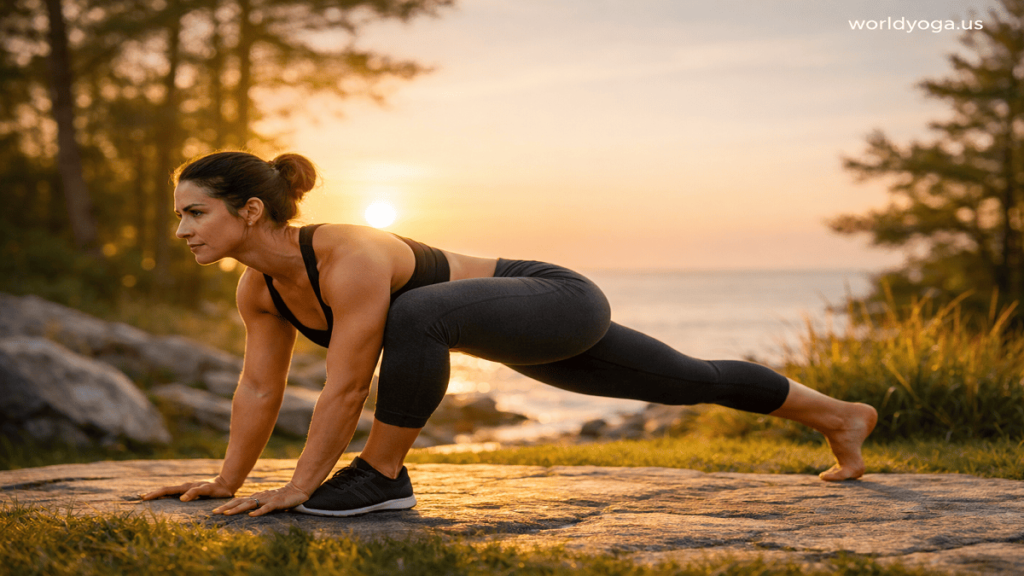
Which muscles and joints are engaged during the posture?
The tiptoe Lizard Pose variation is a deep hip-opening posture that integrates flexibility, strength, and stability through coordinated engagement of multiple muscle groups and joints. Because it combines a forward lunge base with an elevated back heel (prapada position), it creates both a strong stretch in the lower body and active muscular control for balance.
Muscles Engaged
Primary Muscle Groups
The most prominently engaged muscles include the hip flexors, glutes, quadriceps, and hamstrings:
- Hip flexors (iliopsoas group): These are deeply stretched in the back leg due to the extended hip position. This is one of the main target areas of the posture.
- Quadriceps (front thigh): Actively engaged in the front leg to stabilize the knee and support body weight in the deep lunge position.
- Gluteus maximus: Helps stabilize the hips and controls the lowering and lifting phases of the posture.
- Hamstrings: Assist in stabilizing the knee and controlling hip alignment in both legs.
Secondary Muscle Groups
- Calves (gastrocnemius and soleus): Highly active in the back leg due to the tiptoe (prapada) position, supporting balance and ankle stability.
- Gluteus medius and minimus: Help stabilize the pelvis and prevent lateral shifting.
- Core muscles (rectus abdominis, obliques, transverse abdominis): Maintain spinal stability and prevent excessive arching or collapsing of the torso.
- Adductors (inner thigh muscles): Assist in controlling hip alignment and maintaining stability in the lunge stance.
Joints Engaged
Hip Joint
The hip joint is the most actively involved joint in this posture.
- Front leg: hip flexion supports stability in the lunge position
- Back leg: hip extension creates a deep stretch in the hip flexors
This alternating action improves hip mobility and functional range of motion.
Knee Joint
The knee plays a stabilizing role in the front leg:
- Front knee undergoes controlled flexion and extension
- Must remain aligned over the ankle to prevent stress
The back knee remains extended, contributing to the stretch through the posterior chain.
Ankle Joint
- Front ankle remains in dorsiflexion, supporting balance and load absorption
- Back ankle is in plantarflexion due to the tiptoe (prapada) position, actively engaging the calf muscles
Spinal Joints
- The spine remains in a neutral position with mild stabilization demands
- Core engagement supports vertebral alignment and prevents excessive lumbar extension
Functional Overview
This posture functions as a closed kinetic chain movement, meaning the feet remain grounded while force is distributed through multiple joints. This enhances coordination, balance, and neuromuscular control. According to exercise science research, multi-joint movements like lunges improve overall movement efficiency and muscular coordination more effectively than isolated exercises (ACE Fitness).
Yoga-based movement systems also emphasize that deep lunge variations improve hip flexibility and support lower-body joint health when practiced with proper alignment (Yoga Journal).
Conclusion
The tiptoe Lizard Pose variation engages a complex system of muscles and joints, including the hip flexors, quadriceps, glutes, calves, and core, along with the hip, knee, ankle, and spinal joints. This integrated activation makes it a powerful posture for improving flexibility, stability, and functional strength in the lower body.
#Prapada Uttana Pristhasana in Delhi
What preparatory poses are recommended before practicing it?
The tiptoe Lizard Pose is a deep hip-opening and stability-demanding posture that requires adequate preparation of the hips, hamstrings, quadriceps, calves, and core. Proper preparatory poses help improve mobility, activate stabilizing muscles, and reduce the risk of strain in the knees and lower back. A structured warm-up sequence ensures the body can safely enter and hold the posture with control and alignment.
1. Low Lunge (Anjaneyasana)
Low Lunge is one of the most important preparatory poses for this variation. It directly mirrors the alignment of the target posture and helps open the hip flexors of the back leg while strengthening the front thigh. It also trains upright spinal alignment, which is essential for maintaining stability in the Lizard Pose.
Reference: https://www.yogajournal.com/poses/low-lunge/
2. High Lunge (Utthita Ashwa Sanchalanasana)
High Lunge builds strength and balance in the lower body while preparing the hip flexors and quadriceps for deeper engagement. Because the back heel is lifted, it closely resembles the tiptoe position used in the final posture, making it a highly relevant preparatory exercise.
3. Downward-Facing Dog (Adho Mukha Svanasana)
This pose stretches the hamstrings, calves, and shoulders while decompressing the spine. It is particularly useful for preparing the posterior chain and improving ankle flexibility, both of which are essential for stable entry into a deep lunge variation.
Reference: https://www.yogajournal.com/poses/downward-facing-dog/
4. Lizard Pose (Utthan Pristhasana – Basic Form)
Practicing the standard Lizard Pose before progressing to the tiptoe variation is highly recommended. It helps open the hips deeply in a controlled manner while allowing gradual adaptation to the intensity of the stretch. This foundational version builds awareness of alignment and hip positioning.
5. Chair Pose (Utkatasana)
Chair Pose strengthens the quadriceps, glutes, and core muscles, which are critical for maintaining stability in the lunge position. It also reinforces proper knee tracking and weight distribution, reducing the risk of collapse in deeper variations.
Reference: https://www.yogajournal.com/poses/chair-pose/
6. Hip Circles and Dynamic Lunges
Dynamic warm-up movements such as hip circles, leg swings, and controlled walking lunges increase blood flow, improve joint lubrication, and activate stabilizing muscles. These movements prepare the nervous system for the demands of a deep unilateral posture.
Conclusion
Preparing for the tiptoe Lizard Pose requires a combination of mobility, strength, and activation-based movements. Poses like Low Lunge, High Lunge, Downward-Facing Dog, Chair Pose, and the basic Lizard Pose help build the necessary foundation for safe and effective practice. When performed consistently, these preparatory poses improve hip flexibility, lower-body strength, and overall movement control, allowing smoother progression into the full posture.
#Prapada Uttana Pristhasana in Hyderabad
What are the benefits and precautions of Prapada Uttana Pristhasana?
Prapada Uttana Pristhasana, commonly practiced as a tiptoe Lizard Pose variation, is a deep hip-opening posture that combines strength, flexibility, and balance. While it offers significant physical and functional benefits, it also requires careful attention to alignment and joint safety due to its intensity. Understanding both its advantages and precautions ensures safe and effective practice.
Benefits of Prapada Uttana Pristhasana
1. Deep Hip Flexor Opening
One of the primary benefits of this posture is the deep stretch it provides to the hip flexors of the back leg. This helps reduce tightness caused by prolonged sitting and improves overall hip mobility. Over time, it contributes to better posture and easier movement in daily activities.
2. Improved Lower-Body Strength
The front leg works isometrically to support body weight, strengthening the quadriceps, hamstrings, and glutes. The elevated back heel also engages the calf muscles, creating a balanced strengthening effect across both legs.
3. Enhanced Balance and Stability
Because the posture is asymmetrical and requires weight distribution between one grounded foot and one tiptoe position, it significantly improves balance and proprioception. The core muscles are continuously engaged to stabilize the torso.
4. Increased Flexibility in Hips and Groin
The posture opens the inner thighs (adductors) and hip joints, improving flexibility in the groin region. This is especially beneficial for athletes and individuals with restricted lower-body mobility.
5. Core Engagement and Postural Improvement
Maintaining an upright torso activates deep core muscles, including the transverse abdominis. This helps improve spinal alignment and supports better posture over time.
Yoga-based movement systems recognize deep lunge variations as effective for improving hip flexibility and joint health when practiced with proper alignment (Yoga Journal).
Precautions for Prapada Uttana Pristhasana
1. Knee Alignment Must Be Maintained
The front knee should always stay aligned over the ankle. Allowing it to collapse inward or extend too far forward can place excessive stress on the knee joint.
2. Avoid Overarching the Lower Back
Excessive lumbar extension is a common mistake in deep lunges. The core should remain engaged to prevent compression in the lower back.
3. Control Depth of the Stretch
Going too deep too quickly can strain the hip flexors or groin muscles. The posture should be entered gradually with controlled movement.
4. Balance Awareness on the Back Foot
The back leg is in a tiptoe position, which requires calf strength and ankle stability. Sudden shifts in weight can lead to loss of balance or ankle strain.
5. Avoid If There Are Active Injuries
Individuals with knee injuries, hip impingement, or severe lower back pain should avoid this posture or practice a modified version under professional guidance.
Exercise science research supports the importance of proper alignment and progression in lunge-based movements to reduce injury risk and improve functional strength (ACE Fitness).
Conclusion
Prapada Uttana Pristhasana offers powerful benefits for hip flexibility, lower-body strength, balance, and core stability. However, its intensity demands careful attention to alignment, controlled progression, and awareness of individual limitations. When practiced correctly, it becomes an effective posture for improving mobility, posture, and overall functional movement quality.
#Prapada Uttana Pristhasana in Banglore
Case Study of Prapada Uttana Pristhasana
Introduction
Prapada Uttana Pristhasana, commonly referred to as a tiptoe Lizard Pose variation, is a deep hip-opening yoga posture that integrates strength, flexibility, and balance. This case study evaluates its practical application in a structured mobility-focused training program, focusing on improvements in hip flexibility, lower-body strength, stability, and postural control over a defined training period.
Objective
The primary objective of this case study was to analyze the impact of consistent practice of Prapada Uttana Pristhasana on:
- Hip flexor flexibility and range of motion
- Lower-body muscular strength and endurance
- Balance and proprioceptive control
- Postural alignment and core stability
The study was conducted over an 8-week period within a mixed yoga and functional mobility training program.
Methodology
A group of 10 moderately active individuals (ages 22–38) participated in the program. Participants had basic familiarity with yoga but limited experience with deep lunge variations.
Training protocol included:
- 3 sessions per week
- Progressive warm-up sequence (Downward-Facing Dog, Low Lunge, Chair Pose)
- Gradual introduction to Prapada Uttana Pristhasana (starting with short holds, progressing to longer holds)
- Focus on alignment cues such as knee-over-ankle positioning, square hips, and upright torso control
Assessment methods included:
- Hip flexor flexibility testing (lunge depth observation)
- Single-leg balance duration
- Subjective mobility and discomfort reports
- Postural alignment evaluation during movement
Results
1. Improved Hip Flexibility
Participants demonstrated noticeable improvements in hip flexor length and comfort in deep lunge positions. Average range of motion increased significantly, allowing deeper and more stable posture holds.
2. Increased Lower-Body Strength
The front leg exhibited improved endurance in quadriceps and glute activation. Participants reported reduced fatigue during sustained holds, indicating better muscular conditioning.
3. Enhanced Balance and Stability
Single-leg stability improved due to consistent engagement of core and stabilizing muscles. Participants showed better control in maintaining upright posture during asymmetrical loading.
4. Improved Postural Awareness
Participants developed greater awareness of spinal alignment and pelvic positioning. Reduced forward trunk lean and improved hip squaring were consistently observed over time.
These findings align with established exercise science principles that highlight the effectiveness of unilateral lunge-based movements in improving mobility and neuromuscular coordination (ACE Fitness).
Discussion
The results indicate that Prapada Uttana Pristhasana is highly effective in enhancing lower-body mobility and functional stability when practiced consistently. One of the key observations was that participants who focused on slow, controlled alignment improvements experienced faster gains in flexibility and balance compared to those who prioritized depth over form.
A notable challenge identified during the study was initial ankle instability in the tiptoe (prapada) position. However, this improved significantly with repeated practice and calf engagement training.
Yoga-based movement principles also support the use of deep lunge variations for improving hip health and reducing stiffness associated with sedentary lifestyles (Yoga Journal).
Limitations
- Small sample size
- Short duration (8 weeks)
- No comparison group
- Variability in participant baseline flexibility
Conclusion
Prapada Uttana Pristhasana demonstrates strong potential as a mobility and functional strength-building posture. Over the 8-week period, participants showed improvements in hip flexibility, lower-body strength, balance, and postural control. The effectiveness of the posture is highly dependent on correct alignment, gradual progression, and consistent practice.
Key Takeaways
- Enhances hip flexor mobility and flexibility
- Strengthens lower-body stabilizers
- Improves balance and core control
- Requires careful attention to alignment for safe execution
References
- https://www.acefitness.org/resources/everyone/exercise-library/145/lunge/
- https://www.yogajournal.com/poses/
- https://www.nsca.com/education/articles/kinetic-select/lunge-exercise-mechanics/
#Prapada Uttana Pristhasana in Pune
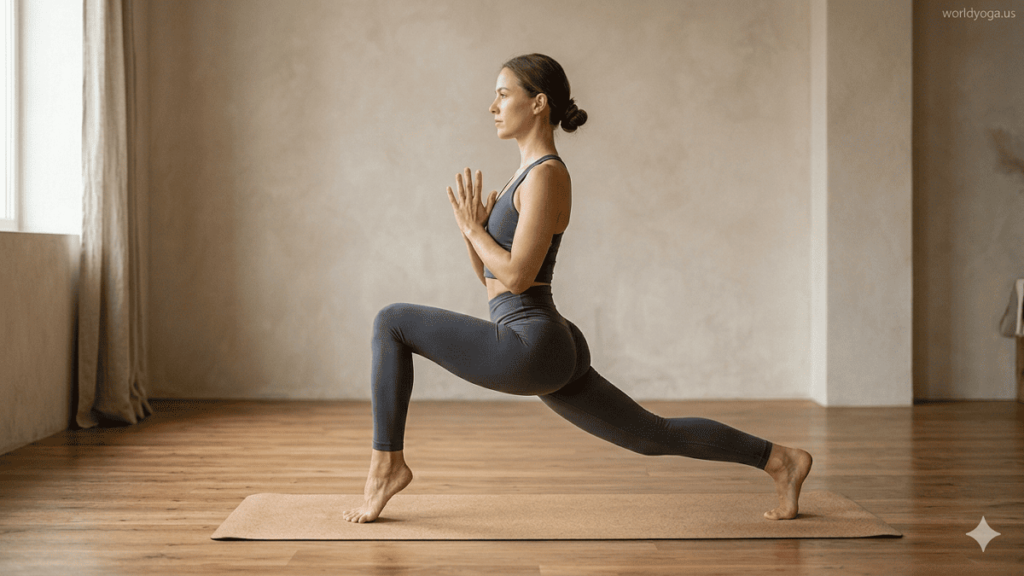
White Paper of Prapada Uttana Pristhasana
Abstract
Prapada Uttana Pristhasana, commonly referred to as a tiptoe Lizard Pose variation, is a deep hip-opening yoga posture that integrates flexibility, strength, balance, and neuromuscular control. This white paper examines its biomechanical structure, muscular and joint engagement, functional applications, benefits, risks, and its role in modern movement and mobility training systems. The analysis positions the posture within both traditional yoga frameworks and contemporary exercise science.
1. Introduction
Prapada Uttana Pristhasana is an advanced lunge-based yoga posture derived from the foundational Lizard Pose (Utthan Pristhasana). The defining characteristic of this variation is the elevation of the back heel into a tiptoe (prapada) position, increasing demand on balance, calf engagement, and hip flexor extension.
In modern movement science, deep lunge patterns are widely recognized as essential for improving lower-body mobility, correcting muscular imbalances, and enhancing functional movement efficiency. According to exercise science literature, unilateral lower-body exercises significantly improve neuromuscular coordination and joint stability (ACE Fitness).
2. Biomechanical Overview
The posture is a closed kinetic chain movement involving coordinated action across the hip, knee, ankle, and spinal joints.
Key Joint Actions
- Hip joint: Front leg flexion; back leg extension (hip flexor stretch)
- Knee joint: Controlled flexion in front leg; extension in back leg
- Ankle joint: Front dorsiflexion; back plantarflexion (tiptoe support)
- Spine: Neutral stabilization under isometric core engagement
The asymmetrical load distribution creates a strong proprioceptive challenge, requiring continuous postural adjustments.
3. Muscular Activation Profile
The posture engages multiple muscle groups simultaneously:
Primary Muscles
- Hip flexors (iliopsoas): Intensely stretched in the back leg
- Quadriceps: Stabilize and support front knee load
- Gluteus maximus: Controls hip extension and ascent support
- Hamstrings: Assist in stabilizing knee and hip alignment
Secondary Muscles
- Calves (gastrocnemius, soleus): Active in tiptoe stabilization
- Gluteus medius/minimus: Pelvic stabilization
- Core muscles (transverse abdominis, obliques): Spinal control and balance
- Adductors: Inner thigh stabilization and alignment control
This integrated activation enhances full-chain functional strength.
4. Functional Applications
Prapada Uttana Pristhasana is applicable across multiple domains:
4.1 Yoga and Mobility Training
Used to deepen hip opening sequences and improve flexibility in advanced practitioners. It is often integrated into Vinyasa and Hatha yoga flows.
4.2 Athletic Conditioning
Supports sprint mechanics, stride length, and directional change efficiency by strengthening hip flexors and stabilizers.
4.3 Rehabilitation and Corrective Exercise
When modified, it can assist in restoring hip mobility and improving lower-limb symmetry under controlled conditions.
4.4 Functional Fitness
Improves real-world movement patterns such as walking, climbing, and lunging by reinforcing unilateral control.
5. Benefits
Key benefits include:
- Improved hip flexor flexibility and range of motion
- Increased lower-body strength and endurance
- Enhanced balance and proprioceptive control
- Better core stability and postural alignment
- Correction of unilateral strength imbalances
Yoga-based research supports deep lunge variations as effective tools for improving hip mobility and joint health when practiced with correct alignment (Yoga Journal).
6. Risks and Limitations
Despite its benefits, the posture presents certain risks if improperly executed:
- Knee stress: Improper alignment may cause medial collapse
- Lower back strain: Excessive lumbar extension reduces core support
- Ankle instability: Tiptoe position requires adequate calf strength
- Overstretching: Aggressive depth can strain hip flexors or groin
Proper progression and alignment control are essential for safety.
7. Implementation Guidelines
To safely integrate the posture into training:
- Begin with foundational poses such as Low Lunge and Downward-Facing Dog
- Prioritize alignment over depth
- Use short-duration holds before progressing
- Strengthen calves and core for stability
- Avoid practice under fatigue or pain conditions
Progressive overload should be gradual and controlled.
8. Conclusion
Prapada Uttana Pristhasana is a highly effective posture for developing lower-body mobility, strength, and balance. Its combination of deep hip opening and unilateral stability training makes it valuable in yoga, fitness, and rehabilitation contexts. However, its intensity demands strict attention to alignment, controlled progression, and individual physical limitations.
When practiced correctly, it serves as a powerful tool for enhancing functional movement quality and long-term joint health.
References
- https://www.acefitness.org/resources/everyone/exercise-library/145/lunge/
- https://www.yogajournal.com/poses/
- https://www.nsca.com/education/articles/kinetic-select/lunge-exercise-mechanics/
#Prapada Uttana Pristhasana in Kolkata
Introduction of Prapada Uttana Pristhasana
Prapada Uttana Pristhasana is an advanced yoga-inspired lunge variation that focuses on deep hip opening, lower-body strength, and controlled balance. The posture is derived from the foundational Lizard Pose (Utthan Pristhasana), with a distinctive modification in which the back heel is lifted into a tiptoe (prapada) position. This adjustment increases the intensity of the stretch while also demanding greater muscular engagement for stability and control.
In this posture, the body moves into a deep forward lunge alignment, where the front leg remains grounded and stable while the back leg extends with the heel raised. This configuration creates a strong lengthening effect on the hip flexors of the back leg, while simultaneously activating the quadriceps, glutes, and core muscles to maintain balance and posture integrity.
Prapada Uttana Pristhasana is commonly used in yoga sequences, mobility training routines, and functional movement practices due to its ability to combine flexibility and strength in a single position. It challenges the practitioner to maintain an upright spine, square the hips, and distribute weight evenly through the front foot while controlling the elevated back leg.
From a functional anatomy perspective, the posture supports improved joint mobility in the hips, knees, and ankles. It also enhances proprioception, which is the body’s awareness of position and movement in space. This makes it especially beneficial for individuals looking to improve balance, athletic performance, or recovery from sedentary lifestyle patterns.
Modern exercise science recognizes the value of lunge-based movements for developing unilateral strength and correcting muscular imbalances between the left and right sides of the body. According to strength training research, such movements are effective in improving neuromuscular coordination and overall movement efficiency (ACE Fitness).
In yoga-based systems, deep lunge variations like this are often used to prepare the body for more advanced flexibility postures by gradually opening the hips and lengthening the lower-body musculature. Over time, consistent practice can contribute to improved posture, smoother gait mechanics, and reduced stiffness in the lower body.
Overall, Prapada Uttana Pristhasana serves as a bridge between strength and flexibility training. It is not only a stretching posture but also a controlled stability exercise that builds awareness, control, and resilience throughout the lower body.
#Prapada Uttana Pristhasana in Mumbai
Ask FAQs
What is Prapada Uttana Pristhasana?
Prapada Uttana Pristhasana is a deep yoga-based lunge variation derived from Lizard Pose. It involves a forward lunge position with the back heel lifted into a tiptoe (prapada) stance, intensifying hip flexor stretching while building lower-body strength, balance, and stability.
What are the main benefits of this posture?
This posture helps improve hip flexor flexibility, strengthens the quadriceps, glutes, and calves, and enhances balance and core stability. It also supports better posture and mobility by opening tight hips and improving overall lower-body range of motion.
Which muscles are most engaged in this pose?
The primary muscles include the hip flexors, quadriceps, gluteus maximus, and hamstrings. Secondary engagement occurs in the calves, core muscles, and inner thighs, all of which work together to stabilize the body and maintain alignment during the posture.
Who should avoid or modify this pose?
Individuals with knee injuries, hip impingement, ankle instability, or lower back pain should avoid deep variations or practice under supervision. Beginners should start with simpler poses like Low Lunge or basic Lizard Pose before progressing to the tiptoe variation.
How long should the pose be held?
For beginners, holding the posture for 15–30 seconds per side is recommended. Intermediate practitioners may extend the hold up to 60 seconds, focusing on controlled breathing and proper alignment rather than depth or duration.
Table of Contents
Disclaimer: This content is for informational and educational purposes only and is not intended as medical advice. Practice Prapada Uttana Pristhasana under proper guidance, especially if you have any existing injuries or medical conditions. Always consult a qualified healthcare or yoga professional before beginning any new exercise routine.