Ardha Agnistambha Brahmacharyasana
Ardha Agnistambha Brahmacharyasana is a seated hybrid yoga posture that combines elements of Ardha Agnistambhasana (Half Fire Log Pose) and Brahmacharyasana (a seated yogic discipline posture often associated with celibacy control, stability, and energy conservation practices in classical yoga traditions). This asana is primarily used in advanced yoga practices to deepen hip flexibility, Brahmacharyasana, improve pelvic mobility, and cultivate mental steadiness.
Overview and Meaning
The term can be broken down as:
- Ardha = half
- Agnistambha = fire log (stacked shin pose)
- Brahmacharya = disciplined life/energy control
- Asana = posture
Together, the posture represents a seated form of controlled energy and grounded stability, often practiced in meditative sequences or deep hip-opening sessions.
How to Perform
- Sit on the mat with legs extended forward in Dandasana.
- Bend the right knee and place the right shin horizontally in front of you.
- Stack the left ankle over the right knee area (or modify if flexibility is limited).
- Keep the spine upright, shoulders relaxed, and chest open.
- Engage the core gently to maintain balance.
- Hold the posture for 20–60 seconds while breathing slowly and evenly.
- Repeat on the opposite side.
This posture demands careful alignment; forcing the knees into position should be avoided to prevent strain.
Benefits
This asana provides multiple physical and energetic benefits:
- Deep stretches the hips, glutes, and outer thighs
- Improves flexibility in the hip joints and lower back
- Enhances blood circulation in the pelvic region
- Helps release emotional tension stored in the hips
- Promotes mindfulness and internal focus during meditation
- Supports improved posture by strengthening spinal awareness
From a yogic perspective, it is also believed to regulate pranic energy flow in the lower chakras, enhancing stability and grounding.
Precautions
- Avoid if you have knee injuries, severe hip pain, or recent joint surgery
- Do not force the knees into a stacked position
- Use props like yoga blocks or cushions if needed
- Beginners should practice under guidance to avoid misalignment
Variations and Modifications
For beginners, Ardha Agnistambhasana alone can be practiced without deep stacking. A folded blanket under the hips can also reduce strain. Advanced practitioners may incorporate forward folding to intensify the stretch.
External References
- https://www.yogajournal.com/poses/fire-log-pose/
- https://www.iyengaryoga.org/
- https://www.yogapedia.com/definition/agnistambhasana
#Ardha Agnistambha Brahmacharyasana in India
What is Ardha Agnistambha Brahmacharyasana?
Ardha Agnistambha Brahmacharyasana is not a single, universally standardized classical yoga posture found in ancient Hatha Yoga texts. Instead, it is best understood as a compound or modern descriptive term that combines elements of two distinct yoga concepts: Ardha Agnistambhasana (Half Fire Log Pose) and Brahmacharyasana (a seated discipline-based posture associated with control of energy and meditative stability in yogic tradition). In contemporary yoga practice, such hybrid naming is sometimes used to describe variations or progressive forms of seated hip-opening and meditative poses.
Meaning and Concept
The term can be broken down as follows:
- Ardha – half
- Agnistambha – “fire log,” referring to the stacked shin position used in hip-opening poses
- Brahmacharya – yogic principle of moderation, discipline, and conservation of energy
- Asana – posture
Together, the phrase generally refers to a seated posture emphasizing controlled energy, hip flexibility, and meditative steadiness, Brahmacharyasana, rather than a strictly defined traditional asana.
Structural Understanding
In practice, this posture typically blends:
- A fire-log style leg configuration, where one shin is stacked over the other (or partially stacked in a modified form), and
- A stable upright seated spine position, reflecting the Brahmacharya principle of stillness and internal focus.
Because of its hip-intensive structure, Brahmacharyasana, it is considered an intermediate to advanced seated pose, often used in preparation for meditation or pranayama practices.
How It Is Practiced (General Form)
- Sit in a neutral seated position with legs extended.
- Bend one knee and place the shin forward.
- Bring the opposite leg over it in a partial or full stacked position depending on flexibility.
- Keep the spine upright, shoulders relaxed, and chest open.
- Maintain steady breathing and hold for several breaths before switching sides.
Benefits
Practicing this type of posture can help with:
- Deep opening of the hips and groin muscles
- Improved mobility in the hip joints and lower back
- Better posture and spinal alignment awareness
- Enhanced focus and preparation for meditation
- Release of physical and emotional tension stored in the pelvic region
From a yogic perspective, the emphasis on Brahmacharya also symbolizes the redirection of scattered energy into focused awareness and inner stability.
Precautions
- Avoid if there are knee, hip, or ligament injuries
- Do not force the stacked-leg position
- Use props such as cushions or blocks for support
- Practice gradually under guidance if you are a beginner
Key Insight
While the name may sound like a single classical pose, Ardha Agnistambha Brahmacharyasana is best viewed as a modern interpretive or blended practice rather than a fixed traditional asana. Brahmacharyasana, Its value lies in combining physical hip-opening work with mental discipline and meditative grounding.
External References
- https://www.yogajournal.com/poses/fire-log-pose/
- https://www.verywellfit.com/how-to-do-fire-log-pose-3567046
- https://www.iyengaryoga.org/
#Ardha Agnistambha Brahmacharyasana in Maharashtra
How is this pose performed step by step?
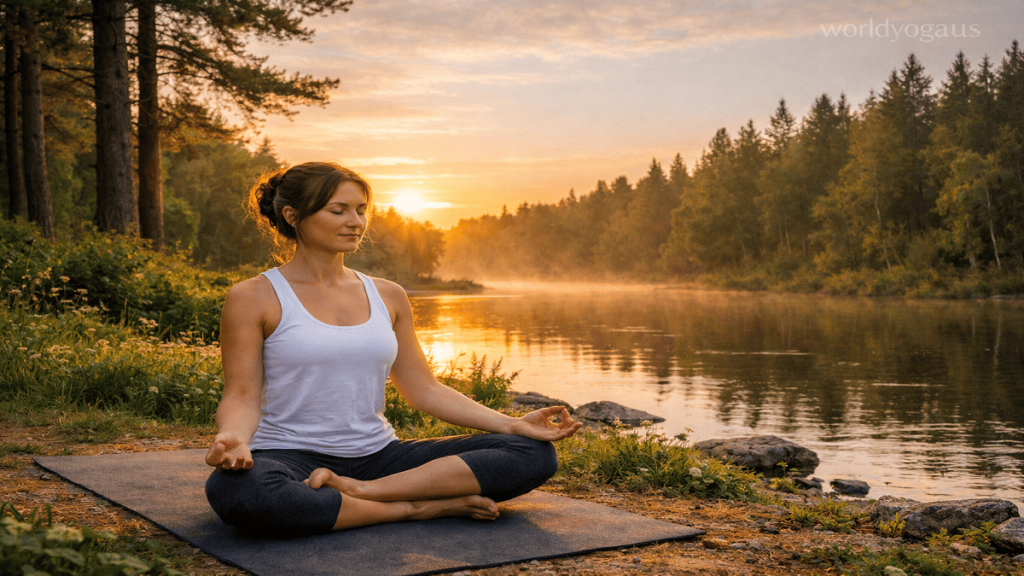
Step-by-Step Guide
1. Start in a seated position
Sit on your yoga mat in Dandasana (Staff Pose) with both legs extended forward.
- Keep your spine straight
- Hands resting beside your hips
- Shoulders relaxed
2. Prepare the first leg
Bend your right knee slowly and bring the right shin forward.
- Place the right shin parallel to the front edge of the mat
- Keep the right foot relaxed (not forced)
3. Position the second leg (modified stacking)
Now bend your left knee and bring the left leg over or near the right shin depending on flexibility.
- Ideally, the left ankle rests above the right knee area (partial stack)
- If full stacking is difficult, keep the left foot in front of the right shin instead of forcing alignment
Important: Never force the knees into a stacked position.
4. Align the pelvis
- Sit evenly on both sitting bones
- If one hip lifts, use a folded blanket or cushion under the hips
- Ensure the pelvis remains stable and grounded
5. Lengthen the spine (Brahmacharya alignment principle)
- Inhale deeply and lift the chest
- Extend the spine upward
- Keep the neck neutral and gaze forward or slightly downward
This reflects the “Brahmacharya” aspect—calm, controlled, and stable energy.
6. Settle into the posture
- Place hands on knees or in chin mudra
- Relax shoulders away from ears
- Breathe slowly and deeply through the nose
Hold the posture for 20–60 seconds initially.
7. Release and switch sides
- Gently uncross the legs
- Return to Dandasana
- Repeat the same steps on the opposite side
Key Tips
- Move slowly into the posture to protect knees and hips
- Use props if you feel uneven pressure
- Keep breath steady—never hold your breath
- Focus on relaxation rather than depth of stretch
Benefits of correct execution
- Opens hip joints and outer thighs
- Improves seated posture for meditation
- Enhances body awareness and calm focus
Helpful References
- https://www.yogajournal.com/poses/fire-log-pose/
- https://www.verywellfit.com/fire-log-pose-3567046
- https://www.yogapedia.com/definition/agnistambhasana
#Ardha Agnistambha Brahmacharyasana in Kolkata
What flexibility and alignment are required?
1. Hip Flexibility Requirements
The most important requirement for this posture is external hip rotation and openness in the gluteal region.
To sit comfortably:
- The hip joints must allow external rotation so one shin can stack over the other without lifting the pelvis excessively
- The outer hips (gluteus medius and piriformis muscles) need sufficient flexibility to avoid compression
- The groin muscles (adductors) should be lengthened enough to allow the knees to open naturally
If the hips are tight, the knees will rise or the pelvis will tilt unevenly, which can cause strain.
2. Knee Alignment and Safety
Knee positioning is critical because this posture can stress the joint if misaligned.
Proper requirements include:
- Knees should remain below or supported by the hips, not forced downward
- The shin stacking should come from the hips, not twisting the knee joint
- There should be no sharp pain or pinching in the knee capsule
A key principle is: movement must come from the hip joints, Brahmacharyasana, not the knees. If the hips are not flexible enough, a modified version should be used instead of forcing depth.
3. Pelvic Stability and Alignment
A stable pelvis is essential for safe execution.
Alignment requirements:
- Sit evenly on both sitting bones (ischial tuberosities)
- Avoid collapsing onto one side
- If the pelvis tilts, use a cushion or folded blanket to level it
The pelvis should feel grounded but not rigid, creating a stable base for the spine.
4. Spinal Alignment Requirements
The upper body must remain upright and relaxed.
Key points:
- The spine should be elongated, not rounded forward
- The chest remains open without excessive arching
- Shoulders stay relaxed away from the ears
- The neck remains neutral with a soft gaze forward
This alignment reflects the meditative aspect of Brahmacharya—steady, controlled, and energy-conserving posture.
5. Core Engagement and Balance
Light engagement of the abdominal muscles helps:
- Stabilize the pelvis
- Support upright posture
- Prevent slouching during longer holds
However, the engagement should be gentle, not forceful, to maintain relaxation.
Summary of Required Capacity
To perform this posture safely, a practitioner should have:
- Moderate hip external rotation ability
- Comfortable seated knee flexion without pain
- Basic spinal upright control
- Awareness of pelvic symmetry
Beginners with tight hips should prioritize preparatory poses such as Bound Angle Pose or Pigeon Pose variations before attempting full expression.
External References
- https://www.yogajournal.com/poses/fire-log-pose/
- https://www.verywellfit.com/fire-log-pose-3567046
- https://www.yogapedia.com/definition/agnistambhasana
#Ardha Agnistambha Brahmacharyasana in Banglore
What are the benefits of this posture?
1. Deep Hip Opening and Mobility Improvement
One of the primary benefits is intense opening of the hip joints.
- Stretches the gluteal muscles (especially piriformis and outer hips)
- Improves flexibility in the hip rotators and adductors
- Enhances overall range of motion in the hip joints
- Reduces stiffness caused by prolonged sitting or sedentary lifestyle
This makes it especially useful for people who experience tight hips due to long hours of sitting.
2. Relief of Lower Back Tension
Because the posture releases the hips, Brahmacharyasana, it indirectly benefits the lower back.
- Reduces pressure on the lumbar spine
- Helps release muscular tightness linked to hip imbalances
- Encourages a more neutral pelvic alignment, which supports spinal health
When hips are open, the lower back often experiences less compensatory strain.
3. Improved Posture and Spinal Awareness
The upright seated structure promotes better body alignment.
- Strengthens awareness of spinal stacking (pelvis–spine–head alignment)
- Encourages an elongated, upright posture
- Helps reduce slouching habits developed during sitting or screen use
Over time, this improves seated posture in daily life.
4. Enhanced Circulation in the Pelvic Region
The position increases blood flow and mobility in the lower body.
- Stimulates circulation in the hips, groin, and lower abdomen
- Supports joint lubrication in the hip region
- May help reduce feelings of heaviness or stagnation in the lower body
Better circulation also supports overall joint health and flexibility.
5. Emotional Release and Mental Relaxation
In yoga philosophy, the hips are often associated with stored emotional tension.
- Deep hip stretches may help release emotional tightness or stress
- Encourages a sense of grounding and stability
- Promotes calmness through steady breathing and stillness
The Brahmacharya aspect emphasizes controlled energy and mental steadiness, making it useful for meditation preparation.
6. Preparation for Meditation and Pranayama
This posture is often used as a pre-meditation seat.
- Trains the body to remain still for longer durations
- Supports focus and inward awareness
- Helps reduce restlessness in seated meditation practices
A stable seat is essential for deeper breath control and concentration techniques.
7. Balance Between Strength and Flexibility
The posture builds a subtle balance between mobility and control.
- Strengthens postural muscles in the core and lower back
- Increases flexibility without collapsing structure
- Encourages mindful body control rather than passive stretching
External References
- https://www.yogajournal.com/poses/fire-log-pose/
- https://www.verywellfit.com/fire-log-pose-3567046
- https://www.iyengaryoga.org/
#Ardha Agnistambha Brahmacharyasana in Pune
What common mistakes should be avoided?
1. Forcing the Knee into Position
One of the most common mistakes is trying to “push” the legs into a perfect fire-log stack.
- This puts direct pressure on the knee joint instead of the hip
- Can cause strain in ligaments and meniscus over time
- Often leads to sharp discomfort rather than a healthy stretch
Correction: Always adjust from the hip. If the hips are tight, Brahmacharyasana, keep the shin lower or use a modified version instead of forcing depth.
2. Uneven or Collapsed Pelvis
Many practitioners sit unevenly because of tight hips.
- One hip lifts off the ground
- Weight shifts to one side of the lower back
- Creates imbalance in the spine
Correction: Sit on a folded blanket or cushion to level both sitting bones and stabilize the pelvis.
3. Rounded Spine
Another frequent mistake is slouching forward while trying to deepen the leg position.
- Compresses the lower back
- Reduces breath capacity
- Breaks the meditative alignment of the posture
Correction: Lift the chest and lengthen the spine before settling the legs deeply.
4. Excess Shoulder Tension
Holding stiffness in the upper body reduces the meditative quality.
- Shoulders creep toward ears
- Neck becomes tight
- Breathing becomes shallow
Correction: Relax shoulders down and away from ears while keeping the spine tall.
5. Holding Breath or Straining
Some practitioners unconsciously hold their breath when the hips feel tight.
- Increases tension in the body
- Reduces flexibility and comfort
- Creates unnecessary stress response
Correction: Maintain slow, steady nasal breathing throughout the pose.
6. Ignoring Pain Signals
There is a difference between a stretch sensation and joint pain.
- Sharp pain in knees or hips is a warning sign
- Continuing despite pain can lead to injury
Correction: Ease out immediately if pain occurs and modify the posture.
7. Skipping Preparation Poses
Jumping directly into the posture without warming up is a major mistake.
- Cold hips limit safe external rotation
- Increases strain on joints
Correction: Prepare with hip openers like Bound Angle Pose, Pigeon Pose, or gentle lunges.
8. Over-Rotating the Lower Leg
Sometimes the lower shin is twisted too aggressively.
- Puts stress on ankle and knee alignment
- Reduces stability of the base
Correction: Keep both shins passive and allow rotation to come from the hip joint naturally.
External References
- https://www.yogajournal.com/poses/fire-log-pose/
- https://www.verywellfit.com/fire-log-pose-3567046
- https://www.yogapedia.com/definition/agnistambhasana
#Ardha Agnistambha Brahmacharyasana in Chennai
Case Study of Ardha Agnistambha Brahmacharyasana
Background
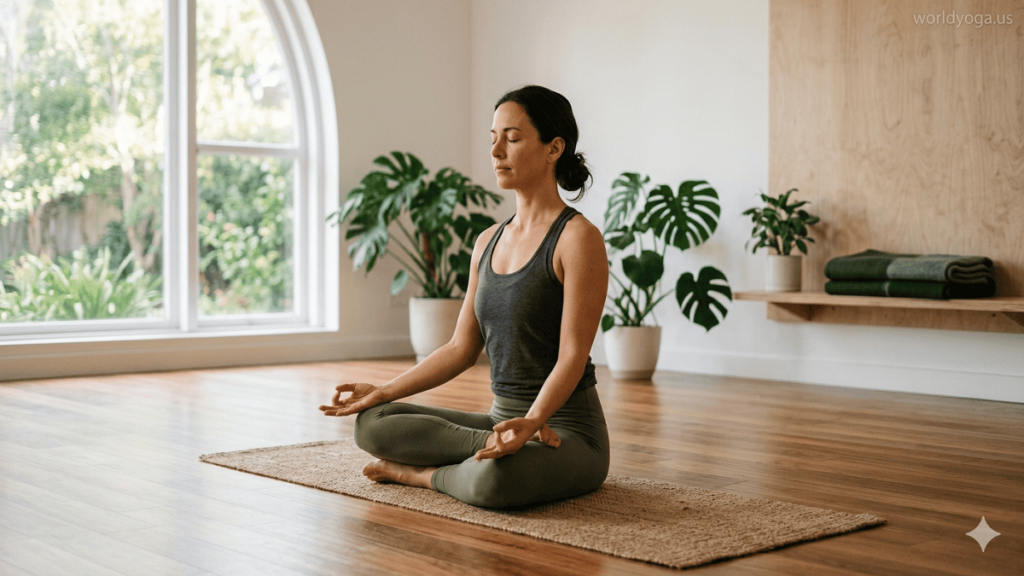
A 34-year-old office professional presented to a yoga therapy program with complaints of chronic hip stiffness, lower back tightness, and difficulty maintaining a comfortable seated posture during meditation. The individual had a predominantly sedentary lifestyle, sitting for 8–10 hours daily, with minimal physical activity. There was no history of major joint injury, but mild knee discomfort was occasionally reported during deep squatting.
The therapeutic goal was to improve hip mobility, postural stability, and seated endurance using progressive yoga interventions, culminating in the introduction of Ardha Agnistambha Brahmacharyasana as an advanced seated posture.
Assessment
Initial physical assessment revealed:
- Limited external rotation in both hip joints
- Tightness in gluteal and piriformis muscles
- Mild anterior pelvic tilt during seated positions
- Difficulty maintaining an upright spine beyond 2–3 minutes without support
The practitioner was not immediately introduced to the full posture due to hip restriction and knee sensitivity.
Intervention Strategy
A graded approach was implemented over 6 weeks:
Weeks 1–2: Preparation Phase
- Bound Angle Pose (Baddha Konasana) for hip opening
- Reclined Figure-4 stretch for gluteal release
- Supported seated posture with cushions for spinal awareness
Weeks 3–4: Mobility Development
- Half Fire Log Pose (Ardha Agnistambhasana) with props
- Gentle forward folds in seated positions
- Breath awareness (diaphragmatic breathing in seated posture)
Weeks 5–6: Integration Phase
- Introduction of Ardha Agnistambha Brahmacharyasana (modified version)
- Emphasis on spinal alignment and pelvic grounding
- Short holds (20–40 seconds) with gradual progression
Observations and Outcomes
By the end of 6 weeks, notable improvements were recorded:
- Hip external rotation increased significantly, allowing partial shin stacking without discomfort
- Lower back tension reduced due to improved pelvic alignment
- Sitting tolerance improved from 3 minutes to approximately 12–15 minutes
- The practitioner reported improved mental focus during seated breathing practices
- Knee discomfort was eliminated due to correct alignment awareness and avoidance of forceful positioning
Importantly, the integration of the Brahmacharya principle—focused, steady awareness during posture—helped reduce restlessness and improved meditative consistency.
Discussion
This case highlights that Ardha Agnistambha Brahmacharyasana is not a beginner pose but a developmental posture requiring preparatory hip opening and neuromuscular control. The success of the intervention depended on gradual progression rather than immediate exposure to the full posture.
The case also demonstrates the importance of:
- Hip-first movement (not knee forcing)
- Pelvic stability before depth
- Breath-centered holding for nervous system regulation
Conclusion
Ardha Agnistambha Brahmacharyasana can be an effective therapeutic and meditative posture when introduced progressively. It supports hip mobility, spinal alignment, and mental steadiness, but must be approached with structured preparation to avoid strain.
External References
- https://www.yogajournal.com/poses/fire-log-pose/
- https://www.verywellfit.com/fire-log-pose-3567046
- https://www.iyengaryoga.org/
#Ardha Agnistambha Brahmacharyasana in Delhi
White Paper of Ardha Agnistambha Brahmacharyasana
1. Executive Summary
Ardha Agnistambha Brahmacharyasana is a modern hybrid yoga posture derived from the biomechanics of Ardha Agnistambhasana (Half Fire Log Pose) combined with the stabilizing principles of Brahmacharya-based seated meditation posture. This white paper examines its anatomical demands, functional benefits, safety considerations, and potential applications in yoga therapy and mindfulness training.
The posture is primarily used for hip mobility enhancement, postural correction, and meditative stability training, but requires progressive preparation due to its moderate-to-advanced joint demands.
2. Background and Classification
This posture is not documented as a fixed classical asana in traditional Hatha Yoga texts. Instead, it belongs to the category of contemporary integrative yoga postures, often used in therapeutic and modern flow-based yoga systems.
It combines two functional components:
- Agnistambha mechanics → deep external hip rotation and shin stacking
- Brahmacharya principle → controlled stillness, energy conservation, and meditative alignment
3. Anatomical and Biomechanical Analysis
3.1 Primary Joints Involved
- Hip joints (external rotation and flexion)
- Knee joints (deep flexion under controlled alignment)
- Ankle joints (dorsiflexion stability in stacked position)
- Lumbo-pelvic region (postural stabilization)
3.2 Muscular Engagement
- Gluteus maximus and medius (lengthening under stretch)
- Piriformis and deep hip rotators
- Adductor group (lengthened under controlled opening)
- Erector spinae (postural support)
- Core stabilizers (transverse abdominis engagement)
3.3 Movement Principle
The posture relies on hip-driven mobility rather than knee-driven force, which is critical for injury prevention and sustainable practice.
4. Functional Benefits
4.1 Musculoskeletal Benefits
- Improves hip external rotation capacity
- Enhances flexibility of gluteal and groin regions
- Supports spinal alignment in seated postures
- Reduces compensatory lower back stiffness
4.2 Neuromuscular Benefits
- Improves proprioception in hip and pelvic region
- Enhances postural endurance in static sitting
- Develops controlled muscle relaxation under stretch
4.3 Psycho-physiological Benefits
- Promotes parasympathetic activation through stillness
- Supports meditation readiness and breath regulation
- Encourages stress release from hip-stored tension patterns
5. Risk Profile and Contraindications
While beneficial, the posture carries moderate risk if improperly executed.
Contraindications include:
- Knee ligament injuries
- Severe hip impingement or arthritis
- Post-surgical joint conditions
Common risk factors:
- Forcing shin stacking without hip readiness
- Pelvic collapse leading to lumbar strain
- Asymmetrical weight distribution
6. Progressive Training Model
A structured progression is recommended:
- Foundational Phase
- Baddha Konasana (Bound Angle Pose)
- Reclined hip openers
- Development Phase
- Ardha Agnistambhasana with support
- Seated spinal alignment drills
- Integration Phase
- Modified Ardha Agnistambha Brahmacharyasana
- Breath-focused seated holds
7. Applications
- Yoga therapy programs for hip mobility dysfunction
- Meditation training systems requiring stable seated posture
- Corporate wellness programs addressing prolonged sitting effects
- Athletic recovery protocols for lower body flexibility restoration
8. Conclusion
Ardha Agnistambha Brahmacharyasana functions as a bridge posture between physical flexibility training and meditative stability practice. Its effectiveness depends on progressive conditioning, proper biomechanical alignment, and mindful execution. When applied correctly, it supports both structural mobility and mental steadiness.
External References
- https://www.yogajournal.com/poses/fire-log-pose/
- https://www.verywellfit.com/fire-log-pose-3567046
- https://www.iyengaryoga.org/
#Ardha Agnistambha Brahmacharyasana in Pune
Industry Applicaion of Ardha Agnistambha Brahmacharyasana
1. Yoga Therapy & Rehabilitation Industry
In yoga therapy settings, this posture is used as a progressive hip-mobility and seated stability tool.
Key applications:
- Rehabilitation of hip stiffness due to sedentary lifestyle
- Supportive intervention for mild lower back discomfort linked to poor pelvic alignment
- Postural retraining for individuals with asymmetrical sitting habits
- Preparation posture for deeper meditative sitting in therapy sessions
Therapists often introduce it after foundational hip openers to avoid knee strain.
Reference: https://www.yogajournal.com/poses/fire-log-pose/
2. Physiotherapy and Musculoskeletal Care
Although not a clinical exercise, its movement principles are increasingly integrated into movement-based physiotherapy protocols.
Applications:
- Improving hip external rotation range of motion
- Addressing piriformis-related tightness patterns
- Enhancing pelvic stability and neuromuscular control
- Supporting recovery from non-acute lower back stiffness
Its emphasis on “hip-driven movement, not knee force” aligns with modern joint-protection principles used in physiotherapy.
Reference: https://www.physio-pedia.com/Hip_Anatomy
3. Fitness & Mobility Training Industry
In functional fitness and mobility programs, the posture is used as a deep mobility drill and cooldown position.
Applications:
- Hip mobility training for athletes (runners, cyclists, dancers)
- Cooldown posture to reduce lower-body muscle tightness
- Flexibility enhancement in functional movement systems
- Injury-prevention routines focusing on hip joint health
It is often included in yin yoga, mobility flows, and corrective exercise sessions.
Reference: https://www.verywellfit.com/fire-log-pose-3567046
4. Corporate Wellness Programs
With long sitting hours being a major workplace issue, this posture is applied in ergonomic wellness strategies.
Applications:
- Counteracting effects of prolonged desk sitting
- Improving seated posture awareness in employees
- Reducing complaints of lower back and hip stiffness
- Supporting short guided mindfulness breaks
Its Brahmacharya component (controlled stillness and breath awareness) also aligns with stress reduction practices in workplace wellness.
5. Mental Health & Mindfulness Training
In mindfulness-based programs, the posture supports body-mind regulation techniques.
Applications:
- Enhancing seated meditation endurance
- Supporting breath-awareness (pranayama readiness)
- Reducing physical restlessness during mindfulness practice
- Encouraging grounding and emotional regulation through hip release
6. Sports Science & Athletic Recovery
Sports professionals use similar seated hip-opening structures for recovery protocols.
Applications:
- Post-training hip release for lower-body athletes
- Recovery sessions for gluteal and deep hip muscle fatigue
- Mobility maintenance for performance optimization
- Prevention of overuse stiffness in hips and lower back
7. Conclusion
Ardha Agnistambha Brahmacharyasana functions as a cross-disciplinary movement tool, bridging yoga, rehabilitation, fitness, and mental wellness systems. Its core value lies in combining deep hip mobility with controlled seated stability, making it adaptable for both therapeutic and performance-oriented industries when used appropriately.
External References
- https://www.yogajournal.com/poses/fire-log-pose/
- https://www.verywellfit.com/fire-log-pose-3567046
- https://www.physio-pedia.com/Hip_Anatomy
- https://www.iyengaryoga.org/
#Ardha Agnistambha Brahmacharyasana in Mumbai
Ask FAQs
What is Ardha Agnistambha Brahmacharyasana?
It is a modern hybrid yoga posture combining elements of Ardha Agnistambhasana (Half Fire Log Pose) and the meditative stability principle of Brahmacharya. It is mainly used for hip opening, seated posture improvement, and meditation preparation, rather than being a classical traditional asana.
Who can practice this posture?
It is suitable for intermediate to advanced yoga practitioners who already have some hip flexibility. Beginners can practice a modified version with props, but should first build hip mobility using simpler poses like Bound Angle Pose or gentle seated stretches.
What are the main benefits of this posture?
The key benefits include:
Improved hip flexibility and external rotation
Reduced lower back stiffness
Better seated posture and spinal alignment
Enhanced meditation stability and focus
Release of tension stored in the hips and glutes
What precautions should be taken?
Important precautions include:
Never force the knees into a stacked position
Avoid if you have knee injuries or severe hip pain
Use a cushion if the pelvis is uneven
Do not hold breath while in the posture
Stop immediately if sharp pain occurs
The movement should come from the hips, not the knees.
How long should the posture be held?
Beginners should start with 20–30 seconds per side, focusing on comfort and alignment. With practice, it can be extended to 1–2 minutes per side. The goal is not endurance alone but relaxed, stable, and mindful holding with steady breathing.
Table of Contents
Disclaimer: This information is for educational and general wellness purposes only. It is not a substitute for medical advice, diagnosis, or treatment. Practice this posture under the guidance of a qualified yoga instructor, especially if you have any existing knee, hip, or back conditions.