Backbends
Backbends are a category of movement commonly found in yoga, gymnastics, dance, and general mobility training. They involve extending the spine into a backward curve, opening the chest and shoulders while engaging the back, hips, and legs to support and stabilize the posture. When performed correctly, can improve spinal flexibility, posture, breathing capacity, and overall functional mobility.
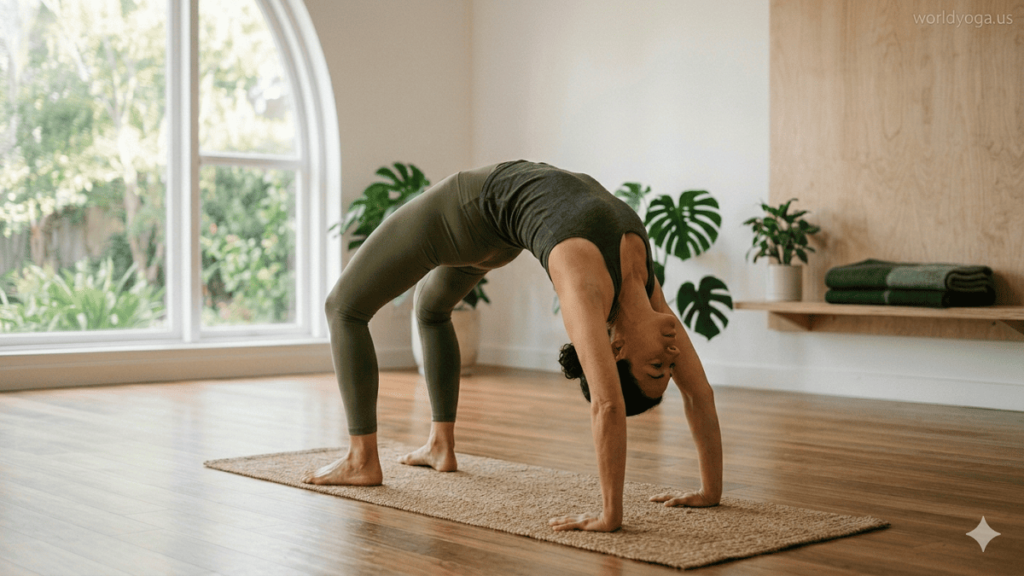
In yoga, are considered heart-opening poses because they expand the front body, particularly the chest and ribcage. Common examples include Cobra Pose (Bhujangasana), Upward-Facing Dog (Urdhva Mukha Svanasana), and Wheel Pose (Urdhva Dhanurasana). These postures activate the spinal extensors, glutes, and hamstrings while stretching the abdominal muscles and hip flexors, which are often shortened due to prolonged sitting.
From a biomechanical perspective, a safe backbend is not about compressing the lower back but distributing the curve evenly across the entire spine. This requires proper engagement of supporting muscles, especially the core and glutes, to protect the lumbar region. Poor technique or insufficient preparation can lead to strain, particularly in the lower back or cervical spine.
Regular practice of is associated with several benefits. Physically, they may help counteract the effects of modern sedentary lifestyles by improving posture and spinal alignment. They also increase thoracic mobility, which can support better breathing efficiency. On an emotional level, practitioners often report a sense of openness or release, as chest-opening movements are linked with reduced feelings of stress and tension.
However, backbends should be approached progressively. Beginners are encouraged to start with gentle variations and use props such as yoga blocks or bolsters. Warm-ups that include spinal mobilization, shoulder opening, and hip flexor stretching are essential before deeper backbends. Overextension without control can place excessive pressure on spinal discs and facet joints.
In training contexts like gymnastics or dance, backbends are often more dynamic and load-bearing. Athletes develop them through structured progressions that emphasize strength, flexibility, and coordination simultaneously.
For safe practice guidance and anatomical insights, reliable references include:
- https://www.yogajournal.com/poses/types/backbends/
- https://www.verywellfit.com/yoga-backbend-poses-3566882
- https://www.healthline.com/health/fitness-exercise/backbends-yoga
#Backbends in India
What are backbends in yoga and why are they practiced?
Backbends in yoga are a group of postures in which the spine is extended backward, creating an arch-like shape through the chest, upper back, and sometimes the entire spine. These poses range from gentle beginner movements to advanced deep extensions, and they are a core component of many yoga styles such as Hatha, Vinyasa, and Ashtanga yoga.
Common backbends include Cobra Pose (Bhujangasana), Bridge Pose (Setu Bandhasana), Camel Pose (Ustrasana), and Wheel Pose (Urdhva Dhanurasana). While they vary in intensity, all backbends share the same fundamental action: spinal extension combined with opening of the chest, shoulders, and hip flexors.
The primary purpose of backbends in yoga is to improve spinal flexibility and mobility. Modern lifestyles often involve prolonged sitting and forward-leaning postures, which can lead to tight chest muscles, rounded shoulders, and a stiff upper back. Backbends counteract these patterns by strengthening the posterior chain (back muscles, glutes, and hamstrings) while stretching the anterior body, especially the abdominal region and hip flexors.
Beyond physical benefits, backbends are also associated with energetic and emotional effects in traditional yoga philosophy. They are often referred to as “heart-opening” poses because they expand the chest area. Practitioners sometimes report feelings of openness, emotional release, increased confidence, and improved mood after practicing backbends. In yogic tradition, this is linked to the activation of the Anahata (heart) chakra, which is associated with compassion and emotional balance.
Physiologically, backbends can improve posture by strengthening spinal extensors and encouraging an upright alignment of the torso. They also support better breathing capacity by expanding the rib cage and allowing fuller diaphragmatic movement. When practiced safely, they may help reduce stiffness and improve overall functional movement.
However, backbends require careful technique. The goal is not to compress the lower back but to distribute the curve evenly across the entire spine, including the thoracic region. Proper engagement of the core and glute muscles is essential to protect the lumbar spine. Warm-up exercises, gradual progression, and awareness of individual limits are critical to prevent strain or injury.
Beginners are usually advised to start with supported or mild backbends before progressing to deeper poses. Using props like yoga blocks or bolsters can help maintain alignment and reduce pressure on the spine.
For further reading on technique and benefits:
- https://www.yogajournal.com/poses/types/backbends/
- https://www.healthline.com/health/fitness-exercise/yoga-backbend-benefits
- https://www.verywellfit.com/yoga-backbend-poses-3566882
#Backbends in Maharashtra

How should beginners safely approach backbend poses?
Beginners should approach backbend poses in yoga gradually, with a strong focus on preparation, alignment, and controlled progression. Because backbends involve spinal extension and can place stress on the lower back if done incorrectly, building a foundation of mobility and strength is essential before attempting deeper poses.
The first principle for safe practice is preparation. A proper warm-up should include gentle spinal movements such as Cat-Cow (Marjaryasana-Bitilasana), hip flexor stretches, and shoulder-opening exercises. These help increase blood flow to the spine and reduce stiffness in key areas that will be engaged during backbends. Tight hip flexors and chest muscles are common in beginners, especially due to long hours of sitting, and addressing these areas first significantly reduces injury risk.
Next, beginners should focus on foundational backbends that are low-load and supported. Poses like Cobra Pose (Bhujangasana) and Sphinx Pose are ideal starting points because they teach spinal extension without excessive compression. In these poses, the emphasis should be on lengthening the spine rather than forcing depth. The movement should feel distributed across the entire back, not concentrated in the lower lumbar region.
Breath control is another critical aspect. Inhalation naturally supports spinal extension, so beginners should coordinate gentle backbends with slow, deep breaths. This helps maintain stability and prevents unnecessary tension in the neck and lower back. Holding the breath or rushing into depth increases the risk of strain.
Engaging supporting muscles is equally important. Beginners should lightly activate the core and glutes to stabilize the pelvis and protect the lower spine. Without this engagement, the lumbar region tends to overarch, which can lead to discomfort or injury over time. A common cue is to imagine lengthening the spine upward and backward rather than collapsing into the pose.
Progression should always be gradual. Advanced backbends like Camel Pose or Wheel Pose should only be attempted after consistent practice of simpler variations. Using props such as yoga blocks, bolsters, or even a wall can provide support and help maintain correct alignment during learning stages.
It is also important for beginners to avoid comparing their flexibility to others. Backbends are highly individual, and depth is not an indicator of effectiveness or benefit. Consistency and safe alignment matter far more than achieving a deep arch.
Finally, awareness of discomfort versus pain is essential. Mild stretching sensations are normal, but sharp or pinching pain—especially in the lower back or neck—is a signal to stop or modify the pose.
For additional guidance:
- https://www.yogajournal.com/poses/types/backbends/
- https://www.verywellfit.com/yoga-backbend-poses-3566882
- https://www.healthline.com/health/fitness-exercise/yoga-backbend-benefits
#Backbends in Pune
What muscles are strengthened and stretched in backbends?
Muscles that are strengthened in backbends
Backbends primarily strengthen the posterior chain, which includes the muscles along the back of the body. The most actively engaged muscles are the spinal extensors, a group of deep and superficial muscles that run along the spine. These muscles contract to lift and stabilize the torso during extension.
The erector spinae (iliocostalis, longissimus, and spinalis muscles) play a key role in maintaining spinal extension and posture. In deeper backbends, these muscles work continuously to support the arch of the spine.
The gluteal muscles—especially the gluteus maximus—are also strongly activated. They help stabilize the pelvis and prevent excessive compression in the lower back. When engaged properly, the glutes distribute the load of the backbend more evenly across the hips and spine.
The hamstrings assist in stabilizing the pelvis, particularly in poses where the hips are extended. In more dynamic or standing backbends, they help control balance and alignment.
The shoulder and upper back muscles, including the trapezius, rhomboids, and posterior deltoids, are also strengthened. These muscles support chest opening and shoulder extension, especially in poses like Wheel Pose or Camel Pose.
Muscles that are stretched in backbends
While strengthening the back of the body, backbends simultaneously stretch the anterior chain.
The most significant stretch occurs in the abdominal muscles, including the rectus abdominis and obliques. These muscles lengthen as the spine extends backward, which helps counteract the effects of prolonged sitting and forward flexion.
The hip flexors, especially the psoas major and iliacus, are deeply stretched in many backbends. Tight hip flexors are common due to sedentary lifestyles, so this stretch is one of the most therapeutically valuable aspects of backbends.
The pectoralis major and minor (chest muscles) are also stretched as the shoulders move into extension and the chest opens. This helps improve posture by reducing rounded shoulders and forward head posture.
Additionally, the anterior neck muscles (such as the sternocleidomastoid, when the head is gently extended) may also experience a mild stretch, particularly in deeper backbends.
Balance between strength and flexibility
A safe backbend practice requires both strength and flexibility working together. Without sufficient strength in the back and glutes, the lower spine may overextend. Without adequate flexibility in the hip flexors and chest, the body may restrict movement or compensate in unsafe ways.
For further reference on muscle engagement in yoga backbends:
- https://www.yogajournal.com/poses/anatomy-of-backbends/
- https://www.verywellfit.com/yoga-backbend-poses-3566882
- https://www.healthline.com/health/fitness-exercise/yoga-backbend-benefits
#Backbends in Ahemadabad
What are the key benefits of regular backbend practice?
1. Improved spinal flexibility and mobility
One of the most important benefits of backbends is increased spinal mobility. The spine naturally tends toward stiffness due to prolonged sitting, screen use, and forward-bending activities. Backbends encourage controlled spinal extension, helping maintain healthy range of motion in the cervical, thoracic, and lumbar regions. This improved mobility supports everyday movements such as lifting, reaching, and twisting with greater ease and reduced discomfort.
2. Better posture and spinal alignment
Backbends strengthen the muscles responsible for maintaining upright posture, especially the spinal extensors, upper back, and glutes. At the same time, they stretch tight chest and abdominal muscles that often contribute to rounded shoulders and forward head posture. Over time, this muscular balance helps the body naturally return to a more aligned and upright posture.
3. Strengthening of the posterior chain
Consistent practice builds strength in the back body, including the erector spinae, glutes, hamstrings, and supporting shoulder muscles. This not only enhances stability in yoga practice but also reduces the risk of lower back weakness or injury in daily life. A strong posterior chain is essential for safe lifting, standing, and long-term spinal health.
4. Improved breathing capacity
Backbends open the chest and expand the rib cage, allowing for deeper and more efficient breathing. This can improve diaphragmatic function and increase oxygen intake. Better breathing mechanics are linked to improved energy levels, focus, and stress regulation.
5. Counteracting sedentary lifestyle effects
Modern lifestyles often involve long periods of sitting, which shortens hip flexors and tightens the front body. Backbends directly counter this pattern by stretching the hip flexors (including the psoas), abdominal muscles, and chest. This helps reduce stiffness, discomfort, and postural imbalances associated with prolonged sitting.
6. Emotional and mental benefits
In yoga philosophy, backbends are often referred to as “heart-opening” poses. Many practitioners report feelings of emotional release, increased confidence, and improved mood after regular practice. While subjective, this effect is commonly linked to both physical chest opening and the activation of the nervous system.
7. Increased energy and vitality
Backbends are often stimulating rather than relaxing poses. They can help reduce fatigue, increase alertness, and promote a sense of vitality by activating large muscle groups and improving circulation.
References
- https://www.yogajournal.com/poses/types/backbends/
- https://www.healthline.com/health/fitness-exercise/yoga-backbend-benefits
- https://www.verywellfit.com/yoga-backbend-poses-3566882
#Backbends in Hyderabad
What common mistakes or risks should be avoided?
1. Overarching the lower back (lumbar over-compression)
One of the most common mistakes is dumping too much of the backbend into the lumbar spine. The lower back is naturally more mobile, so beginners often rely on it excessively instead of distributing the curve across the entire spine. This can lead to compression, irritation of spinal joints, and long-term discomfort. A safer approach is to create a “long” spine and involve the thoracic (mid-back) region more actively.
2. Lack of core and glute engagement
Another frequent issue is passive backbending—letting gravity do the work without muscular support. Without engagement of the core and glutes, the pelvis tilts excessively and places stress on the lumbar spine. Proper activation helps stabilize the pelvis and protects the lower back by sharing the load across larger muscle groups.
3. Insufficient warm-up
Attempting deep backbends without preparing the body is a major risk factor. Cold muscles and stiff joints are less adaptable and more prone to strain. Skipping preparatory movements like spinal mobilization, hip flexor stretches, and shoulder opening increases the likelihood of injury, especially in deeper poses.
4. Forcing flexibility or chasing depth
Pushing into a pose beyond your current capacity is a common mistake. Backbends are not about how deep the arch is, but how evenly the movement is distributed and controlled. Forcing the body can lead to muscle strains, ligament stress, or even disc irritation. Progress should always be gradual.
5. Poor shoulder and neck alignment
Collapsing into the shoulders or compressing the neck is another risk, especially in poses like Wheel or Camel. Inadequate shoulder mobility can cause strain in the cervical spine. Proper alignment involves opening the chest while keeping the neck neutral and avoiding unnecessary pressure on the head.
6. Holding the breath or losing control
Breath is often overlooked, but it plays a key role in safety. Holding the breath or breathing shallowly increases tension and reduces control. Smooth, steady breathing helps maintain stability and prevents unnecessary muscular strain.
7. Ignoring pain signals
There is a difference between stretching sensation and sharp pain. Ignoring pain—especially in the lower back, knees, or neck—can lead to injury. Discomfort should never be pushed through in backbends.
8. Skipping progression stages
Jumping directly into advanced poses like Wheel without mastering foundational ones (Cobra, Bridge) is a major risk. Progression builds strength and awareness gradually, reducing injury likelihood.
References
- https://www.yogajournal.com/poses/types/backbends/
- https://www.healthline.com/health/fitness-exercise/yoga-backbend-benefits
- https://www.verywellfit.com/yoga-backbend-poses-3566882
#Backbends in Chennai
Case Study of Backbends
Background
This case study examines a 34-year-old office worker with a predominantly sedentary lifestyle who began a structured yoga program focusing on backbends over a 12-week period. The individual reported chronic upper back stiffness, mild lower back discomfort after long sitting hours, rounded shoulders, and shallow breathing patterns. The goal of the intervention was to improve spinal mobility, posture, and overall musculoskeletal comfort through progressive backbend practice.
Initial Assessment
At baseline, the participant demonstrated limited thoracic extension, tight hip flexors, and weak posterior chain engagement. Functional movement screening indicated over-reliance on lumbar spine during extension movements, with reduced shoulder mobility restricting overhead and chest-opening actions. Breathing assessment showed limited rib cage expansion, consistent with restricted anterior chest flexibility.
Intervention Program
A structured yoga protocol was implemented three times per week, emphasizing gradual progression from foundational to intermediate backbends. The program included:
- Phase 1 (Weeks 1–4): Gentle spinal mobilization (Cat-Cow), Sphinx Pose, and Cobra Pose with focus on alignment and breath control.
- Phase 2 (Weeks 5–8): Bridge Pose (Setu Bandhasana), supported Camel Pose, and introduction to controlled chest opening with props.
- Phase 3 (Weeks 9–12): Full Camel Pose practice and preparatory work toward Wheel Pose, emphasizing glute activation and core stability.
Each session included warm-ups for hip flexors and shoulders, followed by controlled backbends and counterposes such as forward folds to restore spinal balance.
Observations and Outcomes
By week 6, the participant reported noticeable reduction in upper back stiffness and improved ease of upright posture during work hours. At week 12, measurable improvements included increased thoracic extension, improved shoulder range of motion, and reduced reliance on lumbar compensation during extension movements.
Breathing capacity improved subjectively, with the participant reporting deeper inhalations and reduced breath restriction during stress. Postural assessment showed a visible reduction in forward shoulder rounding and improved spinal alignment when standing naturally.
Importantly, no injuries or adverse effects were reported. The gradual progression and emphasis on muscular engagement were key factors in maintaining safety and preventing lumbar strain.
Discussion
This case highlights the effectiveness of structured backbend training in addressing common postural imbalances associated with sedentary behavior. The combination of spinal mobility work, strength activation, and breath coordination contributed to both functional and perceptual improvements.
A key finding was that controlled progression, rather than depth of pose, was the primary determinant of success. The participant’s outcomes improved significantly when emphasis was placed on alignment and muscular support rather than achieving advanced postures.
Conclusion
Progressive backbend practice, when applied systematically, can improve spinal health, posture, and breathing efficiency in sedentary individuals. The case reinforces the importance of gradual loading, proper warm-ups, and balanced muscular engagement to achieve safe and sustainable results.
#Backbends in Kolkata
White Paper of Backbends
1. Executive Summary
Backbends in yoga are spinal extension-based movements that play a significant role in improving posture, spinal mobility, respiratory function, and musculoskeletal balance. This white paper reviews the anatomical and biomechanical principles of backbends, their physiological and psychological benefits, associated risks, and evidence-informed guidelines for safe practice. The goal is to provide a structured understanding for practitioners, instructors, and wellness professionals.
2. Introduction
Backbends are foundational movement patterns in yoga that involve extending the spine backward while opening the anterior body. They are widely used across yoga systems such as Hatha and Vinyasa yoga and are considered essential for counteracting modern sedentary postural patterns characterized by forward head posture, rounded shoulders, and shortened hip flexors.
3. Biomechanical Overview
Backbends involve coordinated spinal extension across three regions:
- Cervical spine (neck)
- Thoracic spine (mid-back)
- Lumbar spine (lower back)
y=spinal extension distribution across cervical, thoracic, lumbar regionsy = \text{spinal extension distribution across cervical, thoracic, lumbar regions}y=spinal extension distribution across cervical, thoracic, lumbar regions
While lumbar extension is naturally greater, optimal backbending requires balanced contribution from all spinal segments, particularly thoracic extension, which is often underutilized in modern populations.
Primary muscle groups involved:
- Strengthened: erector spinae, gluteus maximus, hamstrings, trapezius
- Stretched: rectus abdominis, hip flexors (iliopsoas), pectoralis major/minor
4. Functional and Physiological Benefits
4.1 Postural Correction
Backbends counteract kyphotic (rounded upper back) posture by strengthening posterior chain muscles and stretching anterior structures. This improves spinal alignment and standing posture.
4.2 Respiratory Enhancement
Chest-opening actions increase rib cage mobility and may improve diaphragmatic breathing efficiency, supporting better oxygen intake and reduced breathing restriction.
4.3 Muscular Balance
Backbends restore equilibrium between anterior and posterior kinetic chains, reducing muscular imbalances caused by prolonged sitting.
4.4 Circulatory and Energy Effects
Extension-based movements promote increased blood flow and neuromuscular activation, often associated with heightened alertness and reduced fatigue.
5. Psychological and Neurological Considerations
Backbends are often associated with improved mood and emotional release. From a physiological standpoint, they stimulate the sympathetic nervous system, increasing arousal and energy. In yoga philosophy, they are linked to “heart-opening” experiences, though such effects remain subjective and vary across individuals.
6. Risk Profile and Injury Mechanisms
Common risks include:
- Lumbar spine over-compression due to uneven spinal distribution
- Insufficient core and glute engagement
- Shoulder and cervical strain from poor alignment
- Overextension without mobility preparation
- Rapid progression to advanced poses (e.g., Wheel Pose)
Risk increases significantly when flexibility is prioritized over strength and control.
7. Evidence-Informed Safety Framework
Recommended principles:
- Progressive loading: begin with low-intensity poses (Cobra, Sphinx)
- Active stabilization: engage core and glutes in all backbends
- Thoracic focus: prioritize mid-back extension over lumbar compression
- Breath coordination: maintain steady diaphragmatic breathing
- Counterposes: integrate forward folds after backbends
- Individual scaling: avoid depth-based comparison
8. Practical Application in Training Systems
In yoga therapy and fitness contexts, backbends are used for:
- Postural rehabilitation programs
- Spinal mobility training
- Athletic cross-training for flexibility and extension strength
- Stress modulation protocols (via controlled sympathetic activation)
9. Conclusion
Backbends are a biomechanically complex yet highly beneficial movement category when performed with structured progression and proper alignment. Their effectiveness depends on balanced spinal distribution, muscular engagement, and gradual skill development. When applied safely, they contribute significantly to spinal health, postural correction, and overall functional well-being.
References
- https://www.yogajournal.com/poses/types/backbends/
- https://www.healthline.com/health/fitness-exercise/yoga-backbend-benefits
- https://www.verywellfit.com/yoga-backbend-poses-3566882
#Backbends in Banglore
Industry Application of Backbends
1. Healthcare and Physiotherapy
In clinical and rehabilitative settings, backbends are used as part of spinal mobility and postural correction programs. Physiotherapists often prescribe modified backbend exercises to patients with:
- Postural kyphosis (rounded upper back)
- Chronic lower back stiffness
- Reduced thoracic mobility
Gentle extensions such as Sphinx Pose or supported Bridge Pose help restore spinal range of motion and strengthen posterior chain muscles. These movements are integrated carefully into rehabilitation plans to avoid lumbar overloading and to support gradual recovery of functional movement.
2. Sports Performance and Athletic Training
In sports science, backbends are used to improve explosive extension strength, flexibility, and injury prevention. Athletes in disciplines such as gymnastics, diving, swimming, martial arts, and dance benefit significantly from spinal extension training.
Key applications include:
- Improving shoulder and thoracic mobility for overhead athletes
- Enhancing hip extension power for sprinting and jumping
- Reducing risk of anterior chain tightness caused by repetitive forward motion
y=spinal extension contributing to athletic movement efficiencyy = \text{spinal extension contributing to athletic movement efficiency}y=spinal extension contributing to athletic movement efficiency
Coaches often integrate backbends as accessory mobility drills within strength and conditioning programs.
3. Fitness and Yoga Industry
In the fitness and yoga industry, backbends are central to mobility training, group classes, and personal development programs. Yoga studios incorporate progressive backbend sequences to:
- Improve posture in sedentary populations
- Increase flexibility and spinal resilience
- Balance strength training routines that overemphasize forward flexion (e.g., cycling, running, weight training)
Fitness trainers also use backbend variations as part of functional mobility circuits and corrective exercise programs.
4. Performing Arts (Dance, Theatre, and Acrobatics)
In performing arts, backbends are essential for expressive movement, aesthetics, and physical capability. Dancers and acrobats use them to:
- Achieve greater range of motion in choreography
- Enhance visual lines and body extension
- Support lifts, balances, and floor work transitions
Contemporary dance training often includes structured spinal extension drills to build both flexibility and strength.
5. Corporate Wellness Programs
Many organizations incorporate yoga-based interventions, including backbends, into employee wellness initiatives. These programs aim to address issues such as:
- Prolonged sitting and workstation-related posture problems
- Stress and fatigue management
- Reduced productivity due to musculoskeletal discomfort
Simple backbend exercises (e.g., chair-supported chest openers) are commonly used during workplace wellness breaks.
6. Mental Health and Stress Management
In wellness psychology and holistic health programs, backbends are used for their energizing and mood-enhancing effects. They are often included in movement-based stress relief practices to:
- Counter depressive posture (slumped body posture linked to low mood)
- Increase alertness and emotional openness
- Support mind-body awareness techniques
7. Conclusion
Backbends have broad industrial relevance beyond yoga practice. Their integration into healthcare, sports, fitness, performing arts, and corporate wellness demonstrates their versatility as a functional movement pattern. When applied appropriately with progression and safety principles, they serve as a valuable tool for improving physical performance, posture, and overall well-being.
References
- https://www.yogajournal.com/poses/types/backbends/
- https://www.healthline.com/health/fitness-exercise/yoga-backbend-benefits
- https://www.verywellfit.com/yoga-backbend-poses-3566882
#Backbends in Mumbai
Ask FAQs
What are backbends in yoga?
Backbends are yoga postures where the spine is extended backward, creating an arch shape. They open the chest and front body while strengthening the back muscles. Common examples include Cobra Pose, Bridge Pose, Camel Pose, and Wheel Pose.
Why are backbends important in yoga practice?
Backbends help improve spinal flexibility, posture, and breathing capacity. They counteract the effects of prolonged sitting by stretching tight hip flexors and chest muscles while strengthening the back and core. They are also associated with increased energy and improved mobility.
Are backbends safe for beginners?
Yes, backbends are safe for beginners when practiced gradually and with proper technique. Beginners should start with gentle poses like Sphinx or Cobra Pose and focus on alignment, breathing, and core engagement before progressing to deeper backbends. Warm-ups are essential to reduce injury risk.
What muscles are used in backbends?
Backbends strengthen the spinal extensors, glutes, hamstrings, and upper back muscles. They also stretch the abdominal muscles, hip flexors, and chest muscles. This combination helps create balance between the front and back of the body.
What are common mistakes to avoid in backbends?
Common mistakes include over-arching the lower back, skipping warm-ups, forcing flexibility, and not engaging the core or glutes. Poor shoulder and neck alignment can also increase injury risk. Safe practice focuses on gradual progression and even spinal distribution rather than depth.
Table of Contents
Disclaimer: This content is for educational purposes only and is not a substitute for professional medical, fitness, or physiotherapy advice. Always consult a qualified healthcare professional or certified yoga instructor before starting or modifying any exercise, especially if you have existing injuries or health conditions.