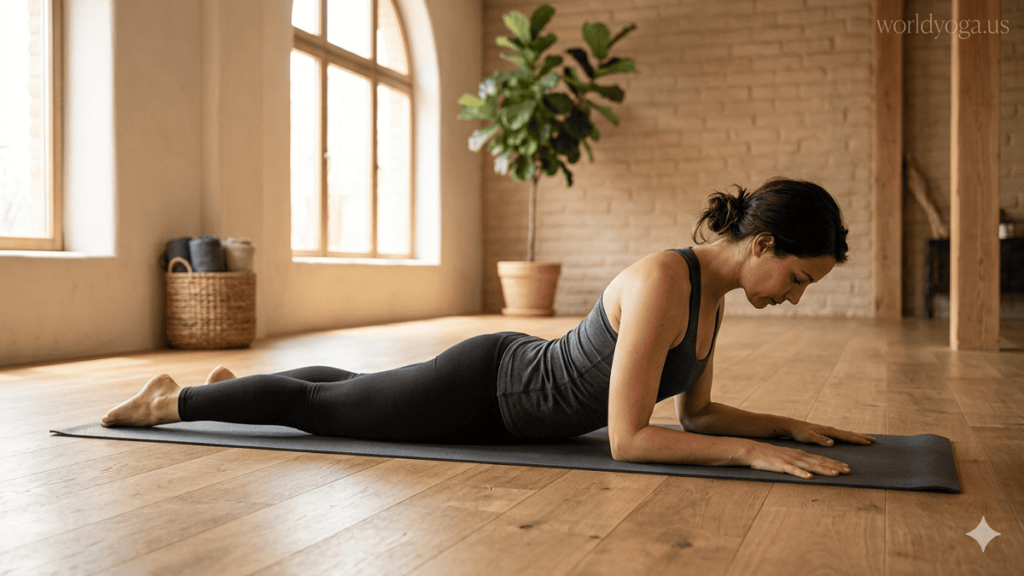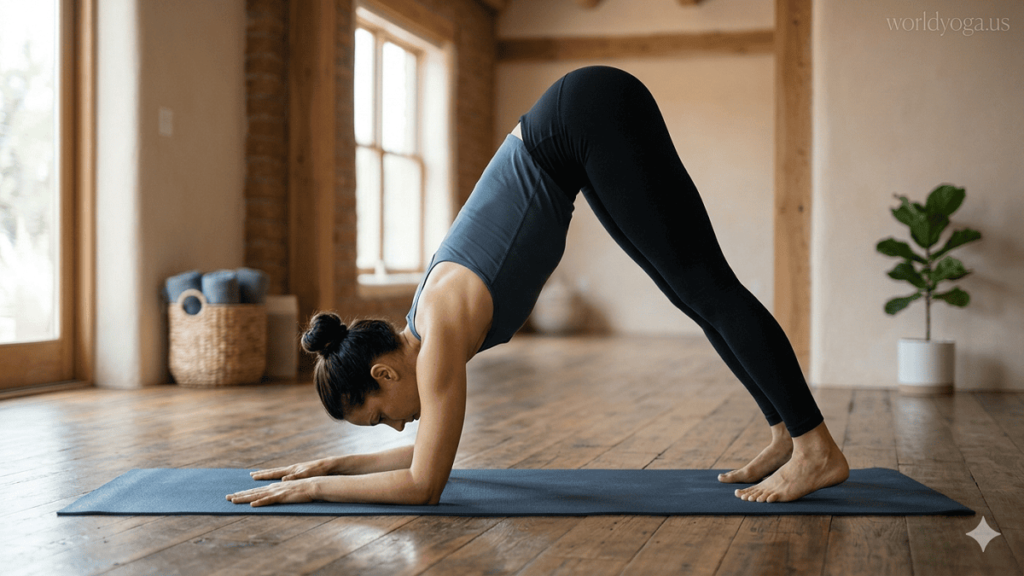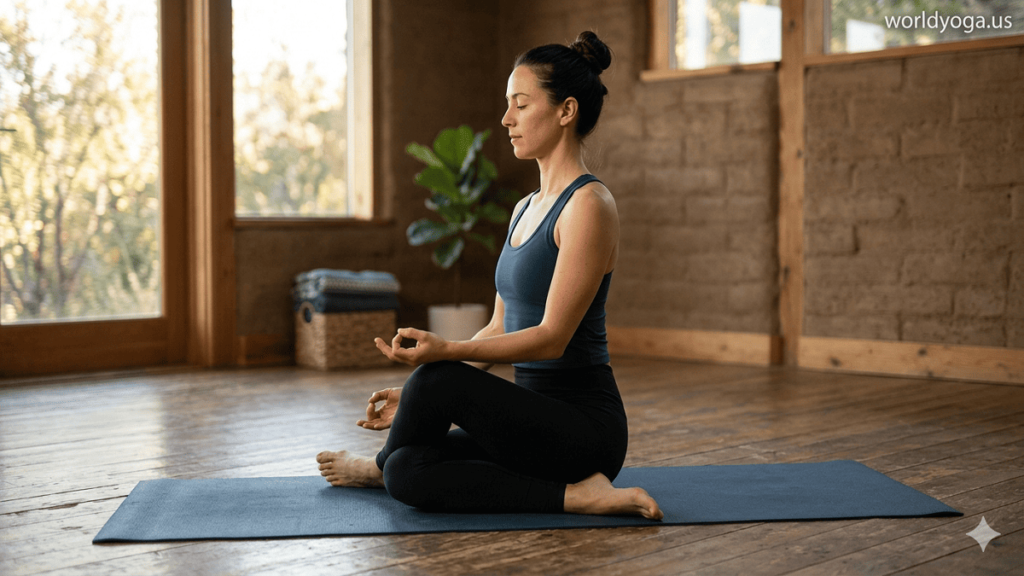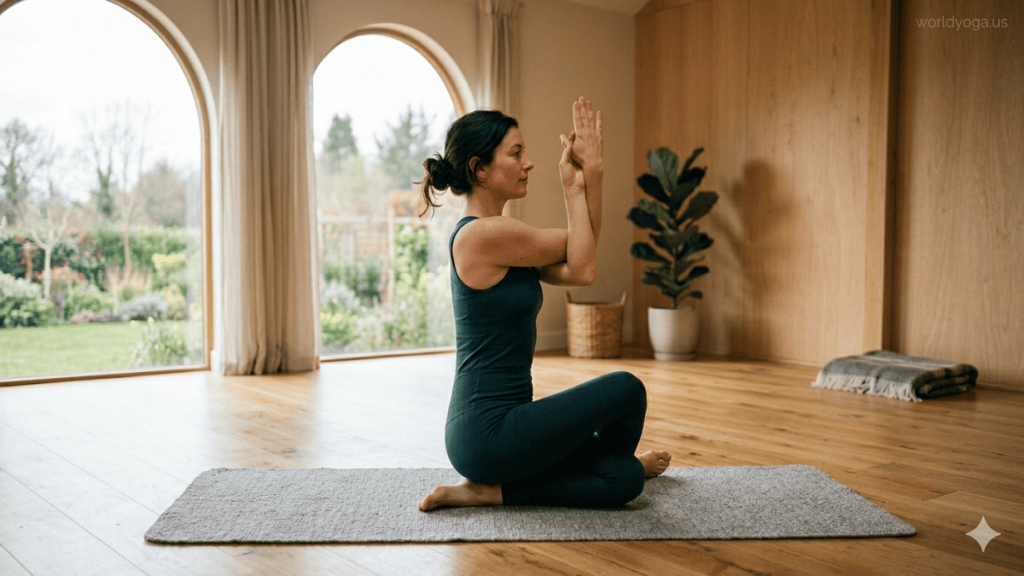
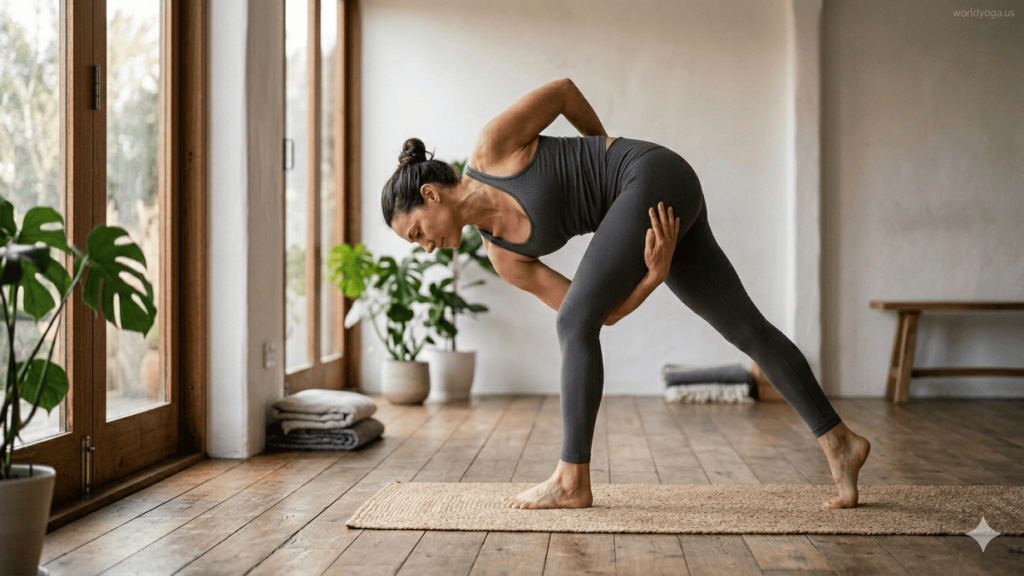
Person performing Swan Pose yoga variation (Sleeping Swan/Pigeon Pose) with one leg folded forward and the other extended back in a calm studio setting.
Swan Pose, ARM BALANCE: PEACOCK AND SWAN

Swan Pose

Swan Pose is a yoga posture commonly used in Yin and Hatha Yoga that deeply stretches the hips, glutes, and lower back. In this pose, one leg is bent in front of the body while the other extends straight behind, allowing for a powerful yet calming hip-opening experience. It is often practiced in both active and restorative forms, including the forward-fold variation known as Sleeping Swan. This posture supports improved mobility, stress relief, and better posture when practiced consistently with mindful breathing and proper alignment.

A yoga practitioner performing Peacock Pose (Mayurasana), balancing the body horizontally on the arms with elbows pressing into the abdomen, legs extended straight back in a controlled alignment.
Peacock Pose, ARM BALANCE: PEACOCK AND SWAN

Peacock Pose

Peacock Pose (Mayurasana), an advanced yoga arm balance in which the body is lifted parallel to the ground using arm strength and core engagement. The elbows press into the abdomen to create leverage while the legs remain fully extended and aligned. This posture requires significant wrist strength, shoulder stability, and abdominal control. It is traditionally practiced in Hatha Yoga to develop balance, concentration, and internal body awareness, and is recommended only for experienced practitioners due to its high physical demands.

A highly advanced yogi performing One Hand Peacock Pose, balancing the body horizontally on a single forearm with the elbow pressed into the abdomen, legs extended straight back in a controlled alignment.
ARM BALANCE: PEACOCK AND SWAN, One Hand Peacock Pose

One Hand Peacock Pose

One Hand Peacock Pose (Eka Hasta Mayurasana), an elite-level yoga arm balance derived from Mayurasana (Peacock Pose). In this posture, the practitioner supports the entire body on a single forearm while the elbow presses into the abdomen to create lift and stability. The body is held parallel to the ground with legs fully extended, requiring extreme core strength, shoulder stability, and precise balance control. This advanced pose is typically practiced only by experienced yogis due to its high physical demands and need for neuromuscular coordination.

A yoga practitioner performing Mayurasana (Peacock Pose), balancing the body horizontally on forearms with elbows pressed into the abdomen, legs extended straight back, in a calm studio setting.
ARM BALANCE: PEACOCK AND SWAN, Mayurasana

Mayurasana

Mayurasana, also known as Peacock Pose, an advanced yoga arm-balancing posture. The practitioner lifts the entire body parallel to the ground using only the strength of the arms and core, with elbows pressing into the abdomen for support. The pose demonstrates high levels of strength, balance, and concentration, typically practiced in advanced Hatha Yoga. It is often used to improve core stability, upper body strength, and internal organ stimulation.

Yoga practitioner performing Hamsasana in a studio, balancing on both hands with elbows supporting the abdomen and body lifted in a controlled arm balance.
ARM BALANCE: PEACOCK AND SWAN, Hamsasana

Hamsasana

Hamsasana, a foundational arm-supported posture in Yoga designed to build upper-body strength, core stability, and balance control. The practitioner is positioned in a controlled arm balance with both hands grounded and elbows engaged against the abdominal region for support. The body is slightly lifted forward, demonstrating stability and muscular engagement. The studio environment is minimalistic with soft natural lighting, wooden flooring, and a calm atmosphere. The focus is on alignment, wrist strength, and core activation.

Yoga practitioner performing Eka Hasta Mayurasana outdoors at sunrise on a natural surface, body extended horizontally while balanced on one hand with golden light illuminating the pose.
ARM BALANCE: PEACOCK AND SWAN, Eka Hasta Mayurasana

Eka Hasta Mayurasana

Eka Hasta Mayurasana, a demanding arm balance in Yoga and a one-handed variation of Mayurasana. The pose is performed outdoors during sunrise, with warm golden light enhancing the silhouette and emphasizing muscular engagement and balance. The body remains fully horizontal, supported by one hand, demonstrating exceptional core strength and stability. The natural environment—featuring soft-focus trees and distant landscape—adds depth and calmness.

Yoga practitioner performing Peacock Pose and Swan arm balance, demonstrating upper-body strength, balance, and controlled body alignment.
Kundalini Yoga

ARM BALANCE: PEACOCK AND SWAN

Arm balance postures such as Peacock Pose and Swan Pose (arm balance variation) represent advanced stages of yoga practice that require a high level of physical strength, coordination, and mental focus. Peacock Pose (Mayurasana) is a classical posture in which the body is held horizontally, supported by the hands, with elbows pressing into the abdomen. This pose emphasizes upper-body strength, particularly in the wrists, forearms, and shoulders, along with strong core engagement to maintain alignment and stability.

Yoga practitioner performing Padmasana in Mayurasana, balancing horizontally on hands with legs in full lotus position, demonstrating strength and control.
Padmasana in Mayurasana, ARM BALANCE: LOTUS PEACOCK

Padmasana in Mayurasana

Padmasana in Mayurasana is an advanced yoga posture that merges the seated lotus position of Padmasana with the arm-balancing mechanics of Mayurasana. In this variation, the practitioner lifts the entire body parallel to the ground while maintaining a full lotus leg position, supported entirely by the hands and arms.
This posture requires exceptional upper-body strength, particularly in the wrists, forearms, shoulders, and upper back. At the same time, the core muscles play a critical role in stabilizing the spine and maintaining a straight, horizontal alignment. The lotus position adds an additional level of complexity by requiring deep hip flexibility and proper joint alignment.

Advanced yoga practitioner performing Mushti Padma Mayurasana, balancing the body horizontally on fists with legs in full lotus position in a controlled arm balance.
ARM BALANCE: LOTUS PEACOCK, Mushti Padma Mayurasana

Mushti Padma Mayurasana

Mushti Padma Mayurasana is a highly advanced yoga posture that integrates fist-based arm support (Mushti), lotus leg position (Padmasana), and horizontal balancing mechanics similar to Mayurasana. In this pose, the practitioner lifts the entire body parallel to the ground while balancing on clenched fists, requiring exceptional wrist strength, core stability, and hip flexibility. This posture demands a high degree of neuromuscular coordination, as the body must maintain precise alignment while suspended above the floor. The arms bear nearly all body weight, while the abdomen engages deeply to stabilize the spine. The lotus position adds an additional layer of difficulty by requiring advanced hip external rotation and knee control.

Advanced yoga practitioner performing Lotus Pose in Peacock Pose, balancing horizontally on forearms with elbows pressed into the abdomen, legs locked in lotus position, set in a serene studio environment with soft lighting and a subtle “worldyoga.us” watermark in the top-right corner.
Lotus Pose in Peacock Pose, ARM BALANCE: LOTUS PEACOCK

Lotus Pose in Peacock Pose

Advanced yoga posture “Lotus Pose in Peacock Pose,” a hybrid arm balance combining Padmasana and Mayurasana. The practitioner is shown holding a horizontal suspension using only forearm support, with elbows firmly engaged into the abdominal region for structural leverage. The legs remain locked in a full lotus position, significantly increasing balance difficulty and core activation demands. The posture highlights exceptional upper-body strength, wrist stability, and deep core engagement required to maintain controlled alignment.

Scroll to Top