DOWNWARD DOG: KNEES BENT

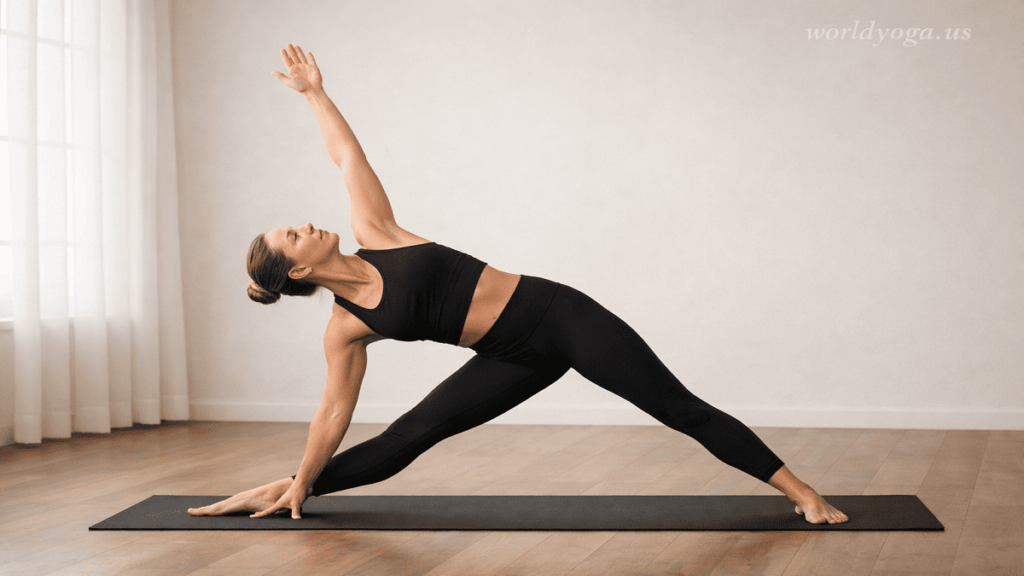
Person performing Extended Side Triangle Pose (Utthita Trikonasana) in a fully extended standing yoga posture, with one hand reaching toward the floor and the other arm extended upward, demonstrating balance, alignment, and full-body stretch in a calm yoga environment.
TRIANGLE POSE, Extended Side Triangle Pose

Extended Side Triangle Pose

Extended Side Triangle Pose (Utthita Trikonasana) is a foundational standing yoga posture that integrates strength, flexibility, and balance in a single movement. The pose involves a wide-legged stance with one hand reaching toward the floor or shin while the opposite arm extends upward, creating a long diagonal line through the body.
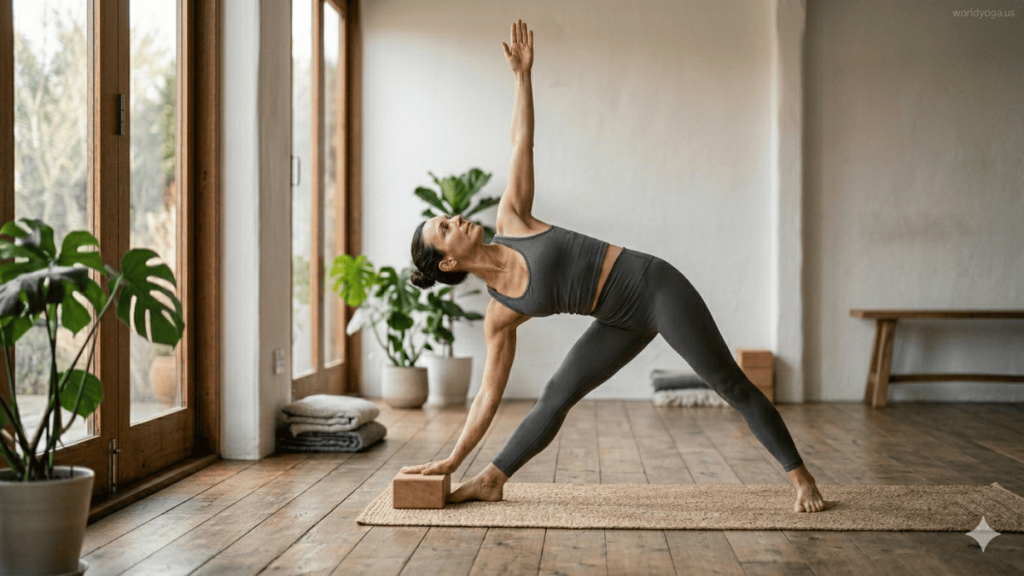
Yoga practitioner performing Triangle Pose (Trikonasana) in a modern indoor yoga studio with proper alignment.
TRIANGLE POSE

TRIANGLE POSE

Triangle Pose, commonly known as Trikonasana, is a foundational standing yoga posture that enhances flexibility, balance, strength, and postural alignment. The pose involves a wide-legged stance with lateral extension of the torso, forming a triangular shape with the body. It stretches and strengthens key muscle groups including the hamstrings, hips, groin, spine, chest, and shoulders while improving core stability and lower-body endurance.

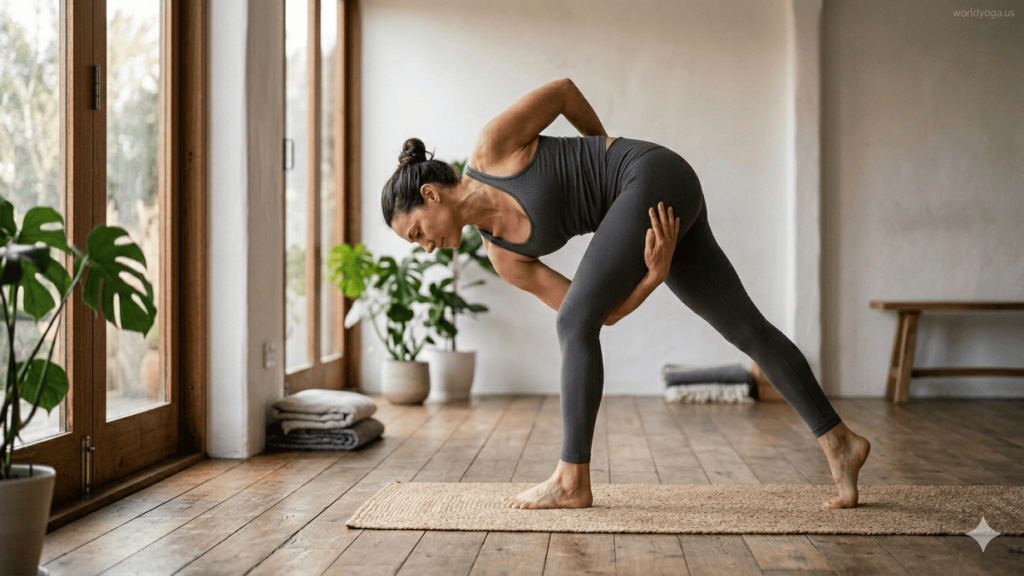
Yoga practitioner performing Vishama Pada Prapada Parshvottanasana in a professional indoor yoga studio.
DOWNWARD DOG: KNEES BENT, Vishama Pada Prapada Parshvottanasana

Vishama Pada Prapada Parshvottanasana

Vishama Pada Prapada Parshvottanasana is an advanced asymmetrical standing yoga posture that enhances balance, flexibility, stability, and body awareness. This variation of Intense Side Stretch Pose features uneven foot positioning with a lifted back heel, creating a deeper challenge for the legs, core, and stabilizing muscles. The posture stretches the hamstrings, calves, hips, and spine while improving coordination, posture, and concentration. Commonly practiced in advanced yoga sequences, Vishama Pada Prapada Parshvottanasana supports functional mobility.

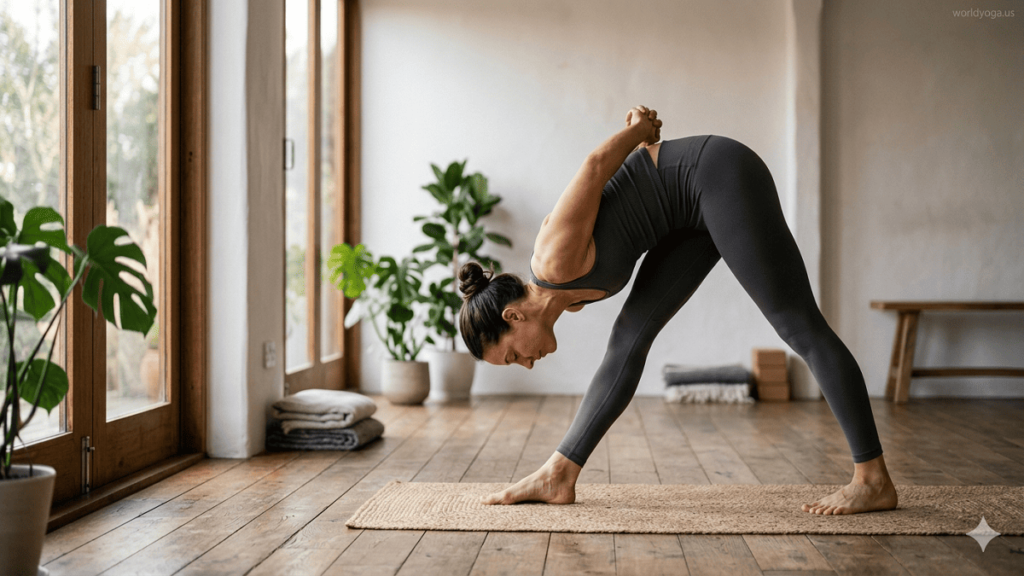
Yoga practitioner performing Baddha Hasta Parshvottanasana in a modern yoga studio with natural lighting.
Baddha Hasta Parshvottanasana

Baddha Hasta Parshvottanasana

Baddha Hasta Parshvottanasana, also known as Bound Intense Side Stretch Pose, is an advanced standing yoga posture that combines balance, flexibility, spinal alignment, and shoulder opening. This pose strengthens the legs and core while deeply stretching the hamstrings, hips, shoulders, and spine. Commonly practiced in intermediate and advanced yoga sequences, it helps improve posture, body awareness, stability, and concentration.

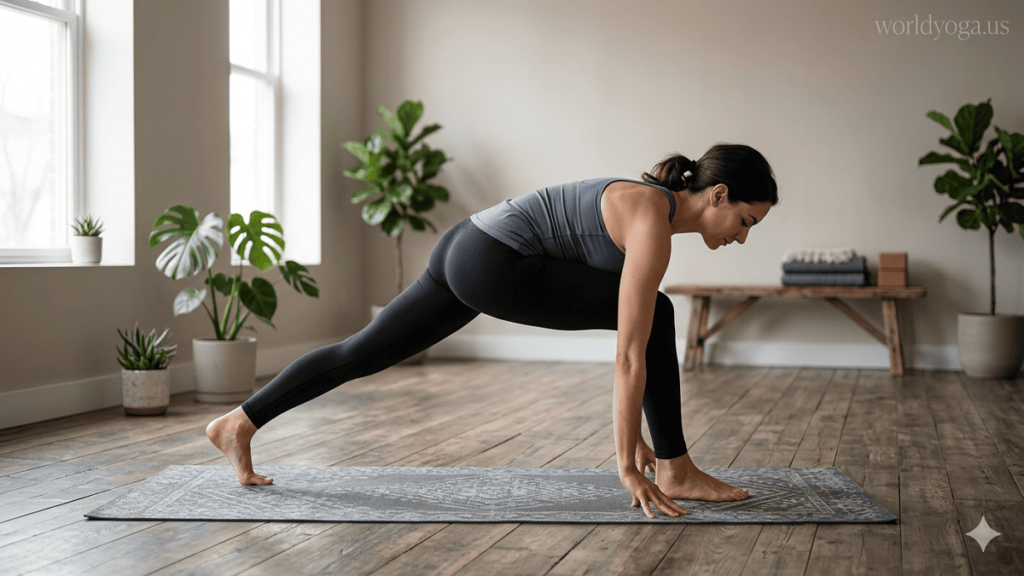
A person practicing Parsvottanasana in a calm indoor yoga studio with proper alignment in a forward bend posture.
DOWNWARD DOG: KNEES BENT, Intense Side Stretch Pose Prep.

Intense Side Stretch Pose

Parsvottanasana is a deep standing forward bend that enhances hamstring flexibility, strengthens the legs, and improves spinal alignment. This topic explores nine powerful insights into the pose, including correct technique, key alignment principles, benefits for posture and balance, common mistakes to avoid, and safety precautions. It also explains how consistent practice supports mobility, body awareness, and overall physical stability, making it an essential posture for both beginner and advanced yoga practitioners.

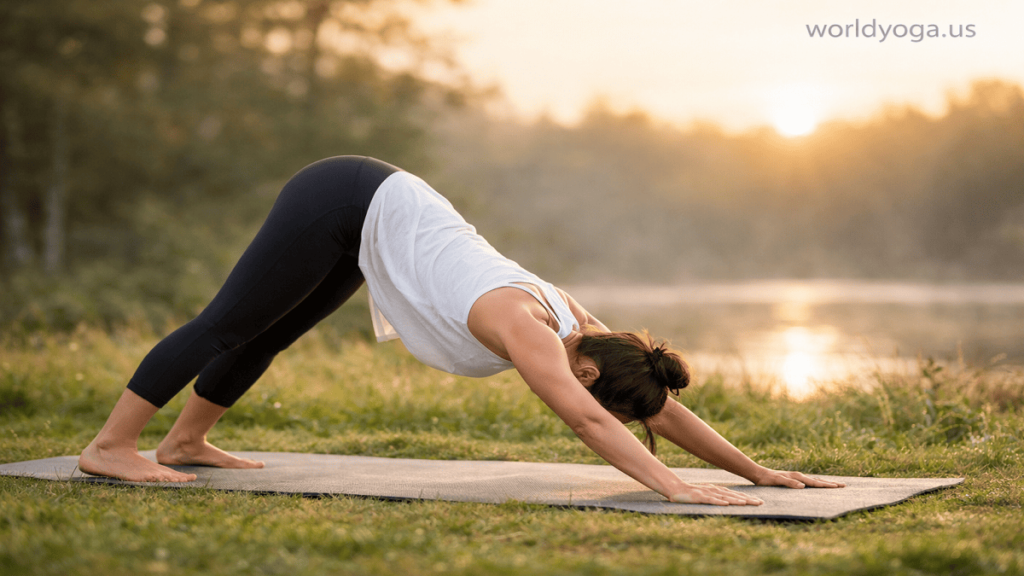
A person performing Adho Mukha Shvanasana outdoors on grass during sunrise in a peaceful natural environment.
DOWNWARD DOG: KNEES BENT, Adho Mukha Shvanasana

Adho Mukha Shvanasana

Adho Mukha Shvanasana (Downward-Facing Dog Pose) is a foundational yoga posture that combines strength, flexibility, and balance. This topic explores its correct technique, alignment principles, benefits for the body and mind, common mistakes, precautions, and variations. It also highlights how the pose supports spinal health, improves circulation, strengthens the upper body, and stretches the hamstrings and calves.

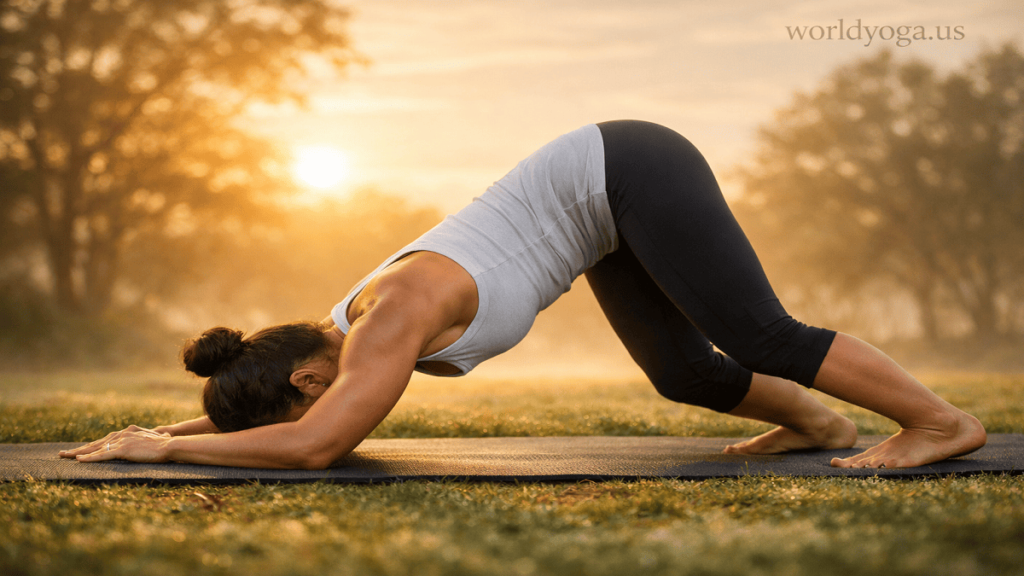
A person performing Downward Dog yoga pose with knees bent, hands firmly grounded, spine elongated, and hips lifted in a stable inverted V position for proper alignment.
DOWNWARD DOG: KNEES BENT

DOWNWARD DOG: KNEES BENT

Downward Dog with knees bent is a modified form of Downward Dog (Adho Mukha Svanasana) that focuses on safe alignment, spinal length, and reduced strain on the hamstrings and lower back. Instead of striving to straighten the legs, this variation allows practitioners to keep a soft bend in the knees, making it easier to maintain a neutral spine and proper pelvic positioning.

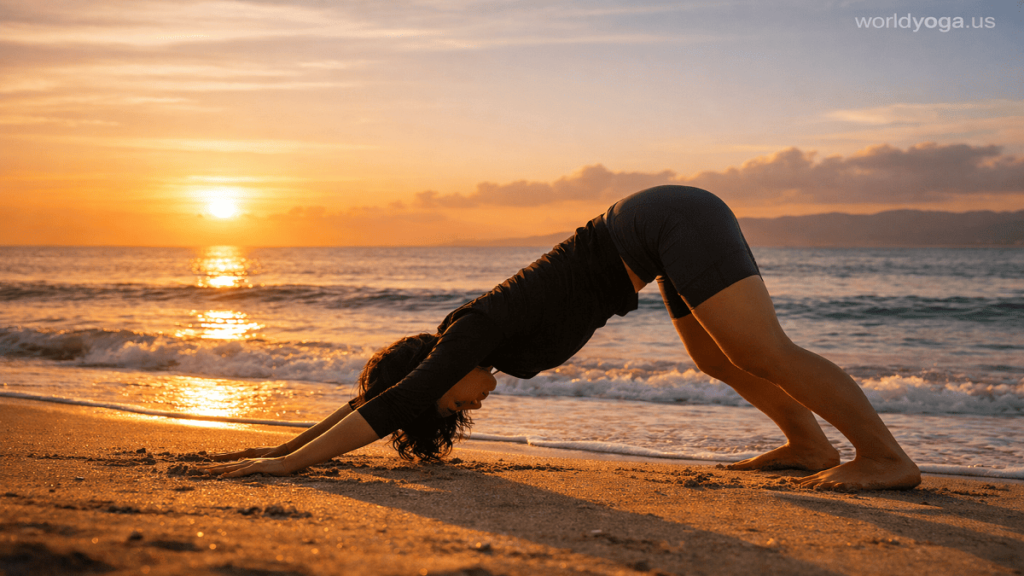
Downward Dog: Knees Bent. A person performing Downward Dog with bent knees on a beach at sunrise, hands on sand, hips lifted, spine extended, and knees softly bent in a stable inverted position.
DOWNWARD DOG: KNEES BENT

DOWNWARD DOG: KNEES BENT

This topic explores Downward Dog with bent knees (a modification of Adho Mukha Svanasana), focusing on correct alignment, posture control, and safe practice principles. It explains how bending the knees helps maintain spinal length, reduce hamstring strain, and improve shoulder stability while building core strength. The content also covers benefits, precautions, preparatory poses, and muscle engagement, making it suitable for beginners and practitioners working on alignment, flexibility, and foundational strength development in yoga.

Scroll to Top