Core Poses

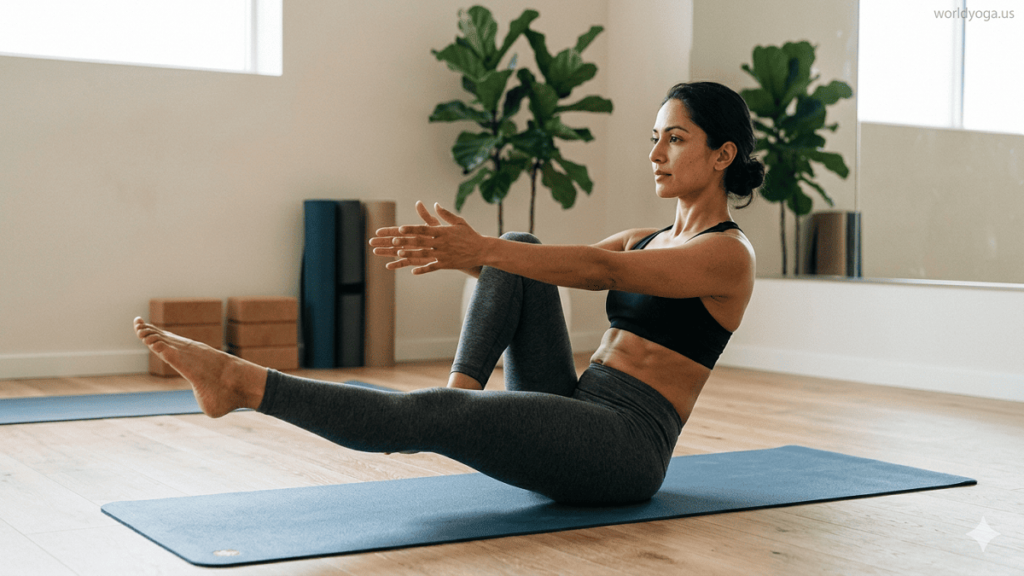
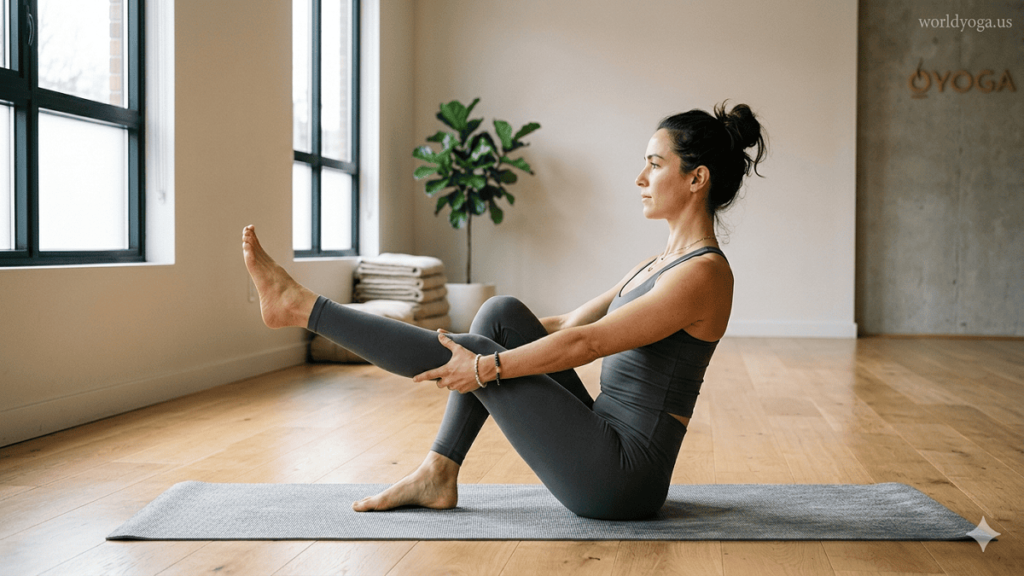
A yoga practitioner performing One-Legged Supported Boat Pose in a minimalist studio with one leg extended and hands providing light support.
BOAT POSE: ONE LEG STRAIGHT, ONE LEG BENT, One-Legged Supported Boat Pose

One-Legged Supported Boat Pose

One-Legged Supported Boat Pose is a powerful intermediate yoga core balance posture designed to build stability, strength, and control through asymmetrical engagement. Derived from Navasana, this supported variation introduces single-leg extension while maintaining hand-assisted balance, making it ideal for developing safe progression into advanced core training. The posture strengthens deep abdominal muscles, improves pelvic alignment, enhances hip flexor endurance, and trains anti-rotation control essential for functional movement.
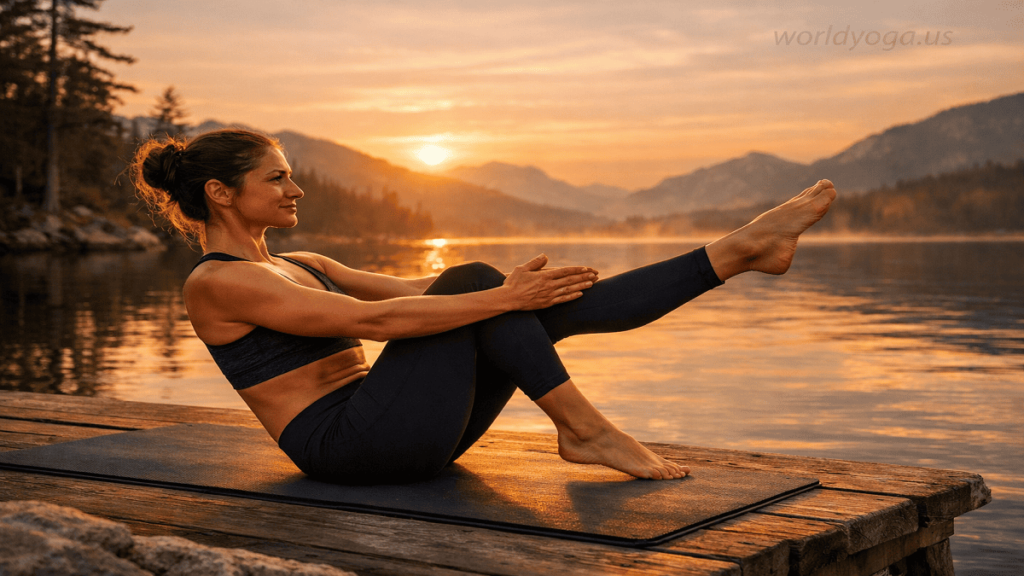
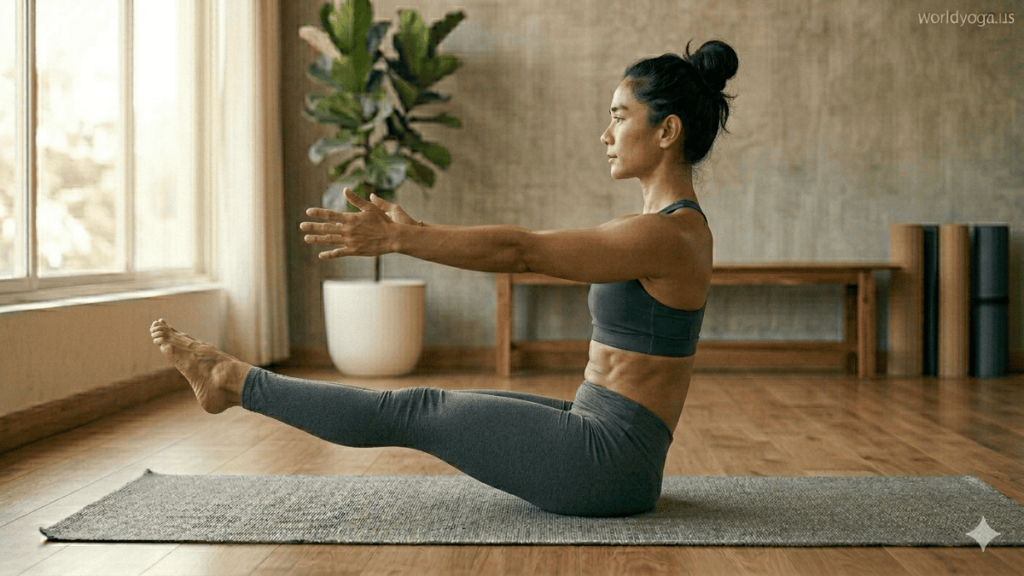
A woman performing Boat Pose yoga variation indoors with one leg straight and one leg bent, arms extended forward, in a calm studio setting with natural light.
BOAT POSE: ONE LEG STRAIGHT, ONE LEG BENT

BOAT POSE: ONE LEG STRAIGHT, ONE LEG BENT

Boat Pose (Navasana) with one leg straight and one leg bent is an advanced-yet-accessible yoga variation that builds deep core strength, improves balance, and enhances spinal stability. This asymmetrical version increases muscular engagement by challenging the obliques, transverse abdominis, and hip flexors more intensely than the standard pose. It also develops neuromuscular coordination due to the uneven load distribution between both sides of the body.

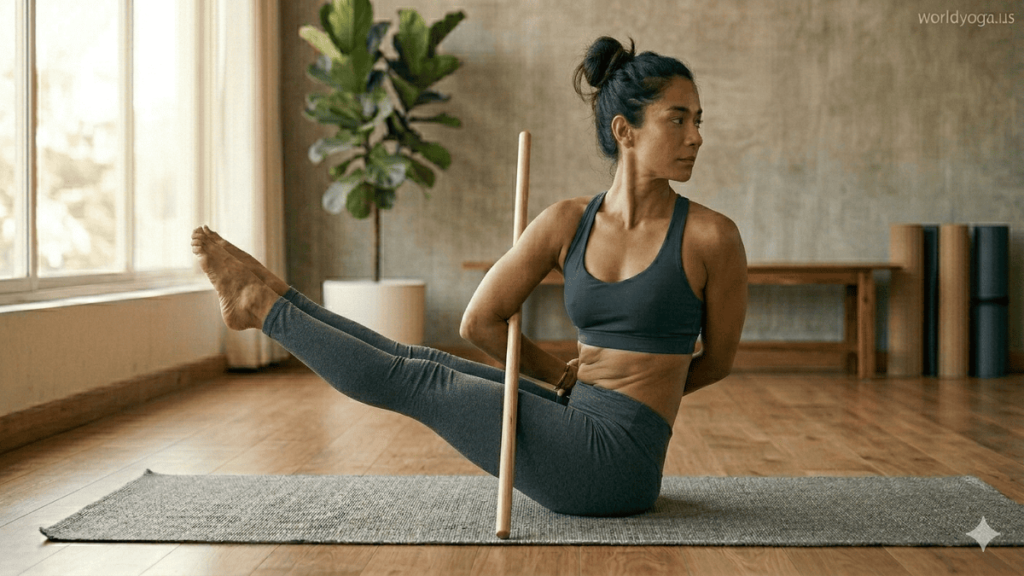
Bound Yogic. Advanced yoga practitioner holding a twisted bound Boat Pose in a modern studio with strong core engagement and elevated legs. Watermark “worldyoga.us” in top right corner.
BOAT POSE: ONE FOOT TO KNEE, Revolved Bound Yogic Staff Boat Pose

Revolved Bound Yogic Staff Boat Pose

Revolved Bound Yogic Staff Boat Pose is an advanced yoga-based movement that combines core stability, spinal rotation, and binding mechanics into a single integrated posture. It strengthens the abdominal muscles, especially the obliques and transverse abdominis, while improving spinal mobility and neuromuscular coordination. The pose challenges balance and breath control, requiring precise alignment and controlled movement rather than force or momentum. With consistent practice.

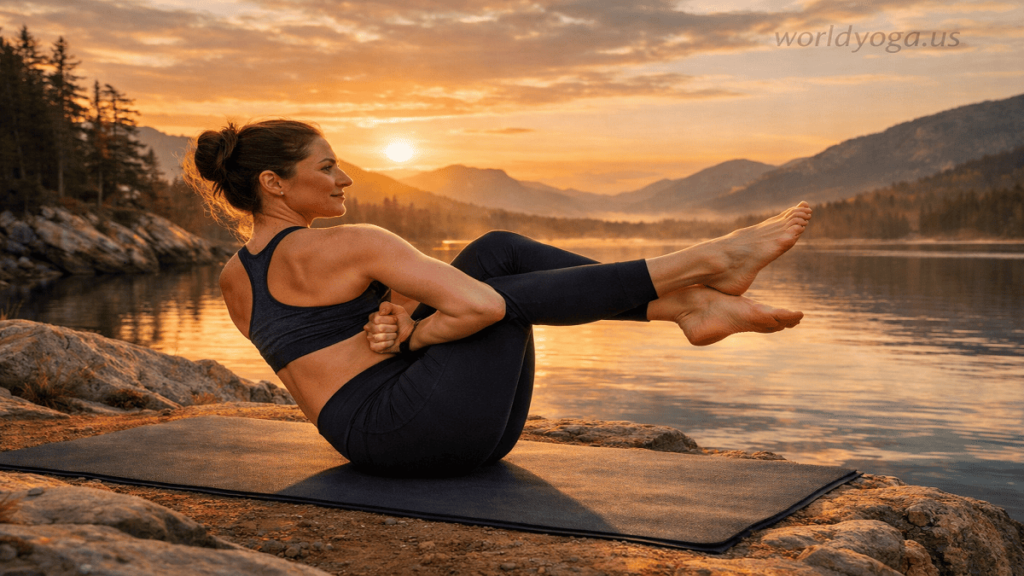
Parivritta Baddha Yogadanda Navasana. Yoga practitioner holding a twisted bound Boat Pose variation outdoors at sunrise on a mountain cliff with core engagement. Watermark “worldyoga.us” in top right corner.
BOAT POSE: ONE FOOT TO KNEE, Parivritta Baddha Yogadanda Navasana

Parivritta Baddha Yogadanda Navasana

Parivritta Baddha Yogadanda Navasana is an advanced yoga posture that integrates Boat Pose stability with spinal twisting and binding mechanics to create a highly demanding core training variation. It strengthens the deep abdominal muscles, improves spinal mobility, and enhances neuromuscular coordination under rotational load. This posture also develops balance, breath control, and postural awareness, making it valuable for advanced practitioners seeking functional strength and control.

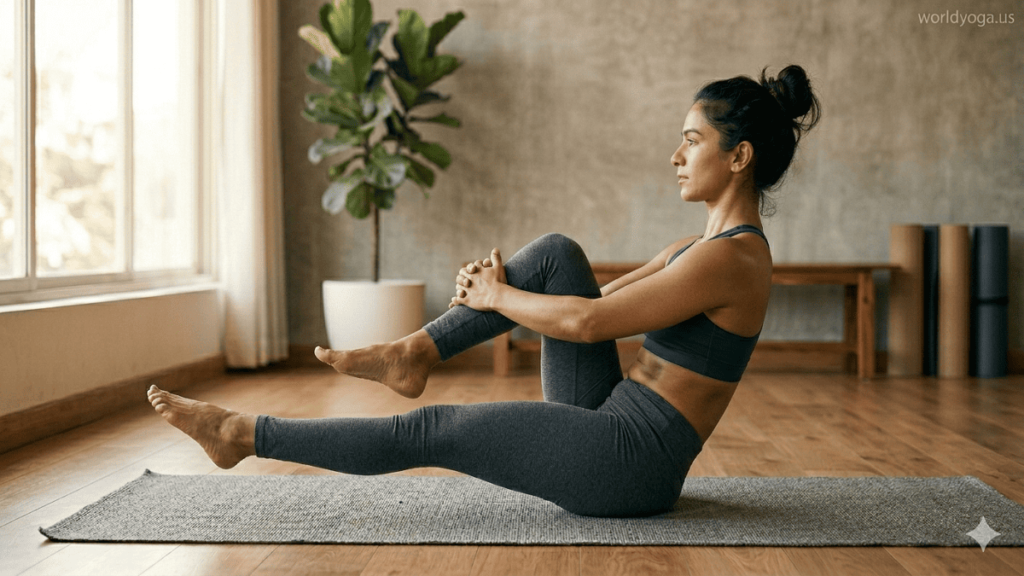
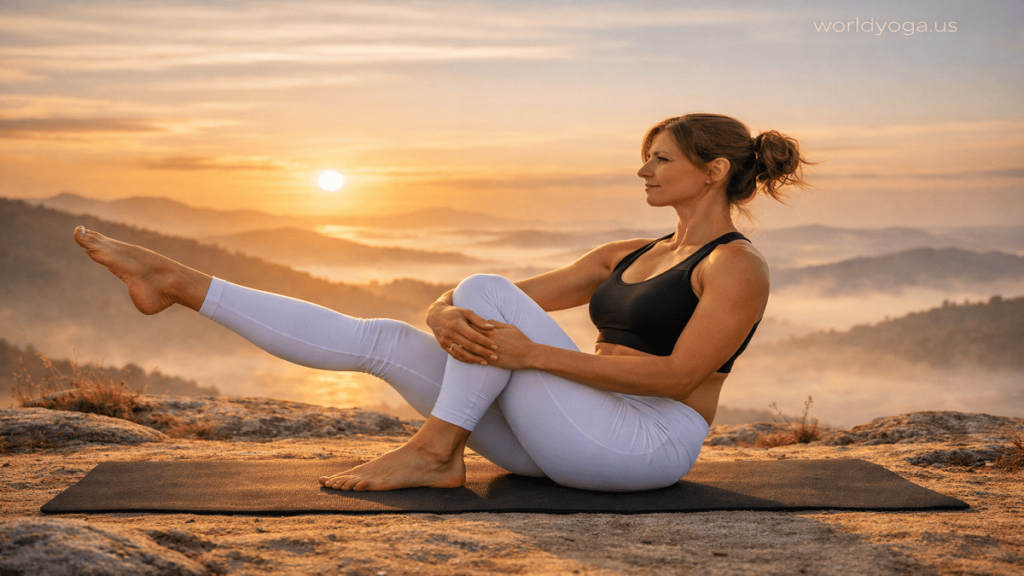
One Foot to Knee A person practicing an intermediate Boat Pose variation outdoors at sunrise, balancing on sit bones with one leg extended and the other foot near the opposite knee.
BOAT POSE: ONE FOOT TO KNEE

BOAT POSE: ONE FOOT TO KNEE

Boat Pose One Foot to Knee is an intermediate asymmetrical variation of Boat Pose that builds deep core strength, pelvic stability, and controlled balance. In this studio-based practice, the practitioner maintains a lifted spine while extending one leg forward and placing the other foot gently near the opposite knee.

A person performing an advanced asymmetrical Boat Pose yoga variation in a studio with one foot placed toward the opposite hip socket while balancing on sit bones.
BOAT POSE: ONE FOOT TO HIP SOCKET

BOAT POSE: ONE FOOT TO HIP SOCKET

Boat Pose: One Foot to Hip Socket is an advanced variation of Boat Pose that enhances core strength, hip stability, and spinal control. In this studio-based practice, the practitioner maintains a strong asymmetrical balance by extending one leg forward while guiding the opposite foot toward the hip socket. The controlled engagement of abdominal muscles, hip flexors, and spinal stabilizers demonstrates how precision-based movement improves neuromuscular coordination and postural endurance.

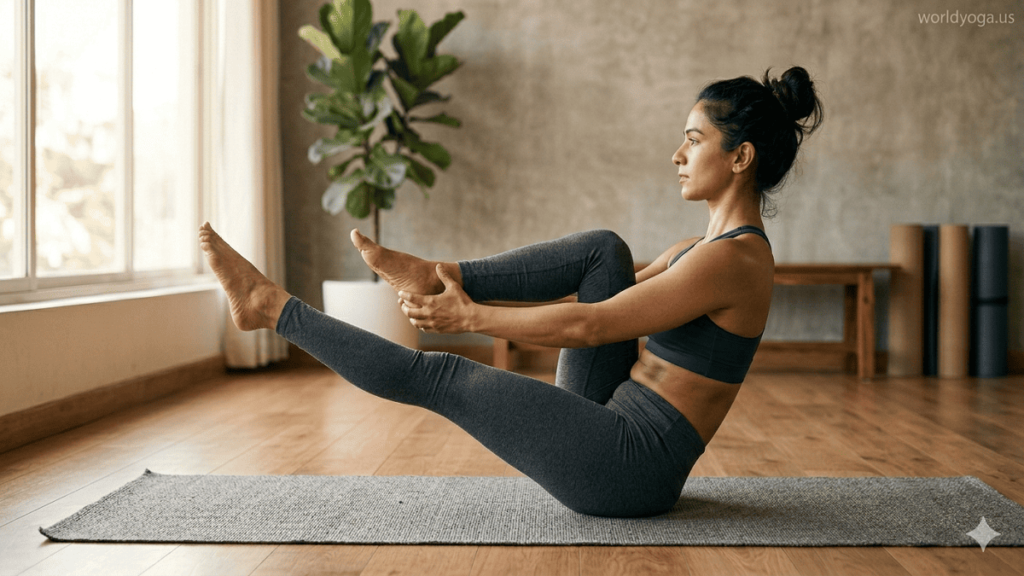
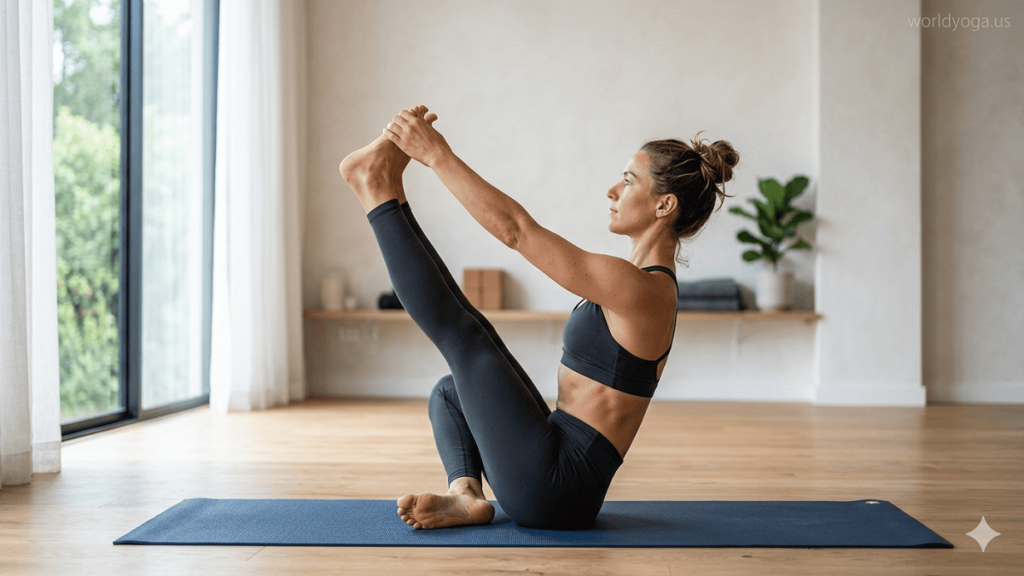
Advanced yogi performing Urdhva Mukha Paschimottanasana, lifting both legs and torso while holding feet with strong core engagement and straight spine.
BOAT POSE: GRABBING ONTO FEET/TOES, Urdhva Mukha Paschimottanasana

Urdhva Mukha Paschimottanasana

Urdhva Mukha Paschimottanasana (Upward-Facing Intense West Stretch) is an advanced yoga posture designed to build extreme core strength, deep hamstring flexibility, and full spinal control. This powerful seated lift variation requires simultaneous engagement of the abdominal muscles, hip flexors, and back stabilizers while maintaining balance and breath control. Regular practice improves posture, enhances body awareness, strengthens the posterior chain, and develops advanced neuromuscular coordination.

Scroll to Top