
Eka Pada Urdhva Prasarita Padasana
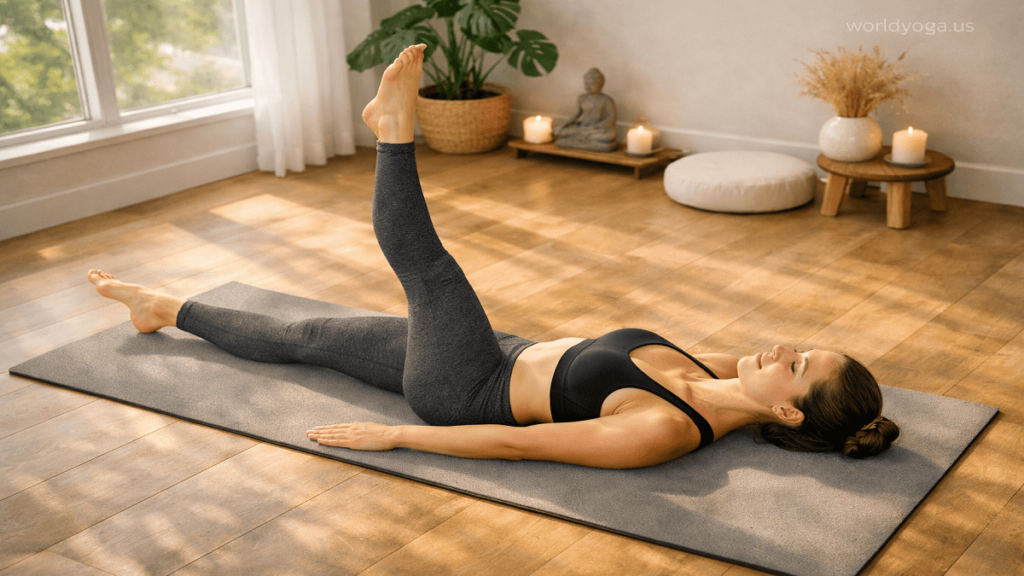
Eka Pada Urdhva Prasarita Padasana (One-Legged Upward Extended Foot Pose) is a supine yoga posture that focuses on hamstring flexibility, core stability, and lower body alignment. The pose is performed by lying on the back and extending one leg vertically upward while the other leg remains grounded or extended along the floor. It is commonly used in yoga therapy, flexibility training, and foundational Hatha yoga practices.
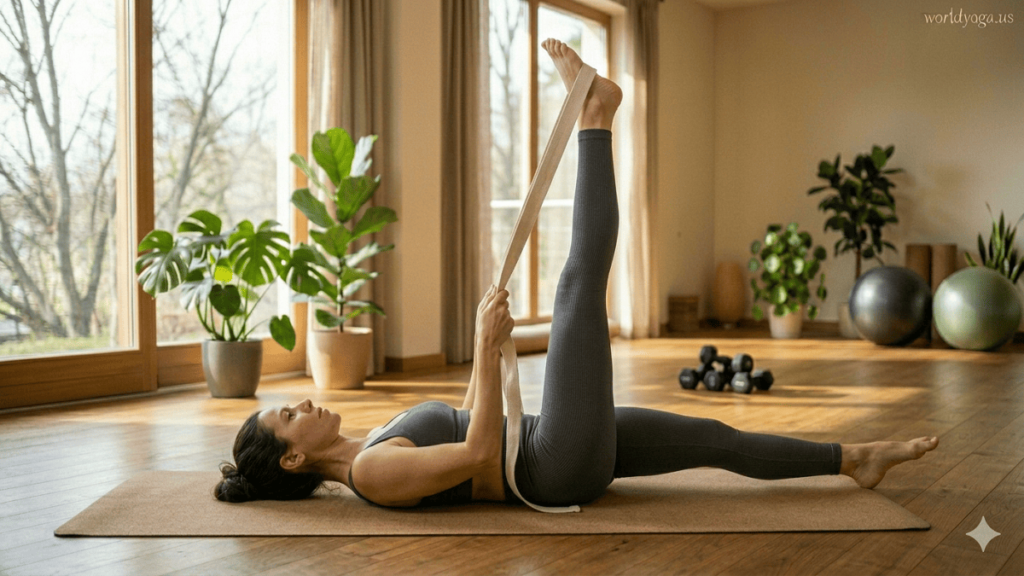
In this posture, the raised leg is kept straight with an active foot, while the hips remain square and stable on the mat. The spine stays neutral, and the core is gently engaged to prevent the lower back from arching. The arms typically rest alongside the body, though a strap may be used around the lifted foot for support in beginners or individuals with limited flexibility.
This asana primarily stretches the hamstrings, calves, and posterior chain of the raised leg while strengthening the abdominal muscles that stabilize the pelvis. It also improves neuromuscular control, enhances balance awareness, and supports better posture by encouraging symmetrical alignment of the hips and spine.
Regular practice of Eka Pada Urdhva Prasarita Padasana helps reduce stiffness in the lower body, improves circulation in the legs, and supports recovery from sedentary habits such as prolonged sitting. It is often included in yoga sequences designed for beginners as well as rehabilitation-focused routines.
Proper breathing is essential in this posture. Slow, steady inhalation and exhalation help maintain relaxation while supporting core engagement. The movement should remain static rather than dynamic, emphasizing control, alignment, and sustained stretch.
Common precautions include avoiding excessive pulling of the lifted leg, preventing lower back strain by not over-arching the spine, and modifying the pose with props if necessary. Individuals with severe hamstring injuries or lower back issues should practice under guidance.
In summary, Eka Pada Urdhva Prasarita Padasana is a foundational supine yoga posture that enhances flexibility, core stability, and postural alignment when practiced with correct technique and mindful control.
#Eka Pada Urdhva Prasarita Padasana in India
How is Eka Pada Urdhva Prasarita Padasana performed correctly?
Eka Pada Urdhva Prasarita Padasana (One-Legged Upward Extended Foot Pose) is a foundational supine yoga posture that requires precision, alignment, and controlled engagement rather than force. When performed correctly, it improves hamstring flexibility, core stability, and pelvic control while minimizing strain on the lower back.
To begin, lie flat on your back in a supine position on a yoga mat. Keep both legs extended and the spine in a neutral alignment. The shoulders should be relaxed, and the back of the head resting comfortably on the floor. Arms can be placed alongside the body with palms facing down for stability.
Next, gently engage the core by drawing the navel toward the spine. This activation is essential to stabilize the pelvis and prevent the lower back from arching when one leg is lifted. Maintaining this engagement throughout the pose ensures safe and effective alignment.
Slowly lift one leg upward toward the ceiling while keeping it straight. The movement should be controlled and gradual, avoiding any jerking or momentum. The opposite leg remains grounded on the floor, fully extended and active. It is important that both hips remain level and do not tilt or rotate during the lift.
As the leg rises, ensure the foot is relaxed but active, with toes pointing upward or slightly flexed depending on flexibility. The raised leg does not need to go beyond its natural range of motion; forcing the stretch can compromise alignment and lead to strain.
The spine should remain neutral throughout the posture. Avoid pressing the lower back excessively into the floor or allowing it to arch. A slight natural curve is acceptable, but stability should come from core engagement rather than back compression.
Breathing plays a key role in maintaining ease in the posture. Inhale as you prepare, and exhale slowly while lifting or holding the leg. Steady breathing helps maintain relaxation in the hamstrings and prevents unnecessary tension in the upper body.
For beginners or individuals with tight hamstrings, using a yoga strap around the lifted foot is recommended. This allows the leg to extend gradually without compromising spinal alignment or forcing flexibility. The knee should remain straight but not locked.
Common mistakes include lifting the leg too quickly, rotating the hips, holding the breath, or straining the lower back. These errors reduce the effectiveness of the pose and increase the risk of discomfort or injury.
In summary, Eka Pada Urdhva Prasarita Padasana is performed correctly by maintaining a stable supine position, engaging the core, lifting one leg slowly with controlled alignment, and preserving neutral spine and hip balance. When practiced mindfully, it delivers deep stretching benefits and strengthens core control simultaneously.
#Eka Pada Urdhva Prasarita Padasana in Maharashtra
What is the proper alignment in this single-leg upward extension pose?
Proper alignment in Eka Pada Urdhva Prasarita Padasana (One-Legged Upward Extended Foot Pose) is essential to ensure that the stretch targets the hamstrings effectively while protecting the lower back and maintaining pelvic stability. This supine posture depends more on control and precision than flexibility alone.
The foundation of alignment begins with the supine position. The body lies flat on the mat with the spine in a neutral position. The head, shoulders, and pelvis should rest evenly without unnecessary tension. The shoulders remain relaxed and drawn away from the ears, while the arms lie alongside the body with palms gently pressing into the floor for light support.
The pelvis is the central focus of alignment. It should remain level and stable throughout the entire pose. There should be no tilting, lifting, or rotating of the hips when one leg is raised. Both sides of the pelvis must stay grounded and symmetrical to prevent strain on the lower back and ensure even muscle engagement.
The spine should maintain its natural curves. A slight lumbar arch is normal, but it should not deepen during the leg lift. Core engagement is crucial here; gently drawing the navel inward helps stabilize the pelvis and prevents excessive pressure on the lumbar spine.
The extended leg on the floor remains fully straight and active, pressing gently into the mat. This grounding action helps stabilize the pelvis and supports proper alignment. The lifted leg should also remain straight, with the knee extended but not locked. The movement should be vertical, aligned with the hip joint, without drifting inward or outward.
Foot positioning of the raised leg can be neutral or slightly dorsiflexed (toes pointing toward the body), depending on comfort and flexibility. This helps maintain proper hamstring engagement and avoids unnecessary tension in the calf.
The head and neck remain relaxed, with the gaze directed upward. There should be no strain in the cervical spine, and breathing should remain steady and natural to support relaxation and stability.
This posture, closely related in training systems to Scissor kicks in its stabilization demands, requires strong core control to maintain alignment under tension. However, unlike dynamic scissor movements, this pose emphasizes static alignment and controlled stretching rather than repetition.
Common alignment errors include lifting the hip on the raised-leg side, arching the lower back excessively, or allowing the grounded leg to bend. These mistakes reduce the effectiveness of the pose and may lead to discomfort or imbalance.
In summary, proper alignment in this single-leg upward extension pose requires a neutral spine, level pelvis, engaged core, straight and controlled legs, and relaxed upper body positioning. When these principles are maintained, the pose delivers safe and effective hamstring stretching along with improved core stability and body awareness.
#Eka Pada Urdhva Prasarita Padasana in Ahemadabad
Which muscles are engaged during the posture?
In Eka Pada Urdhva Prasarita Padasana (One-Legged Upward Extended Foot Pose), the body works through a combination of active stabilization and passive stretching. Although it appears simple, the posture involves deep muscular engagement to maintain alignment and control, especially in the core and pelvic region.
The primary muscles engaged are the abdominal muscles, particularly the rectus abdominis and transverse abdominis. These muscles work isometrically to stabilize the pelvis and prevent excessive arching of the lower back while one leg is lifted. The transverse abdominis plays a key role in maintaining internal abdominal pressure and spinal stability.
The obliques (internal and external) are also engaged to a moderate degree. They help prevent rotational movement of the pelvis, ensuring that both hip points remain level on the mat. This stabilizing action is essential for maintaining symmetry in the posture.
In the lower body, the hamstrings of the raised leg are the primary muscle group being stretched. These include the biceps femoris, semitendinosus, and semimembranosus. The stretch improves flexibility and reduces tightness caused by prolonged sitting or repetitive activity.
The hip flexors, particularly the iliopsoas of the grounded leg, remain active in a stabilizing role. They help maintain leg extension and pelvic alignment while preventing unnecessary bending or shifting.
The quadriceps of the grounded leg engage lightly to keep the knee extended and the leg stable against the floor. This grounding action supports overall pelvic balance.
The adductor muscles (inner thighs) assist in maintaining leg alignment and preventing outward rotation of the lifted leg. Meanwhile, smaller stabilizing muscles around the pelvis and lower back, including the erector spinae, work isometrically to support spinal posture without excessive movement.
The gluteal muscles contribute to pelvic stability, particularly the gluteus medius, which helps control hip alignment and prevents lateral tilting.
Although this posture is often considered a stretching exercise, it functions as a controlled balance between flexibility and stability. The core remains active while the hamstrings are lengthened, creating a coordinated full-body engagement pattern.
This combination of muscle activation makes the posture highly effective for improving posture, flexibility, and neuromuscular control when practiced correctly and consistently.
Before practicing Eka Pada Urdhva Prasarita Padasana (One-Legged Upward Extended Foot Pose), it is important to prepare the body with poses that improve hamstring flexibility, activate the core, and teach pelvic stability. Proper preparation reduces strain on the lower back and allows smoother alignment during the posture.
One of the most effective preparatory poses is Supta Padangusthasana (Reclining Hand-to-Big-Toe Pose). This supine stretch directly targets the hamstrings while training the pelvis to remain stable. It also introduces controlled leg extension using a strap, which is helpful for beginners who have tight posterior chains.
Another important preparatory pose is Apanasana (Knees-to-Chest Pose). This gentle supine posture helps release tension in the lower back and activates the deep abdominal muscles. It improves awareness of spinal neutrality, which is essential for maintaining correct alignment during single-leg extension.
Setu Bandhasana (Bridge Pose) is also highly beneficial. It strengthens the glutes, hamstrings, and lower back while reinforcing pelvic stability. This helps the practitioner develop better control over hip alignment, which is critical when one leg is lifted in the main posture.
Core activation poses such as Dead Bug variations or supine leg lowers are also recommended. These movements train the transverse abdominis to stabilize the spine while the limbs move independently. This directly prepares the body for the balancing demands of Eka Pada Urdhva Prasarita Padasana.
Tadasana (Mountain Pose), although a standing posture, is useful for building body awareness. It teaches proper alignment of the hips, spine, and shoulders, which translates into better control when transitioning into supine poses.
Gentle hamstring stretches such as Supta Baddha Konasana variations with leg extension or supported reclined stretches using props can also improve flexibility gradually without overstressing the muscles.
Breath-focused preparatory work is equally important. Practicing slow diaphragmatic breathing while lying supine helps activate the core and relax the hamstrings, making it easier to maintain control during the pose.
This posture is closely related in functional training principles to Scissor kicks in terms of core stabilization demand, but it requires more static control and alignment precision rather than dynamic movement. Therefore, preparation should focus more on stability and flexibility rather than speed or repetition.
In summary, effective preparatory poses include Supta Padangusthasana, Apanasana, Setu Bandhasana, core activation drills, and gentle hamstring stretches. These practices collectively build the flexibility, strength, and control required for safe and effective performance of Eka Pada Urdhva Prasarita Padasana.
#Eka Pada Urdhva Prasarita Padasana in Hyderabad
What are the benefits and precautions of this supine variation?
Eka Pada Urdhva Prasarita Padasana (One-Legged Upward Extended Foot Pose) is a supine yoga posture that combines hamstring stretching with core stabilization. When practiced correctly, it offers multiple physical benefits, but it also requires careful attention to alignment and control to avoid strain.
One of the primary benefits of this posture is improved hamstring flexibility. The raised leg receives a deep, sustained stretch that lengthens the posterior thigh muscles, including the biceps femoris, semitendinosus, and semimembranosus. This helps reduce tightness caused by prolonged sitting and improves overall lower-body mobility.
Another key benefit is enhanced core strength and stability. The abdominal muscles, especially the transverse abdominis and rectus abdominis, engage isometrically to stabilize the pelvis and prevent the lower back from arching. This improves spinal control and supports better posture in daily activities.
The pose also promotes pelvic alignment and neuromuscular coordination. By requiring one leg to remain grounded while the other lifts, the body learns to maintain symmetry and prevent hip rotation. This improves balance awareness and functional movement control.
Additionally, this posture supports improved circulation in the lower limbs. The gentle stretch and activation help increase blood flow, which may reduce feelings of heaviness or stiffness in the legs. It is often used in yoga therapy to support recovery from sedentary lifestyles.
Despite these benefits, several precautions must be observed. The most important is avoiding lower back strain. If the core is not properly engaged, the lumbar spine may over-arch when the leg is lifted, leading to discomfort or injury risk. Maintaining a neutral spine is essential throughout the pose.
Individuals with hamstring injuries or severe tightness should practice with a strap or reduce the range of motion. Forcing the leg too high can overstretch the muscles and compromise alignment.
People with lower back conditions such as disc issues or chronic pain should approach this pose cautiously and ideally under professional supervision. Modifications such as keeping the lifted leg lower or bent slightly may be necessary.
Another precaution is to avoid locking the knee of the raised leg. Hyperextension can place unnecessary stress on the joint and reduce muscular engagement. The leg should remain active but not rigid.
Breathing should remain steady and relaxed. Holding the breath can increase tension in the abdomen and reduce stability, making the posture less effective and potentially unsafe.
This pose shares functional similarities with Scissor kicks in terms of core engagement and pelvic control, but it is more static and stretch-focused. Therefore, control and alignment are more important than movement intensity.
In summary, Eka Pada Urdhva Prasarita Padasana offers benefits such as improved hamstring flexibility, stronger core stability, better posture, and enhanced circulation. However, it must be practiced with careful attention to spinal alignment, controlled range of motion, and appropriate modifications to ensure safety and effectiveness.
#Eka Pada Urdhva Prasarita Padasana in Banglore
Case Study of Eka Pada Urdhva Prasarita Padasana
Introduction
Eka Pada Urdhva Prasarita Padasana (One-Legged Upward Extended Foot Pose) is a supine yoga posture widely used in yoga therapy and movement training to improve hamstring flexibility, pelvic stability, and core control. This case study explores its practical application in addressing lower-body tightness and postural imbalance in a non-athlete adult population.
Subject Profile
A 34-year-old office professional presented with complaints of chronic hamstring tightness, mild lower back discomfort, and reduced mobility after prolonged sitting. The individual had no history of structural injury but demonstrated limited hip flexibility and weak core activation patterns during movement screening.
Intervention Plan
The intervention program lasted 6 weeks, with supervised practice of Eka Pada Urdhva Prasarita Padasana performed 4–5 times per week. The protocol included:
- Supported supine leg extension using a yoga strap
- Gradual increase in hold duration (20–60 seconds per side)
- Emphasis on neutral spine alignment and pelvic stability
- Integration of preparatory exercises such as Apanasana and gentle hamstring stretches
- Core activation drills to reinforce abdominal engagement
The practice was carefully progressed to ensure that the lifted leg did not exceed the subject’s available range of motion.
Method of Execution
The subject performed the pose in a supine position with one leg extended vertically while the other remained grounded. Focus was placed on:
- Maintaining level hips
- Engaging the transverse abdominis
- Avoiding lumbar arching
- Using a strap for controlled hamstring stretching
Breath control was emphasized, with slow inhalation during setup and steady exhalation during hold phases.
Observations and Progress
By the third week, noticeable improvements were recorded:
- Increased hamstring flexibility with reduced resistance during leg lift
- Improved ability to maintain pelvic neutrality without support adjustments
- Decreased reports of lower back stiffness after prolonged sitting
- Enhanced body awareness during core engagement tasks
By the end of the 6-week period, the subject demonstrated significantly improved range of motion and better control in maintaining spinal alignment under stretch.
Key Outcomes
The intervention resulted in:
- Improved posterior chain flexibility
- Enhanced core stabilization and neuromuscular control
- Reduced functional discomfort in the lower back
- Better postural endurance during daily activities
The subject also reported improved ease in walking, bending, and prolonged sitting tolerance.
Discussion
The results highlight the effectiveness of Eka Pada Urdhva Prasarita Padasana as a controlled flexibility and stability training tool. Its supine nature reduces joint load while allowing focused stretching of the hamstrings and activation of deep stabilizing muscles.
This posture shares functional stabilization principles with Scissor kicks, particularly in maintaining pelvic control and core engagement during isolated lower-limb movement. However, unlike dynamic core exercises, this pose emphasizes static alignment and sustained muscular control.
Conclusion
Eka Pada Urdhva Prasarita Padasana is an effective therapeutic and conditioning posture for improving hamstring flexibility, core strength, and postural stability. When practiced consistently with proper alignment and progression, it can significantly reduce lower back discomfort and improve overall functional mobility in sedentary individuals.
#Eka Pada Urdhva Prasarita Padasana in Kolkata
White Paper of Eka Pada Urdhva Prasarita Padasana
Abstract
Eka Pada Urdhva Prasarita Padasana (One-Legged Upward Extended Foot Pose) is a foundational supine yoga posture used in therapeutic movement systems, flexibility training, and core stabilization protocols. This white paper analyzes its biomechanical structure, muscular activation, functional benefits, clinical applications, and safety considerations. The posture integrates passive hamstring stretching with active core stabilization, making it a hybrid flexibility–stability exercise.
1. Introduction
Modern sedentary lifestyles contribute to hamstring tightness, pelvic instability, and weakened core function. Supine yoga postures such as Eka Pada Urdhva Prasarita Padasana are widely used to address these issues in both clinical rehabilitation and fitness environments. The posture is characterized by a single-leg vertical extension while maintaining spinal neutrality and pelvic alignment.
2. Biomechanical Analysis
The posture is performed in a supine position, where one leg is lifted vertically while the opposite leg remains grounded. This creates an asymmetrical load on the pelvis, requiring active stabilization.
Key biomechanical principles include:
- Anti-rotation control of the pelvis
- Isometric stabilization of the lumbar spine
- Controlled hip flexion and hamstring elongation
- Load distribution across the core and lower extremities
The lever effect increases as the leg approaches a 90-degree angle, intensifying hamstring stretch and core demand.
3. Muscular Activation Profile
Primary stretching muscles:
- Hamstrings (biceps femoris, semitendinosus, semimembranosus)
Primary stabilizing muscles:
- Transverse abdominis
- Rectus abdominis
- Obliques (internal and external)
Secondary contributors:
- Iliopsoas (grounded leg stabilization)
- Quadriceps (knee extension support)
- Gluteus medius (pelvic alignment control)
- Erector spinae (isometric spinal support)
This coordinated engagement enhances neuromuscular control across the posterior chain and core.
4. Functional Benefits
Regular practice provides measurable improvements in:
- Hamstring flexibility and posterior chain mobility
- Core stability and spinal control
- Pelvic alignment and postural symmetry
- Lower limb circulation and recovery
- Movement efficiency in gait and bending mechanics
The posture is especially effective in counteracting prolonged sitting-related dysfunction.
5. Clinical and Performance Applications
Eka Pada Urdhva Prasarita Padasana is widely used in:
- Physiotherapy for lumbar strain recovery
- Yoga therapy for postural correction
- Athletic conditioning for mobility enhancement
- Pilates-based core stabilization programs
- Workplace wellness interventions for sedentary populations
It serves as a low-impact intervention suitable for early rehabilitation stages and progressive mobility training.
6. Safety and Risk Management
Despite its benefits, improper execution may lead to discomfort or strain.
Key precautions include:
- Maintaining neutral lumbar spine alignment
- Avoiding excessive leg elevation beyond capacity
- Preventing pelvic rotation or tilting
- Using props (such as straps) for limited flexibility
- Avoiding knee hyperextension during leg lift
- Gradual progression for individuals with tight hamstrings
Individuals with acute lower back or hamstring injuries should practice under professional supervision.
7. Comparative Functional Insight
This posture shares neuromuscular stabilization principles with dynamic core movements such as Scissor kicks. However, unlike dynamic repetitions, this pose emphasizes static control, sustained alignment, and passive tissue elongation combined with isometric stabilization.
8. Conclusion
Eka Pada Urdhva Prasarita Padasana is a highly effective supine posture that bridges flexibility training and core stabilization. Its dual role in stretching and strengthening makes it valuable in rehabilitation, fitness, and performance settings. When practiced with proper alignment and progression, it enhances hamstring flexibility, improves core stability, and supports long-term postural health.
#Eka Pada Urdhva Prasarita Padasana in Delhi
Industry Application of Eka Pada Urdhva Prasarita Padasana
Eka Pada Urdhva Prasarita Padasana (One-Legged Upward Extended Foot Pose) is a supine yoga posture widely integrated across fitness, rehabilitation, sports performance, yoga therapy, and wellness industries. Its value lies in its ability to combine hamstring flexibility, pelvic stability, and core activation in a low-impact, scalable format suitable for diverse populations.
1. Physiotherapy and Rehabilitation Industry
In clinical rehabilitation settings, this posture is used to address hamstring tightness, lumbar discomfort, and postural imbalance. Physiotherapists apply it as a controlled, non-weight-bearing stretch that minimizes joint stress while improving mobility.
It is commonly prescribed for:
- Recovery from lower back strain
- Postural correction programs
- Sedentary lifestyle-related stiffness
- Early-stage mobility restoration
The use of props such as straps makes it highly adaptable for patients with limited flexibility.
2. Yoga Therapy and Holistic Health
In yoga therapy systems, this posture is a foundational tool for restoring balance between strength and flexibility. It is often included in therapeutic sequences designed for nervous system regulation, stress reduction, and body awareness training.
Yoga practitioners use it to:
- Improve hamstring length without spinal compression
- Develop mindful breath coordination
- Enhance pelvic alignment awareness
- Support restorative and gentle practice sequences
Its supine nature makes it accessible even for beginners or individuals with physical limitations.
3. Fitness and Personal Training Industry
In fitness environments, Eka Pada Urdhva Prasarita Padasana is used as a mobility and core stability exercise. Trainers include it in warm-ups, cooldowns, and flexibility circuits to improve lower-body range of motion and core control.
It supports:
- Functional flexibility training
- Core stabilization programs
- Injury prevention routines
- Active recovery sessions
It is often paired with dynamic core exercises to create balanced training programs.
4. Sports Performance and Athletic Conditioning
Athletic trainers incorporate this posture to improve posterior chain flexibility and reduce injury risk in sports requiring running, jumping, or kicking.
Key applications include:
- Hamstring injury prevention protocols
- Recovery sessions after intense training
- Mobility enhancement for sprinting and agility sports
- Core control development for dynamic movement efficiency
Its controlled nature allows athletes to safely improve range of motion without excessive load.
5. Dance, Pilates, and Movement Education
In dance and Pilates systems, this posture is used to refine alignment, control, and body awareness. It helps performers develop precise lower-limb control while maintaining pelvic stability.
It is used for:
- Enhancing flexibility for leg extensions
- Improving alignment and posture control
- Strengthening deep core engagement
- Supporting graceful movement mechanics
6. Workplace Wellness and Corporate Health Programs
In occupational health programs, this posture is used to counteract the effects of prolonged sitting. It is often included in short mobility breaks or guided wellness sessions.
Benefits include:
- Reduced lower back stiffness
- Improved circulation in lower limbs
- Enhanced posture awareness
- Stress relief through breath-focused movement
Conclusion
Eka Pada Urdhva Prasarita Padasana is a versatile supine posture with wide-ranging applications across multiple industries. Its adaptability, low impact nature, and combined flexibility–stability benefits make it a valuable tool in rehabilitation, fitness, sports conditioning, and wellness programming. When implemented correctly, it supports improved mobility, core strength, and functional movement efficiency across all populations.
#Eka Pada Urdhva Prasarita Padasana in Mumbai
Ask FAQs
What is Eka Pada Urdhva Prasarita Padasana used for?
Eka Pada Urdhva Prasarita Padasana is primarily used to improve hamstring flexibility, enhance core stability, and support pelvic alignment. It is commonly practiced in yoga therapy, rehabilitation, and fitness training to reduce stiffness caused by prolonged sitting.
Is this pose suitable for beginners?
Yes, it is suitable for beginners when practiced with proper modifications. Using a yoga strap around the raised foot and keeping the leg at a comfortable height helps maintain alignment and prevents strain on the lower back and hamstrings.
Which muscles are involved in this posture?
The posture primarily stretches the hamstrings of the raised leg while engaging the core muscles, including the rectus abdominis and transverse abdominis. It also activates the obliques, glutes, and stabilizing muscles of the pelvis and lower back for alignment control.
What are the common mistakes to avoid?
Common mistakes include lifting the leg too high too quickly, allowing the hips to rotate, arching the lower back excessively, and holding the breath. These errors reduce effectiveness and may lead to discomfort or imbalance.
Can this pose help with lower back pain?
Yes, it may help improve core strength and hamstring flexibility, which can support better spinal alignment and reduce mild discomfort caused by tight muscles. However, individuals with existing lower back issues should practice cautiously or under professional guidance.
Table of Contents
Disclaimer: This content is for educational and informational purposes only and is not intended as medical advice. Please consult a qualified healthcare or yoga professional before practicing Eka Pada Urdhva Prasarita Padasana, especially if you have any existing injuries or medical conditions.