Backbends

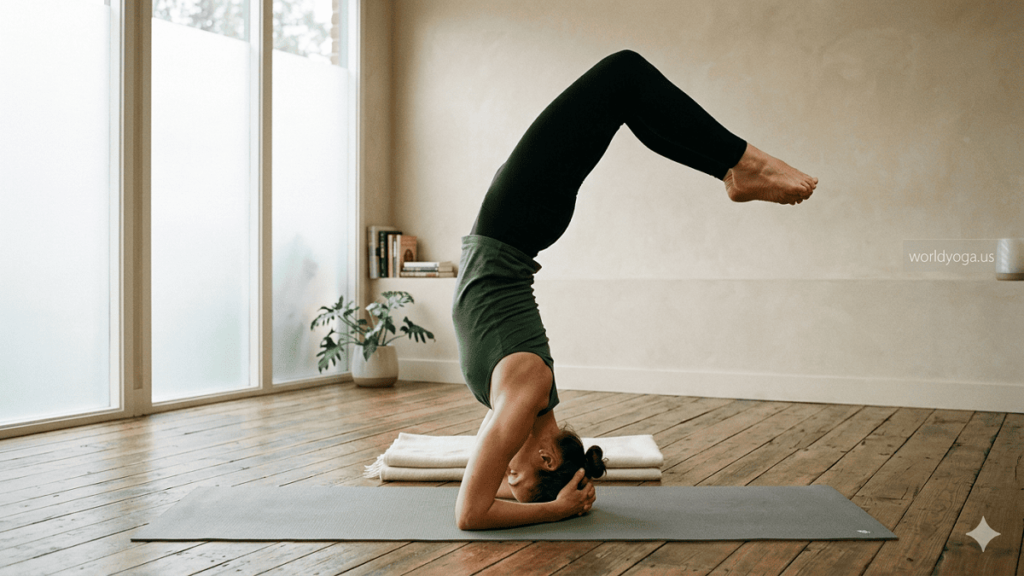
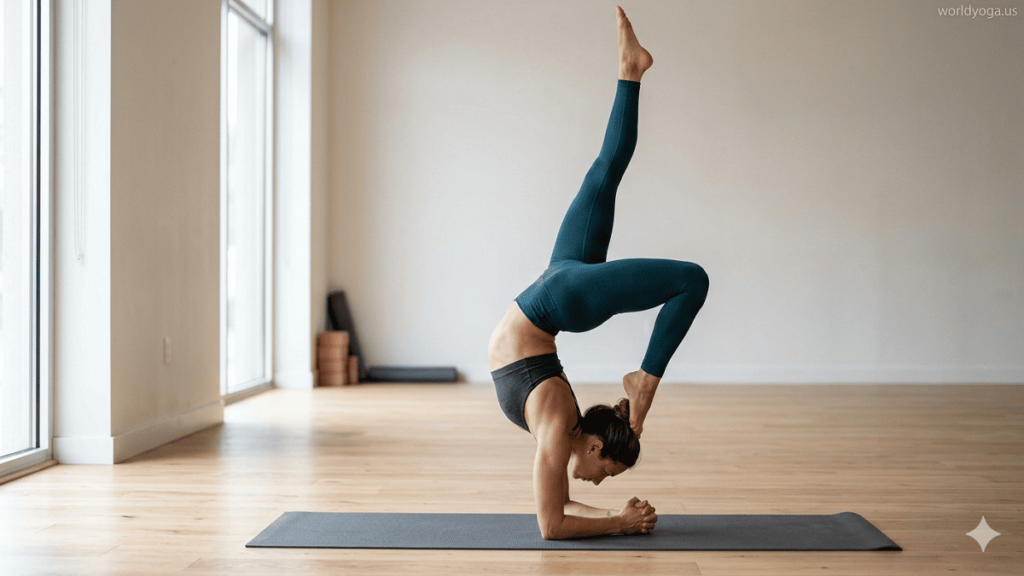
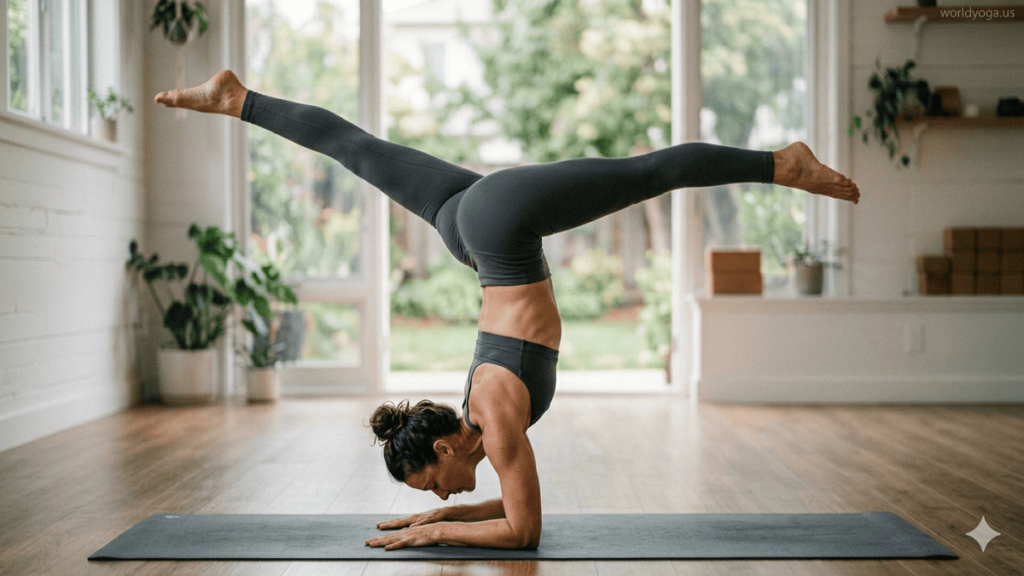
Advanced yoga practitioner performing Bound Foot One-Legged Inverted Staff Pose in a minimalist studio with natural light
BACKBEND: FOREARMS ON THE FLOOR, ONE-LEGGED, Bound Foot One-Legged Inverted Staff Pose

Bound Foot One-Legged Inverted Staff Pose

Bound Foot One-Legged Inverted Staff Pose is an advanced yoga posture that combines deep backbending, inversion, and flexibility into a single, highly demanding movement. Often associated with Eka Pada Viparita Dandasana, this pose requires strong shoulders, a stable core, open hips, and excellent spinal mobility. It is typically practiced by experienced yoga practitioners who have developed a solid foundation in backbends and inversions.

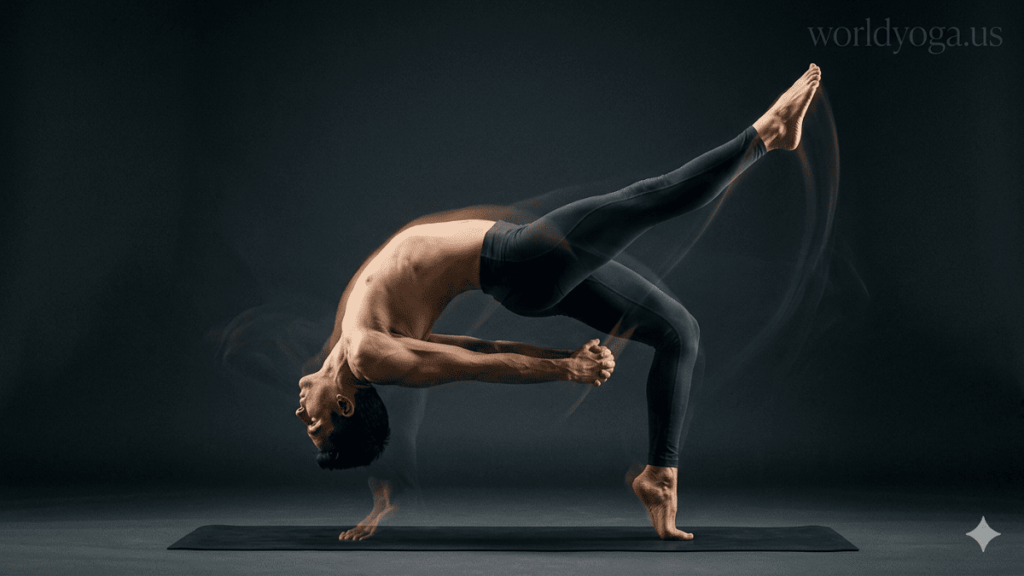
Prapada . Artistic depiction of a yoga practitioner in a flowing deep backbend pose with one leg extended upward, motion lighting effects, watermark “worldyoga.us” top-right.
BACKBEND: FOREARMS ON THE FLOOR, ONE-LEGGED, Prapada Baddha Pada Eka Pada Viparita Dandasana

Prapada Baddha Pada Eka Pada Viparita Dandasana

Prapada Baddha Pada Eka Pada Viparita Dandasana is an advanced composite yoga posture that integrates toe-based grounding (Prapada), pelvic alignment control (Baddha Pada), and a one-legged inverted backbend (Eka Pada Viparita Dandasana). This posture emphasizes deep spinal extension, shoulder load-bearing strength, core stabilization, and precise neuromuscular coordination. It is typically practiced by highly experienced yoga practitioners as a peak pose within advanced backbend and inversion sequences, requiring progressive preparation, controlled breath, and strong body awareness to ensure safe execution.

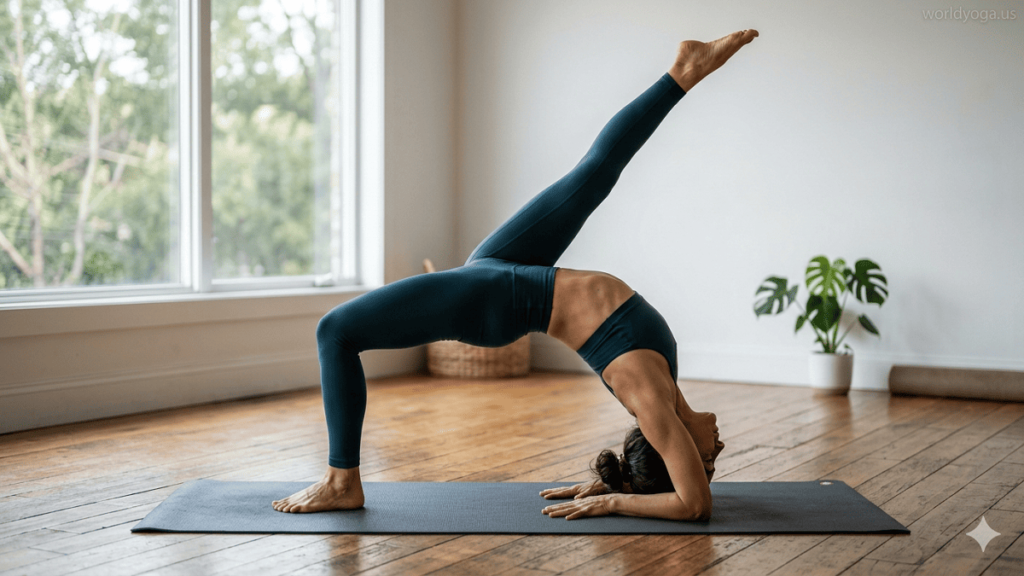
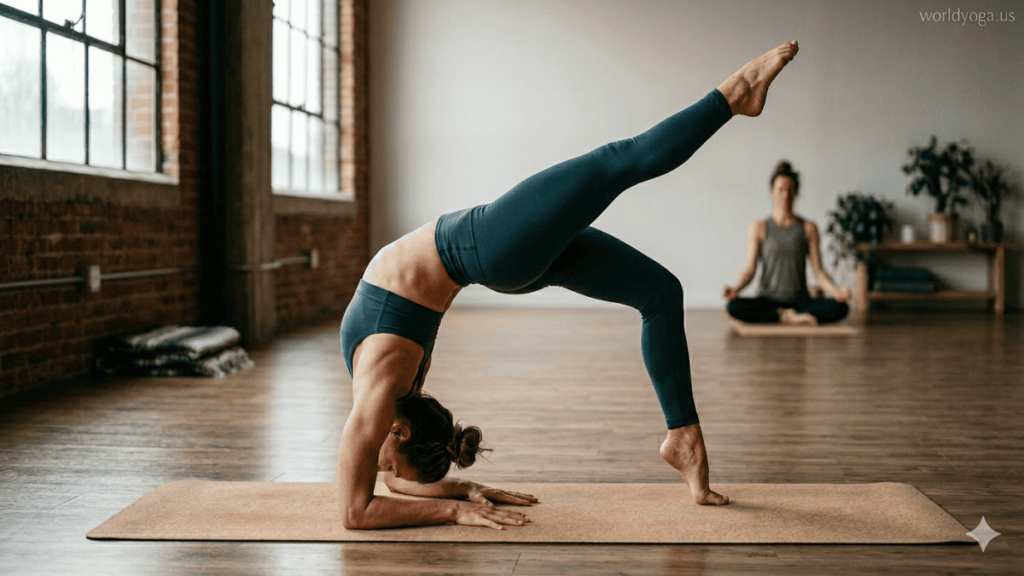
Advanced yogi performing a Forearms-on-the-Floor One-Legged Backbend with deep spinal arch, forearms grounded, one leg lifted upward, and strong core engagement in a controlled yoga studio environment.
BACKBEND: FOREARMS ON THE FLOOR, ONE-LEGGED

BACKBEND: FOREARMS ON THE FLOOR, ONE-LEGGED

The Forearms One-Legged Backbend is an advanced yoga variation that combines deep spinal extension, forearm-based support, and unilateral leg lifting to create a high-level strength and balance challenge. This powerful posture develops exceptional spinal flexibility, shoulder endurance, core stability, and neuromuscular coordination. It is widely used in advanced yoga progression systems and movement training disciplines to improve control under asymmetrical load conditions. The pose demands precise alignment, controlled breathing, and strong foundational preparation, making it suitable only for experienced practitioners seeking elite-level mobility and functional strength development.

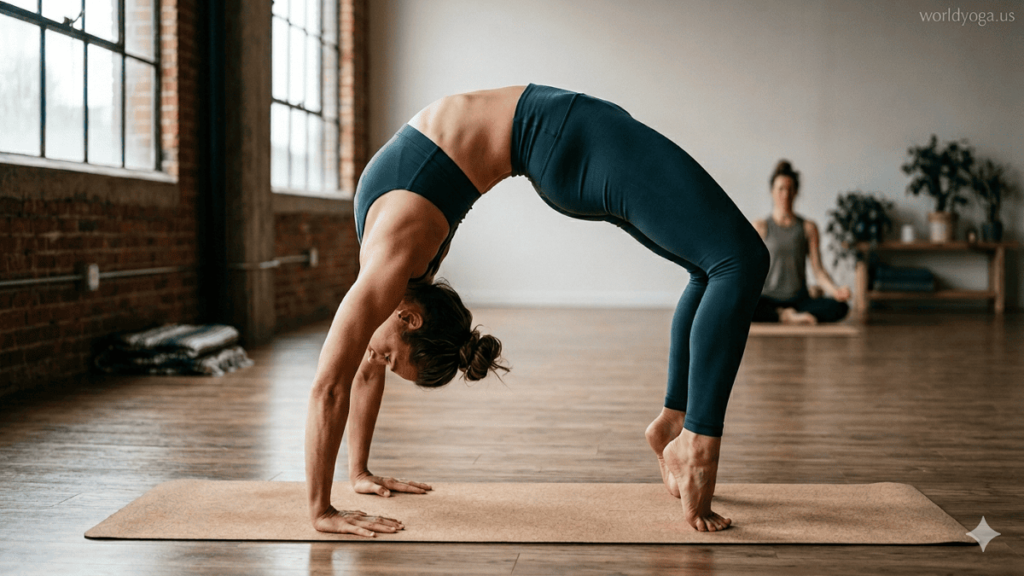
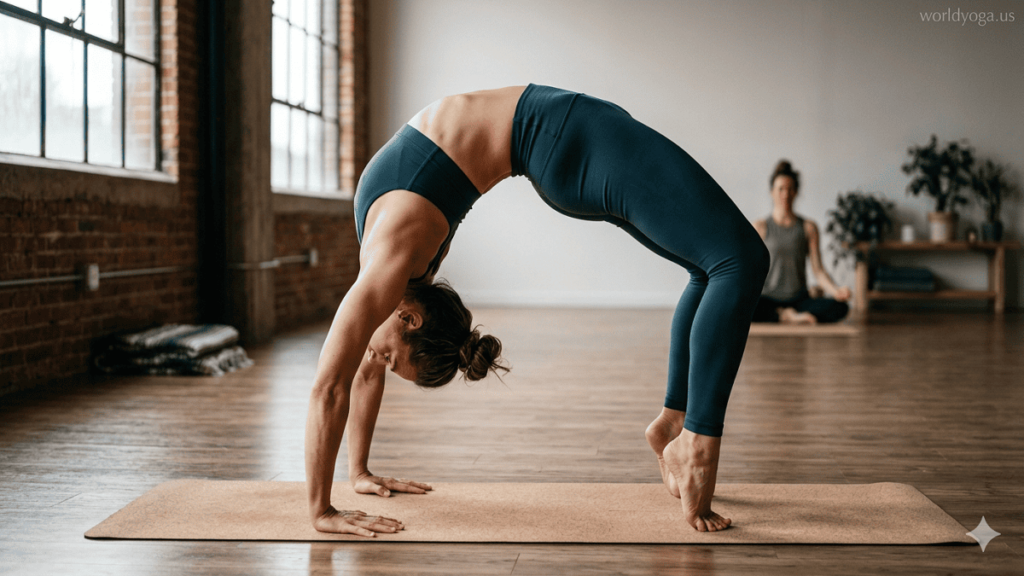
An advanced yogi performing Tip Toe Bound Wheel Pose in a deep backbend with hands and forefeet grounded, heels lifted, chest open, and strong spinal arch in a calm, well-lit yoga studio environment.
BACKBEND: FOREARMS ON THE FLOOR, HEELS LIFTED, Tip Toe Bound Wheel Pose

Tip Toe Bound Wheel Pose

Tip Toe Bound Wheel Pose is an advanced yoga backbending variation of Wheel Pose (Urdhva Dhanurasana) that combines deep spinal extension, forefoot (tiptoe) engagement, and strong internal stabilization through core and bandha-like control. This powerful posture develops exceptional flexibility, upper-body strength, and full-body coordination while improving balance and breath awareness. It is typically practiced by experienced yoga practitioners as part of advanced progression training and requires strong foundational preparation in backbends.

Prapada Chakra Bandhasana. An advanced yoga practitioner performing a deep wheel pose variation with strong spinal arch, arms and feet grounded, chest lifted upward, and forefoot engagement, in a calm studio environment with soft natural lighting.
BACKBEND: FOREARMS ON THE FLOOR, HEELS LIFTED, Prapada Chakra Bandhasana

Prapada Chakra Bandhasana

Prapada Chakra Bandhasana is an advanced yoga backbending posture derived from Wheel Pose (Urdhva Dhanurasana), combining deep spinal extension with forefoot (prapada) activation and internal energy locks (bandhas). This powerful practice develops exceptional spinal flexibility, upper-body strength, and core stability while enhancing breath control and neuromuscular coordination. Often practiced in advanced yoga training systems, it requires strong foundational preparation and careful progression to avoid strain on the wrists, shoulders, and lower back.

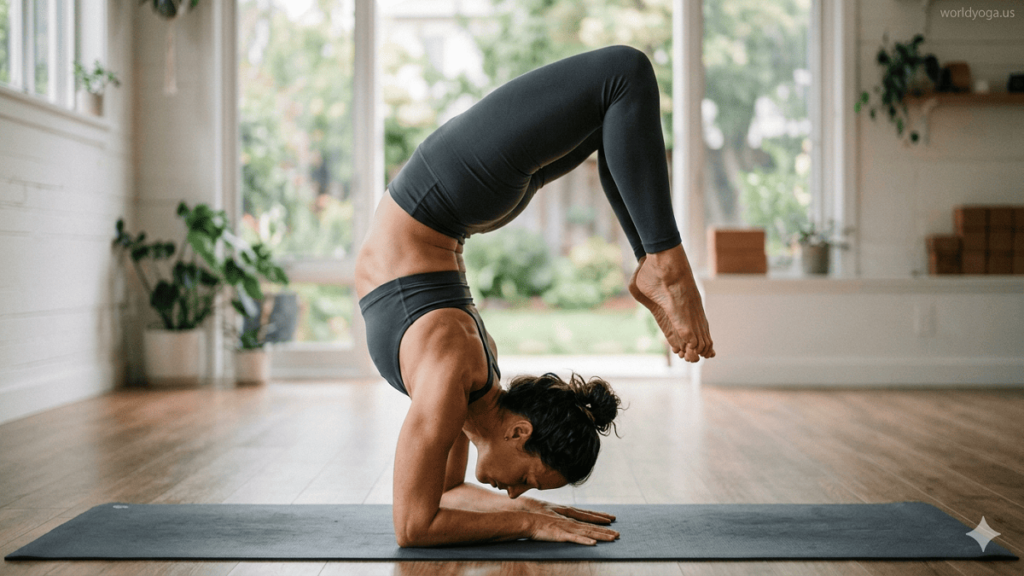
An advanced yoga practitioner performing a deep forearm-supported backbend in a studio with lifted heels and strong spinal extension.
BACKBEND: FOREARMS ON THE FLOOR, HEELS LIFTED

BACKBEND: FOREARMS ON THE FLOOR, HEELS LIFTED

Forearm Backbend 108 – Ultimate Power Spinal Control Mastery Blueprint explores the advanced forearm-supported spinal extension known as the Forearms-on-Floor, Heels-Lifted Backbend, a powerful variation of Forearm Wheel Pose. This guide breaks down the posture as a high-level movement pattern designed to develop extreme thoracic spine mobility, shoulder stability, and full-body control in deep backbending. By shifting weight from the hands to the forearms, the pose reduces wrist load while significantly increasing demand on the upper back, core, and scapular stabilizers.

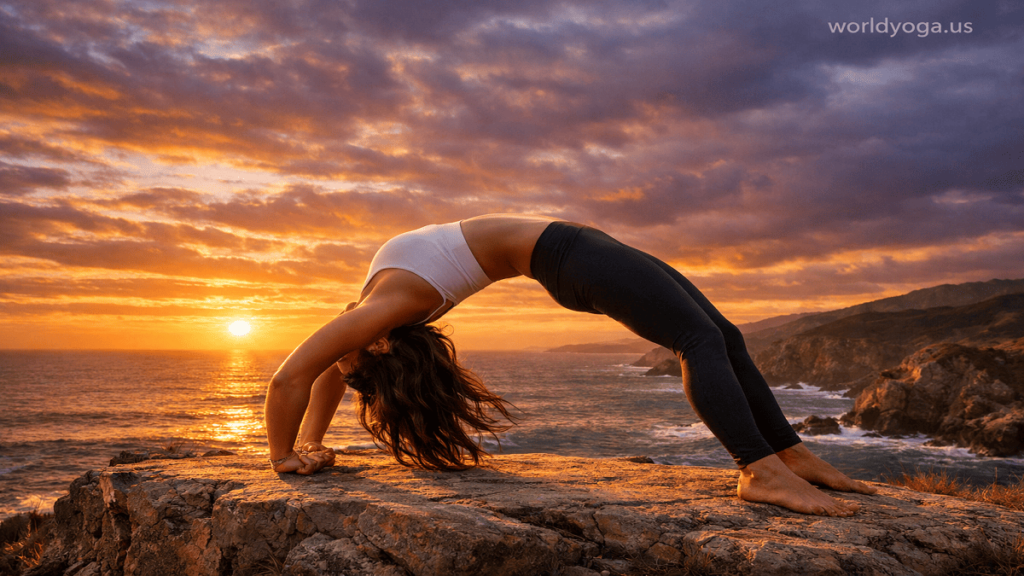
A yoga practitioner holding Chakra Bandhasana in a deep backbend on a natural platform during sunrise with scenic outdoor background.
BACKBEND: FOREARMS ON THE FLOOR, BOUND HANDS, Chakra Bandhasana

Chakra Bandhasana

Chakra Bandhasana 360° – Ultimate Power Backbend Mastery Blueprint presents a comprehensive and advanced overview of one of the most intense yoga backbends, Chakra Bandhasana, derived from the foundational Urdhva Dhanurasana. This guide explores Chakra Bandhasana as a high-level integration of spinal extension, shoulder mobility, and full-body strength control. It highlights how the posture transitions from a standard wheel pose into a “locked” variation through deep elbow bending and arm binding, demanding exceptional thoracic flexibility, shoulder extension capacity, and neuromuscular coordination.

A yoga practitioner holding Bound Wheel Pose outdoors at sunrise on a wooden platform surrounded by natural scenery.
BACKBEND: FOREARMS ON THE FLOOR, BOUND HANDS, Bound Wheel Pose

Bound Wheel Pose

Bound Wheel Pose 101 – Ultimate Power Backbend Mastery Guide explores one of the most advanced and physically demanding yoga backbends derived from Wheel Pose (Urdhva Dhanurasana). This guide breaks down the pose as a combination of deep spinal extension and intense shoulder binding, requiring exceptional flexibility, strength, and body control. The content focuses on how Bound Wheel Pose builds upon the foundational Wheel Pose by adding a controlled arm bind, significantly increasing the challenge on the thoracic spine, shoulders, and core muscles.

A practitioner performing a forearm-supported backbend with heels grounded on a yoga mat in a bright indoor studio with natural light.
BACKBEND: FOREARMS ON THE FLOOR, BOUND HANDS, BACKBEND: FOREARMS ON THE FLOOR, HEELS DOWN

BACKBEND: FOREARMS ON THE FLOOR, HEELS DOWN

The forearm-supported backbend with heels grounded is an advanced, controlled yoga variation focused on building strength, stability, and mobility through mindful spinal extension. Rooted in principles of Paryankasana and practiced within the broader framework of Hatha Yoga, this posture emphasizes active engagement rather than passive flexibility. By combining forearm support with grounded heels, it strengthens the posterior chain, enhances core stability, and improves overall posture alignment. The pose also opens the chest and hips while promoting balanced muscular activation, making it an effective progression for practitioners aiming to develop safe, functional backbend capacity and improved body awareness.

A yoga practitioner performing a forearm-supported bound backbend with elbows on the floor and hands clasped, chest lifted in a bright indoor studio.
BACKBEND: FOREARMS ON THE FLOOR, BOUND HANDS

BACKBEND: FOREARMS ON THE FLOOR, BOUND HANDS

The forearm-supported bound backbend is an advanced yoga variation derived from traditional backbending practices such as Paryankasana. In this posture, the practitioner supports the body on the forearms while maintaining a controlled spinal arch and binding the hands to deepen shoulder and chest engagement. This dynamic pose enhances spinal flexibility, strengthens the upper body, and significantly improves posture and mobility. It is especially effective for opening the chest, stretching the hip flexors, and developing core stability. Practiced with proper alignment and progression, it offers both physical strength and mental focus benefits, making it a valuable addition to advanced yoga and mobility training routines.

Scroll to Top