Backbends

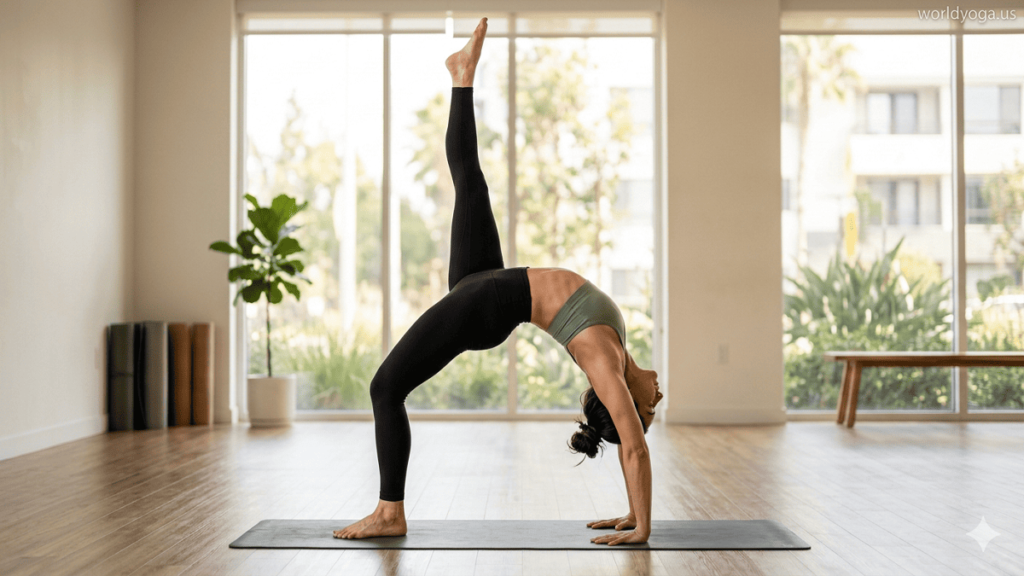
Bow Pose. A yoga practitioner performing Eka Pada Urdhva Dhanurasana with one leg lifted, demonstrating strength, flexibility, and balance in a controlled backbend position.
UPWARD BOW POSE, One-Legged Upward Bow Pose

One-Legged Upward Bow Pose

Eka Pada Urdhva Dhanurasana is an advanced backbend in Yoga that builds strength, flexibility, and balance. This guide explores 7 powerful benefits, proper techniques, alignment tips, and safety precautions to help practitioners safely master this challenging variation of Urdhva Dhanurasana. Ideal for intermediate to advanced yogis seeking improved performance and body awareness.
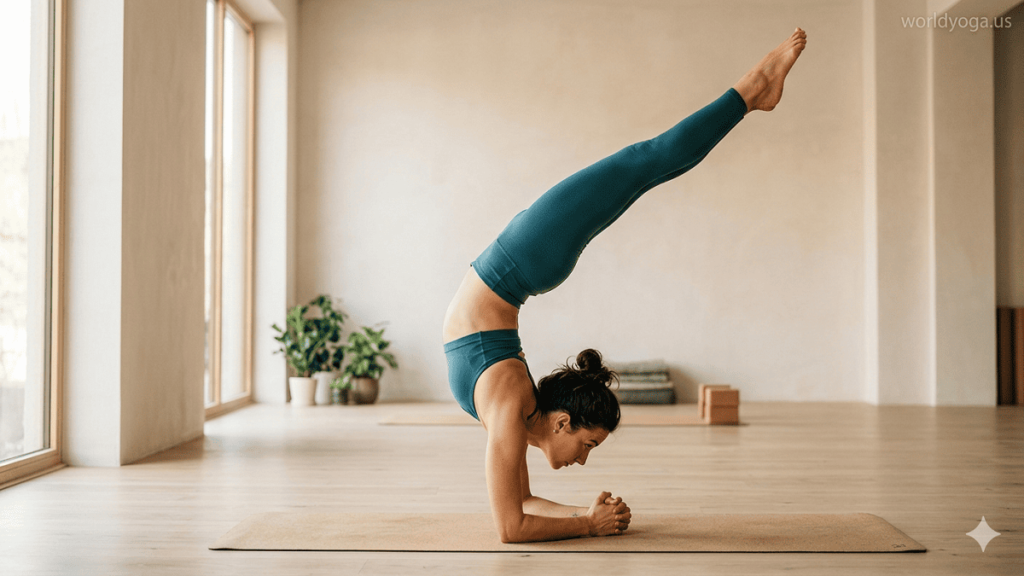
Staff Pose. An advanced yoga practitioner performing an inverted forearm-supported backbend with both legs extended vertically in a calm indoor studio.
UPWARD BOW POSE, Elevated Both Legs Inverted Staff Pose

Elevated Both Legs Inverted Staff Pose

Elevated Both Legs Inverted Staff Pose is an advanced inversion and backbend that demands exceptional strength, stability, and full-body coordination. This powerful posture combines deep spinal extension with forearm-supported inversion and bilateral leg elevation, creating a high-level challenge for shoulder endurance, core control, and spinal integrity. Practicing this pose develops superior neuromuscular awareness, improves thoracic spine mobility, strengthens the posterior chain, and enhances pelvic stability under asymmetrical load conditions.

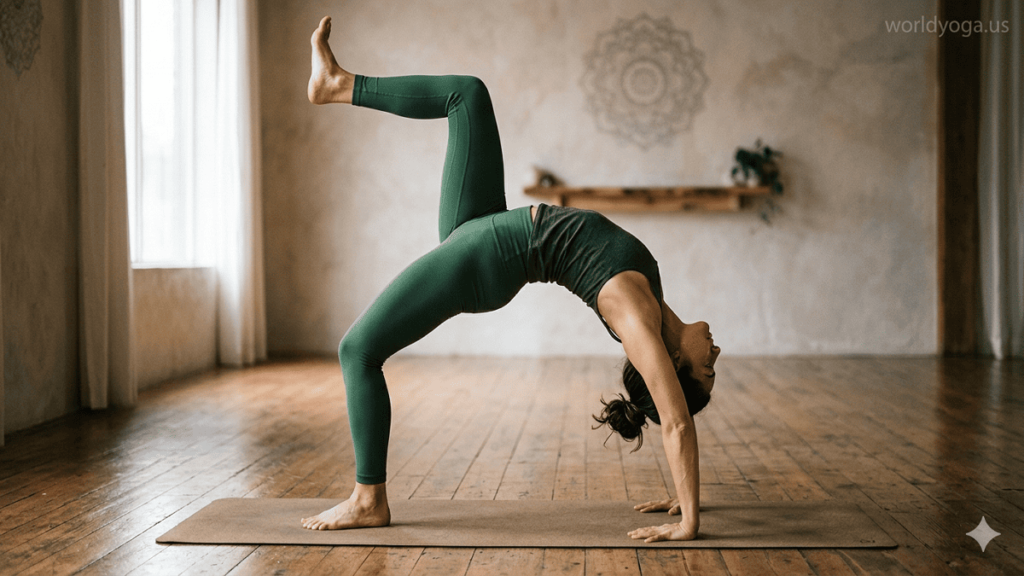
Eka Pada Urdhva Dhanurasana. A yoga practitioner performing One-Legged Wheel Pose in a calm indoor studio with one leg extended upward and hands and feet grounded on a mat.
UPWARD BOW POSE, Eka Pada Urdhva Dhanurasana

Eka Pada Urdhva Dhanurasana

Eka Pada Urdhva Dhanurasana (One-Legged Wheel Pose) is an advanced yoga backbend that demands exceptional strength, flexibility, and neuromuscular control. This powerful posture integrates deep spinal extension with unilateral balance, making it a benchmark for advanced yoga practitioners. It enhances shoulder stability, core anti-rotation strength, hip mobility, and overall body coordination. Practicing this pose requires careful progression from foundational backbends to full Wheel Pose before introducing asymmetry.

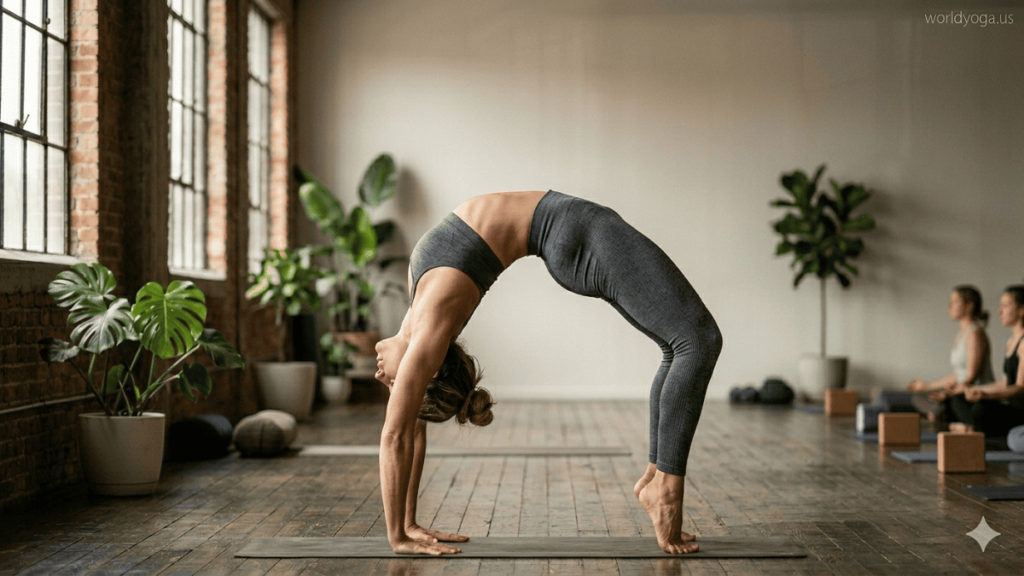
Person performing Upward Bow Pose (Wheel Pose) in a deep backbend with hands and feet grounded, forming a full arch in a yoga studio setting.
UPWARD BOW POSE

UPWARD BOW POSE

Upward Bow Pose (Chakrasana) is a powerful advanced backbending yoga posture that builds full-body strength, spinal flexibility, and mobility. This pose deeply engages the arms, shoulders, back, core, and legs while opening the chest and improving posture. It is widely used in advanced yoga practice and functional movement training to enhance flexibility, energy, and body control. Practicing with proper alignment and preparation ensures safe execution and maximizes its physical and postural benefits.

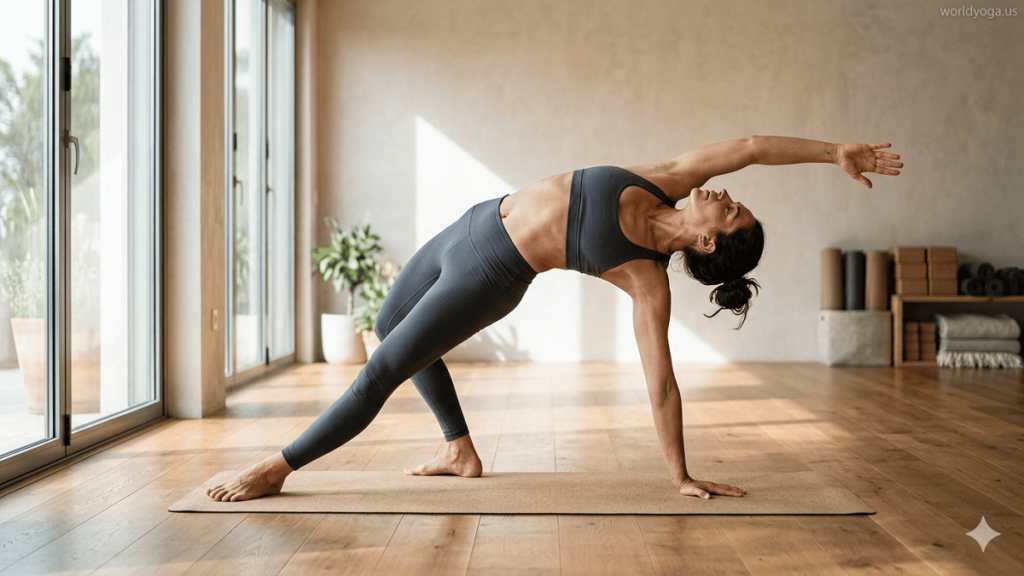
A yoga practitioner performing Chamatkarasana (Wild Thing Pose) with one hand grounded, hips lifted, and chest open in a graceful backbend.
WILD THING POSE, Chamatkarasana

Chamatkarasana

Chamatkarasana, also known as Wild Thing Pose, is a dynamic yoga posture that builds strength, flexibility, and balance. Commonly practiced as a transition from Side Plank, it enhances spinal mobility, opens the chest, and improves shoulder stability. This guide explores 7 powerful benefits of Chamatkarasana along with key insights for safe and effective practice.

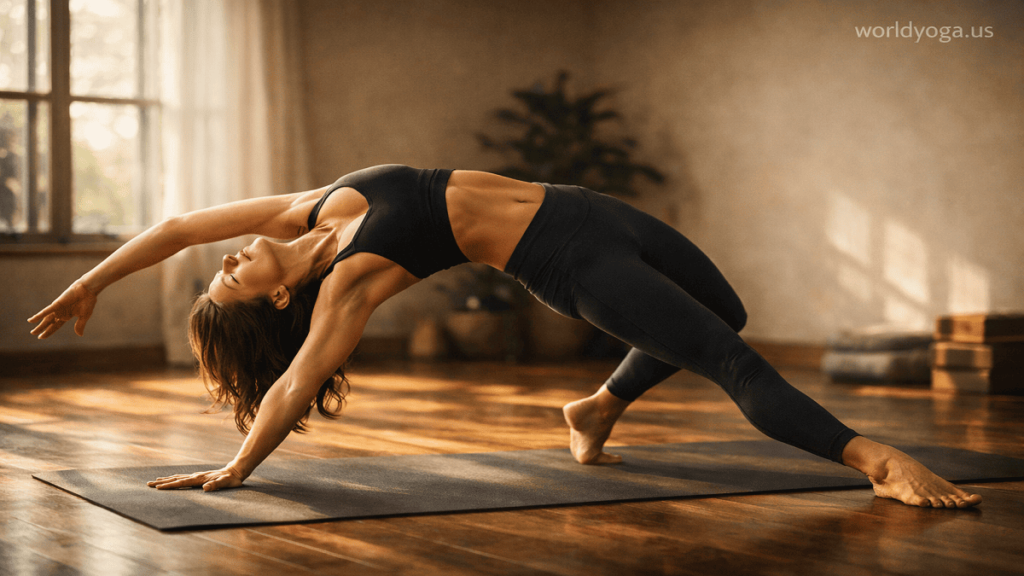
Person performing Wild Thing Pose (Camatkarasana) in a deep backbend with one hand grounded and chest open, captured in a realistic yoga photography-style scene with natural lighting and a calm environment. Watermark “worldyoga.us” appears in the top right corner.
WILD THING POSE

WILD THING POSE

Wild Thing Pose (Camatkarasana) is a dynamic yoga backbend that combines strength, flexibility, and balance through a controlled transition from Downward-Facing Dog into an expansive chest-opening position. This guide explores 7 powerful alignment principles that help practitioners improve shoulder stability, spinal extension, and core engagement while maintaining safety and control. It emphasizes proper weight distribution, mindful breath coordination, and progressive mobility to avoid strain in the wrists, shoulders, and lower back.

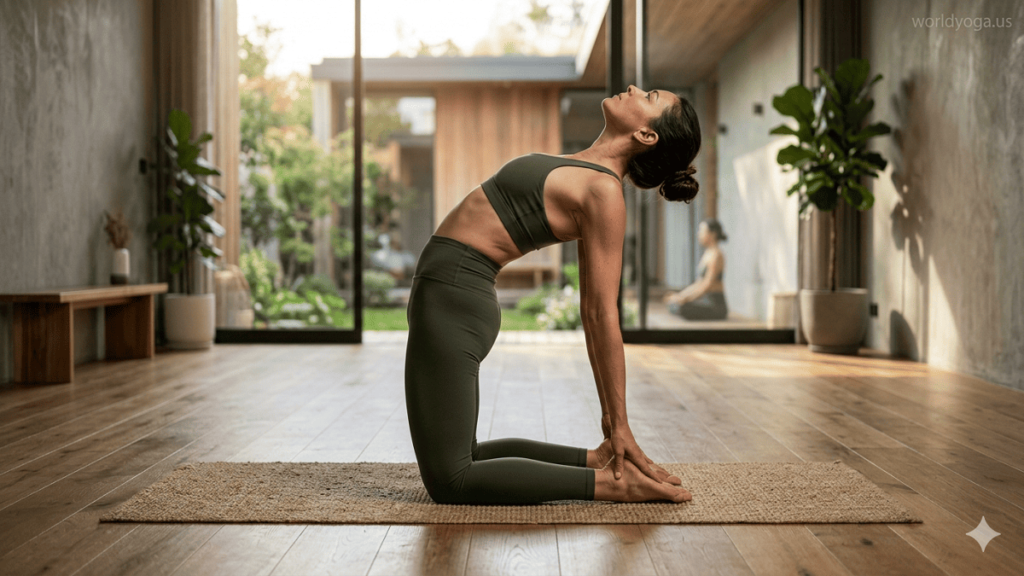
An advanced yoga practitioner performing a kneeling deep backbend in a studio, hands reaching toward heels with controlled spinal alignment and open chest.
KNEES ON THE FLOOR: BACKBEND—HANDS TO THE HEELS AND TO THE FLOOR

KNEES ON THE FLOOR: BACKBEND—HANDS TO THE HEELS AND TO THE FLOOR

The Knees-on-the-Floor Backbend (Hands to Heels and Floor Variation) is an advanced progression of Ustrasana (Camel Pose) that focuses on deep spinal extension, hip flexor opening, and controlled chest expansion. It is not a standalone classical yoga pose but a biomechanically advanced variation used in modern yoga, mobility training, and therapeutic movement systems.

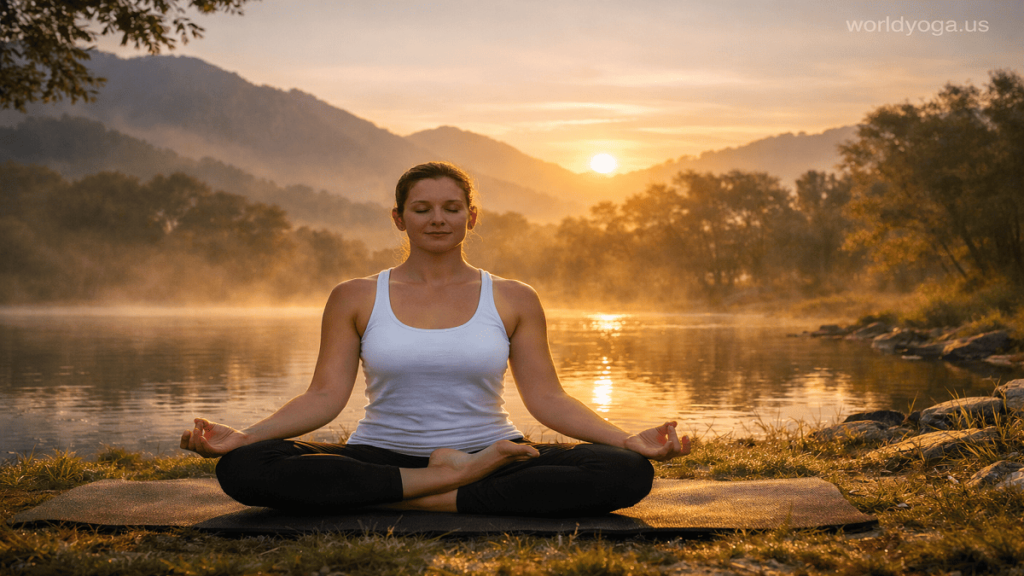
A person practicing Ardha Padmasana outdoors on grass at sunrise with mountains, mist, and warm golden light in the background.
KNEE TO THE FLOOR: Lotus Pose., Half Pose Dedicated to Siddhar Kamalamuni

Half Pose Dedicated to Siddhar Kamalamuni

Ardha Kamalamunyasana, interpreted in modern yoga practice as Ardha Padmasana (Half Lotus Pose), is a foundational seated posture widely used in meditation, pranayama, and mindfulness training. Although the term itself is not formally recognized in classical yogic texts, its functional equivalent plays an important role in developing physical stability and mental focus.

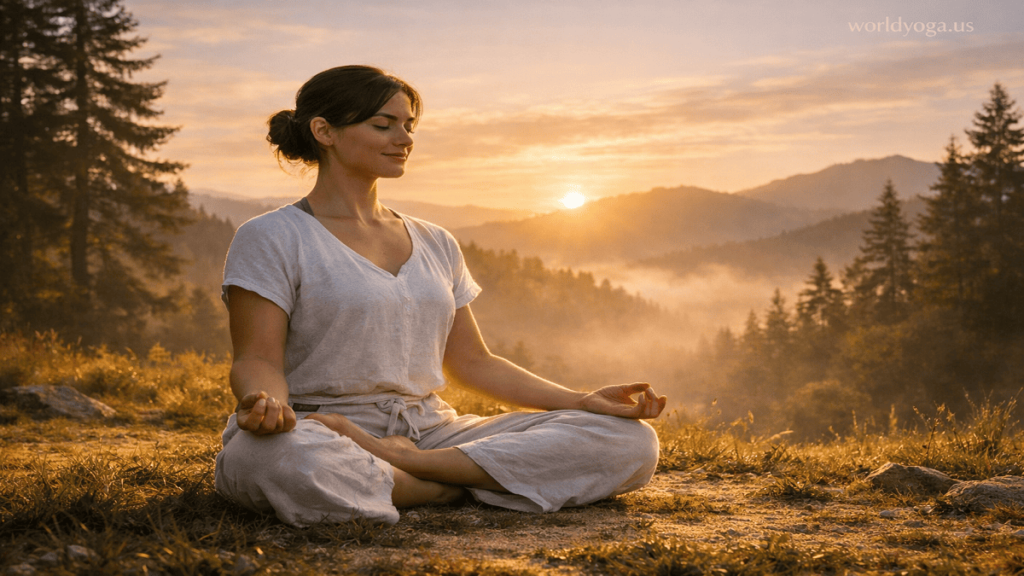
Ardha Kamalamunyasana. A person practicing Ardha Padmasana outdoors on grass during sunrise with mountains in the background and soft golden light.
KNEE TO THE FLOOR: Lotus Pose., Ardha Kamalamunyasana

Ardha Kamalamunyasana

Ardha Kamalamunyasana, though not an officially recognized yoga posture, is commonly interpreted as Ardha Padmasana (Half Lotus Pose), a foundational seated position used in meditation and pranayama practices. This posture plays a key role in developing physical stability, mental focus, and controlled breathing. It requires a balanced combination of hip flexibility, spinal alignment, and lower-body relaxation while maintaining an upright seated posture.

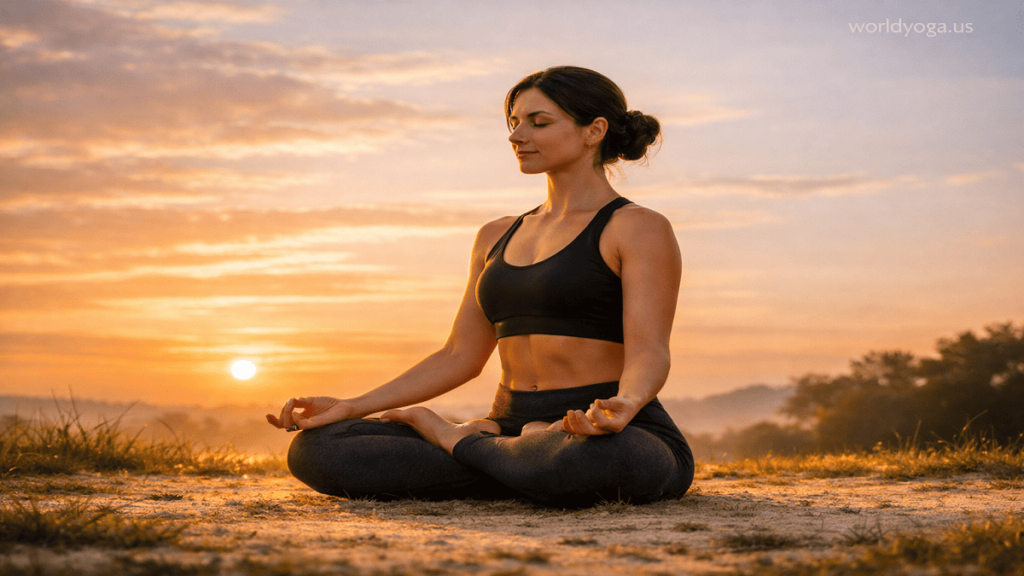
Yoga practitioner in Lotus Pose variation at sunrise with knees close to the ground in a peaceful outdoor setting.
KNEE TO THE FLOOR: Lotus Pose.

KNEE TO THE FLOOR: Lotus Pose.

Knee to the Floor Lotus Pose is an advanced variation of Padmasana that emphasizes deep hip opening, controlled alignment, and seated stability. In this variation, the practitioner works toward allowing both knees to gently descend toward the floor as a result of increased external rotation in the hip joints, rather than applying any force on the knees.

Scroll to Top