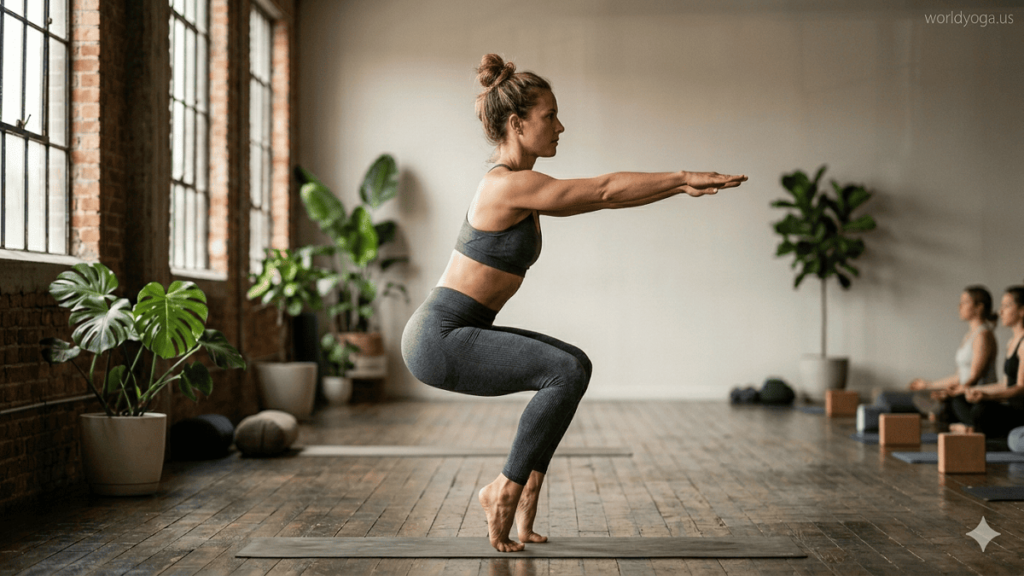
CHAIR SQUAT: HIGH STANCE

Advanced practitioner performing Ardha Baddha Padma Prapadasana in indoor studio with forefoot balance and bound Half Lotus posture.
ONE-LEGGED SQUAT: HALF LOTUS, Ardha Baddha Padma Prapadasana

Ardha Baddha Padma Prapadasana

Ardha Baddha Padma Prapadasana is an advanced standing yoga balance posture that integrates Half Bound Lotus (Ardha Baddha Padma), forefoot balance (prapada), and a binding action to create a highly demanding full-body coordination challenge. The posture requires precise control of hip external rotation, strong single-leg stability, and continuous engagement of the core, ankles, and lower-limb muscles.
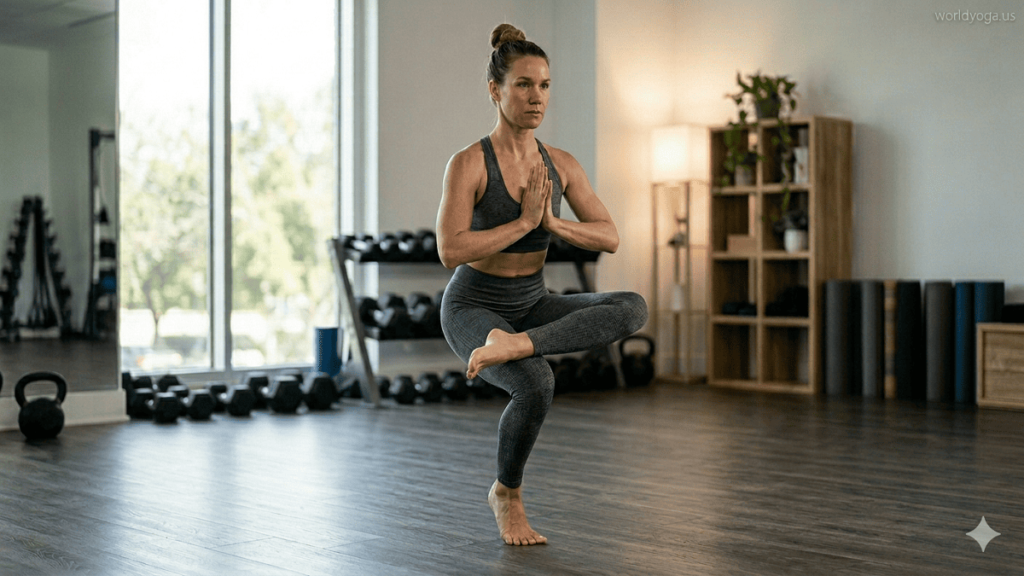
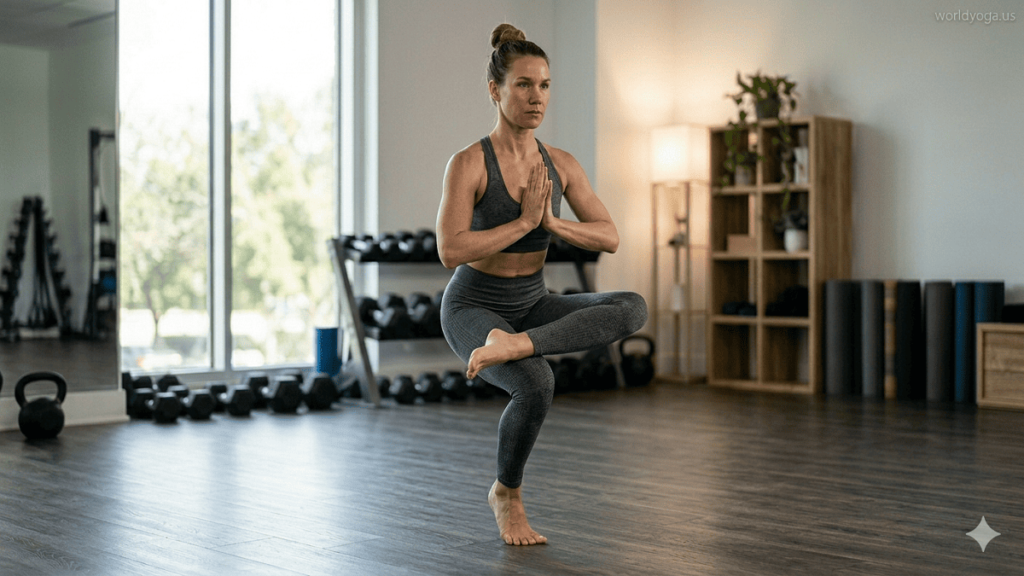
Advanced yoga practitioner performing One-Legged Squat in Half Lotus in indoor studio with controlled alignment and strong balance.
ONE-LEGGED SQUAT: HALF LOTUS

ONE-LEGGED SQUAT: HALF LOTUS

One-Legged Squat in Half Lotus is an advanced yoga-based functional movement that combines deep unilateral squatting with hip external rotation in Ardha Padmasana. This posture challenges multiple systems of the body simultaneously, including the lower-limb muscles, hip joints, core stabilizers, and balance mechanisms. It requires precise alignment, controlled mobility, and strong neuromuscular coordination to maintain stability on a single supporting leg while the opposite leg is placed in Half Lotus.

Yoga practitioner balancing on one leg in Eka Pada Prapadasana with foot-to-knee preparation for Ardha Yogadandasana inside a studio.
ONE-LEGGED SQUAT: FOOT TO KNEE, Ardha Yogadandasana Prep. in Eka Pada Prapadasana

Ardha Yogadandasana Prep. in Eka Pada Prapadasana

Description

Ardha Yogadandasana preparation in Eka Pada Prapadasana is an advanced standing yoga balance practice designed to develop exceptional lower-body strength, stability, and controlled mobility. This posture combines single-leg balance on the ball of the foot with progressive hip opening and core engagement, making it a powerful preparatory step toward deeper Yogadandasana variations. It strengthens the calves, quadriceps, glutes, and hip stabilizers while improving ankle control.

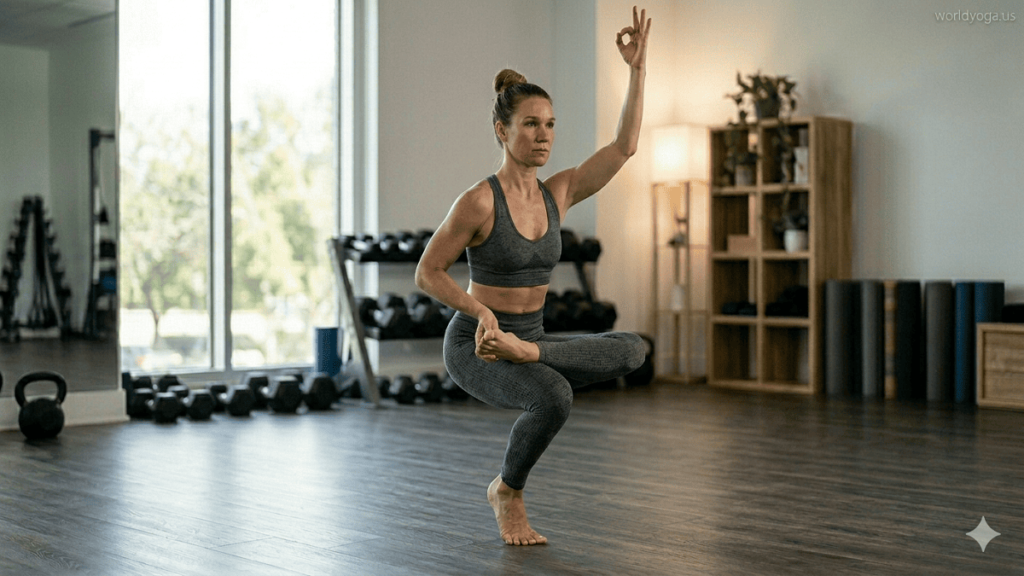
One-Legged Squat. Athlete performing a one-leg squat with foot-to-knee position in a gym, maintaining balance and proper form under studio lighting.
ONE-LEGGED SQUAT: FOOT TO KNEE

ONE-LEGGED SQUAT: FOOT TO KNEE

The One-Leg Squat Foot-to-Knee is an advanced unilateral lower-body exercise designed to build strength, stability, and balance through controlled single-leg movement. It primarily targets the quadriceps, glutes, hamstrings, and core while heavily engaging stabilizing muscles around the hips, knees, and ankles. This variation improves neuromuscular coordination, corrects left-right strength imbalances, and enhances functional movement patterns used in sports and daily activities. Because it requires high levels of balance and joint control, it is commonly used in athletic training, rehabilitation programs, and performance conditioning.

Advanced yogi performing a controlled balance transition from Eka Pada Prapadasana II into Hindolasana in a softly lit yoga studio.
ONE-LEGGED SQUAT: FOOT UNDER THE KNEE, Hindolasana in Eka Pada Prapadasana 2

Hindolasana in Eka Pada Prapadasana 2

Eka Pada Prapadasana II combined with Hindolasana represents an advanced level of balance, strength, and dynamic control in modern yoga practice. This integration focuses on unilateral stability, precise alignment, and controlled transitional movement under load. Practitioners develop deep neuromuscular coordination as the body shifts between static balance and oscillatory motion, requiring strong engagement of the core, hips, and lower limb stabilizers.

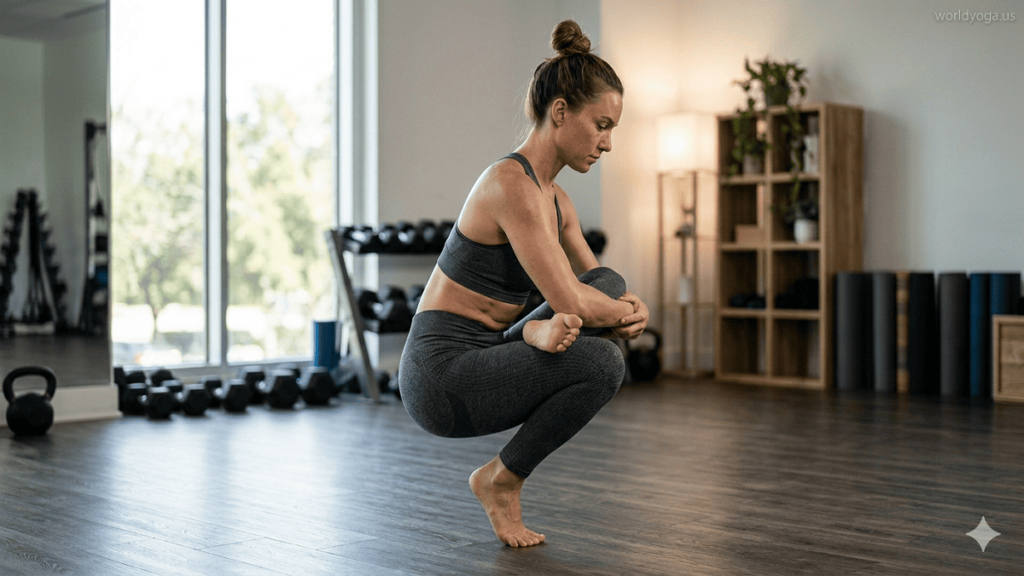
A yoga practitioner balancing on one foot in a tiptoe position while holding the opposite leg in Baby Cradle Pose, demonstrating flexibility, balance, and control.
ONE-LEGGED SQUAT: FOOT UNDER THE KNEE, Baby Cradle Pose in One-Legged Tip Toe Pose 2

Baby Cradle Pose in One-Legged Tip Toe Pose 2

The Baby Cradle Pose in One-Legged Tip Toe Pose 2 is an advanced posture in Yoga that combines deep hip opening with single-leg balance. This guide explores 7 powerful benefits, proper technique, alignment tips, and safety precautions to help practitioners improve flexibility, stability, and overall body control through the integration of Baby Cradle Pose.

A person performing a controlled one-legged squat with the foot positioned under the knee, maintaining balance, proper alignment, and core stability.
ONE-LEGGED SQUAT: FOOT UNDER THE KNEE

ONE-LEGGED SQUAT: FOOT UNDER THE KNEE

The One-Legged Squat (foot under the knee) is an effective unilateral exercise that improves lower-body strength, balance, and coordination. As a progression toward the Pistol Squat, it helps develop proper alignment, core stability, and joint control. This guide covers 5 powerful benefits, correct technique, and key tips to safely master the movement and enhance overall functional fitness.

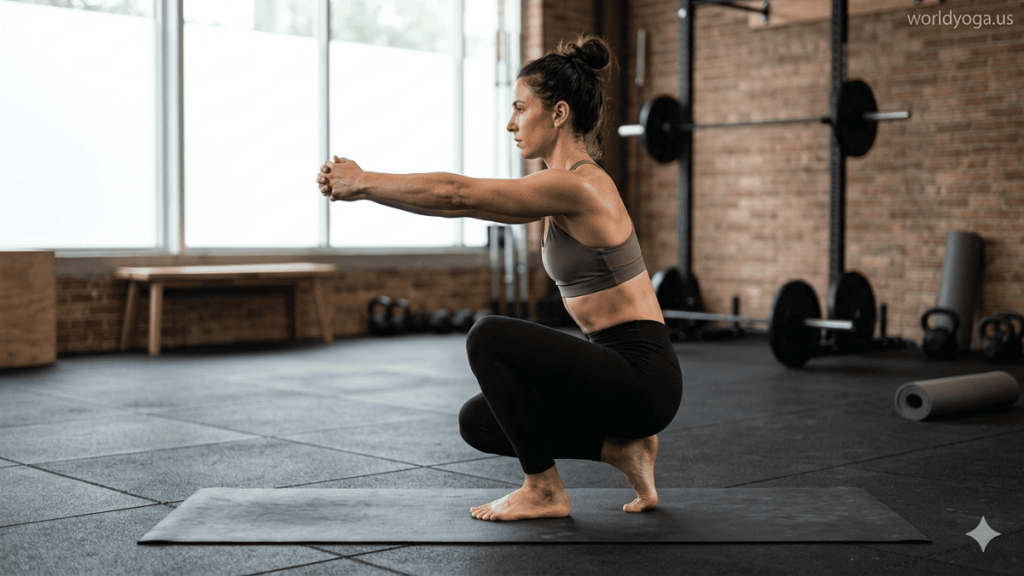
Athlete performing a heel-elevated chair squat in high stance, balancing on forefoot with arms extended forward in a controlled fitness training position.
CHAIR SQUAT: HIGH STANCE HEELS UP—ARMS IN FRONT & BEHIND

CHAIR SQUAT: HIGH STANCE HEELS UP—ARMS IN FRONT & BEHIND

Chair Squat High Stance Heels Up is an advanced functional training exercise designed to build lower-body strength, ankle stability, core control, and full-body coordination. Performed on the balls of the feet, this variation increases balance demand while engaging the quadriceps, calves, glutes, and core muscles. Adding arm positions in front and behind enhances postural stability and neuromuscular coordination. It is widely used in fitness, sports training, and rehabilitation programs to improve functional movement efficiency and overall body control.

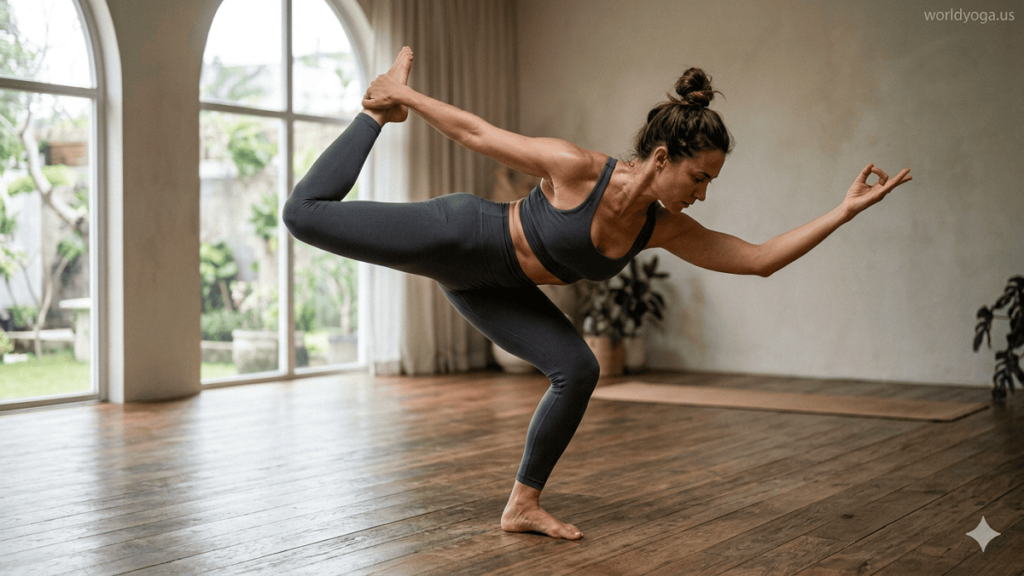
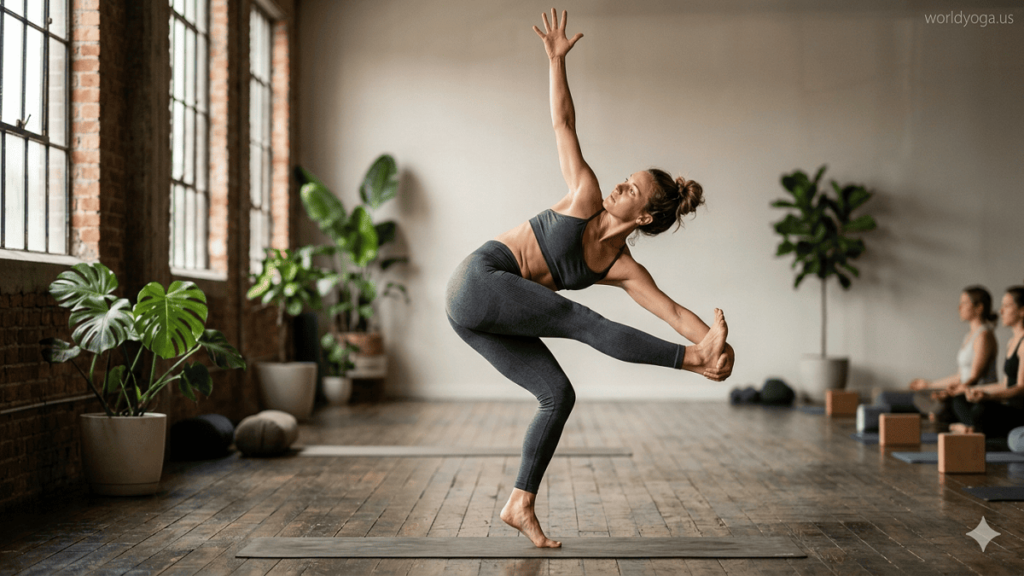
Advanced yogi performing Revolved Tip Toe Pose variation, balancing on the tip of one foot with a deep spinal twist and arms extended for stability in a yoga studio setting.
CHAIR SQUAT: HIGH STANCE, Revolved Tip Toe Pose

Revolved Tip Toe Pose

Revolved Tip Toe Pose (Parivrtta Padangusthasana) is an advanced balancing yoga posture that combines deep spinal rotation with single-leg stability. This pose develops core strength, ankle stability, and full-body coordination while enhancing focus and body awareness. Practicing it safely with proper alignment helps improve balance control, spinal mobility, and neuromuscular integration.

Scroll to Top