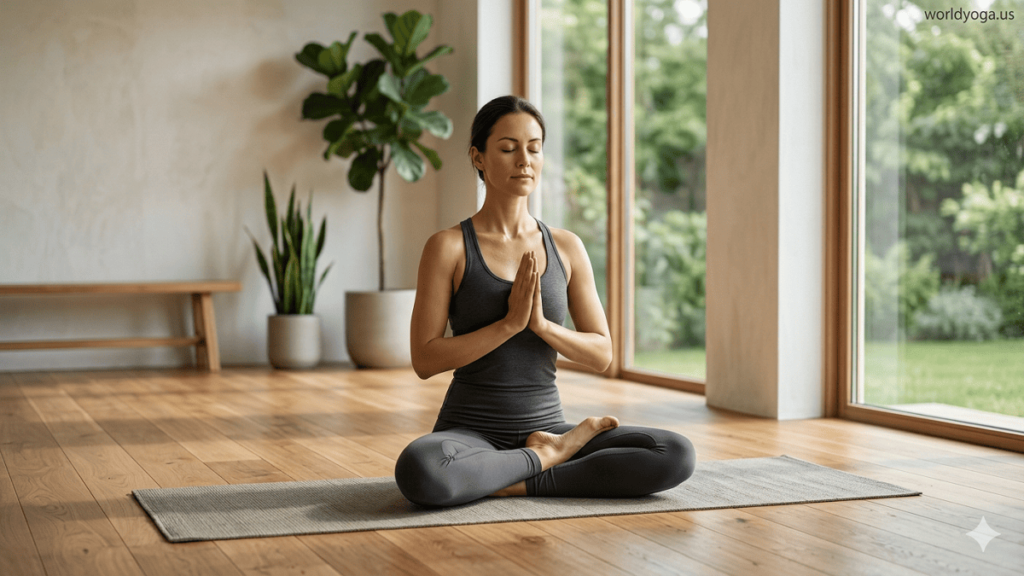
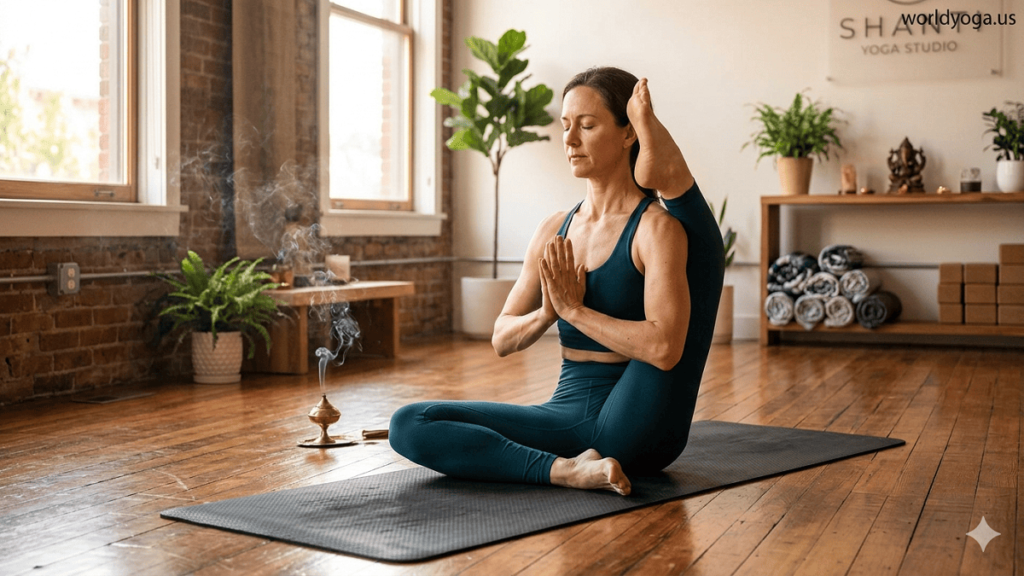
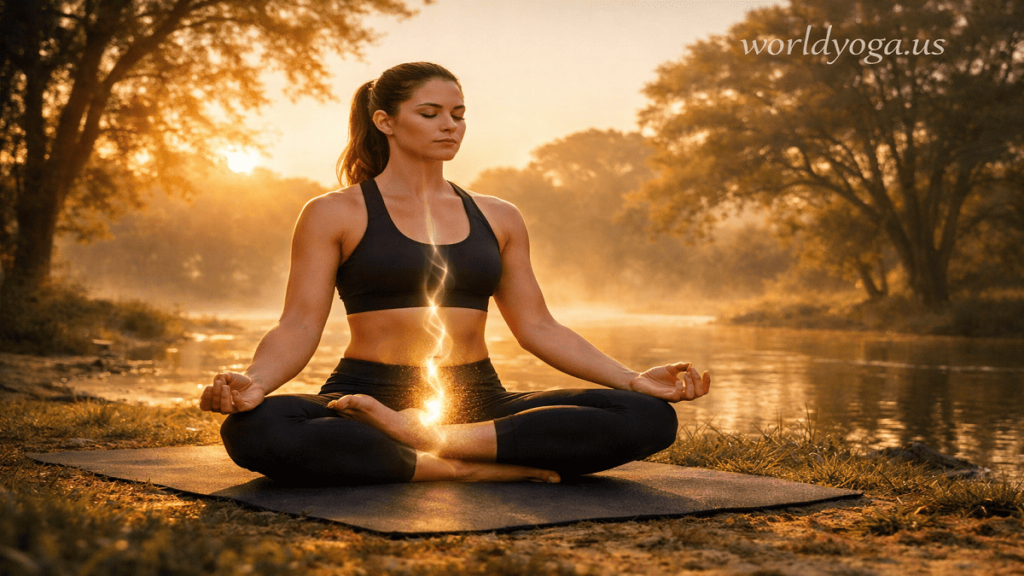
Mulabandhasana Mula Bandhasana is a foundational yogic posture and internal control practice that combines a seated asana with the activation of the pelvic floor lock known as Mula Bandha. The term “Mula” refers to “root,” and “Bandha” means “lock” or “seal,” indicating the engagement of the root energy and muscular control at the base of the spine. In Mula Bandhasana, the practitioner sits in a stable posture while consciously activating the pelvic floor muscles in a controlled and sustained manner. Unlike simple meditation poses, this practice integrates both physical alignment and internal muscular engagement, making it a more advanced and focused yogic technique. The posture is traditionally used to build stability in the lower body, improve awareness of internal muscle control, and support deeper meditative states. It is closely associated with strengthening the connection between body awareness and breath regulation, which is essential in pranayama and advanced yoga practices. From a physical perspective, Mula Bandhasana helps engage the deep core muscles, including the pelvic floor and lower abdominal region. This engagement supports spinal stability, improves posture, and enhances control over internal muscular systems. It also encourages better sitting endurance during prolonged meditation. From a yogic and energetic perspective, this posture is believed to activate the Muladhara (root) energy center, promoting grounding, stability, and mental focus. It is often considered an important preparatory practice for higher levels of meditation and energy control techniques. Mula Bandhasana requires patience and subtle awareness, as the engagement is internal rather than external. Proper guidance is recommended to ensure correct technique and to avoid unnecessary strain. When practiced consistently, it becomes a powerful tool for developing both physical stability and deeper meditative concentration. #Mulabhandasana in India How is Mulabandhasana performed correctly? Mulabandhasana is a seated yogic posture combined with the internal activation of the pelvic floor known as Mula Bandha. Correct execution depends less on external movement and more on subtle muscular awareness, spinal alignment, and controlled breathing. It is considered an advanced awareness-based practice that integrates posture with internal energy control. 1. Starting seated posture Begin by sitting in a stable meditation position such as: The spine should be: Hands can rest on the knees in a relaxed position. 2. Establishing body stability Before engaging the lock: This creates a neutral base for correct activation. 3. Engaging Mula Bandha (root activation) To perform Mulabandhasana correctly: The key is subtle lift, not forceful contraction. 4. Maintaining spinal alignment During the practice: Proper alignment ensures the lock functions effectively. 5. Breath coordination Breathing should remain smooth: Avoid breath holding or pressure buildup. 6. Duration and repetition For beginners: With practice, duration and awareness can gradually increase, allowing sustained engagement during meditation or pranayama. 7. Common mistakes to avoid These reduce effectiveness and may cause discomfort. Summary Mulabandhasana is correctly performed by sitting in a stable posture, maintaining spinal alignment, and gently engaging the pelvic floor muscles with breath awareness. The practice emphasizes subtle internal control, relaxation, and precision rather than strength or force. #Mulabhandasana in Maharashtra What is the proper alignment in this grounding pose? Proper alignment in Mulabandhasana is essential because the posture is not driven by external movement but by internal stability and awareness. In this grounding practice, which integrates a seated posture with activation of Mula Bandha, alignment ensures that the pelvic floor engagement is effective, safe, and balanced throughout the body. 1. Pelvis and hip alignment A stable pelvis is the foundation of correct root engagement. 2. Spinal alignment A neutral spine allows proper energy and breath flow during the lock. 3. Shoulder and chest alignment This prevents tension from interfering with internal pelvic engagement. 4. Head and neck alignment This supports mental steadiness and prevents neck strain. 5. Lower body and leg positioning The lower body should support stillness, not tension. 6. Pelvic floor alignment (core focus) Correct alignment ensures that Mula Bandha works internally rather than mechanically. 7. Breath and internal balance Breath and alignment must work together for stability. Summary Proper alignment in Mulabandhasana involves a grounded pelvis, upright spine, relaxed shoulders, and neutral head position, while maintaining soft lower-body relaxation. This alignment allows the subtle activation of the pelvic floor to occur efficiently without tension, supporting both physical stability and meditative focus. #Mulabhandasana in Ahemadabad Which muscles and energy locks are engaged during the practice? Mulabandhasana is a seated stability practice that combines posture with the internal activation of Mula Bandha. Unlike external yoga postures, its primary focus is subtle neuromuscular engagement and energetic control at the base of the body. It integrates deep muscular activation with traditional yogic energy locking systems. 1. Muscles engaged during the practice Primary muscles (pelvic floor complex) The main activation occurs in the pelvic floor, which forms a supportive muscular sling at the base of the pelvis: These muscles gently contract inward and upward, creating the “root lift” sensation essential to the practice. Deep core stabilizers These muscles assist in maintaining spinal stability during engagement: They work together to stabilize internal pressure and support posture. Secondary supporting muscles Overuse of these muscles is considered incorrect in this practice. 2. Energy locks (Bandhas) involved In yogic physiology, Mulabandhasana primarily involves one of the three major energy locks: Mula Bandha (Root Lock) This is the primary energetic mechanism in the practice. Secondary energetic interactions Although not directly activated, Mula Bandha supports coordination with: Uddiyana Bandha (Abdominal Lock) Jalandhara Bandha (Throat Lock) 3. Energetic system activation From a yogic perspective, Mulabandhasana influences: 4. Functional integration of muscles and energy The practice creates a unified system where: Summary Mulabandhasana engages deep pelvic floor muscles, core stabilizers, and minimal supporting muscle groups while primarily activating the Mula Bandha energy lock. It integrates physical stability with energetic grounding, making it a foundational practice for both body control and meditative awareness. #Mulabhandasana in Hyderabad What preparatory poses or techniques are recommended? Mulabandhasana requires a combination of pelvic awareness, core stability, breath control, and comfortable seated alignment. Because it involves subtle activation of Mula Bandha, preparatory practices are essential to