DOWNWARD DOG: ONE-LEGGED—KNEES TOGETHER

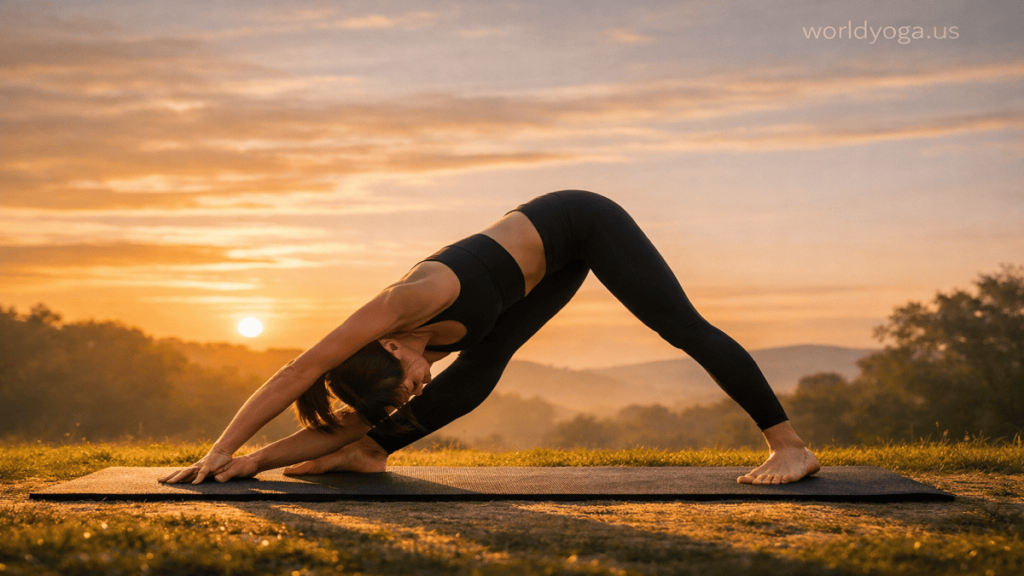
Yoga practitioner performing Revolved Downward-Facing Dog Pose with one arm reaching across the body in a controlled spinal twist while maintaining stable Downward-Facing Dog alignment.
DOWNWARD DOG: ONE-LEGGED—KNEES TOGETHER, Revolved Downward Facing Dog Pose

Revolved Downward Facing Dog Pose

Revolved Downward-Facing Dog is a powerful twisting variation of Downward-Facing Dog that develops spinal mobility, core anti-rotation strength, and shoulder stability under load. This guide explores 8 essential principles for mastering the pose, including correct alignment, safe twisting mechanics, and stability control. Ideal for yoga practitioners, athletes, and movement enthusiasts aiming to improve flexibility, posture, and full-body coordination through controlled rotational movement.
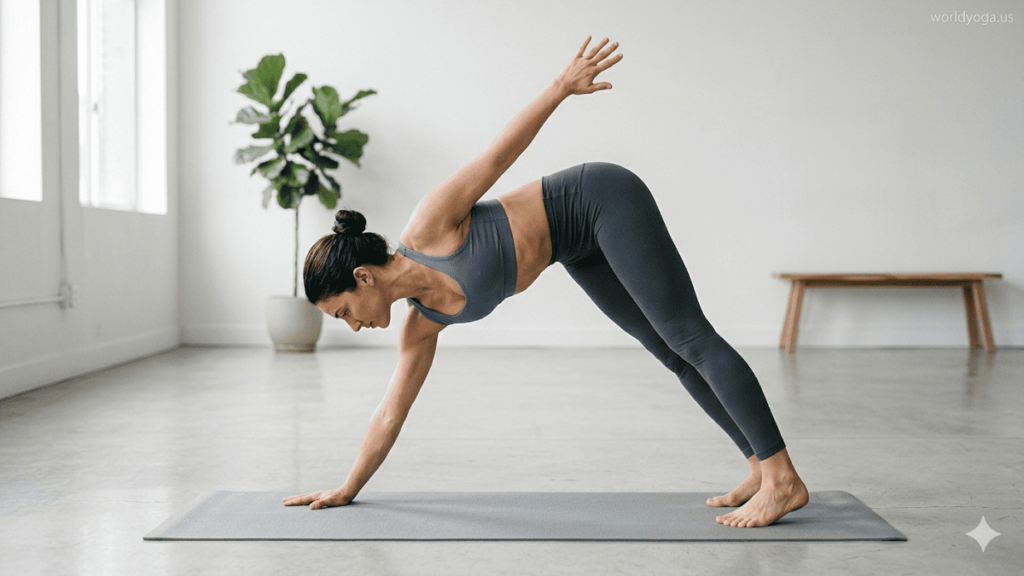
Yoga practitioner performing One-Armed Downward Dog with one hand lifted, maintaining strong core engagement and stable alignment in Downward-Facing Dog pose.
DOWNWARD DOG: ONE-LEGGED—KNEES TOGETHER, DOWNWARD DOG: ONE-ARMED

DOWNWARD DOG: ONE-ARMED

One-Armed Downward Dog is an advanced asymmetrical variation of Downward-Facing Dog that builds exceptional shoulder stability, core anti-rotation strength, and full-body control. This guide explores 9 key principles behind mastering the pose, including alignment, balance, and injury prevention strategies. Ideal for advanced yoga practitioners, athletes, and movement trainers seeking to enhance functional strength and neuromuscular coordination.

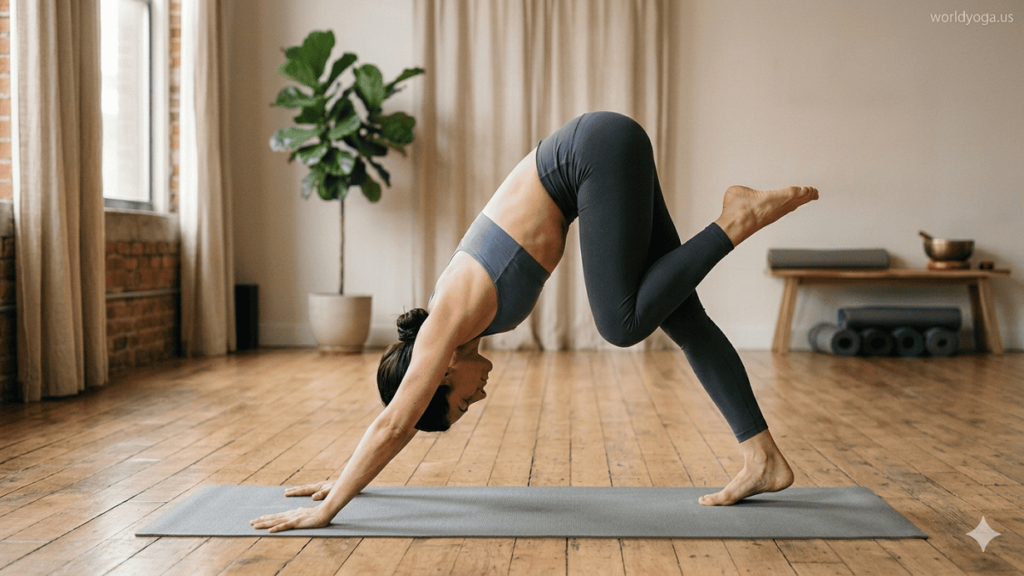
Yoga practitioner performing One-Legged Downward Dog with knees together, maintaining a squared pelvis and strong upper body alignment.
DOWNWARD DOG: ONE-LEGGED—KNEES TOGETHER

DOWNWARD DOG: ONE-LEGGED—KNEES TOGETHER

The One-Legged Downward Dog (Knees Together) is an alignment-focused variation of Downward-Facing Dog that emphasizes core stability, pelvic control, and balanced strength. Unlike the more common Three-Legged Dog, where the hip of the lifted leg often opens, this variation requires the practitioner to keep the knees close together and the hips squared toward the floor. This subtle adjustment shifts the focus from flexibility to controlled muscular engagement.

Scroll to Top