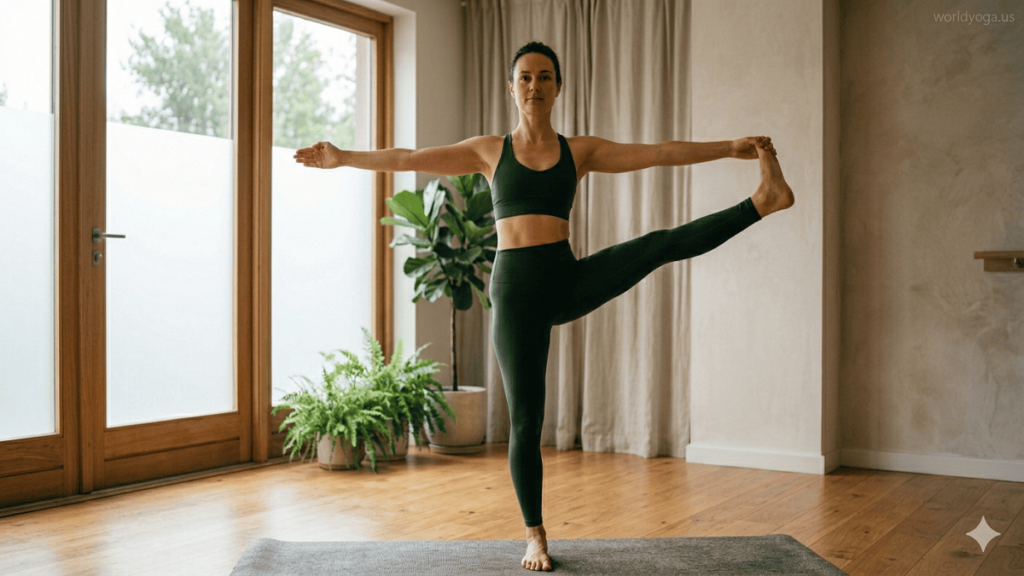
ONE-LEGGED SQUAT: ONE LEG STRAIGHT—HEEL DOWN

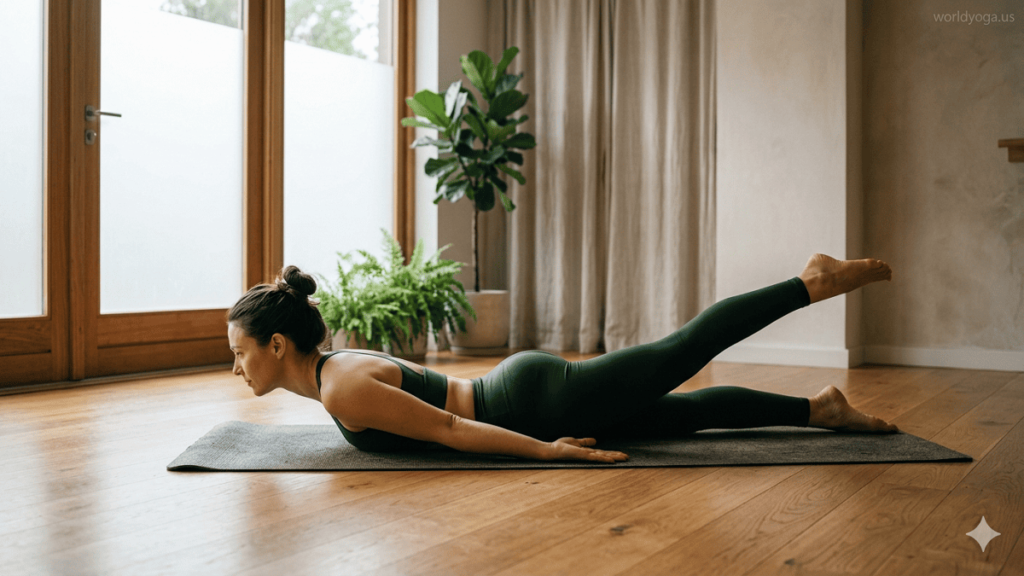
A person performing Bala Shalabhasana (Child Locust Pose variation) on a yoga mat in a softly lit studio, lying prone with one leg slightly lifted and proper spinal alignment.
ONE-LEGGED SQUAT: ONE LEG STRAIGHT—HEEL DOWN, Bala Shalabhasana

Bala Shalabhasana

Bala Shalabhasana is a foundational yoga posture derived from Shalabhasana (Locust Pose) that focuses on gentle spinal extension and controlled activation of the posterior chain. This beginner-friendly variation helps strengthen the lower back, glutes, and hamstrings while improving posture and spinal stability. It is widely used in yoga therapy, fitness conditioning, and rehabilitation programs due to its low-impact nature and safety for beginners.

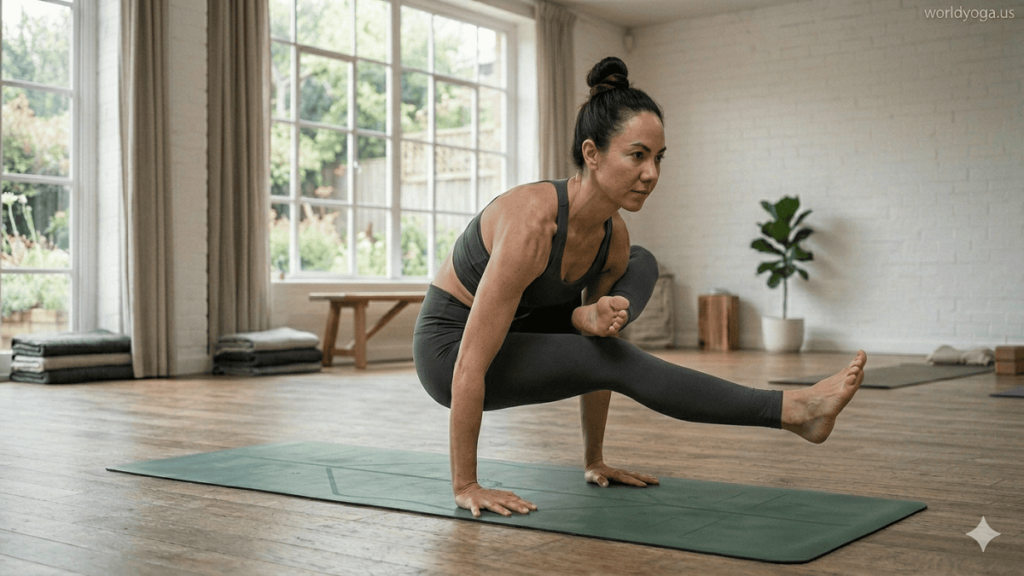
An advanced yoga practitioner performing Baby Grasshopper Pose in a studio with one leg hooked over the arm and body lifted in arm balance.
ONE-LEGGED SQUAT: ONE LEG STRAIGHT—HEEL DOWN, Baby Grasshopper Pose

Baby Grasshopper Pose

The Baby Grasshopper Pose is an advanced yoga arm balance that combines deep hip opening, spinal rotation, and upper-body strength into a highly coordinated movement pattern. This posture challenges the practitioner to integrate flexibility and strength simultaneously, requiring precise control of the shoulders, core, hips, and wrists. It is a preparatory variation of the full Grasshopper Pose and is widely used to develop advanced arm balance skills.

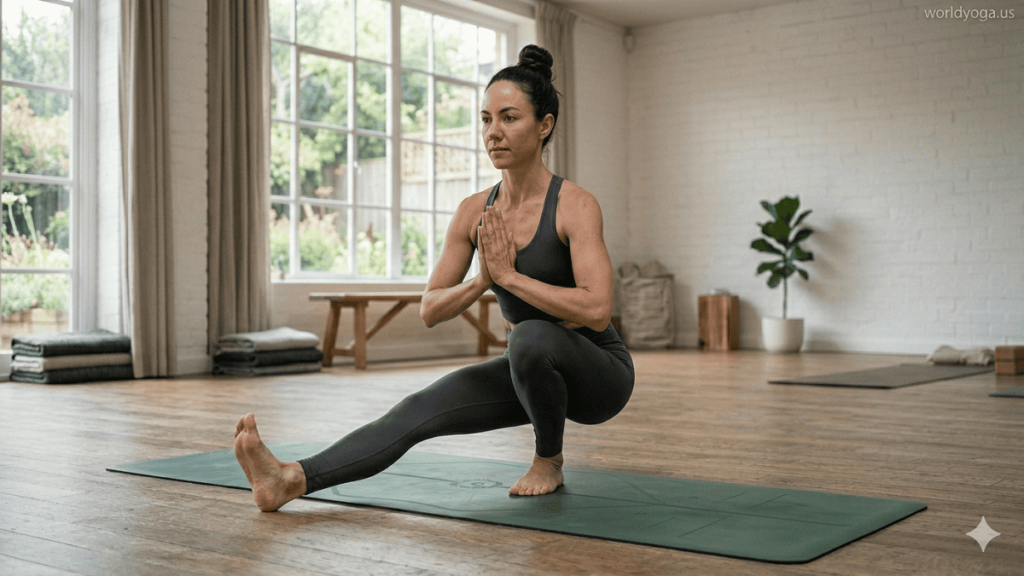
An athlete performing a one-legged squat in a studio with one leg straight and heel down, showing controlled balance and strength.
ONE-LEGGED SQUAT: ONE LEG STRAIGHT—HEEL DOWN

ONE-LEGGED SQUAT: ONE LEG STRAIGHT—HEEL DOWN

The One-Legged Squat with one leg straight and heel down is a powerful unilateral strength and stability exercise designed to develop lower-body control, balance, and functional athletic performance. This movement challenges the quadriceps, glutes, hamstrings, calves, and core stabilizers while requiring precise coordination between hip, knee, and ankle joints. The extended leg with heel-down contact adds an additional layer of balance and mobility demand, making it highly effective for improving symmetry and correcting muscular imbalances.

Scroll to Top