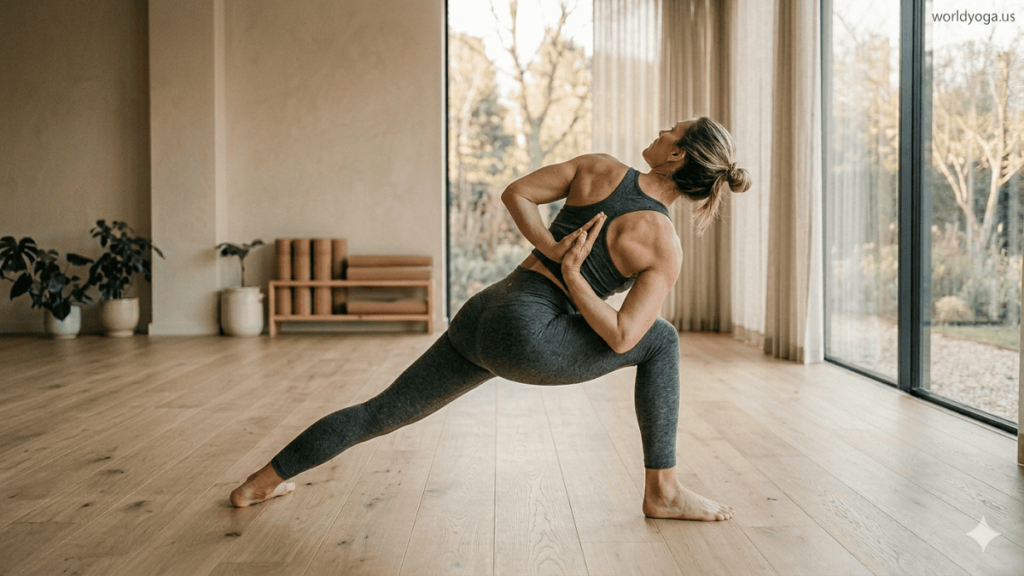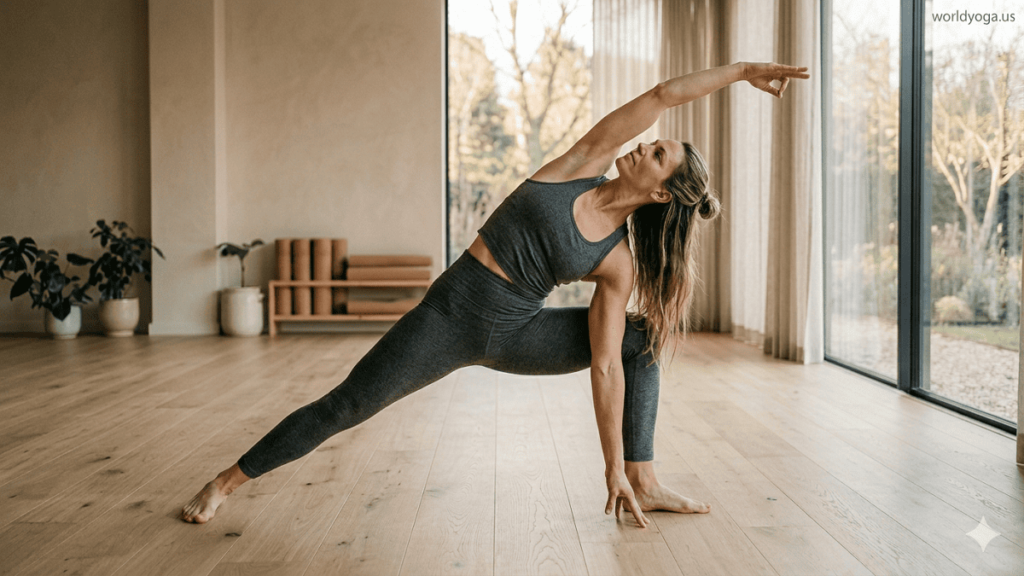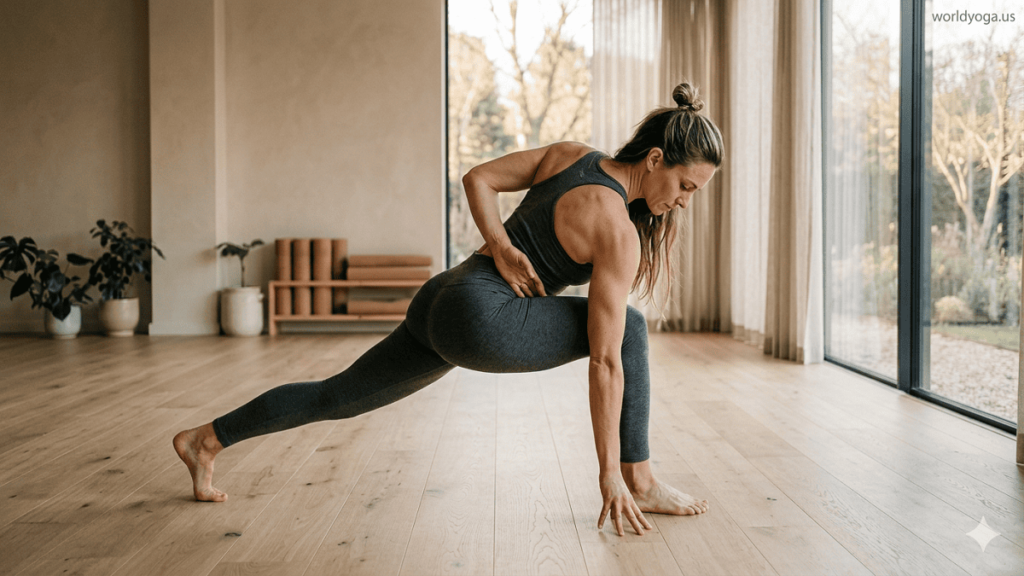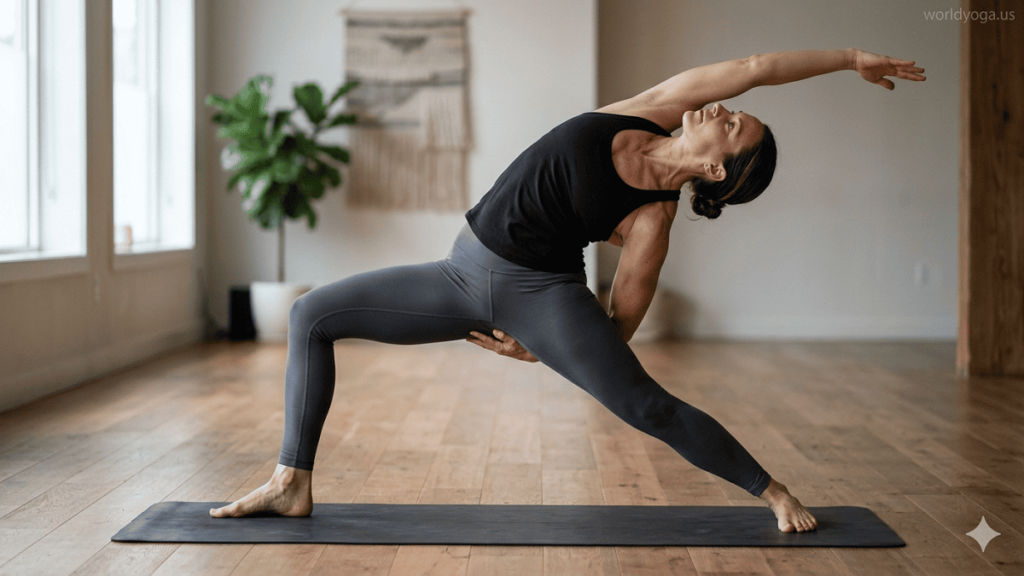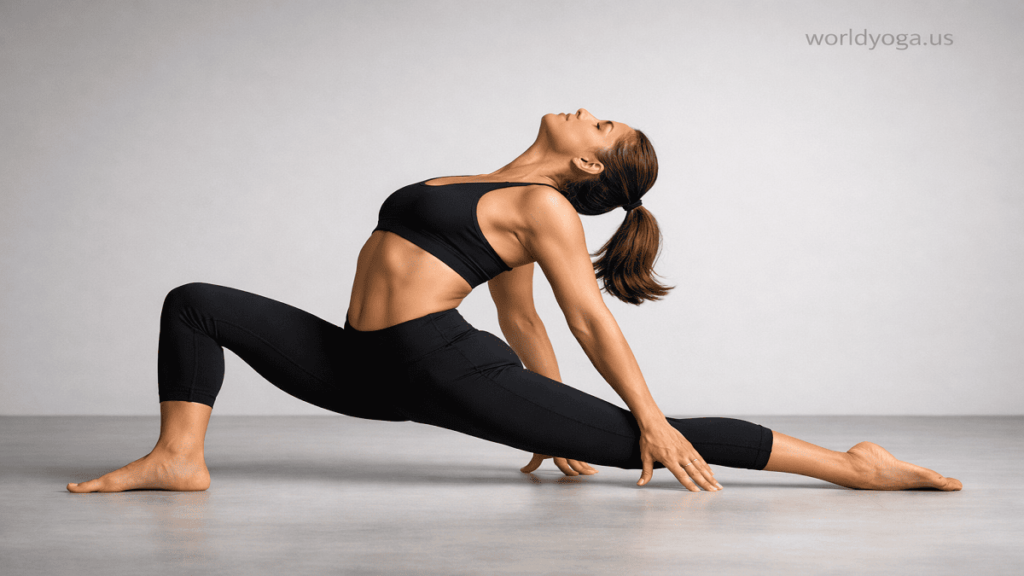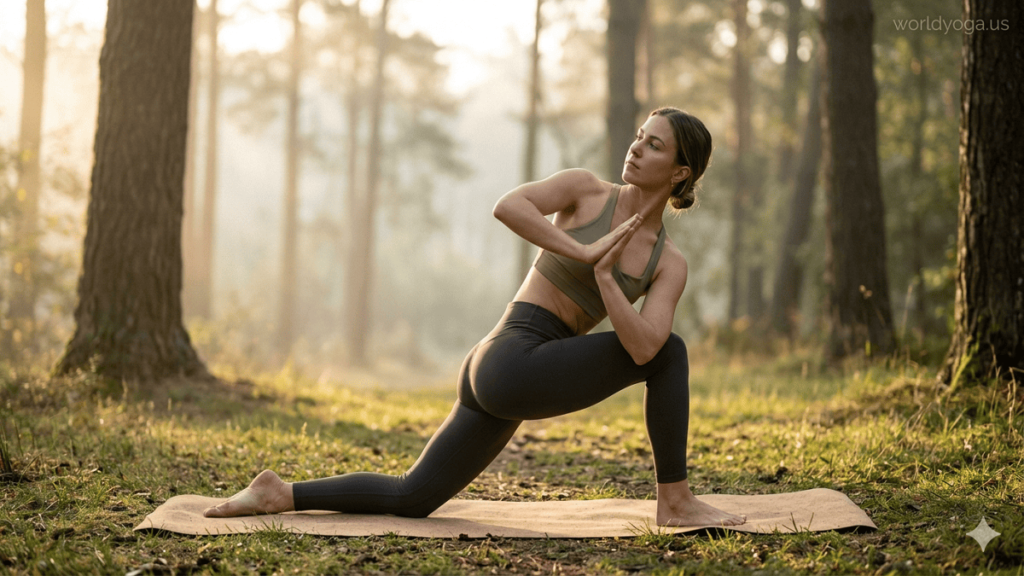
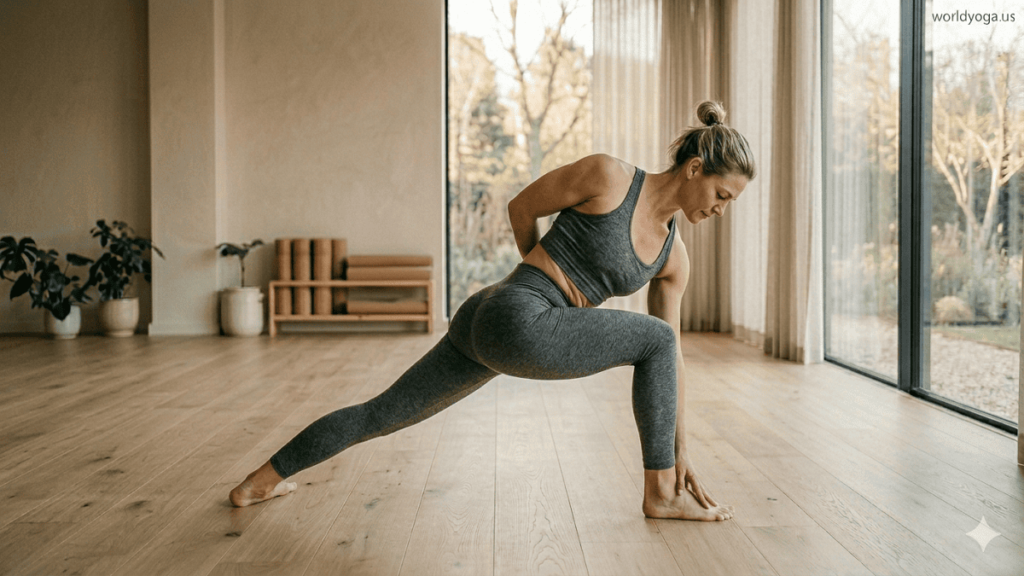
A yoga practitioner performing Kapotasana in a studio, showing a deep kneeling backbend with chest open and spine fully extended in controlled alignment.
BACKBEND ON THE KNEES AND HEAD: PIGEON POSE

BACKBEND ON THE KNEES AND HEAD: PIGEON POSE

Kapotasana is an advanced yoga backbend performed from a kneeling position that requires deep spinal extension, strong core engagement, and high flexibility in the hips, shoulders, and thighs. This powerful posture helps improve spinal mobility, open the chest, strengthen the back muscles, and enhance breathing capacity. It also develops balance, focus, and body awareness through controlled movement and progressive practice. When performed safely, Kapotasana supports better posture, emotional release, and overall physical resilience, making it one of the most transformative poses in advanced yoga practice.

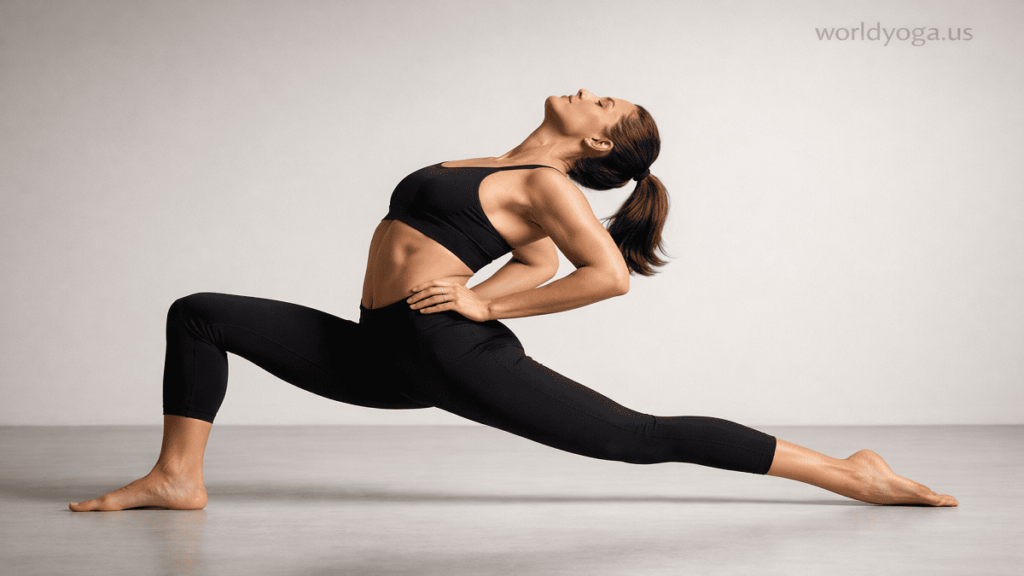
A yoga practitioner performing Little Thunderbolt Pose in a studio, showing a deep kneeling backbend with lifted chest and controlled spinal extension.
Backbends, BACKBEND ON THE KNEES AND HEAD: LITTLE THUNDERBOLT POSE

BACKBEND ON THE KNEES AND HEAD: LITTLE THUNDERBOLT POSE

Little Thunderbolt Pose (Laghu Vajrasana) is an advanced yoga backbend that combines deep spinal extension, strong core engagement, and intense hip flexor opening. This powerful posture enhances spinal flexibility, strengthens the back and lower body, and improves chest expansion for better breathing capacity. It also demands high levels of balance, body awareness, and controlled movement, making it a key progression pose in advanced yoga practice. When performed correctly and safely, it supports improved posture, emotional release, and overall physical resilience.

Backbends. A woman performing a Wheel Pose backbend in a softly lit yoga studio with wooden flooring and natural morning light.
Backbends

Backbends

Backbends in yoga are spinal extension movements that improve flexibility, posture, strength, and breathing capacity. They involve arching the spine backward while engaging the back, core, and leg muscles, and stretching the chest, abdomen, and hip flexors. Common poses include Cobra, Bridge, Camel, and Wheel Pose. Regular practice helps counteract the effects of prolonged sitting, supports spinal health, enhances mobility, and promotes a sense of openness and energy when performed with proper alignment and progression.

A yogi performing One Leg Over The Shoulder arm balance outdoors at sunrise in a natural setting, floating on hands with one leg over the shoulder and the other extended, with “worldyoga.us” watermark in the top right.
ARM BALANCE: ONE LEG OVER THE SHOULDER

ARM BALANCE: ONE LEG OVER THE SHOULDER

One Leg Over The Shoulder arm balance is an advanced yoga posture that combines strength, flexibility, and full-body control into a single challenging movement. This pose, commonly seen in Eka Pada Koundinyasana variations, demands strong wrists, shoulders, and core stability along with deep hip mobility. Practicing it develops not only physical power but also mental focus, balance awareness, and body coordination. The posture requires progressive training through foundational poses such as plank, crow pose, and hip-opening stretches before attempting full lift-off. With consistent practice, it enhances upper-body endurance, improves core engagement, and refines neuromuscular control. This advanced arm balance is widely used in modern yoga and functional fitness training as a benchmark of integrated strength and control.

Brahmacharyasana. A person practicing a seated hip-opening yoga posture in a peaceful indoor studio with natural light, maintaining an upright spine and meditative focus.
ARM BALANCE: SITTING BONES & FEET OFF THE FLOOR, Ardha Agnistambha Brahmacharyasana

Ardha Agnistambha Brahmacharyasana

Ardha Agnistambha Brahmacharyasana is a modern hybrid yoga posture that combines deep hip-opening mechanics with stable, meditative spinal alignment principles. This seated pose focuses on improving flexibility in the hips, glutes, and groin while promoting better posture, pelvic stability, and mental calmness. Practicing this posture regularly can help reduce stiffness caused by prolonged sitting, enhance lower-body mobility, and support a more balanced seated meditation practice. It is especially useful for intermediate practitioners seeking to deepen their hip flexibility and develop stillness in seated poses. When performed correctly with proper alignment and gradual progression, it offers both physical and mindful benefits, making it valuable in yoga therapy, fitness, and meditation-based routines.

A yoga practitioner performing an arm balance (Crow Pose) with feet and sitting bones lifted off the floor, balancing on hands with knees resting on upper arms in a focused indoor studio setting.
ARM BALANCE: SITTING BONES & FEET OFF THE FLOOR

ARM BALANCE: SITTING BONES & FEET OFF THE FLOOR

Arm Balance Mastery 7 focuses on the powerful movement pattern where the practitioner lifts both the sitting bones and feet completely off the floor, achieving full body support through the hands. This advanced arm balance, commonly seen in Crow Pose variations, represents a key milestone in building strength, balance, and body control. The practice emphasizes precise weight transfer, deep core activation, shoulder stability, and wrist strength, allowing the body to transition smoothly from grounded support to full lift-off. It also develops neuromuscular coordination, breath control, and mental focus under physical challenge.

An advanced yoga practitioner performing an inverted scorpion pose (Utthita Dwi Pada Vṛishchikasana), balancing on forearms with a deep backbend and both legs arched overhead in a controlled studio environment.
ARM BALANCE: Shoulder Pressure Pose & Firefly Pose, Utthita Dwi Pada Vrishtasana

Utthita Dwi Pada Vṛishchikasana

Utthita Dwi Pada Vṛishchikasana (Extended Two-Legged Scorpion Pose) is an advanced yoga inversion that combines forearm or hand balance with a deep spinal backbend and controlled leg positioning. In this pose, the practitioner supports the entire body weight on the arms while lifting both legs overhead in a scorpion-like curve, requiring exceptional coordination of strength, flexibility, and balance. This posture is considered one of the most demanding movements in advanced yoga practice because it integrates multiple physical components at once, including shoulder stability, core activation, spinal extension, and hip flexibility. It also requires strong neuromuscular control to maintain alignment and prevent collapse during inversion.

Two-Handed Arm Balance. A person performing Crow Pose yoga arm balance on a mat, balancing body weight on both hands with knees resting on upper arms, in a calm studio environment.
ARM BALANCE: Shoulder Pressure Pose & Firefly Pose, Two-Handed Arm Balance

Two-Handed Arm Balance

The two-handed arm balance is a category of bodyweight movement commonly seen in yoga and functional fitness, where the entire body is supported on both hands while the feet are lifted off the ground. A well-known example of this is Crow Pose (Bakasana). This movement requires a coordinated combination of upper body strength, core stability, balance control, and mental focus. Practicing a two-handed arm balance involves shifting body weight forward onto the hands while engaging the core muscles to lift and stabilize the legs. Proper alignment of the wrists, shoulders, elbows, and hips is essential to maintain balance and prevent injury. Over time, consistent practice improves neuromuscular coordination, proprioception (body awareness), and overall physical control.

A yoga practitioner performing Shoulder Pressure Pose (Bhujapidasana), balancing on hands with legs wrapped around the upper arms, demonstrating strength and control.
ARM BALANCE: Shoulder Pressure Pose & Firefly Pose, Shoulder Pressure Pose

Shoulder Pressure Pose

Shoulder Pressure Pose (Bhujapidasana) is an intermediate yoga arm balance that develops strength, flexibility, and body control through coordinated engagement of the arms, core, hips, and inner thighs. In this posture, the body is lifted on the hands while the legs wrap and press against the upper arms, creating stability through compression and balance. It is widely practiced as a preparatory pose for advanced arm balances, helping practitioners build foundational strength, improve hip mobility, and enhance coordination. This pose also supports mental focus and awareness, making it an essential step in progressive yoga training.

A yoga practitioner performing Lifted Feet Spread Out Pose (Utthita Tittibhasana), balancing on hands with legs extended wide in a straddle, demonstrating strength and flexibility.
ARM BALANCE: Shoulder Pressure Pose & Firefly Pose, Lifted Feet Spread Out Pose

Lifted Feet Spread Out Pose

Lifted Feet Spread Out Pose (Utthita Tittibhasana) is an advanced yoga arm balance that builds upon Firefly Pose by incorporating a wide straddle of the legs while maintaining full body elevation. This posture requires a high level of upper body strength, core stability, and deep hip flexibility. It challenges practitioners to coordinate strength and mobility simultaneously, enhancing balance, control, and body awareness. Commonly practiced in advanced yoga sequences, this pose serves as a progression milestone for those aiming to refine their arm balance skills and achieve greater physical mastery.

Scroll to Top