ARM BALANCE: LOTUS PEACOCK

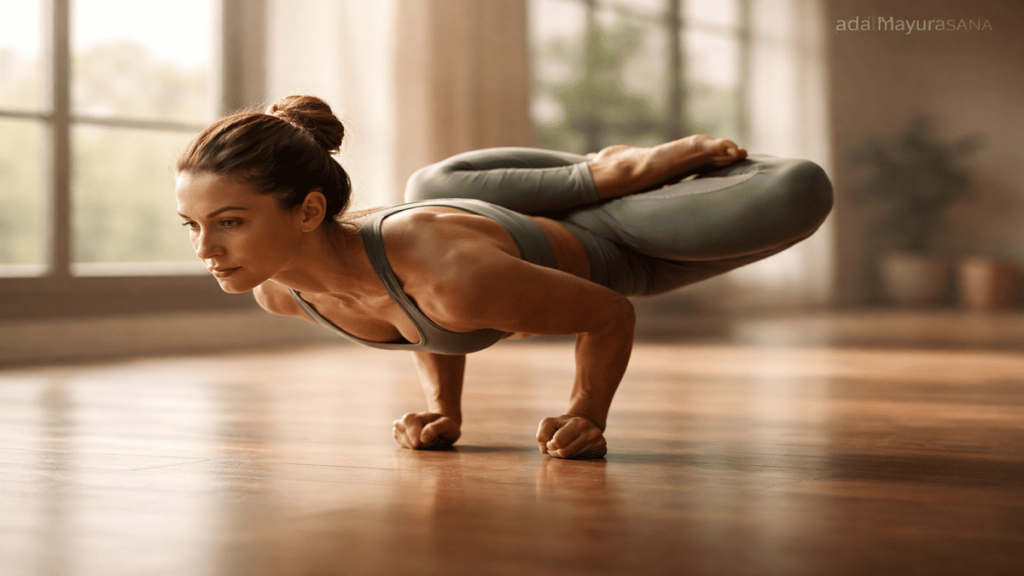
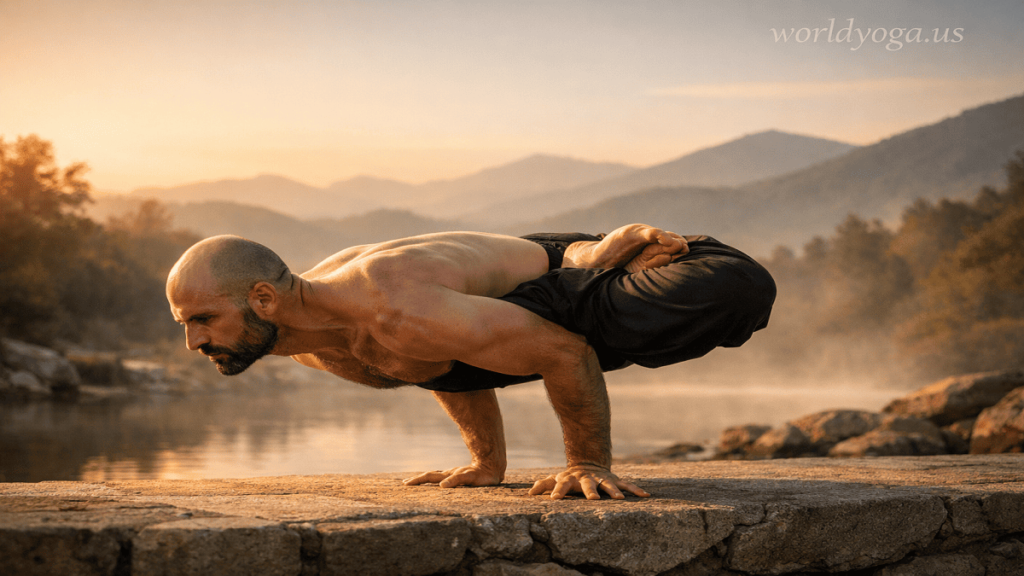
Yoga practitioner performing Padmasana in Mayurasana, balancing horizontally on hands with legs in full lotus position, demonstrating strength and control.
Padmasana in Mayurasana, ARM BALANCE: LOTUS PEACOCK

Padmasana in Mayurasana

Padmasana in Mayurasana is an advanced yoga posture that merges the seated lotus position of Padmasana with the arm-balancing mechanics of Mayurasana. In this variation, the practitioner lifts the entire body parallel to the ground while maintaining a full lotus leg position, supported entirely by the hands and arms.
This posture requires exceptional upper-body strength, particularly in the wrists, forearms, shoulders, and upper back. At the same time, the core muscles play a critical role in stabilizing the spine and maintaining a straight, horizontal alignment. The lotus position adds an additional level of complexity by requiring deep hip flexibility and proper joint alignment.
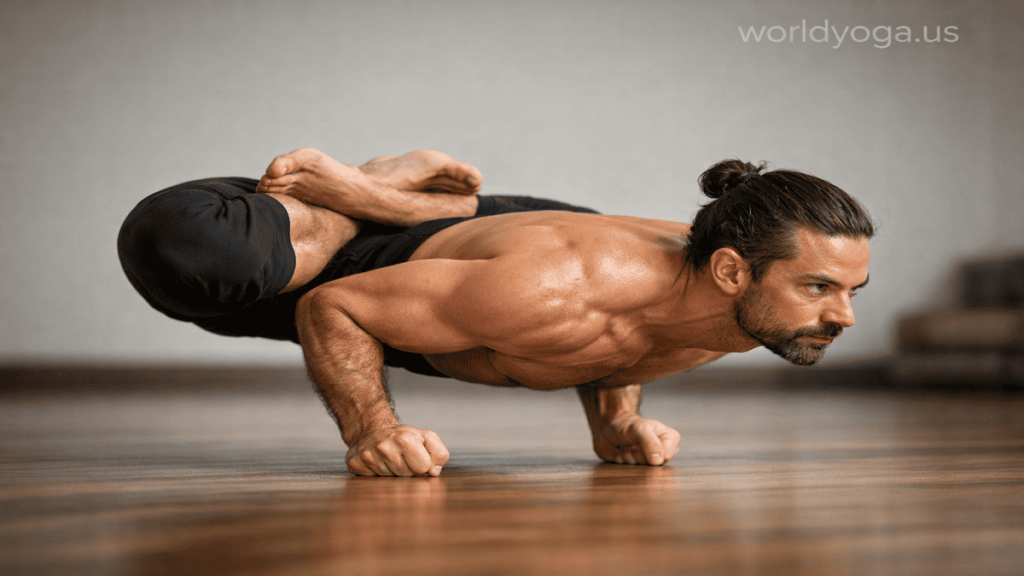
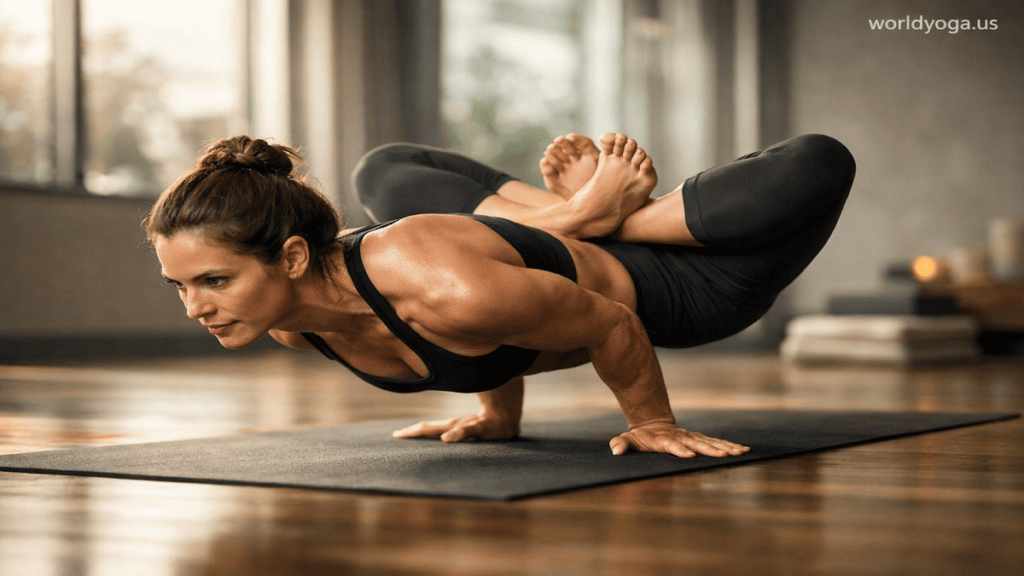
Advanced yoga practitioner performing Mushti Padma Mayurasana, balancing the body horizontally on fists with legs in full lotus position in a controlled arm balance.
ARM BALANCE: LOTUS PEACOCK, Mushti Padma Mayurasana

Mushti Padma Mayurasana

Mushti Padma Mayurasana is a highly advanced yoga posture that integrates fist-based arm support (Mushti), lotus leg position (Padmasana), and horizontal balancing mechanics similar to Mayurasana. In this pose, the practitioner lifts the entire body parallel to the ground while balancing on clenched fists, requiring exceptional wrist strength, core stability, and hip flexibility. This posture demands a high degree of neuromuscular coordination, as the body must maintain precise alignment while suspended above the floor. The arms bear nearly all body weight, while the abdomen engages deeply to stabilize the spine. The lotus position adds an additional layer of difficulty by requiring advanced hip external rotation and knee control.

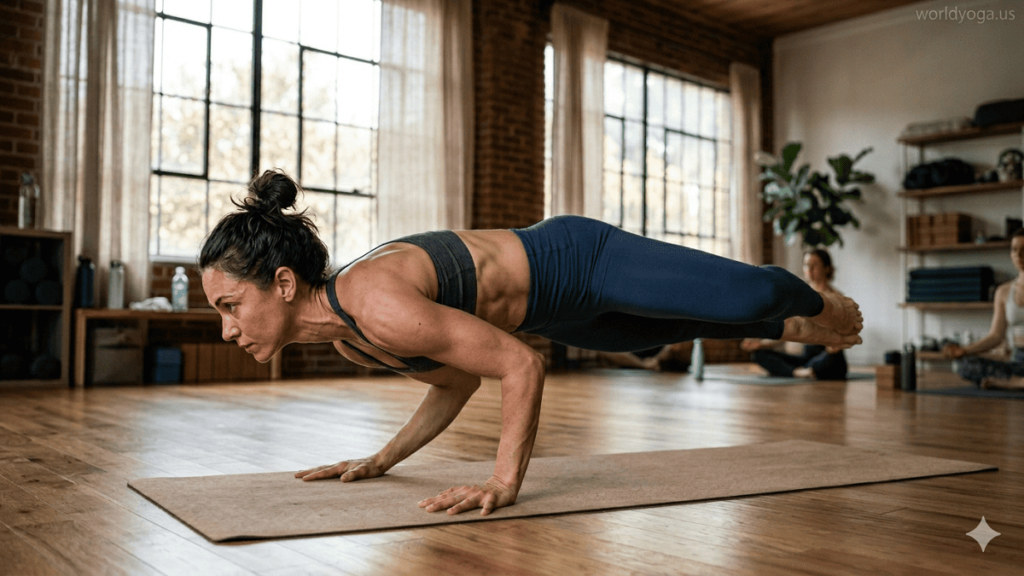
Advanced yoga practitioner performing Lotus Pose in Peacock Pose, balancing horizontally on forearms with elbows pressed into the abdomen, legs locked in lotus position, set in a serene studio environment with soft lighting and a subtle “worldyoga.us” watermark in the top-right corner.
Lotus Pose in Peacock Pose, ARM BALANCE: LOTUS PEACOCK

Lotus Pose in Peacock Pose

Advanced yoga posture “Lotus Pose in Peacock Pose,” a hybrid arm balance combining Padmasana and Mayurasana. The practitioner is shown holding a horizontal suspension using only forearm support, with elbows firmly engaged into the abdominal region for structural leverage. The legs remain locked in a full lotus position, significantly increasing balance difficulty and core activation demands. The posture highlights exceptional upper-body strength, wrist stability, and deep core engagement required to maintain controlled alignment.

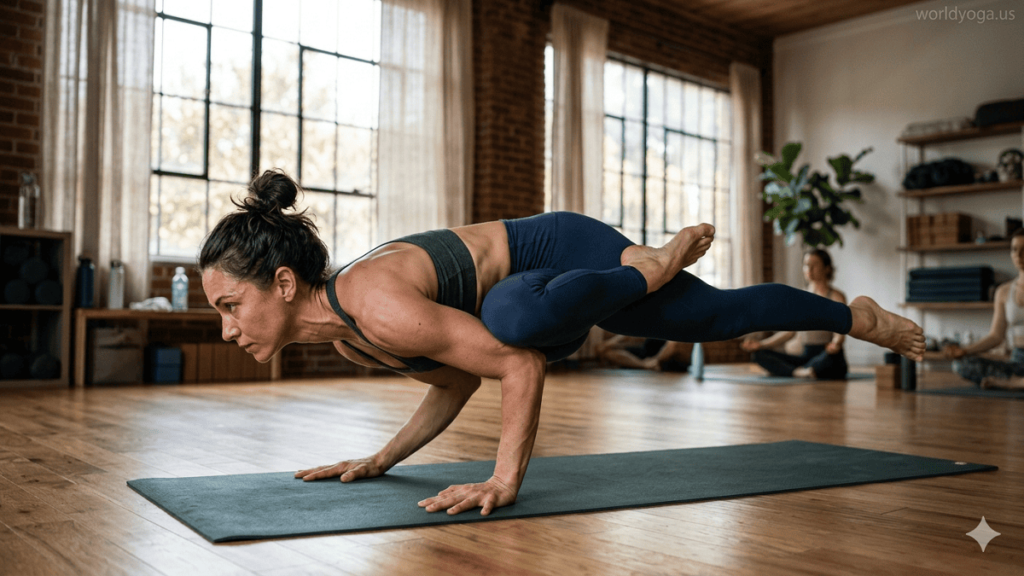
Fist Lotus . Advanced yoga practitioner performing a horizontal arm balance combining Lotus Pose and Peacock Pose, balancing on forearms with elbows pressed into the abdomen, legs locked in lotus position, set in a serene studio environment with soft natural light, watermark “worldyoga.us” in the top right corner.
ARM BALANCE: LOTUS PEACOCK, Fist Lotus Peacock Pose

Fist Lotus Peacock Pose

Yoga practitioner performing a highly advanced arm balance known as the Fist Lotus Peacock Pose, a modern variation combining elements of Padmasana and Mayurasana. The body is held parallel to the ground, supported entirely by the forearms, with elbows firmly engaged into the abdominal region for structural leverage. The legs remain locked in a full lotus position, increasing both balance difficulty and core activation demands.

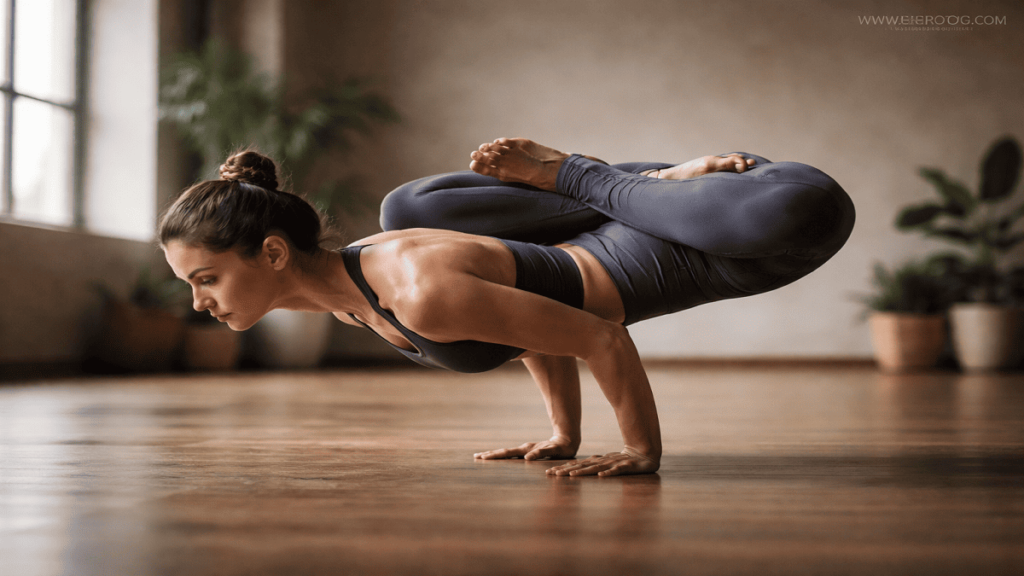
An advanced yoga practitioner performing Lotus Peacock arm balance, holding the body horizontally above the ground supported on forearms while legs are in full lotus position, demonstrating strength and balance in a controlled pose.
ARM BALANCE: LOTUS PEACOCK

ARM BALANCE: LOTUS PEACOCK

Lotus Peacock (Padma Mayūrāsana), an advanced arm balance in yoga that combines the structural foundation of Peacock Pose with the flexibility of Lotus Pose. The practitioner supports the entire body weight using the forearms while maintaining a horizontal alignment. The legs are folded into a full lotus position, requiring deep hip external rotation and precise control.

Scroll to Top