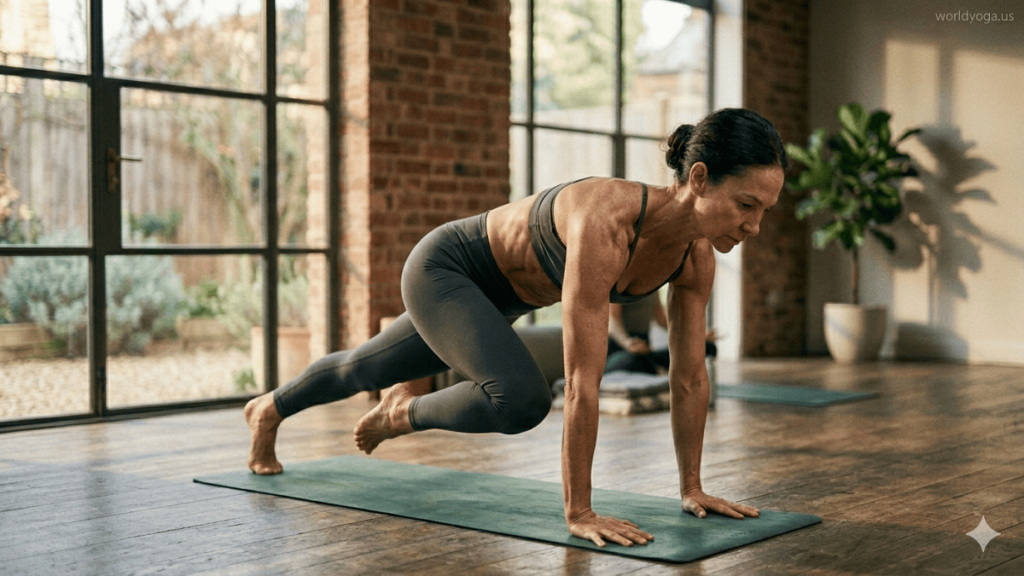
Core Poses. A practitioner holding a strong plank-based core yoga pose in a modern studio with controlled alignment and focused stability.
Core Poses

Core Poses

Core yoga poses are a group of stability-focused postures designed to strengthen the deep abdominal muscles, improve spinal alignment, and enhance overall balance and control. These poses engage multiple muscle layers, including the core, hips, back, and pelvic stabilizers, to support efficient and injury-resistant movement. Practiced regularly, core yoga training improves posture.
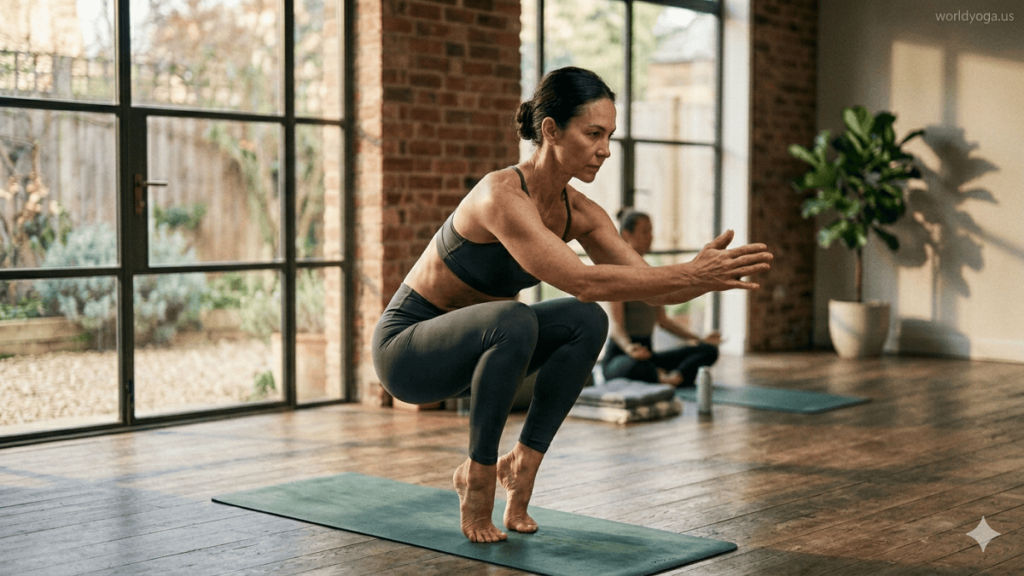
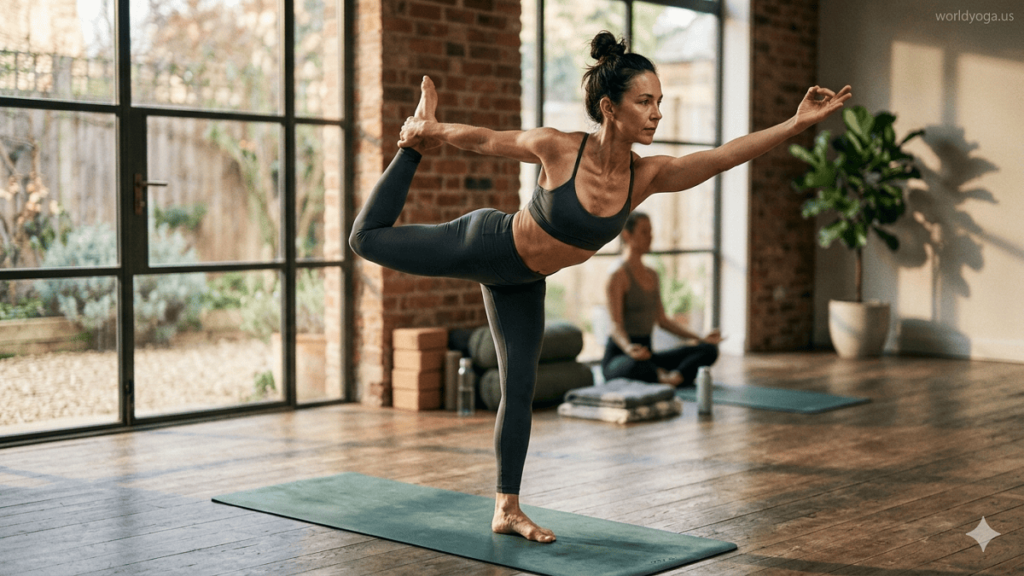
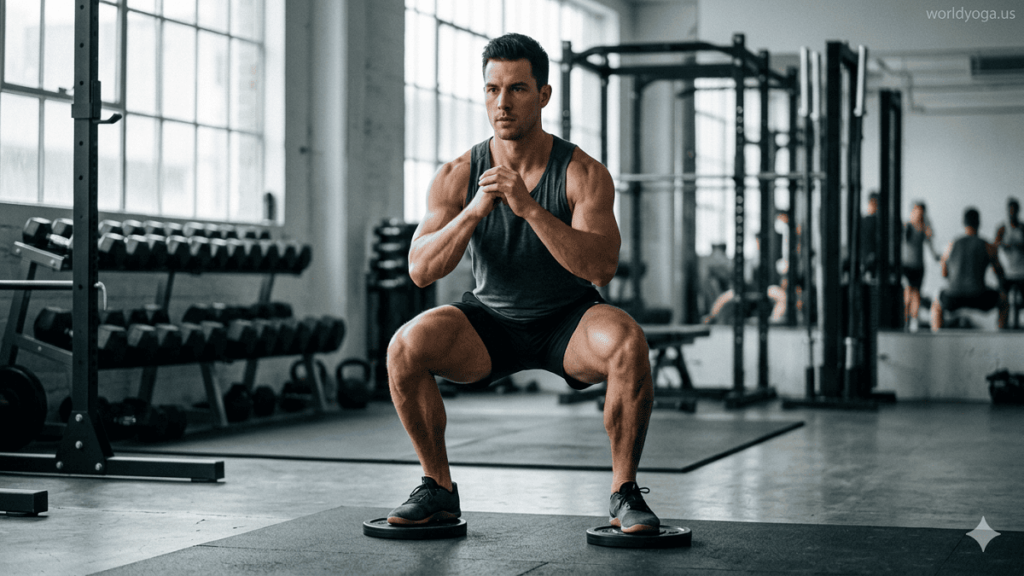
A person performing a deep squat variation with heels lifted, knees together, and arms held below the head in a modern yoga studio.
SQUAT: HEELS UP—KNEES TOGETHER—ARMS BELOW HEAD

SQUAT: HEELS UP—KNEES TOGETHER—ARMS BELOW HEAD

Squat Heels Up Knees Together Arms Below Head is a challenging functional squat variation that emphasizes forefoot balance, inner thigh engagement, and full-body coordination. By lifting the heels, drawing the knees together, and positioning the arms below the head, the posture increases instability and muscular demand, making it effective for improving ankle strength, knee control, core stability, and overall neuromuscular coordination.

Athlete performing a heels-up squat with knees pushed outward on elevated heels in a modern gym.
SQUAT: HEELS UP—KNEES APART

SQUAT: HEELS UP—KNEES APART

Squat: Heels Up-Knees Apart is a powerful lower-body training variation designed to enhance quadriceps activation, improve squat depth, and correct movement mechanics. This method uses heel elevation and outward knee tracking to optimize alignment, reduce ankle mobility limitations, and increase stability during the movement.

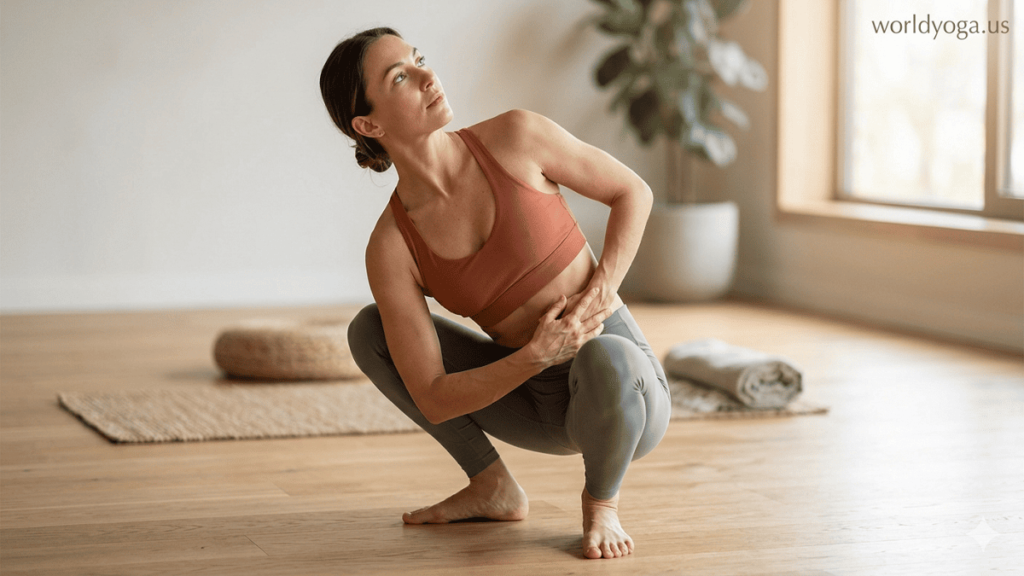
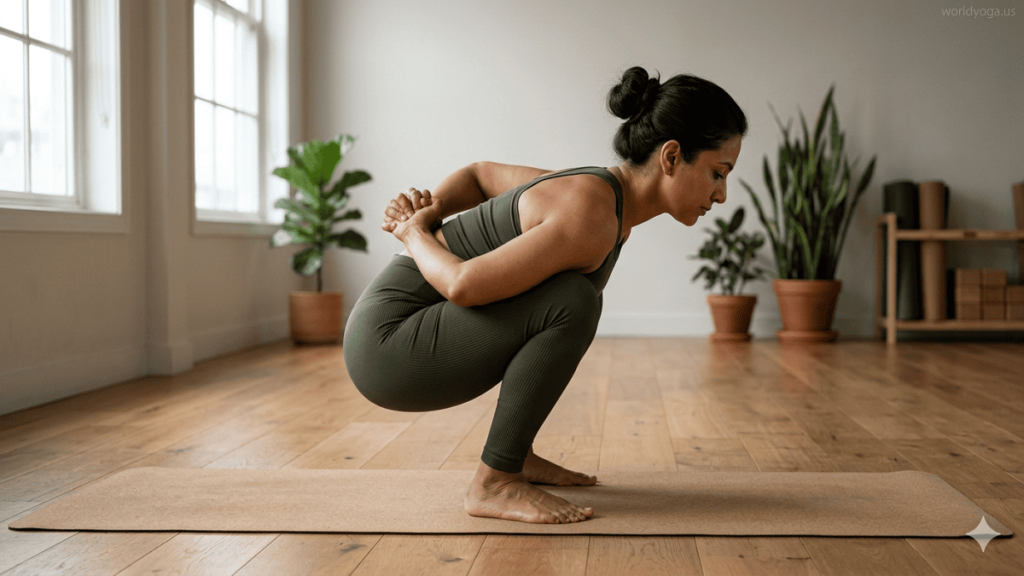
Person performing Ardha Baddha Pashasana in a deep squat with a half bind and gentle spinal twist in a calm yoga studio setting.
SQUAT: HEELS DOWN—TWISTS, Ardha Baddha Pashasana

Ardha Baddha Pashasana

Ardha Baddha Pashasana is an advanced yoga posture that combines a deep squat, controlled spinal rotation, and a half bind to develop full-body coordination, stability, and mobility. This powerful movement challenges balance while engaging multiple muscle groups simultaneously, making it a highly effective posture for improving functional strength and body awareness.

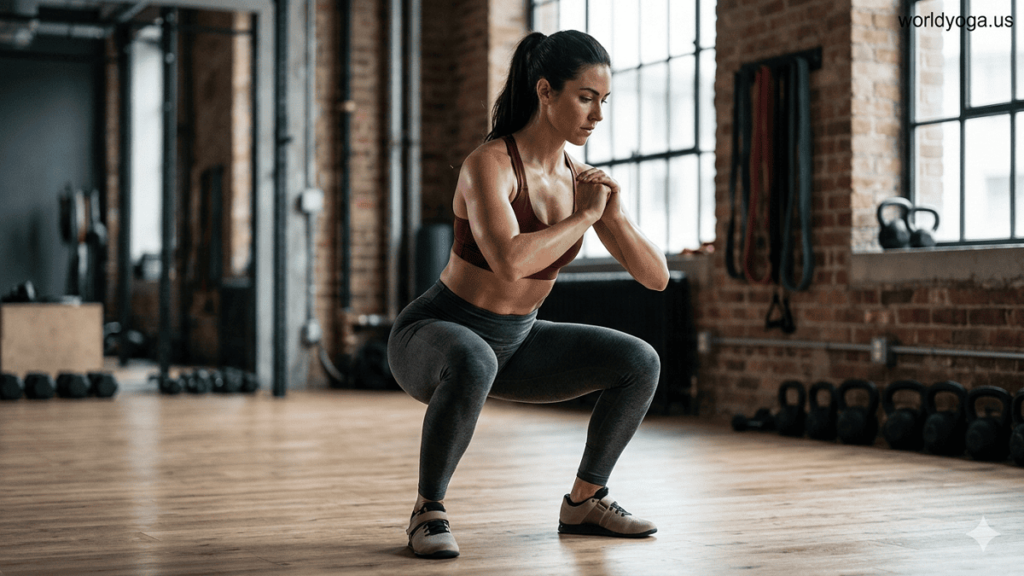
Person performing a heels-down squat with a controlled torso twist at the bottom position in a modern fitness studio, demonstrating proper alignment and core engagement.
SQUAT: HEELS DOWN—TWISTS

SQUAT: HEELS DOWN—TWISTS

The heels-down twisting variation of the Squat is a functional movement designed to combine lower-body strength training with controlled spinal rotation. It emphasizes keeping full heel contact with the ground during the squat to improve balance, stability, and posterior chain engagement, while adding a gentle twist to develop core control and thoracic mobility.

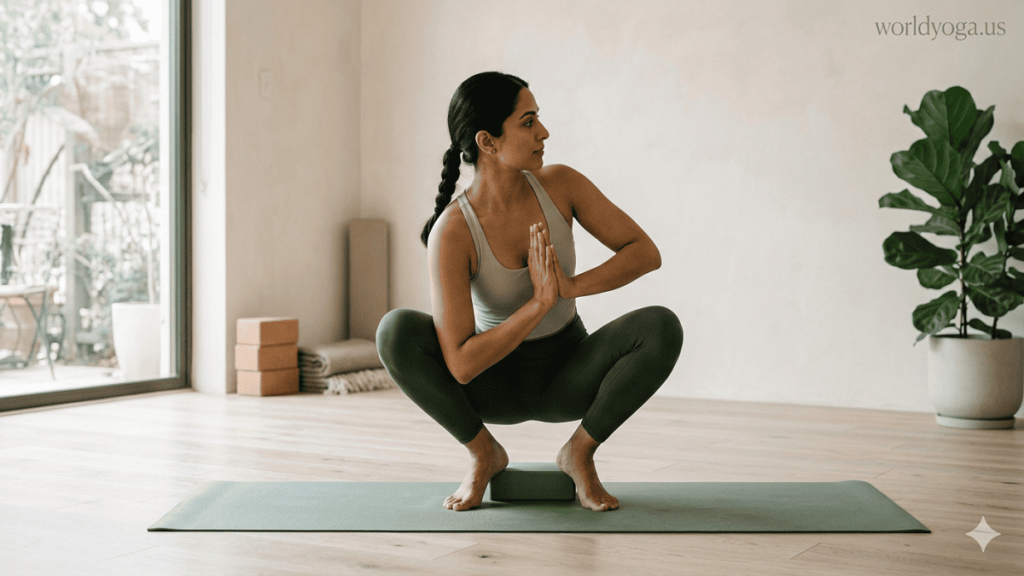
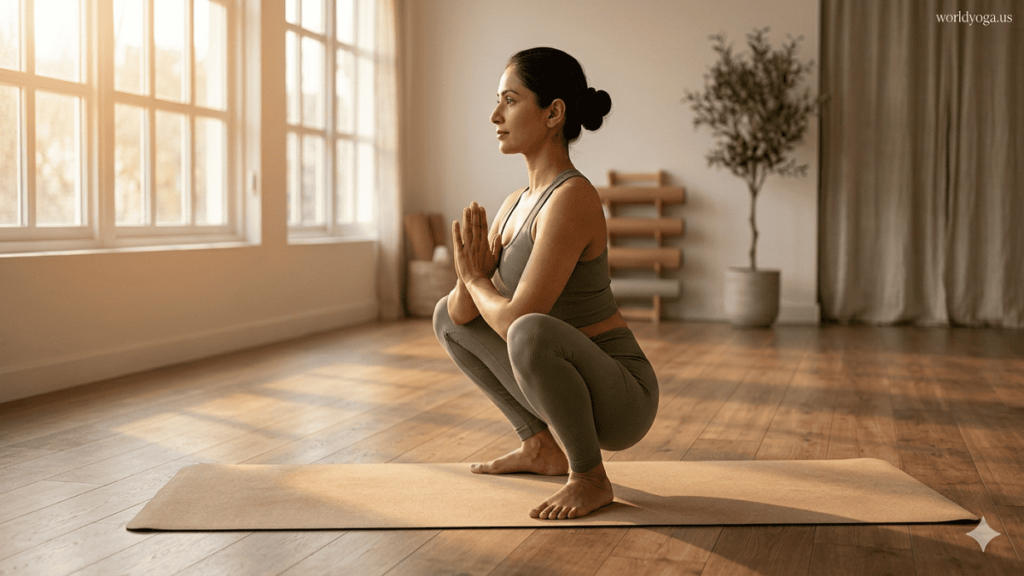
Person performing Malasana yoga pose in a deep squat with palms joined at chest, heels grounded, spine upright, and knees opened outward in a calm studio setting.
SQUAT: HEELS DOWN—KNEES WIDE, FORWARD BENDS, Malasana

Malasana

Malasana, also known as Garland Pose or Yogic Squat, is a foundational yoga posture that enhances lower body strength, flexibility, and overall body balance. This deep squat position engages multiple muscle groups including the hips, thighs, calves, glutes, and core, making it highly effective for improving functional movement and mobility.

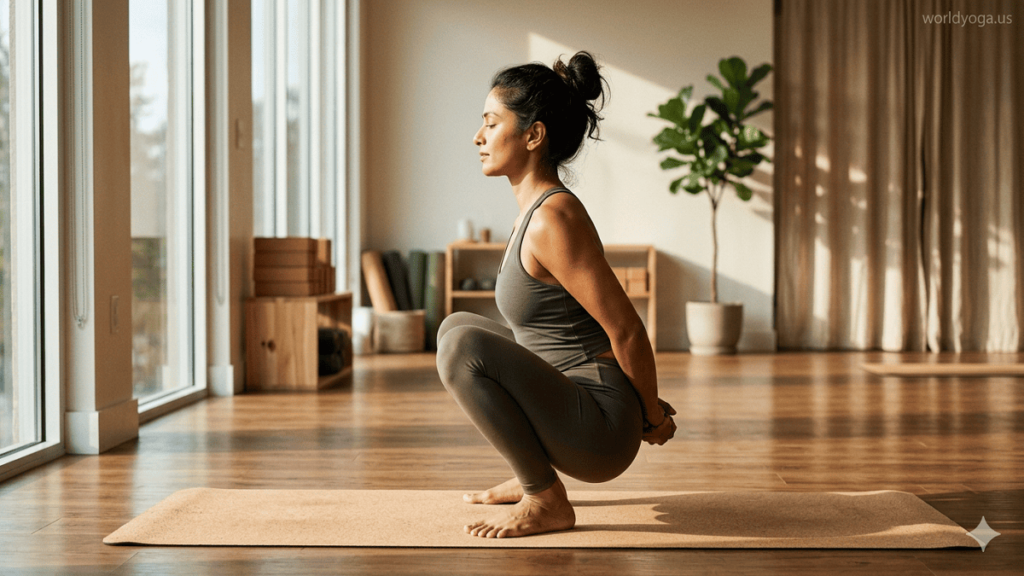
Yoga practitioner performing Hands Bound Garland Pose in a deep squat with bound arms, demonstrating flexibility, balance, and mindfulness in a calm yoga setting.
SQUAT: HEELS DOWN—KNEES WIDE, FORWARD BENDS, Hands Bound Garland Pose

Hands Bound Garland Pose

The Hands Bound Garland Pose is an advanced yoga posture that combines a deep squat with a shoulder bind to enhance flexibility, balance, posture, and body awareness. This pose engages the hips, core, shoulders, and lower body while promoting mindful breathing and stability. Commonly practiced in advanced yoga sequences, it supports mobility, strength, and mental focus when performed with proper alignment and control.

Scroll to Top