Author name: Mukesh Singh

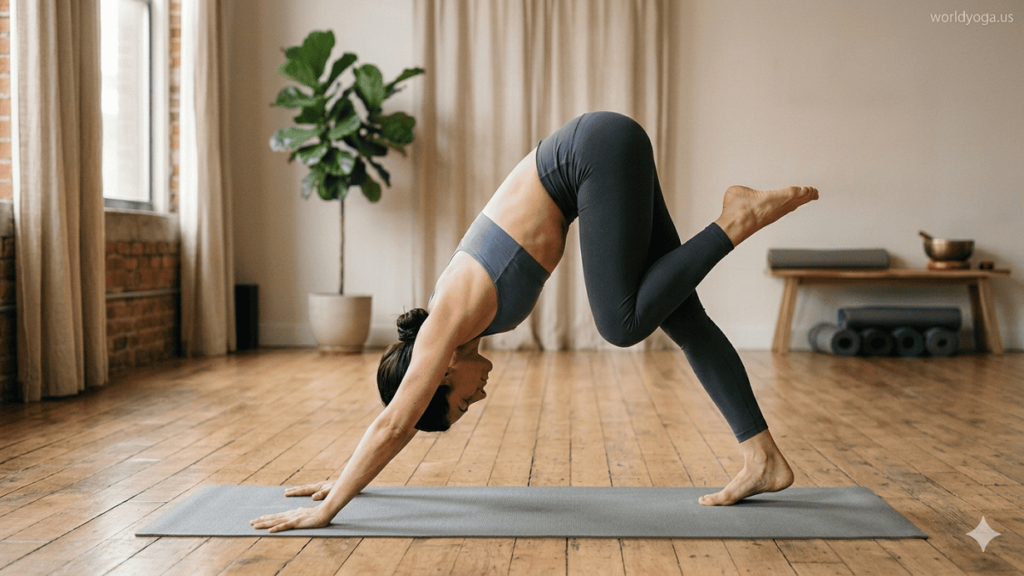
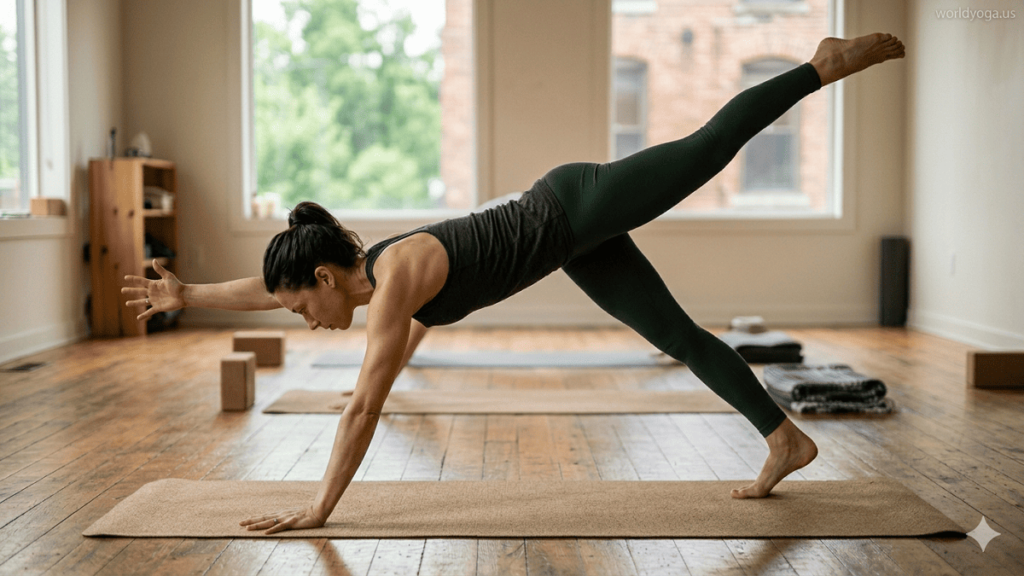
Advanced yogi performing One-Armed, One-Legged Downward Dog pose on a yoga mat with strong body alignment, one hand and opposite foot grounded while the other arm and leg are lifted for balance.
DOWNWARD DOG: ONE-ARMED—ONE-LEGGED

DOWNWARD DOG: ONE-ARMED—ONE-LEGGED

Downward Dog: One-Armed—One-Legged is an advanced yoga variation that develops exceptional unilateral strength, core stability, and full-body coordination. This pose challenges the practitioner to support the entire body using only one hand and the opposite foot, creating a diagonal stability chain that engages the shoulders, core, hips, and lower limbs simultaneously. It is widely used in advanced yoga training and functional movement systems to improve balance, proprioception, and neuromuscular control.
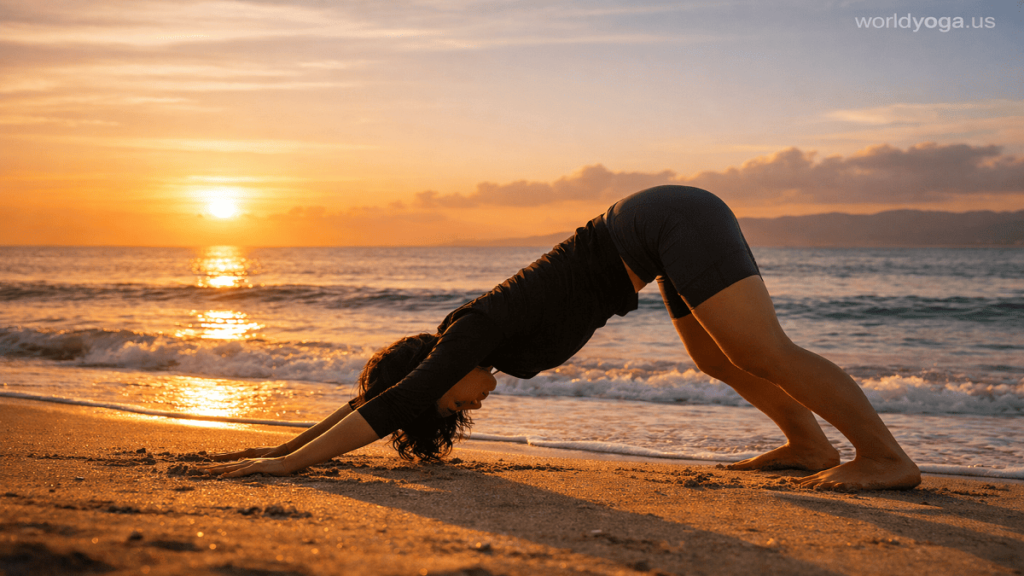
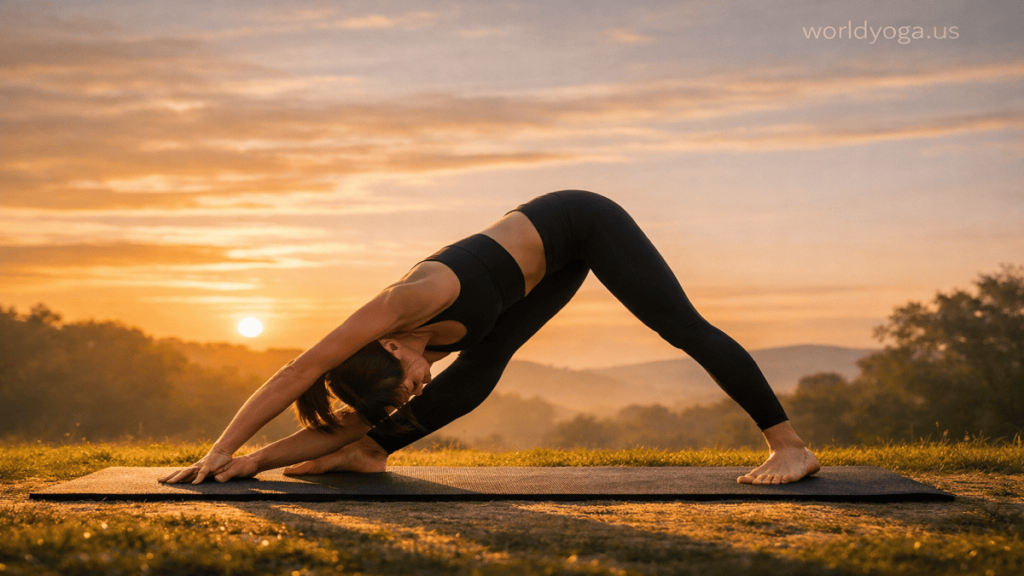
Downward Dog: Knees Bent. A person performing Downward Dog with bent knees on a beach at sunrise, hands on sand, hips lifted, spine extended, and knees softly bent in a stable inverted position.
DOWNWARD DOG: KNEES BENT

DOWNWARD DOG: KNEES BENT

This topic explores Downward Dog with bent knees (a modification of Adho Mukha Svanasana), focusing on correct alignment, posture control, and safe practice principles. It explains how bending the knees helps maintain spinal length, reduce hamstring strain, and improve shoulder stability while building core strength. The content also covers benefits, precautions, preparatory poses, and muscle engagement, making it suitable for beginners and practitioners working on alignment, flexibility, and foundational strength development in yoga.

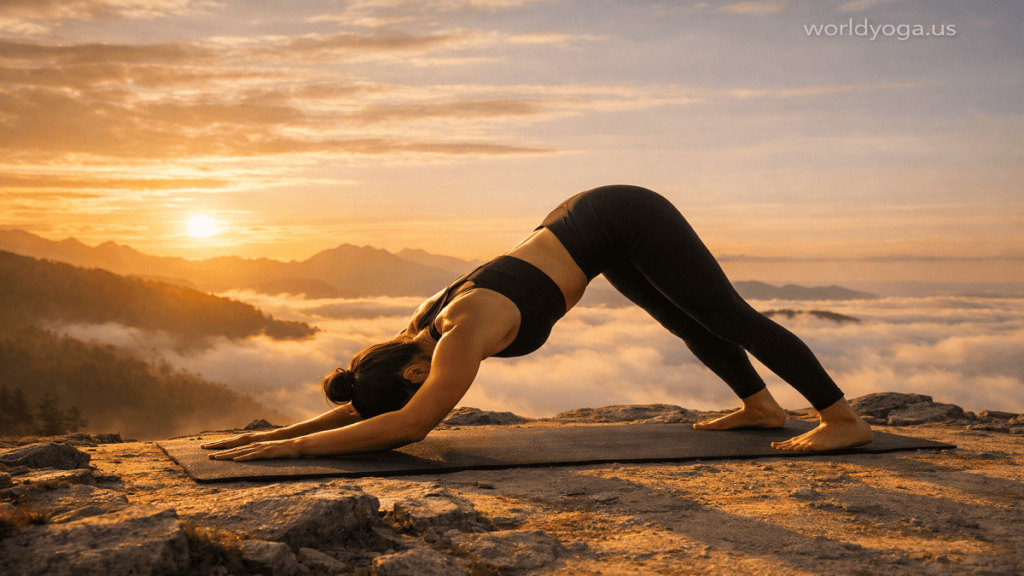
A person practicing Downward-Facing Dog pose on a mountain cliff at sunrise with hands on the ground, hips raised high, legs strong, and head relaxed between the arms.
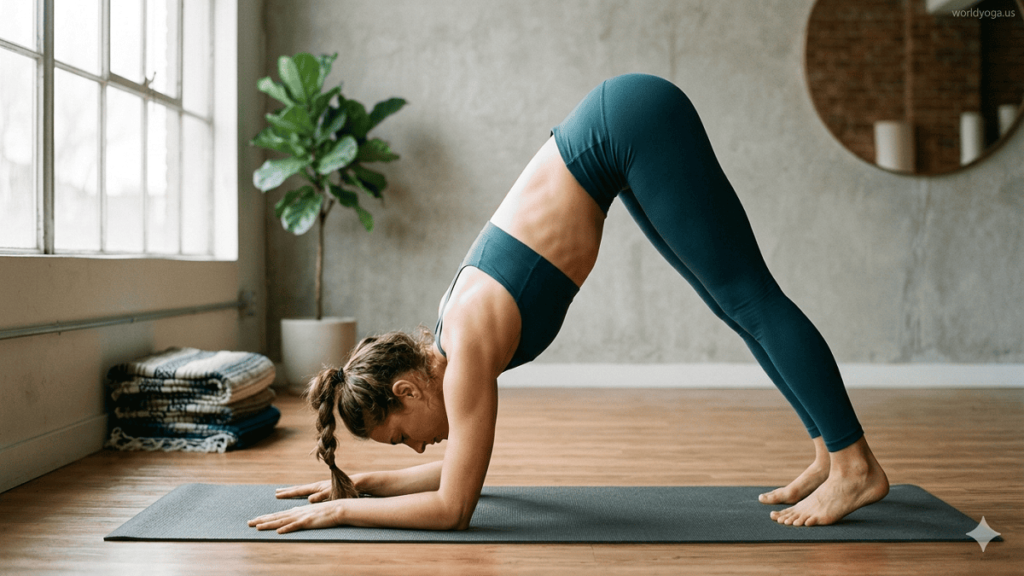
DOWNWARD DOG: FOREARMS AND HEAD ON THE FLOOR, Downward Facing Pose Dedicated to Makara on the Head

Downward Facing Pose Dedicated to Makara on the Head

This topic explores the Makara-inspired interpretation of Downward-Facing Dog (Adho Mukha Svanasana), focusing on alignment, strength development, and mindful practice. It explains how the pose is performed correctly, including body positioning, muscle engagement, and breathing control. The content also highlights its benefits for shoulder stability, core strength, and flexibility, along with precautions and preparatory poses. Additionally, it examines how symbolic “Makara” awareness enhances focus and control during this foundational inversion-style yoga posture.

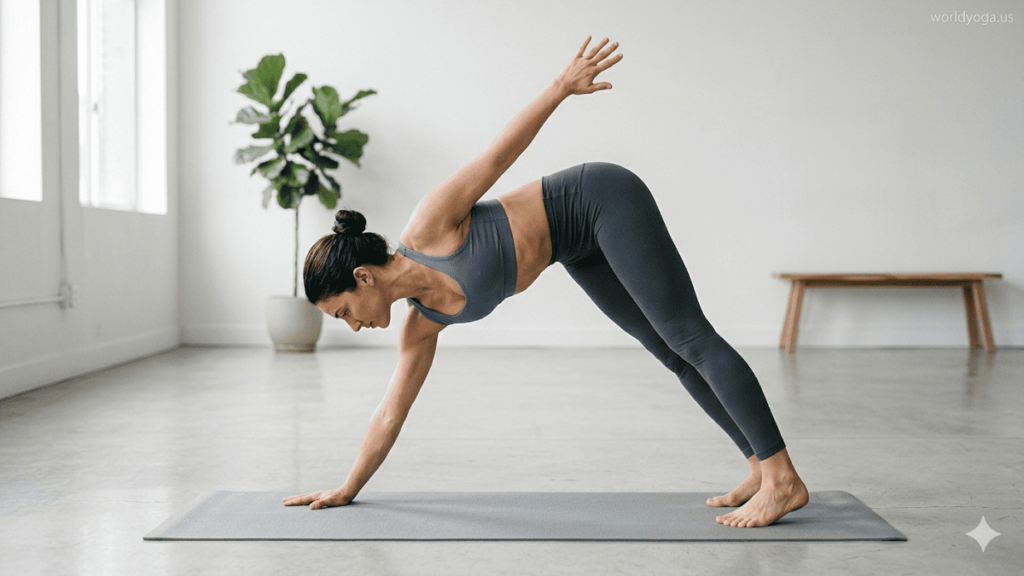
Yoga practitioner performing Revolved Downward-Facing Dog Pose with one arm reaching across the body in a controlled spinal twist while maintaining stable Downward-Facing Dog alignment.
DOWNWARD DOG: ONE-LEGGED—KNEES TOGETHER, Revolved Downward Facing Dog Pose

Revolved Downward Facing Dog Pose

Revolved Downward-Facing Dog is a powerful twisting variation of Downward-Facing Dog that develops spinal mobility, core anti-rotation strength, and shoulder stability under load. This guide explores 8 essential principles for mastering the pose, including correct alignment, safe twisting mechanics, and stability control. Ideal for yoga practitioners, athletes, and movement enthusiasts aiming to improve flexibility, posture, and full-body coordination through controlled rotational movement.

Yoga practitioner performing One-Armed Downward Dog with one hand lifted, maintaining strong core engagement and stable alignment in Downward-Facing Dog pose.
DOWNWARD DOG: ONE-LEGGED—KNEES TOGETHER, DOWNWARD DOG: ONE-ARMED

DOWNWARD DOG: ONE-ARMED

One-Armed Downward Dog is an advanced asymmetrical variation of Downward-Facing Dog that builds exceptional shoulder stability, core anti-rotation strength, and full-body control. This guide explores 9 key principles behind mastering the pose, including alignment, balance, and injury prevention strategies. Ideal for advanced yoga practitioners, athletes, and movement trainers seeking to enhance functional strength and neuromuscular coordination.

Yoga practitioner performing One-Legged Downward Dog with knees together, maintaining a squared pelvis and strong upper body alignment.
DOWNWARD DOG: ONE-LEGGED—KNEES TOGETHER

DOWNWARD DOG: ONE-LEGGED—KNEES TOGETHER

The One-Legged Downward Dog (Knees Together) is an alignment-focused variation of Downward-Facing Dog that emphasizes core stability, pelvic control, and balanced strength. Unlike the more common Three-Legged Dog, where the hip of the lifted leg often opens, this variation requires the practitioner to keep the knees close together and the hips squared toward the floor. This subtle adjustment shifts the focus from flexibility to controlled muscular engagement.

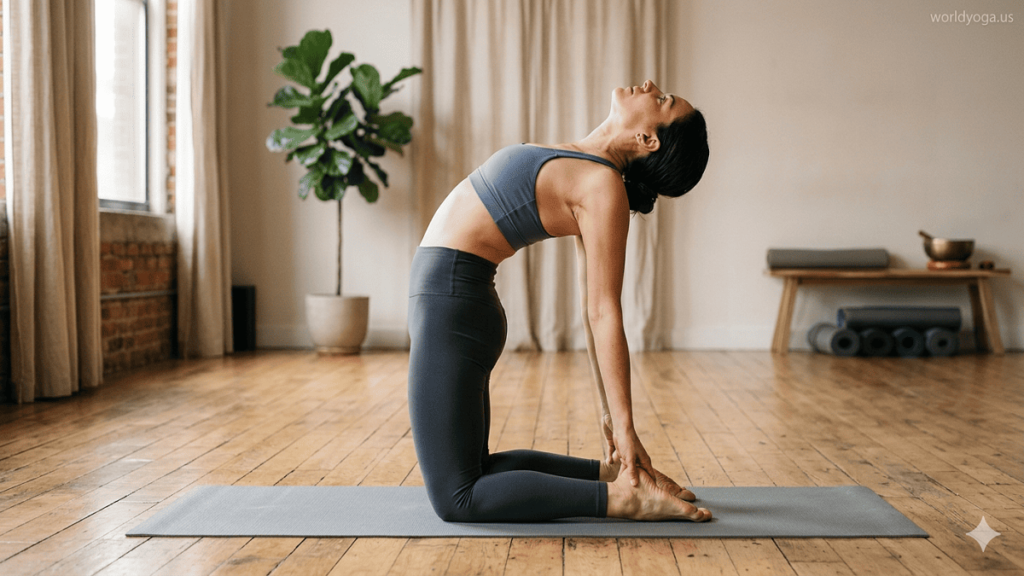
Yoga practitioner performing an advanced Camel Pose variation with legs in Cow Face Pose position, showing stacked knees, open chest, and deep backbend in a studio setting.
COW FACE POSE AND GARUDA ON THE KNEES, Leg Position of Cow Face Pose in Camel Pose

Leg Position of Cow Face Pose in Camel Pose

Leg Position of Cow Face Pose in Camel Pose refers to an advanced yoga variation that integrates the stacked knee alignment of Gomukhasana (Cow Face Pose) with the deep spinal backbend of Ustrasana (Camel Pose). This combination creates a complex posture that simultaneously targets hip mobility, spinal flexibility, and core stability. The asymmetrical positioning of the legs introduces additional balance and coordination challenges, making it suitable for intermediate to advanced practitioners.

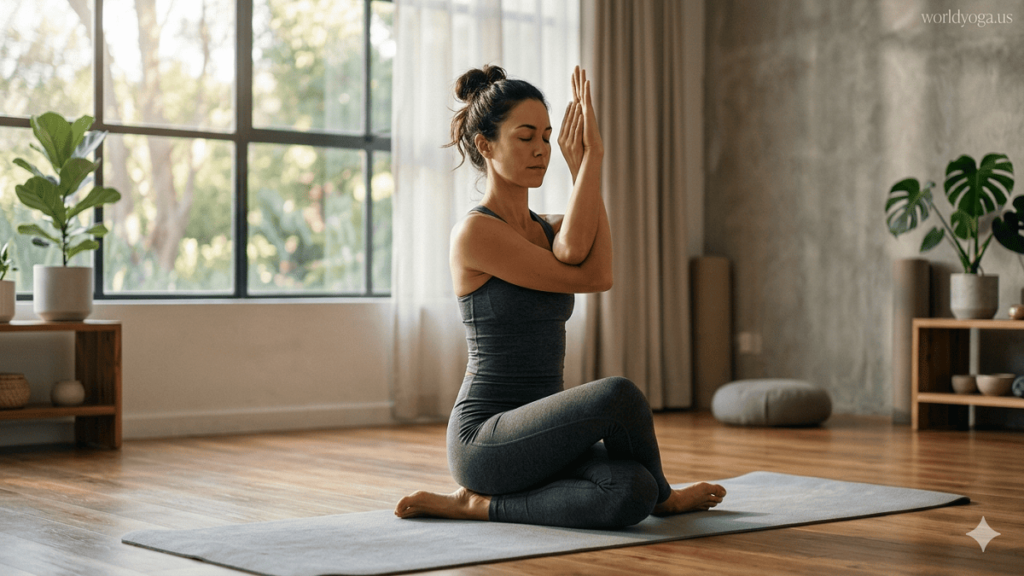
A person kneeling on a yoga mat in a studio performing Cow Face Pose with Garuda arm variation, with upright spine and crossed arms, in soft natural lighting.
COW FACE POSE AND GARUDA ON THE KNEES

COW FACE POSE AND GARUDA ON THE KNEES

This topic explores a combined yoga posture that integrates Cow Face Pose (Gomukhasana) and Garuda (Eagle) arm variation (Garudasana) performed in a kneeling position. The posture is designed to enhance shoulder mobility, upper back flexibility, spinal alignment, and core stability while maintaining a grounded and controlled base. The kneeling variation reduces balance difficulty, making it suitable for therapeutic and mobility-focused practice. It emphasizes proper anatomical alignment, including scapular positioning, neutral spine, and coordinated arm binding patterns that engage the rotator cuff, trapezius, and deep stabilizing muscles.

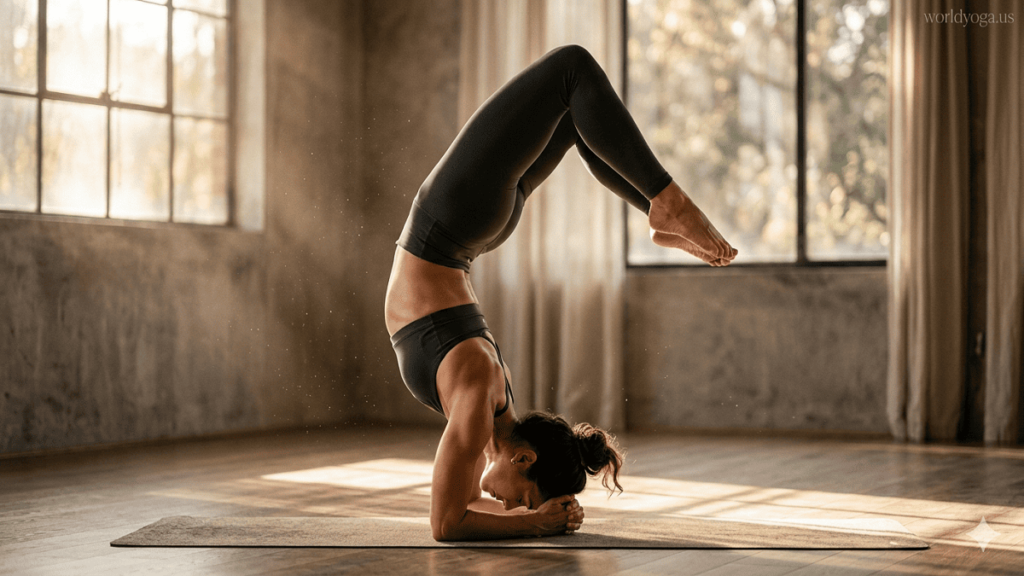
Urdhva Dhanurasana in Shirshasana. An advanced yoga practitioner in a dramatic studio setting appears mid-transition between headstand and wheel pose under warm cinematic lighting, with a subtle “worldyoga.us” watermark in the top right.
BACKBEND: HEADSTAND 5 ARM POSITION, Urdhva Dhanurasana in Shirshasana 1

Urdhva Dhanurasana in Shirshasana 1

This advanced exploration of Urdhva Dhanurasana in Shirshasana 1 examines one of the most complex and unconventional intersections in modern yoga practice. It breaks down seven powerful insights into how inversion (headstand mechanics) and deep spinal extension (wheel pose dynamics) interact from a biomechanical, neurological, and structural perspective. The content highlights the extraordinary demands placed on the cervical spine, shoulders, core stabilizers, and spinal extensors when attempting or studying this variation.

Scroll to Top